• Home
  • About Us
  • Contact Us
  • Cookies Policy
  • Disclaimer
  • DMCA
  • Privacy Policy
  • Terms and Conditions
Dr Crypton
Secure Your Future in Crypto
Bitcoin & Altcoins

Grayscale Proposes Bitcoin Covered Call Strategies to Capitalize on Market Stagnation Amidst Inflationary Headwinds and Geopolitical Tensions

by admin July 18, 2026
written by admin

On July 15, Grayscale, a prominent asset management firm, put forth a compelling argument for the adoption of Bitcoin covered call strategies, positing them as a potent tool for investors seeking to generate income amidst the current cryptocurrency market’s inherent volatility and uncertainty. This strategic recommendation comes at a time when Bitcoin has shown signs of recovery, yet analysts anticipate a period of sideways trading before a more robust upward trend solidifies. Grayscale’s research suggests that in such an environment, covered calls can not only offer attractive yields but also provide a degree of downside protection.

Unlocking Income Potential in a Stagnant Bitcoin Market

The core of Grayscale’s recommendation lies in the mechanics of a covered call strategy. In this approach, an investor maintains a long position in Bitcoin and simultaneously sells call options against that holding. The sale of these options generates immediate income in the form of a premium, effectively turning the holding of an asset that is not actively appreciating into a source of revenue.

Zach Pandl, Grayscale’s Head of Research, elaborated on this strategy in an official post, stating, "Although we see some positive signs, we can’t be sure exactly how the latest Bitcoin (BTC) bear market will play out. If Bitcoin’s price has found a durable bottom but trades sideways before recovering, covered call strategies can offer a way to help generate income from Bitcoin’s volatility while managing exposure to spot prices." He further clarified the process: "As a reminder, in a covered call strategy, an investor buys a spot position and then sells a call option against it, earning the premium."

To illustrate the potential efficacy of this strategy, Grayscale presented a hypothetical scenario. Assuming a Bitcoin spot price of approximately $65,000 by the end of 2026, with an implied volatility of 40%, traders employing a covered call strategy could potentially achieve an annualized yield of around 22%. This yield would also translate into a return exceeding a breakeven price of $58,500, offering a buffer against minor price declines.

The underlying principle of this income generation is the trade-off inherent in selling options. The premium received for selling the call option serves a dual purpose: it provides income and acts as a form of downside protection. In exchange for this benefit, the investor cedes some of the potential upside if Bitcoin experiences a sharp and rapid rally. However, if the spot price of Bitcoin falls below the calculated breakeven price, the covered call strategy would still incur losses, but these losses would be mitigated compared to a straightforward long position by the amount of the option premium received. Grayscale’s own Bitcoin Trust (GBTC), and indeed other Bitcoin covered call Exchange Traded Funds (ETFs), leverage this principle by employing a continuously managed portfolio of call options to generate income for their investors.

Bitcoin’s Ascent Fueled by Cooling Inflationary Pressures

Coinciding with Grayscale’s strategic insights, Bitcoin experienced a notable surge on July 15, breaching the $65,000 mark for the first time in three weeks. This upward momentum was largely attributed to the release of cooler-than-expected U.S. inflation data, which significantly eased concerns about an imminent interest rate hike by the Federal Reserve. The cryptocurrency reached an intraday high of $65,467 before settling back slightly. As of this report, Bitcoin is trading around $64,833, marking a 4.13% increase over the preceding seven days, according to CoinMarketCap. The digital asset currently boasts a market capitalization of approximately $1.3 trillion.

The key economic indicator driving this rally was the June Consumer Price Index (CPI) report. The CPI registered a monthly decline of 0.4%, the most substantial decrease observed since April 2020. This brought the annual inflation rate down to 3.5%, a figure considerably lower than many market analysts had predicted. Furthermore, the Producer Price Index (PPI) also indicated a downward trend, falling by 0.3% on a month-over-month basis. These inflation readings suggest a potential easing of price pressures, which could influence the Federal Reserve’s monetary policy decisions.

Despite these recent gains, Bitcoin has yet to establish a sustained breakout with strong upward momentum. This persistent struggle to maintain upward trajectory can be partly attributed to the fluctuating demand for Bitcoin ETFs among institutional investors. Data from Farside reveals that on July 14, U.S. spot Bitcoin ETFs recorded net inflows of approximately $181 million. However, this followed a period of significant outflows, with July 13 seeing outflows of $424.7 million. Notwithstanding these daily fluctuations, the year-to-date cumulative net inflows for U.S. spot Bitcoin ETFs have surpassed an impressive $51 billion, with more than 636,000 BTC now held within these investment vehicles.

Geopolitical Instability Adds Another Layer of Market Complexity

Adding another layer of complexity to the already dynamic cryptocurrency market, growing global tensions in the Middle East continue to exert pressure. Recent escalations, including missile and drone attacks launched by Iran on countries such as the UAE, Kuwait, Bahrain, and Oman in response to U.S. actions, have once again introduced significant uncertainty into the financial world. Such geopolitical events carry the potential to disrupt global energy supplies, leading to broader economic instability and influencing investor sentiment across all asset classes, including digital currencies.

Historical Context and Broader Market Implications

The current market environment, characterized by potential inflation moderation and geopolitical unease, presents a unique backdrop for Bitcoin. Historically, Bitcoin has been viewed by some as a potential hedge against inflation, similar to gold. However, its price action has also shown a significant correlation with broader market sentiment and macroeconomic factors, particularly interest rate expectations.

The Federal Reserve’s stance on interest rates has been a dominant narrative in financial markets throughout the past year. Rising inflation prompted aggressive rate hikes, which generally put downward pressure on risk assets like cryptocurrencies. The recent deceleration in inflation data offers a glimmer of hope for a less hawkish Fed, potentially creating a more favorable environment for growth-oriented assets.

The performance of Bitcoin ETFs is also a critical barometer for institutional adoption. The significant inflows observed year-to-date underscore a growing institutional appetite for direct Bitcoin exposure. However, the intermittent outflows highlight the cautious approach many institutions are taking, reacting to evolving market conditions and macroeconomic signals.

The covered call strategy, as advocated by Grayscale, offers a method for investors to navigate this period of uncertainty. By generating income from option premiums, investors can potentially offset some of the volatility associated with holding Bitcoin, particularly if the market enters a prolonged period of sideways trading. This strategy aligns with a more conservative approach to cryptocurrency investing, focusing on income generation rather than solely on speculative price appreciation.

The effectiveness of covered call strategies is closely tied to implied volatility. Higher implied volatility in options markets generally translates to higher premiums received for selling calls. In periods of heightened market uncertainty or expected price swings, implied volatility tends to rise, making covered calls potentially more lucrative.

Looking ahead, the interplay between inflation trends, Federal Reserve policy, geopolitical developments, and institutional adoption of Bitcoin will continue to shape the cryptocurrency market. Grayscale’s emphasis on covered calls suggests a strategic shift towards methods that can generate returns even in less bullish market conditions, reflecting a maturing approach to investing in digital assets. The ability of Bitcoin to sustain its recent gains will depend on its resilience in the face of ongoing macroeconomic and geopolitical headwinds, and the continued conviction of institutional investors in its long-term value proposition.


July 18, 2026 0 comment
0 FacebookTwitterPinterestEmail
Web3 & DApps

Citadel Securities Invests $400 Million in Crypto.com at $20 Billion Valuation, Signaling Major Institutional Influx into Digital Assets

by admin July 18, 2026
written by admin

Crypto.com has announced a significant milestone in its growth trajectory with a $400 million investment from Citadel Securities, a leading global financial firm and market maker. This strategic infusion of capital, achieved at a substantial $20 billion valuation, marks Crypto.com’s first institutional funding round in a decade and represents a pivotal moment for the cryptocurrency exchange as it deepens its integration with traditional financial markets.

The substantial investment from Citadel Securities underscores a broader trend of increasing institutional confidence and participation in the digital asset space. For Crypto.com, this funding is poised to accelerate its ambitious expansion plans across a wider array of asset classes, with a particular focus on tokenized securities and derivatives. The company aims to leverage this capital to further bridge the gap between the burgeoning world of digital assets and the established infrastructure of traditional finance.

A New Era of Institutionalization: The Significance of the Citadel Securities Deal

The partnership with Citadel Securities is more than just a financial transaction; it signifies a validation of Crypto.com’s strategic vision and its preparedness to cater to the sophisticated demands of institutional investors. In a statement released on Thursday, Crypto.com emphasized that this funding round is instrumental in its mission to drive the crypto industry into a "new era of institutionalization."

Kris Marszalek, CEO of Crypto.com, articulated the company’s enthusiasm for the collaboration, stating, "We are thrilled to work with Citadel Securities to continue driving the crypto industry into a new era of institutionalization. The size of the opportunity in front of us is staggering, as crypto increasingly becomes the rails for finance. Having built the right regulatory and tech infrastructure over the last decade, Crypto.com is now perfectly positioned to capture this new wave of growth across all asset classes."

This sentiment highlights Crypto.com’s long-term strategy, which has involved building robust regulatory frameworks and technological capabilities. The company’s proactive approach to compliance and infrastructure development has seemingly positioned it favorably to capitalize on the growing convergence of traditional finance and digital assets.

Background and Context: Crypto.com’s Evolution and Market Dynamics

Crypto.com, founded in 2016, has steadily grown to become one of the world’s largest cryptocurrency platforms, offering a comprehensive suite of products and services including a trading app, debit cards, and a decentralized finance (DeFi) platform. The company has consistently invested in expanding its global reach and enhancing its product offerings to meet the evolving needs of its user base, which now numbers in the tens of millions.

The past few years have witnessed a significant shift in the landscape of digital asset investment. Initially perceived as a niche or speculative asset class, cryptocurrencies have gained increasing traction among institutional investors, including hedge funds, asset managers, and even traditional financial institutions. This shift has been driven by several factors, including the growing maturity of blockchain technology, the increasing regulatory clarity in some jurisdictions, and the potential for diversification and higher returns.

Furthermore, the recent softening of U.S. regulatory stances has played a crucial role in encouraging Wall Street’s largest trading firms to explore and engage with the crypto market more actively. This evolving regulatory environment has created a more conducive atmosphere for significant institutional capital to flow into the digital asset ecosystem.

Strategic Pillars of Crypto.com’s Growth

Crypto.com’s strategic initiatives leading up to this investment round demonstrate a clear intent to integrate deeply with the traditional financial system. Last year, the company took a significant step by applying for a national trust bank charter. This move is indicative of its ambition to offer more comprehensive institutional-grade custody and financial services, aligning with the stringent requirements of regulated financial entities.

Citadel Securities Invests $400 Million in Crypto.com at a $20 Billion Valuation

In parallel, Crypto.com has been actively building its institutional prediction-markets business. This initiative involves attracting seasoned executives from traditional finance, signaling a commitment to leveraging their expertise to develop sophisticated financial products and services that cater to institutional clients. The hiring of Wall Street veterans suggests a strategic effort to bridge the cultural and operational divide between the crypto and traditional finance worlds.

These developments are not isolated but form a cohesive strategy to position Crypto.com as a key player in the evolving financial landscape. By seeking regulatory approvals and building specialized business units, the exchange is preparing itself to facilitate large-scale institutional participation in digital asset markets.

The Role of Citadel Securities: A Market Maker’s Perspective

Citadel Securities’ involvement as an investor is particularly noteworthy. As one of the world’s largest market makers, Citadel Securities plays a critical role in ensuring liquidity and price discovery across a vast array of financial markets, including equities, options, and fixed income. Their decision to invest in Crypto.com suggests a belief in the long-term viability and growth potential of the cryptocurrency market and the platforms that facilitate its trading.

Market makers are inherently focused on efficiency, technology, and robust infrastructure. Their investment in a crypto exchange like Crypto.com indicates a recognition of the platform’s capabilities in these areas. It also suggests a potential for future collaborations in areas such as market making services, liquidity provision, and the development of more sophisticated trading instruments within the crypto space.

The $400 million investment, while substantial, is likely viewed by Citadel Securities as a strategic entry point into a rapidly expanding market. Their deep understanding of market dynamics and their technological prowess could prove invaluable to Crypto.com as it navigates the complexities of institutional adoption and regulatory compliance.

Implications for the Broader Crypto Ecosystem

The Crypto.com and Citadel Securities deal has several far-reaching implications for the broader cryptocurrency ecosystem:

  • Increased Institutional Confidence: A major investment from a firm like Citadel Securities serves as a powerful endorsement for the cryptocurrency market, potentially encouraging other institutional players to increase their exposure.
  • Accelerated Adoption of Tokenized Assets: Crypto.com’s focus on tokenized securities and derivatives, supported by this funding, could accelerate the development and adoption of these new asset classes, further blurring the lines between traditional and digital finance.
  • Enhanced Regulatory Dialogue: As more traditional financial firms engage with crypto, the dialogue around regulation is likely to intensify. This could lead to more harmonized and effective regulatory frameworks globally, which are crucial for sustainable growth.
  • Innovation in Financial Products: The convergence of crypto and traditional finance is expected to spur innovation in financial products and services, offering investors a wider range of options and potentially greater efficiency.
  • Talent Migration: The influx of institutional capital and the development of sophisticated financial products will likely continue to attract talent from traditional finance, bringing valuable expertise to the crypto industry.

Looking Ahead: Bridging Worlds

The investment from Citadel Securities is a clear signal that the cryptocurrency industry is maturing and becoming increasingly intertwined with the global financial system. Crypto.com’s strategic moves, coupled with this significant capital injection, position it as a key facilitator in this ongoing transformation. The company’s ability to bridge the gap between digital assets and traditional markets will be crucial in shaping the future of finance, making this partnership a significant development to watch.

The partnership also aligns with a broader conversation about the future of finance, as explored in discussions like the "Why You No Longer Have to Choose Between TradFi and Crypto" podcast episode from Unchained. This suggests a growing consensus that the lines between traditional financial services and the digital asset world are becoming increasingly indistinct, with platforms like Crypto.com poised to play a central role in this evolution.

As Crypto.com continues to execute its strategy, its collaboration with Citadel Securities is likely to be a catalyst for further innovation, institutional adoption, and the continued integration of cryptocurrencies into the mainstream financial infrastructure. The $20 billion valuation reflects the market’s confidence in Crypto.com’s ability to navigate this complex and dynamic landscape, and the $400 million investment provides the fuel to accelerate its journey.

The image accompanying this report, credited to viewimage / Shutterstock.com, visually represents the powerful convergence of established financial institutions and the dynamic world of digital assets. It serves as a symbolic backdrop to a transaction that is poised to redefine the future of financial markets. The date of the report, July 17, 2026, at 6:30 am EST, places this significant development within a contemporary context, highlighting the ongoing and rapid evolution of the financial technology sector.

July 18, 2026 0 comment
0 FacebookTwitterPinterestEmail
Cryptography & Privacy

Anonymous Credentials in Practice: A Deep Dive into Privacy Pass and its Real-World Applications

by admin July 18, 2026
written by admin

This article delves into the practical implementation of anonymous credentials, building upon the foundational concepts introduced in the previous installment. It examines the widely adopted Privacy Pass protocol, exploring its technical underpinnings, widespread adoption by major technology firms, and its implications for user privacy and online security. The discussion will also touch upon emerging proposals for more advanced anonymous credential systems, setting the stage for future developments in this critical area of digital identity.

The Evolution of Anonymous Credentials: From Theory to Ubiquitous Deployment

Anonymous credential systems, designed to empower users to authenticate themselves without compromising their privacy, have transitioned from theoretical constructs to integral components of the modern internet. At their core, these systems involve three key parties: an Issuer, responsible for verifying a user’s identity and issuing credentials; Resources, such as websites, that accept these credentials for access; and Users, who possess and present these credentials. The critical innovation lies in the "showing" process, where the credential can be presented to a Resource in a way that prevents any party, including the Issuer, from linking the presentation back to the specific user or the initial issuance.

The journey from abstract cryptographic principles to tangible applications has been marked by the development of specific features crucial for effective anonymous credential systems. These include issuer anonymity, preventing the Issuer from linking a presented credential to its original issuance; unlinkability, ensuring that a Resource cannot connect multiple credential presentations from the same user; and attribute privacy, allowing users to selectively reveal only necessary information within a credential.

Privacy Pass: The De Facto Standard in Anonymous Authentication

Privacy Pass has emerged as the most extensively deployed anonymous credential standard globally, demonstrating the real-world impact of these privacy-preserving technologies. Initially conceived by researchers to circumvent CAPTCHAs and mitigate online abuse, its adoption has expanded significantly, with major technology players integrating it into their services. Cloudflare, a pioneer in this space, collaborated on the development of the standard, enabling millions of users to bypass frustrating challenges.

The reach of Privacy Pass extends beyond Cloudflare. Apple has integrated a similar protocol under the name "Private Access Tokens," while Google utilizes "Private State Tokens." The Brave browser also leverages this technology, and even Microsoft has incorporated it into its Edge browser, highlighting its broad acceptance across the digital ecosystem. This widespread adoption underscores the growing demand for solutions that balance security with user privacy.

Anonymous credentials: an illustrated primer (Part 2)

At its heart, Privacy Pass is remarkably simple, embodying the concept of single-use "wristband" credentials. Each credential essentially signifies "I possess a valid credential," offering a straightforward yet effective mechanism for authentication. The underlying cryptographic techniques are rooted in foundational research from the 1980s, specifically building upon David Chaum’s seminal work on blind signatures, augmented with clever optimizations for performance. The true innovation lies not in the novelty of the cryptography itself, but in its successful and large-scale implementation. The protocol is standardized through a series of IETF RFCs, including RFC 9576, RFC 9577, and RFC 9578, which outline various deployment options while preserving the core functionality.

The Mechanics of Privacy Pass: Blind Signatures in Action

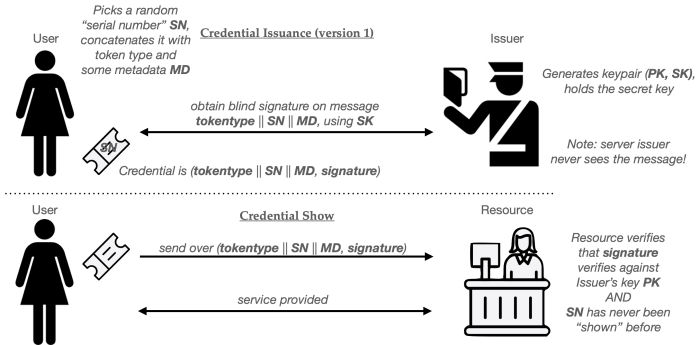
The fundamental operation of Privacy Pass relies on blind signatures, a cryptographic primitive that allows a user to obtain a signature from an Issuer on a message without the Issuer learning the content of the message being signed. This process is crucial for maintaining user anonymity.

The credential itself is typically represented as a four-tuple: tokentype, MD, SN, sig.

  1. tokentype: This field indicates the type of token being used, potentially differentiating between various issuance protocols or credential types.
  2. MD (Metadata): This is an optional but significant field that allows for binding credentials to specific applications or contexts. For instance, a user might request a credential bound to "nyt.com" and a specific date. The Issuer does not see this metadata; it is chosen by the User and, once set, cannot be altered. This feature enables Resources to enforce policies, such as requiring tokens valid only for a particular website or within a defined time frame.
  3. SN (Serial Number): This is a unique identifier for the credential, often derived from the message being signed.
  4. sig (Signature): This is the blind signature generated by the Issuer.

To "show" this credential to a Resource, the User presents the tokentype, MD, SN, and sig. The Resource then verifies the signature using the Issuer’s public key and checks if the MD and SN meet its requirements. If all checks pass, access is granted.

A key application of the MD field is the implementation of "session-specific credentials." In this model, the User obtains a credential not before visiting a website, but rather after initiating a session with a Resource protected by Privacy Pass. This flow involves:

  1. Requesting a Session Token: The User, after interacting with a Resource, requests a temporary session token from the Issuer.
  2. Issuing a Blinded Credential: The User then uses this session token to blind a new credential request, which is sent to the Issuer.
  3. Signing the Blinded Credential: The Issuer signs this blinded credential without knowing its content.
  4. Unblinding and Presenting: The User unblinds the signature, effectively creating a credential tied to the specific session. This credential is then presented to the Resource.

This mechanism ensures that each credential is valid only for the particular session for which it was issued, preventing its reuse in future sessions or for different purposes. This real-time issuance model offers advantages for services like Cloudflare, allowing for granular control over real-time access.

Anonymous credentials: an illustrated primer (Part 2)

However, this approach introduces certain challenges. The most significant is the dependency on the Issuer’s continuous availability. If the Issuer experiences an outage, users may be unable to obtain fresh credentials, potentially leading to widespread access denial for the Resource. Another concern is the potential for "timing correlation attacks." By comparing the timestamps of messages exchanged between the Resource and the Issuer, an attacker might theoretically be able to link a user’s session to their credential issuance request. This risk is particularly pronounced when the Issuer and Resource are operated by the same entity, as is the case with Cloudflare’s implementation. While Cloudflare’s massive transaction volume may mitigate this risk in practice, it remains a theoretical vulnerability.

Cryptographic Underpinnings: RSA vs. Oblivious MACs

The choice of cryptographic primitives for implementing the blind signatures in Privacy Pass is a critical engineering decision, leading to two standardized "issuance protocols":

  1. Publicly Verifiable Tokens: These utilize blind RSA signatures, closely mirroring Chaum’s original protocol. The advantage here is that the Resource can verify the token using the Issuer’s public key, meaning the Issuer and Resource do not need to share any secret cryptographic material. However, RSA signatures are known for their size and computational cost. Achieving approximately 112-bit symmetric-equivalent security requires RSA keys of at least 2048 bits, resulting in relatively large signatures and a slower signing process.

  2. Privately Verifiable Tokens: For deployments prioritizing speed, Privacy Pass defines an alternative using an oblivious Message Authentication Code (MAC) based on an oblivious pseudorandom function. These tokens leverage efficient elliptic-curve (EC) primitives. While significantly faster to create and verify, the drawback is that the verifier (the Resource) must possess the Issuer’s secret key to validate the credential. This requirement introduces a tighter coupling between the Issuer and the Resource, which may not be desirable in all scenarios. Notably, Privacy Pass does not currently support elliptic-curve-based blind signatures due to the lack of mature and widely adopted protocols in this area.

Implications and Future Directions

Privacy Pass represents a significant achievement in the practical deployment of anonymous credential systems. Its ubiquitous use by major technology companies underscores the growing importance of privacy-preserving authentication. However, its "get token, use token" model, while efficient, offers limited functionality beyond basic access control. It does not inherently address more complex scenarios like age verification without continuous reliance on an Issuer for each interaction.

The limitations of Privacy Pass pave the way for more sophisticated solutions. The next frontier in anonymous credentials lies in systems that can support richer attributes and more complex verification processes, such as zero-knowledge credentials. Google’s ongoing standardization efforts in this area, utilizing zero-knowledge proof technology for privacy-preserving age assurance, signal a promising evolution. These advancements aim to provide a more granular and flexible approach to digital identity, enabling users to prove specific attributes without revealing unnecessary personal information, thereby further enhancing privacy and security in the digital realm. The continued development and deployment of such technologies will be crucial in shaping a more privacy-respecting internet.

July 18, 2026 0 comment
0 FacebookTwitterPinterestEmail
FinTech Innovations

Spreedly Unbundles Payment Vault, Empowering Merchants with Stored Credential Ownership

by admin July 18, 2026
written by admin

Spreedly, a prominent player in the payments orchestration landscape, has taken a significant step towards greater merchant autonomy with the launch of its standalone payment vault. This strategic move allows businesses to securely store and manage their customer payment credentials independently, decoupling this critical function from Spreedly’s broader orchestration platform. The innovation marks a pivotal moment, offering merchants enhanced control over their payment data, increased flexibility in choosing payment processors, and a more adaptable approach to their payment infrastructure.

The Strategic Unbundling: A New Era of Merchant Control

Historically, payment vaults have been integrated components of larger payment processing or orchestration solutions. This often meant that a merchant’s stored payment data was intrinsically linked to a specific provider, creating a barrier to switching or diversifying payment partners. Spreedly’s decision to unbundle its vault directly addresses this long-standing challenge. Merchants can now leverage Spreedly’s robust, PCI DSS Level 1 compliant tokenization technology to safeguard sensitive payment information without being obligated to adopt Spreedly’s full orchestration suite.

This unbundling grants businesses several key advantages:

  • Independent Vault Usage: Merchants can utilize Spreedly’s vault solely for secure storage, retaining their existing payment processor relationships, whether with industry giants like Stripe, Adyen, or Worldpay, or other established providers.
  • Preservation of Existing Logic: The ability to maintain existing payment routing logic is crucial for businesses that have invested heavily in optimizing their transaction flows. Spreedly’s standalone vault ensures this continuity.
  • Flexibility in Orchestration: Merchants are empowered to decide whether to adopt Spreedly’s advanced orchestration platform in the future or to build their own custom solutions. This offers a phased approach to payment infrastructure development, catering to businesses at different stages of growth and technological maturity.

A Control Point in Modern Payments: CEO’s Vision

Justin Benson, CEO of Spreedly, articulated the strategic imperative behind this innovation. "The vault has become the control point in modern payments," Benson stated. "More of what determines payment performance now lives in the credential itself, and providers are finally opening up to let merchants own it. Merchants want that control – the ability to run the providers they have today and change course tomorrow. An independent vault lets them start now and decide the rest as they grow. They shouldn’t have to commit to everything on day one."

This statement underscores a fundamental shift in the payments industry, where the value and strategic importance of stored payment data have escalated. As payment methods evolve and consumer expectations for seamless transactions rise, the secure and accessible management of payment credentials has become paramount to a merchant’s operational efficiency and financial success.

Core Features and Benefits of the Standalone Vault

The standalone Spreedly payment vault is engineered to provide a suite of powerful features designed to enhance merchant operations:

  • Direct Path to Advanced Capabilities: The vault serves as a foundational element, offering merchants a seamless pathway to integrate with Spreedly’s broader platform and access additional payment capabilities without the need for complex data migration.
  • PCI DSS Level 1 Tokenization: Adherence to the highest security standards is non-negotiable in the payments industry. Spreedly’s vault ensures that raw payment data is tokenized, effectively removing it from the merchant’s direct systems and significantly reducing their PCI DSS compliance burden and risk.
  • Processor Agnosticism and Portability: A cornerstone of the offering is the portability of payment credentials. These tokens are designed to work across an extensive network of over 100 payment providers. This inherent interoperability liberates merchants from vendor lock-in, enabling them to adapt to market changes or leverage more advantageous processing terms without disrupting their customer payment data.
  • Enhanced Authorization Rates: Spreedly’s integrated network tokenization capabilities, coupled with its account updater services, play a crucial role in maintaining the currency of payment credentials. This proactive approach helps to minimize declined transactions due to expired cards or updated account information, thereby boosting authorization rates and improving revenue capture.

Growing Demand for Portable Credentials: A Market Trend

The increasing adoption of stored credential transactions on Spreedly’s platform provides compelling evidence of this market trend. Stored credential transactions now represent a substantial 40% of Spreedly’s total transaction volume, a notable increase from 34% in 2022. This upward trajectory signals a clear shift in merchant preference towards payment strategies that prioritize the flexibility and resilience offered by portable credentials over a singular reliance on a single payment processor.

The Evolving Value of Payment Data: Five Key Changes

Spreedly attributes the unbundling of its payment vault to five significant shifts in the perceived value of where payment data resides:

  1. Increased Merchant Demand for Control: Merchants are actively seeking greater ownership and management of their customer data, including payment credentials, to drive strategic decisions and enhance operational flexibility.
  2. Evolving Regulatory Landscape: Stringent data privacy regulations and an increased focus on consumer data protection are compelling businesses to adopt more secure and controlled methods for handling payment information.
  3. Technological Advancements in Tokenization: Sophisticated tokenization techniques have made it more feasible and secure to store payment information in a way that is both compliant and flexible, reducing the need for direct processor-tied storage.
  4. Rise of Multi-Processor Strategies: Businesses are increasingly adopting multi-processor strategies to optimize costs, improve authorization rates, and mitigate risks associated with relying on a single provider. Portable credentials are vital for enabling these strategies.
  5. The Vault as a Strategic Asset: The payment vault is no longer just a storage utility; it is recognized as a strategic asset that can unlock new revenue streams, improve customer loyalty, and provide a competitive edge when managed effectively.

Future-Proofing Payments: CTO’s Perspective

Mike Rivers, CTO of Spreedly, emphasized the long-term vision of this move. "A vault shouldn’t lock you into anyone’s roadmap, including ours," Rivers commented. "When credentials stay portable, a merchant can run a single provider per region today and add routing, orchestration, or new payment methods whenever they’re ready. Portability is what keeps the future open."

This forward-thinking perspective highlights Spreedly’s commitment to empowering merchants with tools that are not only secure and efficient today but also adaptable to the ever-changing payments landscape of tomorrow. The focus on portability ensures that merchants can continuously innovate and optimize their payment operations without being constrained by legacy systems or provider dependencies.

Intensifying Competition and Industry Implications

The launch of Spreedly’s standalone payment vault is poised to significantly reshape the competitive dynamics within the payments ecosystem. Traditionally, payment processors and gateways have leveraged control over stored customer payment credentials as a powerful retention tool, making it technically and economically challenging for merchants to switch providers.

By offering a standalone, portable vault, Spreedly is directly challenging this entrenched model. This move encourages merchants to view their payment credentials as a fundamental piece of infrastructure that they own and control, rather than an asset managed by a single payment provider.

Should Spreedly’s strategy gain widespread traction, it could exert considerable pressure on existing processors, gateways, and even other orchestration platforms. These entities may be compelled to adopt more open and interoperable ecosystems to remain competitive, potentially leading to a more fragmented yet more merchant-centric payments market. This shift could foster greater innovation and offer businesses more choices in how they manage their payment operations.

Spreedly’s Journey and Impact

Founded in 2007, Spreedly emerged with the mission to simplify the complexities of payment stack development for merchants, aiming to consolidate these functions onto a single, unified platform. Headquartered in North Carolina, the company has grown to become a significant force in the global payments arena. Its comprehensive payment orchestration stack processes an impressive volume exceeding $50 billion in annual transactions on behalf of more than 400 diverse customers spanning over 100 countries.

Beyond its core orchestration capabilities, Spreedly offers a robust suite of complementary services, including advanced fraud prevention tools and payment optimization solutions designed to enhance transaction success rates and profitability. The company’s client roster features prominent global brands such as BMW, CLEAR, HBO Max, Hopper, Lemonade, Getty, Warner, and The New York Times, underscoring its credibility and the widespread trust it has garnered within the enterprise sector. The introduction of its standalone payment vault is a testament to Spreedly’s continuous evolution and its commitment to anticipating and addressing the evolving needs of its merchant base.

July 18, 2026 0 comment
0 FacebookTwitterPinterestEmail
FinTech Innovations

Regions Financial Corp. Reports Significant Growth in Digital Customer Engagement and Strategic Acquisitions in Q2 2026

by admin July 18, 2026
written by admin

Regions Financial Corp. reported continued robust growth in customer digital usage and transactions during the second quarter of 2026, underscoring the strategic importance of its online banking and mobile app offerings. President, CEO, and Chairman John M. Turner highlighted these digital initiatives as "key initiatives that are central to our long-term strategy," signaling a strong commitment to enhancing the client experience through technological innovation.

Digital Dominance and Client Satisfaction

During a July 17 earnings call, Turner announced that Regions Financial Corp. had achieved top rankings among regional banks for online banking satisfaction and mobile app performance, according to recent surveys. This achievement reflects substantial investments and dedicated efforts to refine the client experience, introduce more intuitive digital capabilities, and simplify banking processes for its diverse customer base. Regions Bank, the subsidiary of Regions Financial Corp., serves a broad geographical area encompassing the South, Midwest, and Texas, operating approximately 1,200 banking offices and 1,750 ATMs.

The company’s recent launch of a new native mobile app has been met with significant customer adoption. Data presented during the earnings call revealed a 44% increase in Zelle usage compared to two years prior, alongside a substantial 70% year-over-year surge in customer chat volume. These metrics indicate a growing preference for digital channels and a heightened reliance on convenient, immediate communication methods.

Furthermore, Regions has witnessed a consistent upward trend in its digital banking user base. Over the past two years, active mobile banking users have grown by 6% to reach 2.73 million. Mobile banking logins have also seen a significant uptick, increasing by 19% to 211 million. This digital acceleration is reflected in the growing proportion of customer transactions conducted through digital channels, which has risen from 75% to 80% within the same timeframe. This shift signifies a fundamental change in customer behavior and a successful adaptation by Regions to meet evolving expectations.

Core Modernization and Strategic Expansion

Beyond digital enhancements, Regions Financial Corp. continued its ambitious core modernization efforts throughout the second quarter. A significant milestone was the successful implementation of a new commercial lending platform. This initiative is designed to streamline operations, accelerate time-to-market for new products and services, and ultimately elevate the experience for both clients and bankers. Turner emphasized that this upgrade represents a "significant step forward in enhancing our technology infrastructure, improving speed to market and elevating the experience we deliver to our clients and bankers."

The company is also making considerable progress on its core deposit transformation project. This complex undertaking is slated to enter a pilot phase later in 2026, with full conversion planned for 2027. Such a transformation is crucial for modernizing the bank’s foundational systems, ensuring greater efficiency, scalability, and improved data management capabilities in the long term.

In a move that further solidifies its strategic growth trajectory, Regions announced on July 2, just days after the conclusion of the second quarter, its acquisition of The Frazer Lanier Company. This Montgomery, Alabama-based firm is a full-service investment banking company specializing in municipal and corporate securities. The acquisition is expected to significantly bolster Regions’ capital markets platform, enhance its expertise in municipal finance, and broaden the range of solutions offered to public sector and institutional clients. Turner articulated the strategic rationale, stating, "We believe this transaction expands our capital markets platform, enhances our municipal finance expertise and allows us to broaden the solutions we provide to the public sector and institutional clients." This acquisition signals Regions’ intent to expand its presence in the capital markets and cater to a more sophisticated client base.

A Favorable Operating Environment

Addressing the broader economic landscape, Turner expressed optimism regarding the prevailing operating environment. He noted that economic activity remains solid, and despite lingering uncertainties, businesses are generally well-positioned, with steady levels of investment and job growth observed across Regions’ markets. On the consumer front, spending trends are described as healthy, with customers maintaining robust account balances and liquidity buffers relative to their spending levels. Overall financial conditions are reported as stable, contributing to a supportive backdrop for Regions’ core business operations and growth initiatives.

Analysis and Implications

The strong performance reported by Regions Financial Corp. in Q2 2026 paints a picture of a financial institution effectively navigating the evolving landscape of banking. The emphasis on digital transformation is clearly paying dividends, not only in terms of increased customer engagement but also in achieving industry-leading satisfaction scores. This focus on user experience is critical in an era where convenience and accessibility are paramount. The company’s strategic investment in its mobile app and online platforms positions it favorably to capture a larger share of digital transactions and deepen customer loyalty.

The successful implementation of a new commercial lending platform and the ongoing core deposit transformation demonstrate a commitment to modernizing its operational backbone. These initiatives are essential for long-term efficiency, risk management, and the ability to introduce new products and services rapidly. In the competitive banking sector, technological infrastructure is a key differentiator, and Regions appears to be investing wisely in this area.

The acquisition of The Frazer Lanier Company is a particularly significant development. It signals a strategic push into the capital markets, an area that can offer substantial revenue diversification and higher-margin business. By acquiring a specialized firm, Regions gains immediate expertise and a client base, accelerating its growth in municipal and corporate finance. This move could position Regions as a more formidable competitor in the investment banking space, particularly for public sector and institutional clients.

The favorable commentary on the economic environment, both for businesses and consumers, provides a positive tailwind for Regions’ operations. A stable economy with steady job growth and consumer spending supports loan demand, deposit growth, and overall profitability. While acknowledging ongoing uncertainties, the assessment suggests that Regions is well-positioned to capitalize on current economic strengths.

Broader Impact and Future Outlook

Regions Financial Corp.’s performance in Q2 2026 highlights several key trends in the financial services industry. Firstly, the continued migration of customers to digital channels is irreversible. Banks that fail to invest in intuitive, user-friendly digital experiences risk losing market share. Regions’ success in this area serves as a case study for other regional banks. Secondly, strategic acquisitions remain a viable path for growth and capability enhancement, especially for expanding into specialized or higher-growth market segments like capital markets.

The company’s dual focus on organic digital growth and strategic inorganic expansion through acquisitions suggests a comprehensive approach to market positioning. As the banking industry continues to evolve, driven by technological advancements and changing consumer preferences, Regions Financial Corp. appears to be making calculated moves to strengthen its competitive standing and ensure long-term sustainability. The success of its core modernization efforts and the integration of new acquisitions will be crucial in the coming quarters as it aims to build upon this strong foundation and continue its trajectory of growth and innovation. The company’s ability to maintain its leadership in digital client satisfaction while expanding its strategic capabilities in areas like capital markets will be closely watched by industry analysts and competitors alike.

July 18, 2026 0 comment
0 FacebookTwitterPinterestEmail
FinTech Innovations

The Builders Stage Returns to TechCrunch Disrupt 2026 to Equip Founders with Essential Scaling Strategies

by admin July 18, 2026
written by admin

TechCrunch Disrupt 2026 is set to ignite San Francisco from October 13-15 at the Moscone Center, and a cornerstone of this premier technology conference will once again be the Builders Stage. This dedicated track is meticulously designed to provide founders, startup operators, and investors with a deep dive into the pragmatic strategies and operational acumen required to not just launch, but to successfully scale and sustain thriving companies in today’s dynamic market. With over 10,000 innovators, investors, and industry leaders expected to converge, the Builders Stage promises to be a hub of actionable insights and invaluable networking opportunities.

A Deep Dive into Startup Scaling: The Pillars of the Builders Stage

The Builders Stage at TechCrunch Disrupt 2026 is more than just a series of talks; it’s a comprehensive curriculum for growth. Recognizing that the journey from a promising startup to a market-leading enterprise is fraught with unique challenges, this stage focuses on the critical junctures of a company’s lifecycle. Sessions will cover essential topics ranging from the intricate art of fundraising and the strategic imperative of hiring top-tier talent, to the nuanced development of go-to-market strategies and the critical operational decisions that fuel sustainable expansion. For founders navigating the crucial transition from seed-stage funding to Series A and beyond, the insights offered here are designed to be immediately applicable.

The agenda for the Builders Stage is curated to address the most pressing concerns of today’s entrepreneurs. Prominent figures from the startup and venture capital ecosystems are slated to share their expertise. Among the confirmed speakers are Grant Lee, CEO and co-founder of Gamma, known for its innovative approach to collaborative content creation; Leah Solivan, founder and general partner at Precedent.vc, bringing a wealth of investment and operational experience; and Robby Stein, VP of Product at Google, offering a unique perspective from one of the world’s largest technology organizations. The lineup is continuously expanding, with more thought leaders and industry disruptors to be announced as the event approaches.

Navigating the AI Revolution: A Central Theme

A significant portion of the Builders Stage discussions will grapple with the pervasive influence of Artificial Intelligence on the startup landscape. Several sessions are dedicated to helping founders understand how to thrive in an AI-saturated market, even if their core business is not AI-centric. The complexities of competing for attention, the importance of retaining users in an AI-driven world, and the strategic considerations for building enduring businesses beyond the immediate hype of AI models will be explored.

One particularly pertinent discussion, "What Happens When OpenAI Ships Your Roadmap," will feature industry veterans like Michel Tricot, CEO and Co-founder of Airbyte; Rob Toews, Partner at Radical Ventures; and Linda Tong, CEO of Webflow. This panel will address the very real anxieties of founders whose products could be subsumed by larger AI players. They will delve into the nuances of creating defensibility in such a landscape and outline strategies for founders facing direct competition from AI giants.

The integration of AI into the workforce itself is another critical area. The session "Hiring When AI Is a Co-Founder," featuring Josh Reeves, CEO and Co-founder of Gusto, will examine how early-stage companies are redefining their teams. The discussion will focus on the strategic decisions involved in delegating tasks to AI agents versus human employees, and how high-growth startups are building hybrid teams that maintain speed, accountability, and a strong company culture.

The Evolving Landscape of Fundraising and Market Entry

Builders Stage agenda revealed: Practical strategies for scaling startups at TechCrunch Disrupt 2026

Beyond the AI narrative, the Builders Stage will provide practical guidance on fundamental aspects of startup growth. For pre-seed stage founders, the session "Winning Pre-Seed Without a Product" will be invaluable. Experts like Puneet Agarwal of True Ventures, Austin Clements of Slauson and Co., and Sandhya Venkatachalam of Axiom Partners will break down how to build credibility and secure initial investment based on vision, conviction, and founder-market fit, even before a tangible product exists.

The journey to securing Series A funding is also under scrutiny. The panel "The Series A in 2027" will bring together investors such as Jahanvi Sardana from Index Ventures, Shailendra Singh from Peak XV, and Janelle Teng Wade from Bessemer Venture Partners. They will discuss the increasingly stringent requirements for Series A funding, redefining the metrics, team structures, and traction that investors will prioritize in the coming years. This session will offer a forward-looking perspective on what it will take to secure crucial growth capital.

Go-to-market (GTM) strategies are also being compressed by the pace of innovation and market demands. The session "The 90-Day GTM: Why $0-$10M ARR Is the New Baseline (and How to Actually Get There)" will feature insights from Ryan Meadows, Chief Revenue Officer at Lovable, and Tomasz Tunguz, General Partner and Founder at Theory Ventures. They will explore how AI-enabled execution, accelerated distribution channels, and shifting investor expectations are compressing GTM timelines, and will detail the tactical levers founders must pull within the critical first 90 days to rapidly generate revenue.

Beyond the Product: Operational Excellence and Founder Resilience

The Builders Stage also emphasizes the operational rigor and human element crucial for long-term success. The session "From MVP to Billions of Users: How Product Decisions Must Change at Scale," featuring Robby Stein from Google, will offer a unique perspective on the evolution of product management. Stein will share how decision-making processes transform when a product impacts billions of users, highlighting the delicate balance between speed, trust, innovation, and reliability at scale.

Mergers and acquisitions (M&A) are increasingly becoming a strategic consideration even at the early stages of a startup. The panel "M&A Is Now an Early-Stage Strategy" will feature Karl Alomar of M13, Aklil Ibssa of Coinbase, and Lindsey Mignano of Mignano Law Group. They will discuss how founders can strategically position their companies for potential acquisition from inception, understanding how this can be a viable path to significant outcomes even for smaller companies in a tightening capital market.

Furthermore, the psychological demands of entrepreneurship will be addressed in "Yes, It’s Hard to Be a Founder: An Honest Conversation." This candid session, featuring Nell Daly of Revenge Capital, David H. Rosmarin from Harvard Medical School, and Jack Withinshaw of Airspeeder, will unpack the often-understated mental and emotional toll of building a high-growth company. Experts will share systems, habits, and mental frameworks to help founders navigate burnout, decision fatigue, and the identity strains of sustained pressure.

Building for Repeatability and Sustainable Growth

A common pitfall for startups is the inability to replicate initial success. The session "So You’ve Got a Hit Product. How Does Your Company Do It Again?" featuring Filip Kaliszan, CEO and Co-founder of Verkada, and Aaron Jacobson, Partner at New Enterprise Associates, will tackle this challenge. They will reveal the operational playbook for capital allocation, systematizing internal innovation, and engineering a "Second Act" before a company’s primary product growth plateaus.

The competitive talent market, further intensified by the growth of AI startups, is another key focus. "Hiring, Compensation and Culture in the Most Competitive Market Ever" will feature Matt Birnbaum of Wylder.co and Atli Thorkelsson of Redpoint Ventures. They will explore how companies are adapting compensation, culture, and team-building strategies to attract and retain top talent in a dramatically altered startup ecosystem, addressing the unique challenges posed by competing for AI specialists and managing the increasing expectations of employees.

Builders Stage agenda revealed: Practical strategies for scaling startups at TechCrunch Disrupt 2026

Early Customer Acquisition and Viral Growth Strategies

Acquiring the first customers is a critical hurdle, especially without substantial marketing budgets. The session "The Zero-to-1K Playbook: How to Get Your First 1,000 Customers Without a Marketing Budget" will feature Grant Lee of Gamma, Leah Solivan of Precedent.vc, and Elia Wallen of Engine. They will break down how founders can leverage community building, product-led growth, founder-led sales, and strategic outbound efforts to achieve initial customer traction.

The explosive potential of viral growth will also be examined in "How to Create Viral Growth and Capitalize on It," with Zach Yadegari, Founder of Cal AI. This session will focus on the challenges of sustaining viral momentum, discussing how to translate breakout attention into durable retention and long-term company building, offering lessons from Cal AI’s rapid ascent.

Disrupt 2026: A Catalyst for Innovation and Growth

TechCrunch Disrupt 2026 is more than just a conference; it’s a launchpad for the next generation of groundbreaking companies. The Builders Stage, as a central pillar of the event, is designed to empower founders with the knowledge, tools, and connections they need to navigate the complexities of scaling in a rapidly evolving technological landscape. By bringing together seasoned entrepreneurs, influential investors, and leading operators, Disrupt 2026 provides an unparalleled environment for learning, collaboration, and strategic advancement.

The event’s return to the Moscone Center in San Francisco underscores its significance as a nexus for the global tech community. The comprehensive agenda, featuring six distinct industry-focused stages alongside the Builders Stage, ensures that attendees can tailor their experience to their specific interests and strategic priorities.

Early Bird Registration Offers Significant Savings

For those eager to gain a competitive edge and connect with the brightest minds in the startup world, securing a pass to TechCrunch Disrupt 2026 is a strategic imperative. Attendees who register early can take advantage of significant savings, with discounts of up to $330 available before ticket prices increase. This early bird incentive encourages proactive planning and underscores the value proposition of attending the premier technology conference of the year. The event dates, October 13-15, provide ample opportunity for attendees to immerse themselves in the wealth of knowledge and networking possibilities that Disrupt 2026 has to offer. The Builders Stage, in particular, stands as a testament to TechCrunch’s commitment to providing founders with the essential building blocks for sustainable and impactful growth.

July 18, 2026 0 comment
0 FacebookTwitterPinterestEmail
FinTech Innovations

Twenty State Attorneys General Urge Regulators to Block High-Cost Lender Bank Acquisitions

by admin July 18, 2026
written by admin

Twenty state attorneys general have formally requested federal regulators to reject proposed acquisitions of banks by high-cost nonbank lenders, arguing that these deals would facilitate predatory lending practices and expose consumers to significant financial harm. The coalition, led by Illinois Attorney General Kwame Raoul, has voiced strong opposition to two specific transactions: Opportunity Financial’s (OppFi) $130 million purchase of an Arizona-based bank and Enova’s $369 million acquisition of Grasshopper Bank.

Concerns Over Predatory Lending and Consumer Protection

In a strongly worded letter addressed to the heads of the Office of the Comptroller of the Currency (OCC), the Federal Deposit Insurance Corporation (FDIC), and the Federal Reserve, the attorneys general articulated their deep-seated concerns. They drew a historical parallel to the period preceding the 2008 financial crisis, recalling how state officials were among the first to identify the dangers posed by subprime mortgages, a foresight that ultimately proved accurate. "Now, we sound the alarm again," the letter states, emphasizing the urgency of their plea.

The attorneys general emphasized the significant power wielded by these regulatory bodies in determining who gains access to national banking privileges. They urged the regulators to deny such access to entities that have a documented history of attempting to circumvent state laws and disregarding consumer protections. The coalition comprises attorneys general from Arizona, California, Colorado, Connecticut, the District of Columbia, Hawaii, Maine, Maryland, Massachusetts, Michigan, Minnesota, Nevada, New Jersey, New Mexico, New York, Oregon, Rhode Island, Vermont, and Washington, in addition to Illinois.

A core tenet of the attorneys’ argument revolves around state-level usury laws, which nearly every state has enacted to cap interest rates on loans. Many of these caps are set at 36% for small loans and even lower for larger ones, reflecting a broad, bipartisan consensus on the need to prevent unaffordable lending. The attorneys general pointed out that both Enova and OppFi currently partner with banks chartered in states without such interest rate caps. This arrangement allows them to offer loans with interest rates significantly exceeding the 36% threshold common in other states.

"These arrangements are deliberate efforts to avoid state usury laws and to extract profit from those that are in desperate need of money," the letter asserts, characterizing these practices as exploitative. The attorneys general contend that allowing these high-cost lenders to acquire banks would effectively grant them a national charter, enabling them to export their high-interest rate models across the country and bypass state-specific consumer protections.

The Proposed Acquisitions Under Scrutiny

The specific transactions that have drawn the ire of the state attorneys general are:

  • Opportunity Financial (OppFi) and its planned acquisition of an Arizona bank: OppFi, a prominent nonbank lender, has been in the process of acquiring a small bank in Arizona. This move is seen by critics as a strategic maneuver to leverage the bank charter for its lending operations. OppFi has faced scrutiny in the past for its high-interest loan products, often marketed to individuals with limited credit options.

  • Enova and its acquisition of Grasshopper Bank: Enova, another significant player in the nonbank lending space, is seeking to acquire Grasshopper Bank. Enova also offers a range of loan products that critics argue carry excessively high interest rates. The acquisition of a federally chartered bank would provide Enova with greater regulatory latitude and potentially shield its business model from state-level oversight.

The attorneys general’s letter highlights the potential for these acquisitions to exacerbate the existing problem of predatory lending. By acquiring banks, these nonbank entities can operate under federal banking regulations, which may differ significantly from state consumer protection laws. This could create a situation where consumers nationwide are subjected to lending practices that are deemed unacceptable by a majority of state legislatures.

Responses from Lenders and Regulators

In response to the allegations, representatives for both OppFi and Enova defended their business practices and their proposed acquisitions.

An OppFi spokesperson stated that the company "currently serve[s] our customers with a highly compliant, legally robust, and consumer-friendly product." The spokesperson added that moving their model into a regulated banking infrastructure would "enable us to pair our proven product with extensive federal oversight, further strengthening our commitment to transparent and fair consumer lending." This suggests a belief that federal regulation, rather than state oversight, is the most appropriate framework for their operations.

Kirk Chartier, Enova’s Chief Strategy Officer, countered the attorneys general’s claims by highlighting a recent development in federal appellate court. He noted that "21 different state attorneys general recently filed an amicus brief in federal appellate court defending a state bank’s right to export home-state interest rates." This suggests a potential inconsistency in the positions taken by some state attorneys general. Chartier further emphasized that as a national bank, Enova "would operate under full federal banking agency supervision and consumer protections and in compliance with applicable federal and state laws and interagency lending guidance." This assertion implies that federal oversight would provide sufficient consumer protection.

The regulatory bodies—the OCC, FDIC, and the Fed—have yet to issue a formal statement on the attorneys general’s request. However, their decisions on these proposed acquisitions will have significant implications for the future of nonbank lending and consumer protection in the United States. The OCC, in particular, has been grappling with the evolving landscape of financial technology and its integration into the traditional banking system.

Broader Concerns Regarding Fintech and Bank Charters

Beyond the specific bank acquisition proposals, the attorneys general also broadened their concerns to include the OCC’s practice of granting national trust charters to cryptocurrency firms. They argue that such expansions risk amplifying instability within the financial system by embedding risky business models into its fabric, potentially triggering a "race to the bottom" in terms of regulatory standards. This sentiment is echoed by various bank trade groups, which have also expressed reservations about national trust charters being granted to cryptocurrency entities.

Comptroller of the Currency Jonathan Gould, in an interview with Banking Dive in October, acknowledged the complexities of regulating emerging financial technologies. He suggested that it is preferable for such activities to occur within the regulated banking system, where they can be observed and monitored, rather than operating in an unregulated space. Gould stated, "it’s better for it to be done within the banking system, if it’s legally permissible and can be done in a safe and sound manner, so that we can see it and monitor it, versus an ostrich approach, where we put our head in the sand and we’re not really observing what’s going on out there." This perspective suggests a regulatory approach that favors oversight of innovation rather than outright prohibition.

Implications for Consumers and the Financial System

The current standoff between state attorneys general and nonbank lenders seeking to acquire banks highlights a fundamental tension in financial regulation. On one hand, there is a drive to foster innovation and increase access to credit, particularly for underserved populations. On the other hand, there is a critical need to protect consumers from predatory practices and ensure the stability of the financial system.

The attorneys general’s arguments are rooted in the principle that state laws are designed to reflect the specific needs and values of their constituents, particularly concerning financial fairness. Allowing nonbank lenders to acquire banks and operate under a more permissive federal framework could undermine these state-level protections, leading to a national market where consumers in states with strong usury laws are still vulnerable to high-cost lending.

The outcomes of these proposed acquisitions will set important precedents for how regulators balance innovation with consumer protection. If the deals are approved, it could signal a shift towards a more unified, albeit potentially less protective, federal regulatory environment for certain types of lending. Conversely, if the regulators heed the attorneys general’s warnings, it could reinforce the role of state-level consumer protection laws and encourage a more cautious approach to integrating high-cost lenders into the traditional banking system.

The debate also touches upon the broader implications of fintech and the increasing convergence of technology-driven financial services with traditional banking. As nonbank lenders seek to acquire bank charters, the lines between these sectors blur, presenting complex challenges for regulators tasked with overseeing a rapidly evolving financial landscape. The concerns raised by the attorneys general are not merely about specific transactions but about the fundamental principles of fair lending and the integrity of the financial system in an era of rapid technological change. The decisions made by the OCC, FDIC, and the Fed in the coming months will undoubtedly shape the future of consumer finance in the United States.

July 18, 2026 0 comment
0 FacebookTwitterPinterestEmail
NFT & Digital Assets

Dead King Society and the Evolution of Curated Web3 Membership Networks on Solana

by admin July 18, 2026
written by admin

Dead King Society represents a specialized shift in the non-fungible token (NFT) landscape, moving away from mass-market collectible models toward a boutique, high-utility membership structure designed for the Solana blockchain. Since its inception, the project has positioned itself not merely as a digital art collection, but as a private social club and investment network known as "The Commonwealth." By maintaining a strictly limited supply of 400 total assets—divided into 100 "Dead Kings" and 300 "Nobles"—the project has fostered an environment defined by scarcity, high-signal networking, and strategic venture capital participation. This model contrasts sharply with the traditional 10,000-piece generative art collections that dominated the early NFT era, signaling a maturation of the sector where value is derived from the caliber of the community rather than sheer volume or viral marketing.

Core Architecture and the Tiered Membership Model

The structural integrity of Dead King Society (DKS) is built upon a two-tier hierarchy that dictates the level of access and influence within the ecosystem. The "Dead Kings" tier consists of 100 animated 1-of-1 NFTs. These are the most exclusive assets in the collection, serving as the primary keys to private communication channels and high-level investment opportunities through Dead King Ventures. The second tier, known as the "Nobles," comprises 300 static 1-of-1 NFTs. While the Nobles represent the entry-level membership, they still command a significant premium and provide access to the majority of the Commonwealth’s resources, including exclusive market insights and collaborative networks.

This tiered system serves a dual purpose: it creates a clear path for progression within the community while ensuring that the "inner circle" remains small enough to facilitate meaningful, high-stakes relationships. The founders, Dylan Santamarina (widely known as Turnt Up Dylan) and Justin, have emphasized that the project’s goal is to curate a group of "digital asset partners" rather than passive holders. This philosophy requires members to contribute value through thought leadership, technical expertise, or strategic connections, effectively turning the collection into a decentralized think tank.

Historical Timeline and Market Evolution

The history of Dead King Society is a reflection of the broader Solana NFT market’s resilience. Established in 2021, the project saw its early public activity gain momentum in 2022. This period was particularly volatile for the Solana ecosystem, which faced significant headwinds following the collapse of the FTX exchange. While many projects on the chain saw their liquidity vanish and communities dissolve, DKS utilized this period of "market cleansing" to solidify its identity as a high-conviction network for serious builders and investors.

NFT Project Passport: Dead King Society

By late 2024 and early 2025, the project reached a significant financial milestone. On January 24, 2025, the floor price for the collection hit an all-time high of approximately 31.42 SOL, which at the time was valued at roughly $8,462. This surge was attributed to the increasing recognition of DKS as a "signal hub"—a place where early information regarding Solana-based startups and token launches was frequently shared.

In December 2025, the project transitioned further into the realm of decentralized finance and venture capital by participating as an investor in the seed round for Asgard Finance. This move was a critical proof-of-concept for the "Dead King Ventures" arm, demonstrating that an NFT community could successfully operate as a legitimate investment entity. As of mid-2026, the market for DKS Nobles has stabilized around 8.03 SOL ($589), reflecting a broader market correction but maintaining a steady upward trend over a 365-day period, according to data from CoinGecko and SolanaFloor.

The Commonwealth and the Prestige System

A central component of the DKS experience is "The Commonwealth," the name given to the collective membership. The project’s leadership has moved away from the "roadmap" culture prevalent in 2021, where developers promised specific future deliverables like video games or merchandise. Instead, DKS focuses on "Prestige," a gamified community engagement and leaderboard system.

The Prestige system allows members to earn status through various contributions, such as social engagement, participation in bounties, or the creation of community-focused digital and physical goods. In May 2026, the project demonstrated the tangible nature of these rewards by granting a Prestige Leaderboard winner a custom-engraved DKS sword. This integration of physical rewards with digital status serves to deepen member loyalty and creates a "reputation economy" within the Discord server. By rewarding active participation over passive holding, DKS mitigates the risk of becoming a "zombie" project where the floor price is the only metric of success.

Strategic Positioning and Venture Integration

The most significant differentiator for Dead King Society is its integration with Dead King Ventures. In the current Web3 landscape, access to early-stage investment rounds is often gated by traditional venture capital firms. DKS attempts to democratize this access for its members. By acting as a unified block, the Society can negotiate entry into seed rounds and private sales that would be unavailable to individual retail investors.

NFT Project Passport: Dead King Society

The investment in Asgard Finance served as a template for this strategy. For the members, the NFT is no longer just a piece of art; it is a productive asset that provides a pipeline to potential financial upside. This "VC-as-a-Service" model is particularly attractive on Solana, a chain known for its high-performance DeFi applications and rapidly growing startup ecosystem. The DKS team continues to scout for "high-signal" opportunities, focusing on infrastructure, gaming, and financial tools within the Solana network.

Analysis of Market Risks and Scarcity Dynamics

Despite its successes, Dead King Society operates within a high-risk niche. The primary risk factor is the project’s limited public visibility. Because the community is small and many of its most valuable interactions happen in private channels, it does not generate the same level of social media "hype" as larger collections. This lack of visibility can lead to thin liquidity; with only 400 pieces in existence, a small number of sales can cause dramatic swings in the floor price, both upward and downward.

Furthermore, the project is heavily dependent on the reputation and activity of its founders and core members. In the decentralized world, the "key person risk" remains a concern. If the leadership were to step back, the value of the networking access—the project’s primary utility—could diminish. However, the DKS team has attempted to counter this by empowering members to take lead roles in community initiatives, effectively decentralizing the "prestige" and responsibility of the group.

Broader Impact on the NFT Industry

The trajectory of Dead King Society offers a case study in the "quality over quantity" movement within the NFT sector. As the market for speculative digital art has cooled, the demand for exclusive, utility-driven networks has remained steady. DKS proves that a project does not need 10,000 holders to be influential. In fact, a smaller, more dedicated group can often move faster and more effectively in the fast-paced Web3 environment.

This model is likely to be emulated by other projects seeking to survive long-term market cycles. By focusing on "presence, community, and reputation," DKS has created a blueprint for the "Social Club 2.0." The broader implication for the industry is a shift toward "token-gated communities" where the NFT serves as a verifiable credential of both wealth and contribution.

NFT Project Passport: Dead King Society

Future Outlook and Strategic Goals

Looking ahead to the remainder of 2026 and into 2027, Dead King Society appears focused on deepening its existing roots rather than horizontal expansion. There are no public plans to dilute the supply with large-scale "side-kick" collections, a move that has historically hurt the value of other premium NFT brands. Instead, the focus remains on:

  1. Strengthening Dead King Ventures: Identifying more seed-stage opportunities within the Solana ecosystem to provide tangible ROI for holders.
  2. Expanding the Prestige Ecosystem: Developing more sophisticated ways to track and reward member contributions, potentially moving these metrics on-chain.
  3. Art and Lore Extensions: Utilizing the "Origins" and "Variants" series to maintain the project’s cultural and aesthetic depth without increasing the core membership supply.
  4. Strategic Partnerships: Collaborating with platforms like Rarible to bring curated experiences to the community, such as the Gacha Station giveaways, which serve to reward holders while maintaining a degree of public engagement.

In summary, Dead King Society stands as a testament to the power of curated scarcity. While it may never achieve the mass-market name recognition of mainstream brands, its value lies in its role as a cornerstone of the Solana builder community. For those within "The Commonwealth," the project is a vital tool for navigation in an increasingly complex digital economy, proving that in the world of Web3, the right connections are often more valuable than the art itself.

July 18, 2026 0 comment
0 FacebookTwitterPinterestEmail
NFT & Digital Assets

The Collapse of the Foundation and Blackdove Acquisition and the Implications for the Future of Decentralized Digital Art Infrastructure

by admin July 18, 2026
written by admin

The non-fungible token (NFT) ecosystem, once heralded as the ultimate frontier for radical ownership and creative sovereignty, is currently facing a significant crisis of confidence following the reported collapse of the acquisition of Foundation by Blackdove. Foundation, a premier Ethereum-based marketplace that defined the "prestige" era of digital art, has recently experienced a series of operational disruptions, site outages, and a lack of communicative transparency that have left thousands of artists and collectors in a state of professional and financial uncertainty. This unfolding situation, characterized by a failed transition of power between the established marketplace and the digital display firm Blackdove, has become a primary case study in the fragility of Web3 infrastructure and the inherent risks associated with centralized platform dependency within a decentralized asset class.

The Strategic Significance of Foundation in the NFT Landscape

To understand the gravity of the current situation, one must first recognize the historical role of Foundation. Launched in early 2021, Foundation arrived at the precipice of the NFT boom, positioning itself as a curated, invitation-only platform that prioritized the "artist-as-creator" over the "trader-as-speculator." While competitors like OpenSea focused on volume and broad accessibility, Foundation cultivated a minimalist, gallery-like aesthetic that attracted high-profile digital artists and institutional collectors.

By mid-2021, Foundation had facilitated hundreds of millions of dollars in Ethereum-based transactions, serving as the launchpad for iconic digital works and helping to establish the "Reserve Auction" format as a standard for primary sales. The platform’s cultural capital was built on the promise of permanence—the idea that an artist’s work, once minted on the Foundation contract, would enjoy an eternal provenance backed by the Ethereum blockchain. However, as the broader NFT market entered a sustained downturn in 2023 and 2024, many "premium" platforms faced dwindling revenues and high operational overhead, leading to the necessity of strategic exits or acquisitions.

Chronology of the Blackdove Acquisition and Subsequent Friction

The announcement that Blackdove, a company specializing in digital art display technology and high-end experiential installations, intended to acquire Foundation was initially met with a degree of cautious optimism within the Web3 community. On paper, the synergy appeared logical: Foundation provided the content and the artist relationships, while Blackdove provided the physical hardware and "IRL" (In Real Life) distribution channels necessary to move digital art beyond the computer screen.

The transition, however, quickly deviated from the standard merger and acquisition (M&A) playbook. According to community reports and on-chain observations, the timeline of the breakdown can be summarized as follows:

  1. Operational Handoff: In the initial phases of the deal, Blackdove began assuming control of Foundation’s social media accounts and internal operational systems. This is standard procedure during an acquisition, yet it was marked by an immediate shift in communication style and a reduction in community engagement.
  2. The Emergence of Silence: Shortly after the takeover of accounts, the platform began to experience technical inconsistencies. Artists reported delays in support tickets, and collectors noticed a lack of updates regarding platform features. In a sector where transparency is a core value, this silence served as an early warning sign of internal discord.
  3. The Failed Closing: While the exact financial details remain undisclosed, it became evident by late 2024 that the acquisition had failed to finalize. Statements from Blackdove leadership suggested a pivot back to their "core business," yet the fate of Foundation’s digital assets and its proprietary marketplace code remained in a state of limbo.
  4. The Platform Shutdown: The situation reached a critical point when the Foundation website—the primary frontend for interacting with its smart contracts—went offline. Unlike a planned sunsetting of a service, this outage occurred without a migration roadmap, leaving users unable to easily view their collections or interact with the marketplace interface.

Technical Analysis: The Access Paradox and On-Chain Reality

The core of the anxiety surrounding the Foundation and Blackdove situation lies in what experts call the "Access Paradox." In theory, because Foundation’s artworks are minted on the Ethereum blockchain and often stored on decentralized file systems like IPFS (InterPlanetary File System), the art itself cannot be "deleted." However, the reality of the user experience is heavily dependent on the "frontend"—the website (Foundation.app) that translates complex smart contract data into a visual gallery.

When a platform like Foundation goes dark, several critical layers of the artwork’s value are threatened:

  • Metadata Accessibility: While the token exists on-chain, the metadata (the image file and description) often relies on "gateways" to be viewed. If the platform’s specific implementation of these gateways fails, the artwork may appear as a "broken link" in standard wallets.
  • Provenance and Context: Foundation was not just a ledger; it was a storytelling platform. The descriptions, the history of the "bidding war," and the artist’s profile were hosted on the platform’s database. Without the website, this cultural context is significantly harder to retrieve, diminishing the "prestige" value of the work.
  • Market Liquidity: Without a functional marketplace interface, secondary sales for Foundation-minted works become fragmented, relying on third-party aggregators that may not support the specific custom smart contracts used by the platform.

Community-Led Preservation: The Role of Jack Butcher and Visualize Value

In the vacuum created by the absence of official leadership from Foundation or Blackdove, prominent figures within the NFT community have stepped forward to protect the ecosystem’s digital heritage. Most notably, Jack Butcher, the founder of the Visualize Value (VV) brand and a major influence in digital design, has taken an active role in advocating for the preservation of Foundation’s historical record.

Butcher’s involvement is not merely aesthetic; it is a defensive move for the entire industry. By leveraging the resources of Visualize Value—a brand built on the principles of clear communication and the economics of digital ownership—Butcher has signaled that the community will not allow a major chapter of NFT history to be erased by corporate mismanagement. This effort includes archival initiatives and the promotion of decentralized alternatives that ensure artists maintain control over their "storefronts" regardless of the fate of any single private company.

Parallel to these efforts, the emergence of "networked.art" has provided a glimpse into the future of the space. Positioned as a "new foundation" for digital art on Ethereum, this initiative emphasizes a "by artists, for artists" philosophy. It seeks to decouple the creative act of minting from the commercial act of hosting a marketplace, ensuring that the collapse of a hosting entity does not result in the "death" of the art it once hosted.

Official Responses and the Lack Thereof

As of the time of this report, official communication from the remaining Foundation team has been sparse. While Blackdove has maintained that its "core business remains strong," the lack of a clear explanation regarding the decommissioning of Foundation has led to a breakdown in trust. In the traditional financial world, an acquisition failure of this magnitude would be subject to rigorous regulatory scrutiny and shareholder reporting. In the relatively unregulated waters of Web3, the burden of accountability has fallen entirely on the community and independent journalists.

The silence from the parties involved has fueled speculation ranging from technical debt and insolvency to legal disputes over IP ownership. Regardless of the underlying cause, the result is a significant "reputation hit" for the concept of platform-based NFT curation.

Broader Implications for the Web3 Ecosystem

The Foundation and Blackdove saga serves as a definitive turning point for the digital art market, highlighting three critical lessons for the future:

1. The Necessity of Decentralized Frontends: The industry can no longer rely on centralized websites to serve as the sole interface for decentralized assets. There is an urgent need for "perma-web" solutions where the gallery interface itself is hosted on decentralized storage (such as Arweave), making it immune to corporate shutdowns or failed acquisitions.

2. The Fallacy of Platform Loyalty: Artists and collectors are increasingly realizing that "brand" prestige is secondary to "contract" sovereignty. The future of the market likely belongs to "manifold" or "sovereign" minting solutions, where the artist owns the smart contract itself, rather than minting under a platform’s umbrella contract.

3. Trust as a Fragile Currency: In Web3, technology is often touted as a replacement for trust. However, this event proves that trust remains the most valuable currency. When a platform that once stood for the "sanctity of art" disappears without a transition plan, it damages the credibility of the entire asset class, potentially deterring institutional entry for years to come.

In conclusion, while the Foundation website may be offline, the struggle for the soul of digital art continues. The resilience shown by the community—led by figures like Jack Butcher and the builders of networked.art—suggests that while individual platforms may fail, the underlying movement toward digital ownership is evolving. The transition from the "Platform Era" to the "Sovereign Era" of NFTs has been accelerated by this crisis, forcing a necessary, albeit painful, maturation of the digital art world. The signal amidst the noise is clear: for Web3 to fulfill its promise, it must move beyond the fragility of centralized intermediaries and embrace a truly permanent, community-governed infrastructure.

July 18, 2026 0 comment
0 FacebookTwitterPinterestEmail
Tech & Startup News

Waymo Resumes San Francisco Robotaxi Operations Following Brief Service Suspension During Citywide Power Outage

by admin July 18, 2026
written by admin

Waymo, the autonomous driving subsidiary of Alphabet Inc., has officially resumed its robotaxi operations in San Francisco following a temporary service suspension triggered by a significant power outage that disrupted the city’s infrastructure on July 18, 2026. The outage, which reportedly affected approximately 7,000 Pacific Gas and Electric (PG&E) customers, created a cascade of technical challenges for the autonomous fleet, leading the company to halt operations for roughly one hour to ensure passenger safety and fleet integrity. While surface street operations have returned to a state of relative normalcy, the company confirmed that freeway routes remain unavailable as technicians and local officials continue to monitor the stability of the local power grid and traffic signaling systems.

The disruption began in the midday hours when a localized failure in the PG&E grid plunged several high-traffic neighborhoods into darkness. For an autonomous vehicle (AV) fleet that relies heavily on synchronized infrastructure, including smart traffic signals and high-speed data connectivity, the loss of power represents a critical "edge case" scenario. Waymo’s decision to pause service was communicated to users via the Waymo One mobile application, with screenshots circulating on social media showing a notification that cited "temporary adjustments" due to local conditions.

A Waymo spokesperson clarified the company’s proactive stance in a statement issued shortly after service resumed. The company explained that the one-hour pause was a deliberate measure intended to allow for a comprehensive assessment of the scale of the outage. During this window, Waymo’s operations team coordinated with San Francisco municipal authorities to identify which sectors of the city were experiencing signal failures. The spokesperson emphasized that while the vehicles are equipped with sophisticated onboard sensors—including Lidar, radar, and cameras—that allow them to navigate without constant infrastructure feedback, the broader safety protocol dictates a conservative approach when citywide systems become unpredictable.

Chronology of the Incident and Immediate Response

The timeline of the July 18 incident highlights the rapid decision-making process required to manage a fleet of hundreds of driverless vehicles in a dense urban environment. At approximately 12:00 PM PDT, reports of flickering lights and immediate power loss began surfacing in neighborhoods including the Mission District and parts of SoMa. By 12:15 PM, PG&E’s outage map confirmed that 7,000 customers were without power, a figure that included numerous commercial corridors and signalized intersections.

By 12:30 PM, Waymo issued its first "temporary pause" alert to customers currently using the app or inside vehicles. Riders already in transit were completed to their destinations, but no new ride requests were accepted. This cooling-off period allowed Waymo’s remote assistance operators to verify the status of every vehicle in the fleet. By 1:30 PM, the company began a phased resumption of service, though it maintained a restriction on freeway travel, citing the need for maximum caution on high-speed routes where emergency response and lighting are paramount.

This incident is not the first time Waymo has had to contend with the vulnerabilities of San Francisco’s infrastructure. In December 2025, a similar blackout led to several Waymo vehicles stalling on city streets, creating significant traffic congestion. Furthermore, during the Fourth of July celebrations earlier this month, a surge in pedestrian activity and localized traffic mismanagement during a fireworks show at the Golden Gate Bridge resulted in a virtual paralysis of several autonomous units. These recurring themes have placed Waymo and its competitors under an intense regulatory microscope.

Supporting Data and Infrastructure Vulnerabilities

The intersection of autonomous technology and aging urban infrastructure is a growing point of contention for urban planners. Data from the California Public Utilities Commission (CPUC) suggests that as the density of AVs increases, the reliance on stable 5G connectivity and "Smart City" sensors becomes a double-edged sword. While these technologies allow for smoother traffic flow under ideal conditions, they create a single point of failure during power disruptions.

In San Francisco, there are currently an estimated 800 to 1,000 autonomous vehicles operating at any given time across various providers. When 7,000 PG&E customers lose power, it often implies that dozens of traffic lights are either dark or flashing red. Under California law, a dark intersection must be treated as a four-way stop. While Waymo’s AI is programmed to recognize these conditions, the unpredictable behavior of human drivers during outages often leads to "gridlock" scenarios where the AVs, programmed to be hyper-cautious, refuse to move until they are 100% certain of a safe path.

Analysis of the December 2025 blackout showed that AVs contributed to a 15% increase in emergency response times in affected areas because stalled units blocked narrow San Francisco streets. Today’s one-hour pause was likely a direct result of lessons learned from that incident, reflecting a shift in strategy toward "preemptive grounding" rather than "active navigation" during crises.

Waymo says San Francisco service has resumed after one-hour pause

Official Reactions and Regulatory Pressure

The recurring nature of these disruptions has drawn the ire of local leadership. San Francisco Mayor Daniel Lurie has been a vocal critic of the current state-level oversight of autonomous vehicles. Following the July 18 outage, the Mayor’s office reiterated its call for the California Department of Motor Vehicles (DMV) and the CPUC to grant the city more direct authority over AV operations.

"We cannot have a situation where a routine power outage or a planned public event leads to the total collapse of our transit flow because of autonomous vehicle behavior," Mayor Lurie stated in a press briefing. "We are pushing for tougher state regulations that adequately address how autonomous vehicles operate during major incidents, planned or not. The safety of our residents and the efficiency of our emergency services cannot be secondary to a tech company’s beta-testing or operational adjustments."

Lurie’s proposed framework includes a "city-controlled kill switch" or a mandatory "emergency mode" that would force AVs to pull over to the nearest safe curb and vacate the roadway during a declared municipal emergency. Currently, the authority to regulate these vehicles rests almost entirely with state agencies, leaving city officials with limited recourse when robotaxis block ambulances or fire trucks.

Technical Analysis: Why Freeways Remain Offline

The decision to keep freeway routes unavailable while resuming surface street service points to a specific technical risk assessment. Waymo’s "Driver" (the AI system) utilizes a high-definition map that is constantly updated. However, freeway driving involves higher speeds and longer braking distances. During a power outage, overhead lighting on highways can fail, and electronic signage—which provides critical information about lane closures or accidents—may go dark.

Furthermore, the "remote assistance" feature, where human operators can provide a "path of intent" for the vehicle when it is confused, relies on low-latency video streaming from the car’s cameras to Waymo’s operations center. If the power outage affects cell towers or data hubs, the reliability of this human-in-the-loop backup is compromised. By restricting vehicles to surface streets, Waymo limits the kinetic energy involved in any potential mishap and ensures that vehicles are operating in environments where they can more easily pull over if they lose their data link.

Broader Implications for the AV Industry

The July 18 incident serves as a stark reminder of the "fragility of autonomy." As Alphabet and its competitors move toward wide-scale commercialization, the focus is shifting from "can the car drive?" to "can the car handle a failing environment?"

Industry analysts suggest that for robotaxis to become a true replacement for car ownership or traditional public transit, they must demonstrate a level of resilience comparable to human drivers. A human driver can navigate a dark intersection, follow hand signals from a police officer, or take a detour based on visual cues even when GPS and cellular networks are down. For Waymo, the challenge is to prove that its "temporary adjustments" are a sign of a robust safety culture rather than a fundamental limitation of the technology.

Looking ahead, the integration of V2X (Vehicle-to-Everything) technology is often cited as the solution. If vehicles could communicate directly with traffic lights via short-range radio frequencies that have battery backups, the impact of a PG&E outage would be mitigated. However, the rollout of such infrastructure is years, if not decades, away. In the interim, San Francisco remains the primary laboratory for these real-world stress tests.

As of late Saturday afternoon, PG&E reported that power had been restored to the majority of the 7,000 affected customers. Waymo has not yet provided a specific timeline for when freeway routes will be reinstated, stating only that they continue to monitor the situation. For now, the "Waymo One" service remains a surface-street-only option in the city, as the tech giant and the "City by the Bay" continue their complex, often friction-filled dance toward an autonomous future.

July 18, 2026 0 comment
0 FacebookTwitterPinterestEmail
Newer Posts
Older Posts

Recent Posts

  • How native transaction assertions could enforce a transaction’s final outcome
  • Kraken Officially Lists NEXO Token, Expanding Access to the Digital Asset Wealth Platform Ecosystem
  • Crypto.com and OG.com Revolutionize US Derivatives Market with Regulated Crypto Perpetual Contracts
  • Beyond the Seed Phrase: How Smart Wallets and AI Agents Are Redefining Digital Personhood in the Post Web
  • Why Artificial Intelligence Might Make Software Too Secure for Law Enforcement Surveillance

Recent Comments

No comments to show.
  • Facebook
  • Twitter

@2021 - All Right Reserved. Designed and Developed by PenciDesign


Back To Top
Dr Crypton
  • Home
  • About Us
  • Contact Us
  • Cookies Policy
  • Disclaimer
  • DMCA
  • Privacy Policy
  • Terms and Conditions

We are using cookies to give you the best experience on our website.

You can find out more about which cookies we are using or switch them off in .

Dr Crypton
Powered by  GDPR Cookie Compliance
Privacy Overview

This website uses cookies so that we can provide you with the best user experience possible. Cookie information is stored in your browser and performs functions such as recognising you when you return to our website and helping our team to understand which sections of the website you find most interesting and useful.

Strictly Necessary Cookies

Strictly Necessary Cookie should be enabled at all times so that we can save your preferences for cookie settings.