
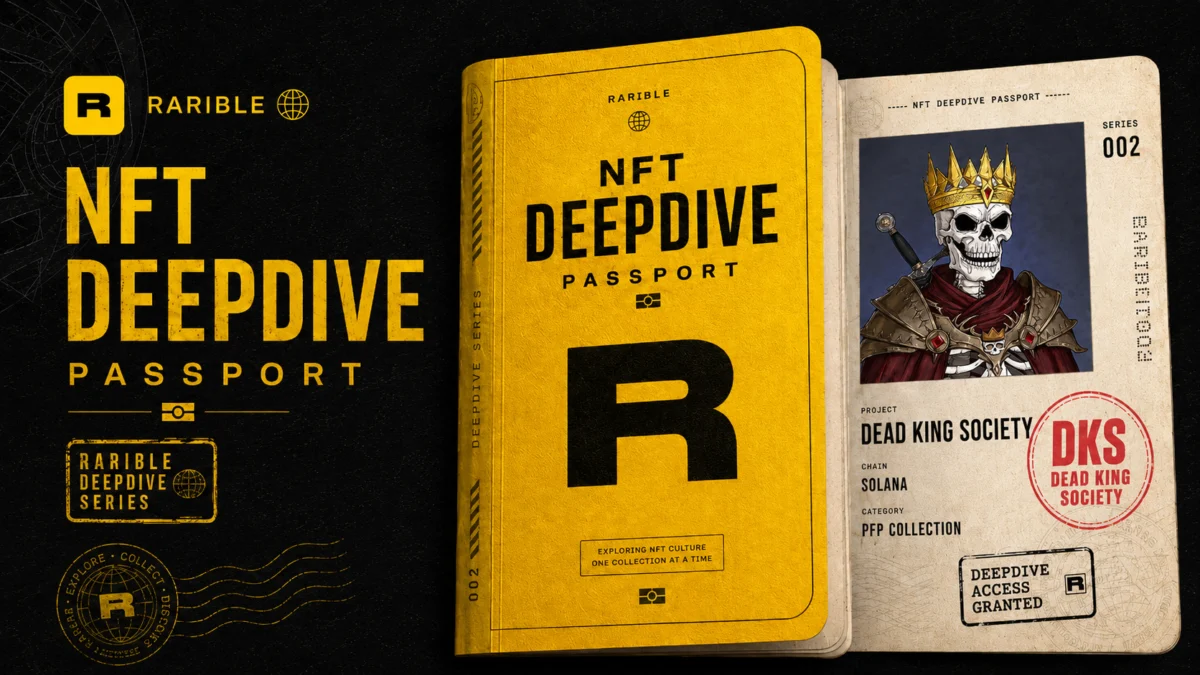
The digital asset ecosystem has evolved far beyond the speculative, high-volume profile picture (PFP) crazes of its early years, giving rise to tightly curated, membership-driven micro-economies. Among the more resilient manifestations of this shift is the Dead King Society (DKS), a Solana-native NFT membership community and venture network established in 2021. Designed from inception to prioritize exclusivity, high-signal networking, and strategic venture-capital access over mass-market consumer appeal, DKS occupies a distinct niche in the Web3 landscape. Rather than functioning purely as digital art or a speculative asset, the project operates as a private digital club where ownership equates to membership in a specialized syndicate of founders, developers, traders, and investors. This comprehensive profile examines the origins, operational structure, market performance, and strategic trajectory of the Dead King Society, shedding light on how ultra-low-supply models continue to redefine value retention and community utility within the Solana ecosystem.
Project Snapshot and Structural Anatomy
To understand the operational mechanics of the Dead King Society, one must examine its tightly constrained supply dynamics and asset tiers. Launched with a mint price of 2 SOL, the core collection comprises a total of just 400 memberships split into two distinct tiers: 100 Dead Kings and 300 Nobles. The top-tier Dead Kings consist of animated, one-of-a-kind (1/1) NFTs that grant exclusive entry to private governance channels and direct participation in early-stage investments orchestrated through Dead King Ventures. The entry-level Nobles comprise 300 static 1/1 NFTs, providing holders with access to the broader community infrastructure—collectively known as The Commonwealth—alongside exposure to selected private investment opportunities.
Publicly available data identifies Turnt Up Dylan, also known as Dylan Santamarina, as the founder of the project, with Justin serving as a co-founder. Market activity for the collection is primarily concentrated on Magic Eden, with floor prices and historical metrics additionally tracked by data platforms such as CoinGecko and SolanaFloor. Market indicators highlight significant resilience within the ecosystem; as of June 2026, the floor price for Dead King Society Nobles hovered around approximately 8.03 SOL (roughly $589 USD), marking steady multi-month gains across 30-day, 60-day, and annual tracking periods. Notably, the collection reached an all-time high floor price of approximately 31.42 SOL—equivalent to roughly $8,462 USD—on January 24, 2025, during a period of heightened market activity on the Solana blockchain.

Origins, Evolution, and the Commonwealth Ethos
The inception of the Dead King Society predates the major macroeconomic and structural resets experienced by the Solana blockchain, notably the network-wide recovery following the late-2022 FTX collapse. While many contemporaneous NFT initiatives launched as art-first projects with speculative roadmaps and nebulous utility promises, DKS adopted an inverted model. The community and access layers were built as the core product from day one, with the artistic identity serving as a visual badge of membership rather than the sole driver of value.
Central to this dynamic is The Commonwealth, the conceptual and operational framework governing holder interactions. DKS explicitly discourages passive speculation among its ranks, framing participants instead as digital asset partners. Holders are expected to contribute tangible value to the collective through thought leadership, technical expertise, strategic relationship-building, and collaborative venture creation. This structural philosophy shifts the psychological burden of project sustainability away from centralized developers and onto the collective intelligence and capital of the holder base itself. Consequently, the project’s longevity is less dependent on public marketing campaigns and more reliant on the internal deal flow and professional synergies generated among its members.
Recent Developments and Ecosystem Expansion
In recent years, the Dead King Society has actively reinforced its positioning as a venture-aligned ecosystem rather than a standard secondary-market art collective. A notable milestone occurred in December 2025, when DKS participated as an institutional investor in the seed funding round of Asgard Finance. This move concretely demonstrated the project’s capacity to deploy collective capital into early-stage Solana protocols, bridging the gap between NFT token-gating and traditional Web3 venture capital.

Parallel to its external investment activities, the project has heavily emphasized internal engagement mechanisms. Among the most prominent of these is Prestige, a proprietary member-recognition and leaderboard system designed to gamify contribution and community participation. Members accrue Prestige through consistent social engagement, creation of digital or physical goods, and the successful completion of community bounties.
The emphasis on tangible status and physical culture was underscored in May 2026, when DKS publicly celebrated a top-ranking Prestige Leaderboard winner by awarding them a custom-engraved physical DKS sword. This initiative exemplifies the project’s strategy of rewarding active participation with real-world artifacts, reinforcing member loyalty and elevating the internal prestige economy independently of fluctuating secondary floor prices.
Roadmap, Strategic Vision, and Future Outlook
Unlike consumer-facing NFT projects or blockchain gaming ecosystems driven by expansive public roadmaps and product release schedules, the trajectory of the Dead King Society remains focused on network density and strategic refinement. According to project documentation and ongoing operational updates, the core pillars of the DKS roadmap involve continuous optimization of The Commonwealth, expansion of the Prestige engagement layer, scaling Dead King Ventures, and extending the project’s lore through targeted art and variant drops.
The commitment to maintaining an ultra-low, curated membership supply acts as a double-edged sword. On one hand, it successfully safeguards the exclusivity of the community, prevents dilution of member benefits, and fosters high-trust relationships among participants. On the other hand, it inherently limits secondary-market liquidity and restricts mainstream visibility, making the collection less accessible to casual retail participants.
Industry analysts observing niche Web3 communities note that while projects with low visibility and thin trading volumes face liquidity constraints during broader market downturns, they often exhibit superior durability compared to high-supply alternatives. Because the intrinsic utility of DKS is tethered directly to the professional networks and investment pipelines accessible exclusively to holders, its long-term viability is insulated from short-term retail sentiment cycles.
Broader Implications for Web3 and NFT Utility
The sustained operation of the Dead King Society offers valuable insights into the maturation of the NFT asset class. As the digital asset sector moves past the era of unbridled PFP speculation, projects are increasingly judged by their ability to generate real-world utility, foster proprietary deal flow, and build self-sustaining sub-economies.
By functioning essentially as an exclusive venture syndicate wrapped in digital token-gated credentials, DKS demonstrates a viable blueprint for niche communities operating on high-throughput networks like Solana. The success of the model suggests that future iterations of digital membership clubs will likely lean further away from public consumer marketing and focus deeper into private networking, capital formation, and peer-to-peer economic empowerment. For the members of the Dead King Society, the value proposition remains clear: ownership is not merely about holding a digital image, but holding a designated seat at a private table within the broader architecture of the Web3 economy.

