
U.S. federal law enforcement agencies are aggressively expanding their investigation into the prolific cybercrime collective known as ShinyHunters. This intensified scrutiny follows a daring late-September breach of the FBI’s recruitment portal, fbijobs.gov, which compromised sensitive personnel records. As investigators delve into the mechanics of the attack, they have uncovered unprecedented intersections between cyber extortionists and the legitimate cybersecurity industry. Sources close to the probe reveal that executives at two distinct ransomware negotiation and remediation firms maintained extraordinarily close relationships with the hackers. In one instance, a U.S.-based corporate executive allegedly assisted in operating a specialized pressure portal designed to force victim organizations into paying multi-million-dollar ransoms.
The widening federal probe highlights a darker, less-discussed underbelly of the cyber incident response ecosystem. While reputable cybersecurity firms assist victims with resilience and recovery, the fluid boundaries of ransomware negotiation have increasingly attracted regulatory scrutiny. Federal prosecutors and cybersecurity watchdogs are now confronting a systemic vulnerability: the presence of insider threats and misaligned financial incentives within organizations hired to protect distressed companies.
The Evolution and Reign of ShinyHunters
To understand the current scale of the federal investigation, one must examine the trajectory of ShinyHunters. Active since 2019, the hacking group initially operated primarily out of France, executing high-profile database thefts that targeted major corporate brands. As international law enforcement chipped away at the core group through targeted arrests and extraditions, leadership transitioned. Control over the ShinyHunters brand eventually fell to a young hacker operating under the alias “Rey,” who was unmasked by security researchers as a teenager residing in Amman, Jordan.

Under Rey’s leadership, the syndicate professionalized its extortion operations. According to FBI assessments, ShinyHunters has successfully extorted upwards of $70 million from global victims over the course of the year. Their tactics evolved from simple data exfiltration and public shaming blogs on the Tor network to sophisticated multi-tiered pressure campaigns.
The turning point for the current federal crackdown occurred on September 28, when ShinyHunters compromised fbijobs.gov. The hackers taunted the bureau by threatening to release highly sensitive internal files, including psychological evaluations, Social Security numbers, home addresses, and specialized unit assignments. This direct assault on federal infrastructure spurred an immediate and aggressive law enforcement response.
Chronology of the Crackdown and Arrests
The rapid succession of international law enforcement actions over the past two months illustrates a coordinated, cross-border effort to dismantle the ShinyHunters network:
- Mid-September 2026: Dutch authorities execute a high-impact tactical raid, utilizing flash-bang grenades to apprehend reformed hacker and ShinyHunters suspect Pepijn van der Stap on September 15. Police seize his active Signal messaging session, capturing real-time communications with ransomware negotiators in North America.
- Early October 2026: Investigative reporting and intelligence leaks reveal that Van der Stap’s encrypted chats contained discussions regarding an alleged foreign murder-for-hire plot, though no attacks were executed. Concurrently, Jordanian authorities detain "Rey," who reportedly begins cooperating with the FBI.
- October 7, 2026: The U.S. Department of Justice charges Zohar Pinhasi, CEO of Florida-based MonsterCloud, with wire fraud and conspiracy for allegedly double-crossing clients by secretly paying hackers millions behind their backs while inflating remediation bills.
- October 9, 2026: The FBI arrests 54-year-old Canadian cybersecurity executive Edward Dubrovsky, charging him with threatening to disclose hacked data and interfering with interstate commerce through extortion. Court records indicate prosecutors have sought his detention pending trial under a sealed docket.
- October 16, 2026: The domain shinywire[.]com, which acted as a primary extortion hub for nearly 100 corporate victims, goes permanently offline following pressure from international law enforcement operations.
The Nexus of Ransomware Negotiation and Extortion

The arrest of Edward Dubrovsky exposed critical vulnerabilities in how private-sector incident response firms handle cyber attacks. According to sources familiar with the investigation, forensic analysis of Pepijn van der Stap’s seized Signal accounts demonstrated that Dubrovsky—author of a recent book advocating for constant engagement with cyber extortionists—communicated regularly with the Dutch hacker. Crucially, records indicate these communications often preceded the victims’ own knowledge of being breached.
Furthermore, investigators discovered that Dubrovsky was aware ShinyHunters had penetrated FBI infrastructure yet failed to notify federal authorities before the group publicly threatened the bureau on social media. These revelations have cast a harsh spotlight on the practices of third-party negotiators.
The investigation also brought to light the mechanics of "Shinywire," a defunct extortion platform active from May to October 2026. The website listed nearly 100 victim organizations—including American medical technology firm Intuitive Surgical, which was breached via a targeted phishing campaign in March 2026. Shinywire featured samples of stolen data, a countdown timer, and explicit ultimatums demanding payment before sensitive corporate files were published on Tor-hosted leaks sites. Investigators believe at least one executive at a prestigious U.S. consulting firm with over 1,000 associates played an active operational role in maintaining this portal, though formal charges have not yet been filed.
Industry Conflicts of Interest and Regulatory Backlash
The intersection of private security consulting and illicit cyber operations has long concerned compliance experts. Unlike organizations struck by groups sanctioned by the U.S. Department of Treasury’s Office of Foreign Assets Control (OFAC), victims of ShinyHunters are not legally barred from paying ransoms. However, the financial architecture surrounding ransom payments creates profound conflicts of interest.

Mark Camillo, chief executive of CyberAcuView—an industry group established by major cyber insurance carriers—pointed out that many negotiation firms operate on a contingency fee model, charging a percentage of the final ransom payout.
"This makes no sense if they are also the negotiator," Camillo stated, noting that firms operating on percentage-based models possess an inherent incentive to inflate ransom demands and discourage pushback against threat actors. "There needs to be more transparency in the process, as no one in the ecosystem should be profiting purely on the size of the ransomware transaction."
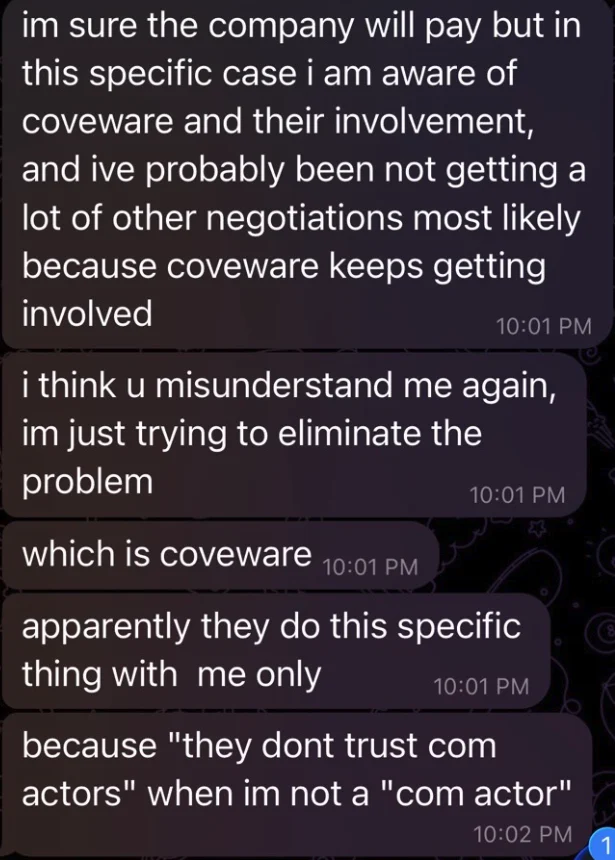
These conflicts have drawn the ire of actual criminal syndicates as well. Internal Telegram messages leaked from ShinyHunters channels reveal intense frustration directed at prominent incident response firms like Coveware and Unit 221B. In April and May 2026 chats, ShinyHunters leadership complained that Coveware’s public guidance—which consistently advises victims against paying ransoms because threat actors frequently retain and resell data anyway—was actively destroying their profit margins. The cybercriminals went so far as to discuss ways to "eliminate the problem" posed by firms discouraging payments.
Broader Implications for Corporate Cyber Defense
The unfolding scandal surrounding ShinyHunters, Edward Dubrovsky, and the alleged operational ties to extortion infrastructure marks a watershed moment for the cybersecurity industry. For years, the incident response market operated largely in the shadows, balancing client confidentiality with the pragmatic reality of cyber extortion.

The revelation that elite consultants may have crossed the line from negotiators to active co-conspirators threatens to erode trust between corporate boards and the security vendor ecosystem. Insurance providers are already re-evaluating panel vendor requirements, demanding clearer disclosures regarding cryptocurrency handling fees, transaction margins, and negotiation methodologies.
As the Department of Justice continues its aggressive prosecution of rogue negotiators—highlighted by recent actions against MonsterCloud CEO Zohar Pinhasi and Florida negotiator Angelo Martino—the message to the cybersecurity sector is clear. Regulatory and law enforcement bodies are no longer viewing third-party negotiators as neutral intermediaries, but as potential vectors for criminal conspiracy. For corporate victims navigating the nightmare of a major data breach, the imperative moving forward will be rigorous vetting, absolute transparency, and a renewed commitment to cryptographic resilience over capitulation to extortion.

