
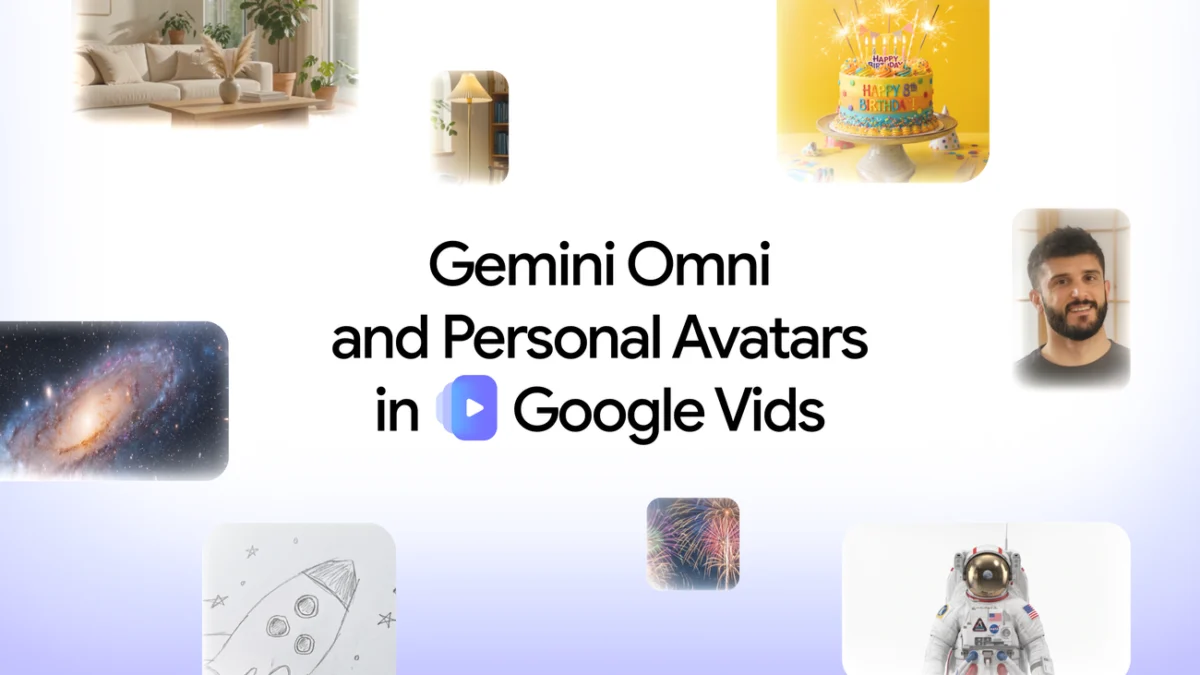
Google has officially announced a significant expansion of its video creation platform, Google Vids, by integrating the advanced multimodal capabilities of Gemini Omni and introducing a new personal avatar feature. These updates, revealed by Product Manager Justin Luk, are designed to streamline the production of high-quality video content for professional and personal use, moving the needle from manual editing to an AI-driven, conversational workflow. By leveraging natural language processing and sophisticated digital twin technology, Google aims to democratize video production within the enterprise environment, allowing users to generate, refine, and star in videos without requiring specialized hardware or extensive technical expertise.
The Integration of Gemini Omni: A Shift to Conversational Editing
The cornerstone of the latest update is the implementation of Gemini Omni within the Google Vids interface. Gemini Omni represents a leap forward in multimodal artificial intelligence, capable of processing and generating content across different formats—text, image, and video—simultaneously. For Google Vids users, this means the process of creating a video draft is no longer dependent on templates alone. Instead, users can initiate a project using a simple text prompt.
The system allows for "multimodal input," where a user can provide a written description of their desired scene and supplement it with reference images, such as a photograph of a specific product or a hand-drawn sketch of a layout. Gemini Omni analyzes these varied inputs to synthesize a cohesive video clip that aligns with the user’s creative vision. This functionality addresses a common pain point in creative software: the gap between a conceptual idea and the technical execution required to visualize it.
Beyond initial generation, Gemini Omni introduces a "chat to edit" functionality. This feature allows for iterative refinement through natural language. Traditionally, editing a video clip—adjusting the lighting, swapping a background, or adding specific visual effects—required navigating complex timelines and layers. With the new update, users can simply type instructions such as "make the lighting warmer" or "replace the office background with a modern studio setting." Because the AI supports step-by-step modifications, these changes can be applied to both AI-generated clips and footage uploaded from external devices, such as a smartphone, without the need to restart the rendering process from scratch.
Personal Avatars: The Emergence of Digital Twins in Corporate Communication
Perhaps the most visually striking update is the introduction of personal avatars. This feature allows users to create a digital representation of themselves that can deliver scripted messages. The creation process is designed to be accessible: a user uploads a high-quality selfie and a short audio recording of their voice. From these inputs, Google’s AI constructs a digital twin that mimics the user’s likeness and vocal characteristics.
Once the avatar is generated, the user no longer needs to appear on camera to produce new content. By simply typing a script into Google Vids, the personal avatar will "perform" the text, complete with synchronized lip movements and naturalistic expressions. This tool is positioned as a solution for busy professionals who need to provide frequent video updates, personalized shout-outs, or training modules but lack the time or resources for a full video shoot.
To maintain security and prevent misuse, Google has implemented several safeguards for the avatar feature. Access is currently restricted to users aged 18 and older in specific geographic regions. Furthermore, the personal avatar is strictly linked to the individual’s Google Account, ensuring that the technology can only be used to represent the verified account holder’s own likeness. This prevents the unauthorized creation of digital twins of colleagues or public figures within the platform.
A Chronology of Google Vids and AI Evolution
The release of Gemini Omni and personal avatars is the latest milestone in a rapid development cycle for Google’s video efforts. Google Vids was first introduced as a new addition to the Google Workspace suite, designed to sit alongside established tools like Docs, Sheets, and Slides. The objective was to recognize video as a primary medium for modern business communication, equal in importance to the written word or data spreadsheets.
In February, Google took its first major step toward AI-integrated video by rolling out Veo 3.1 to all Vids users. Veo, Google’s advanced video generation model, provided the foundational ability to create cinematic clips from text. The transition to Gemini Omni represents an evolution from "generation" to "intelligent collaboration," where the AI acts less like a static tool and more like a creative assistant capable of understanding context and executing complex edits through conversation.
This trajectory reflects a broader trend within Google to consolidate its various AI models under the Gemini brand, ensuring that every tool in the Workspace ecosystem benefits from the same high-level reasoning and multimodal capabilities.

Technical Infrastructure and Content Transparency
As generative AI becomes more prevalent, the industry has faced growing concerns regarding the authenticity of digital content. Google has addressed this by integrating SynthID into every video clip generated or edited via Gemini Omni. Developed by Google DeepMind, SynthID is an invisible digital watermarking technology that embeds information directly into the pixels of a video.
Unlike traditional watermarks, SynthID is imperceptible to the human eye and resistant to common editing techniques such as cropping, resizing, or color adjustments. This allows platforms and viewers to verify whether a piece of media was created or altered by AI. By embedding transparency into the workflow, Google is attempting to foster a responsible environment for AI creativity, providing a technical solution to the "deepfake" and misinformation challenges currently facing the digital landscape.
Market Context and Competitive Landscape
The updates to Google Vids arrive at a time of intense competition in the generative video space. Competitors such as OpenAI, with its Sora model, and specialized startups like Runway, Pika, and HeyGen, have all demonstrated significant breakthroughs in AI video production. However, Google’s strategy differs by focusing on the "enterprise-first" integration.
While other models focus on high-fidelity cinematic output for filmmakers, Google Vids is optimized for the workplace. By embedding these features directly into Google Workspace, the company is leveraging its existing massive user base. For a business already using Google Drive and Gmail, the ability to generate a training video or a project update within the same ecosystem is a significant convenience.
Industry analysts suggest that the "chat to edit" feature could be a major differentiator. While many AI models can generate a video, very few allow for the granular, conversational refinement that Gemini Omni promises. This could potentially reduce the reliance on external creative agencies for internal corporate communications, saving companies both time and budget.
Subscription Tiers and Global Availability
The new features are not available to all users immediately. Google has targeted its high-value segments for the initial rollout. Gemini Omni and the personal avatar tools are accessible to subscribers of the Google AI Pro and Ultra plans, as well as Google Workspace business customers.
This tiered approach reflects the high computational costs associated with generating video and running multimodal AI models. By gating these features behind premium subscriptions, Google is positioning Vids as a professional-grade tool rather than a casual consumer app. The regional limitations on personal avatars also suggest a cautious approach to varying global regulations regarding biometric data and AI-generated likenesses, particularly in markets like the European Union where AI governance is strictly enforced.
Broader Implications for the Future of Work
The enrichment of Google Vids with Gemini Omni and digital avatars points toward a future where "video literacy" is no longer a niche skill. As AI lowers the barrier to entry, the expectation for high-quality visual communication in the workplace is likely to rise.
From a productivity standpoint, the implications are vast. A human resources department could generate a library of personalized onboarding videos in a fraction of the time it previously took. Sales teams could send customized video pitches to hundreds of clients, each featuring a personal avatar addressing the recipient by name. In education, teachers could transform lesson plans into engaging video content without needing to master complex editing software.
However, this shift also prompts questions about the "human element" in communication. As digital twins become more lifelike and easy to deploy, the value of face-to-face or "live" video may shift, potentially becoming a premium form of interaction in an era of AI-mediated content.
Conclusion
The rollout of Gemini Omni and personal avatars marks a pivotal moment for Google Vids and the broader Google Workspace ecosystem. By simplifying the creation and editing process through natural language and providing users with digital versions of themselves, Google is making a clear bet that the future of work is video-centric. With the added security of SynthID and a focus on enterprise integration, the company is positioning itself as a leader in the responsible and practical application of generative AI. As these tools become more widely available, they are set to redefine how stories are told and information is shared across the global business landscape.

