
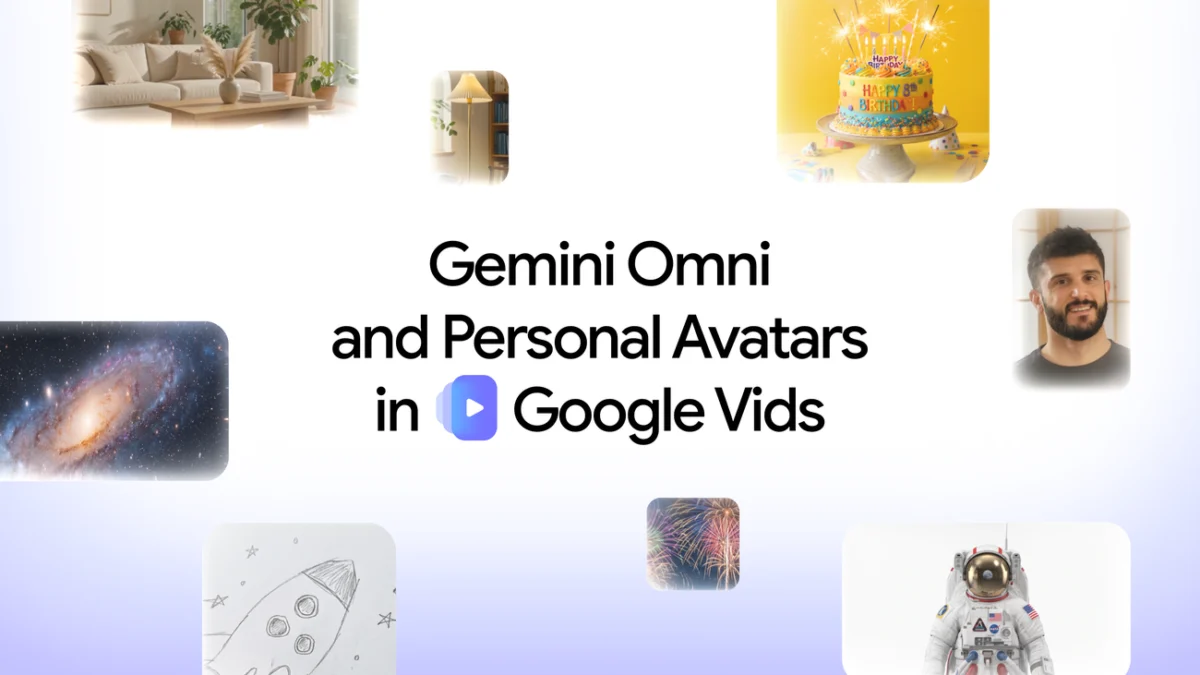
The landscape of corporate communication and digital content creation has shifted fundamentally with Google’s latest announcement regarding its video-first productivity application, Google Vids. In a significant expansion of its Workspace ecosystem, Google has integrated two transformative features: the Gemini Omni model and Personal Avatars. These updates are designed to democratize high-quality video production, allowing users to move from conceptual ideation to a finished, professional-grade video through the use of natural language prompts and personalized digital doubles. By leveraging the multimodal capabilities of Gemini Omni, Google Vids now offers a seamless bridge between text-based storytelling and visual execution, effectively removing the technical barriers that have historically sidelined non-creative professionals from the video production process.
The Evolution of Gemini Omni in Video Production
At the heart of this update is Gemini Omni, a sophisticated multimodal AI model that allows for a more intuitive interaction between the user and the software. Unlike traditional video editing suites that require a granular understanding of timelines, keyframes, and color grading, Gemini Omni operates through a "chat-to-edit" interface. This allows users to generate and refine video clips using everyday language. For instance, a user can start with a simple text prompt to generate a scene and then provide an image reference—such as a brand-specific photograph or a hand-drawn sketch—to ensure the AI matches a specific aesthetic or layout.
The "chat-to-edit" functionality represents a departure from the "one-and-done" generation model seen in earlier AI tools. Recognizing that creative work is iterative, Google has engineered Omni to support step-by-step refinements. If a generated clip requires a change in lighting, a different background, or the addition of specific visual effects, the user can simply describe the desired adjustment in a chat interface. The AI then modifies the existing project rather than forcing the user to regenerate the entire sequence from scratch. This persistence of project state is a critical requirement for professional workflows where precision and consistency are paramount.
Personal Avatars: Solving the Problem of On-Camera Presence
Perhaps the most visually striking update is the introduction of Personal Avatars. This feature addresses a common bottleneck in corporate video production: the time and resources required to record human presenters. Many professionals find the process of setting up lighting, sound, and teleprompters—or simply finding the time to be "camera-ready"—to be a deterrent to frequent video communication.
Google’s solution allows users to create a digital twin that looks and sounds like them. The setup process requires the user to upload a high-quality selfie and a short voice recording. From this data, the AI constructs a dynamic avatar capable of delivering scripted content. Once the avatar is created, the user only needs to type their message; the digital double then performs the speech with synchronized lip movements and natural-looking gestures. This technology is particularly aimed at internal communications, such as weekly department updates, personalized training modules, and executive announcements, where the presence of a familiar face enhances engagement without the logistical overhead of a traditional shoot.
Chronology of Google’s AI Video Ambitions
The rollout of Gemini Omni and Personal Avatars is the latest milestone in a rapidly accelerating timeline for Google’s generative AI efforts. To understand the significance of these updates, one must look at the trajectory of Google’s research and deployment:
- Late 2022 – Early 2023: Google Research begins showcasing early versions of Imagen Video and Phenaki, demonstrating the ability to generate short, low-resolution clips from text.
- December 2023: The introduction of the Gemini era marks a shift toward multimodal models that can process text, code, images, and video simultaneously.
- April 2024: Google officially announces Google Vids at the Cloud Next conference, positioning it as an AI-powered video creation app for work, integrated directly into the Workspace suite alongside Docs, Sheets, and Slides.
- February 2024 (and subsequent updates): The integration of Veo, Google’s most advanced video generation model, into Vids allows for higher-definition cinematic clips and better adherence to complex prompts.
- Late 2024: The current rollout of Gemini Omni and Personal Avatars represents the move from experimental "generation" to practical, user-controlled "production."
This timeline illustrates a strategic push to move AI from a novelty feature to a core component of the modern workplace tech stack.
Market Context and Supporting Data
The push toward AI-driven video is supported by emerging data regarding workplace productivity and communication preferences. According to recent industry reports, video content is increasingly becoming the preferred medium for internal training and knowledge sharing. A 2023 study on workplace communication found that employees are 75% more likely to watch a video than read documents, emails, or web articles. However, the same study noted that "lack of time" and "lack of technical skills" were the top two reasons why managers avoided creating video content.
By integrating these tools into Google Workspace—which boasts over 3 billion users—Google is positioning itself to capture the massive demand for "asynchronous video." As remote and hybrid work models remain standard, the ability to send a personalized video update that bypasses time-zone constraints is becoming a competitive necessity for global enterprises.

Safety, Transparency, and Ethical Considerations
With the rise of deepfake technology and synthetic media, the introduction of Personal Avatars and AI-generated video brings significant ethical responsibilities. Google has addressed these concerns through a multi-layered security and transparency framework.
Central to this framework is SynthID, a digital watermarking technology developed by Google DeepMind. Every video clip generated within Google Vids includes an invisible SynthID watermark embedded directly into the pixels. This watermark is designed to be undetectable to the human eye but remains identifiable by specialized detection software, even if the video is cropped, compressed, or edited. This ensures that any content produced via AI can be verified as such, mitigating the risk of misinformation.
Furthermore, Personal Avatars are strictly governed by identity verification protocols. The feature is currently restricted to users aged 18 and older in specific regions. Crucially, the avatars are linked to the user’s individual Google Account and are restricted to the account holder’s likeness. This "self-only" restriction is a deliberate choice to prevent the unauthorized creation of digital twins of colleagues or public figures, a move that distinguishes Google’s corporate-focused tool from more open-ended consumer AI platforms.
Industry Implications and the Competitive Landscape
The updates to Google Vids place Google in direct competition with specialized AI video startups such as HeyGen, Synthesia, and Runway, as well as established tech giants like Microsoft. Microsoft has been aggressively integrating its Copilot AI into the 365 ecosystem, including video-related features in Microsoft Clipchamp.
However, Google’s advantage lies in the deep integration of Vids within the broader Workspace environment. Because Vids can pull data from a user’s Drive, summarize a Google Doc into a script, and then use Gemini Omni to visualize that script, it creates a closed-loop productivity cycle. This integration reduces the "context switching" that often hampers productivity when users have to move between different platforms to complete a single project.
Fact-based analysis suggests that this move will likely force a shift in the corporate video production industry. Low-level production tasks—such as creating simple "talking head" videos or basic explainer clips—will likely be automated. This allows professional creative teams to focus on high-concept storytelling and complex cinematography, while everyday business users handle routine communication through AI-assisted tools.
Official Responses and Implementation
While the internal product team, led by Product Manager Justin Luk, has emphasized the ease of use and the "natural language" interface, the broader response from Google Workspace leadership highlights the goal of "making video as easy as a slide deck." The company’s strategy focuses on the concept of "AI as a collaborator" rather than a replacement for human creativity.
Currently, Gemini Omni and Personal Avatars are being rolled out to specific tiers of the Google ecosystem. Access is available to subscribers of Google AI Pro and Ultra, as well as Google Workspace business customers. This tiered rollout allows Google to monitor system performance and refine the AI models based on professional feedback before a potential wider release.
Broader Impact on Professional Communication
As these tools become ubiquitous, the standard for professional communication is expected to evolve. The ability to generate a high-quality video from a rough sketch or a short prompt means that visual literacy will become as important as written literacy in the corporate world. The "Personal Avatar" feature, in particular, may change the nature of leadership communication, allowing executives to maintain a high-frequency visual presence across global teams without the burnout associated with constant recording sessions.
In conclusion, the updates to Google Vids signify a major step toward the "generative office." By combining the multimodal intelligence of Gemini Omni with the personalized touch of AI avatars, Google is not just adding features to an app; it is redefining the medium of workplace communication. As SynthID ensures a level of accountability in this new digital frontier, the focus shifts to how users will harness these tools to tell more compelling, efficient, and personalized stories in a professional context.

