
The intersection of generative artificial intelligence and corporate data analysis is fundamentally altering the traditional workflow of business intelligence reporting. For decades, the transformation of raw spreadsheet data into executive-level slide decks has been a labor-intensive, manual process involving manual data cleaning, chart creation, and aesthetic formatting. With the emergence of specialized AI tools, such as the Julius AI presentation maker, organizations are transitioning toward a model where large language models (LLMs) act as intermediaries between raw Excel or CSV datasets and finalized PowerPoint presentations. This evolution is not merely a convenience; it is a significant shift in how data is synthesized for high-stakes decision-making.
The Evolution of Data Reporting Workflows
Historically, the "presentation gap"—the time elapsed between the finalization of data analysis and the creation of a polished slide deck—has been a source of inefficiency in corporate environments. According to industry surveys, middle managers and analysts spend approximately 20% to 30% of their work week on administrative tasks related to reporting, including formatting and slide creation.
The integration of AI into this process is designed to bridge this gap by automating the translation of quantitative insights into visual narratives. By leveraging tools like Julius, analysts can now upload complex multi-tab workbooks, perform iterative calculations, and request slide generation based on verified data points. This process replaces the fragmented workflow of switching between Excel for calculations and PowerPoint for design, effectively streamlining the production cycle.
Establishing a Methodological Framework for AI-Assisted Analysis
To ensure data integrity, industry experts recommend a structured five-step methodology when employing AI for reporting. This approach mitigates the risk of "hallucinations"—a common pitfall in generative AI where the system may misinterpret data or invent trends.
1. Defining Analytical Objectives
Before engaging an AI, the scope of the presentation must be defined. Whether the goal is a quarterly marketing review or an annual fiscal analysis, the AI requires a clear directive. For instance, instead of a vague prompt to "make a presentation," analysts are now utilizing specific queries regarding revenue attribution, channel performance, and budget efficacy. By establishing the "why" behind the report, the AI can prioritize data points that align with strategic leadership goals.
2. Data Validation and Verification
The integrity of the output is strictly dependent on the quality of the input. Modern AI tools are now capable of cross-referencing multiple sheets within a single workbook. Analysts are advised to instruct the AI to perform a preliminary "data audit"—flagging missing values, duplicates, or ambiguous headers—before any analytical work begins. This pre-analysis phase is critical; it ensures that the AI understands the context of the data, such as distinguishing between booked revenue, cash collections, and pipeline forecasts, which can significantly alter the interpretation of the results.
3. Iterative Computational Analysis
Once the data is validated, the AI can perform complex calculations. In a standard marketing review, this includes computing year-over-year growth, channel-specific contributions to revenue, and return on ad spend (ROAS). The crucial advancement here is the AI’s ability to provide the underlying formulas and source values for every calculation. This transparency allows for human-in-the-loop verification, where the analyst cross-checks the AI’s output against reference data or manual calculations to ensure accuracy before the deck is generated.
4. Translating Findings into Narrative Structure
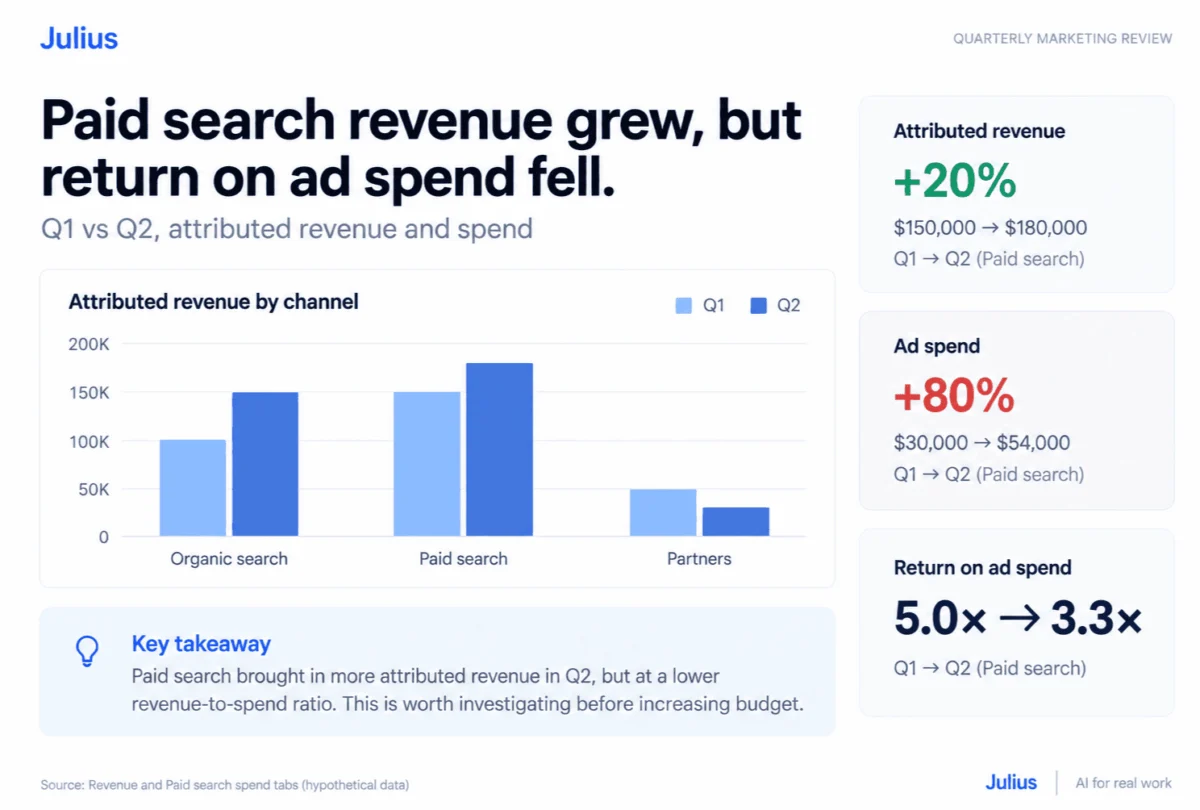
The transition from raw data to a presentation brief requires the AI to synthesize findings into actionable insights. This involves moving beyond descriptive statistics—such as simply stating revenue increased by 20%—to providing a critical analysis, such as noting that this increase occurred alongside an 80% rise in advertising spend. By prompting the AI to include these caveats, analysts ensure the final presentation is balanced and intellectually honest.
5. Technical Review and Final Refinement
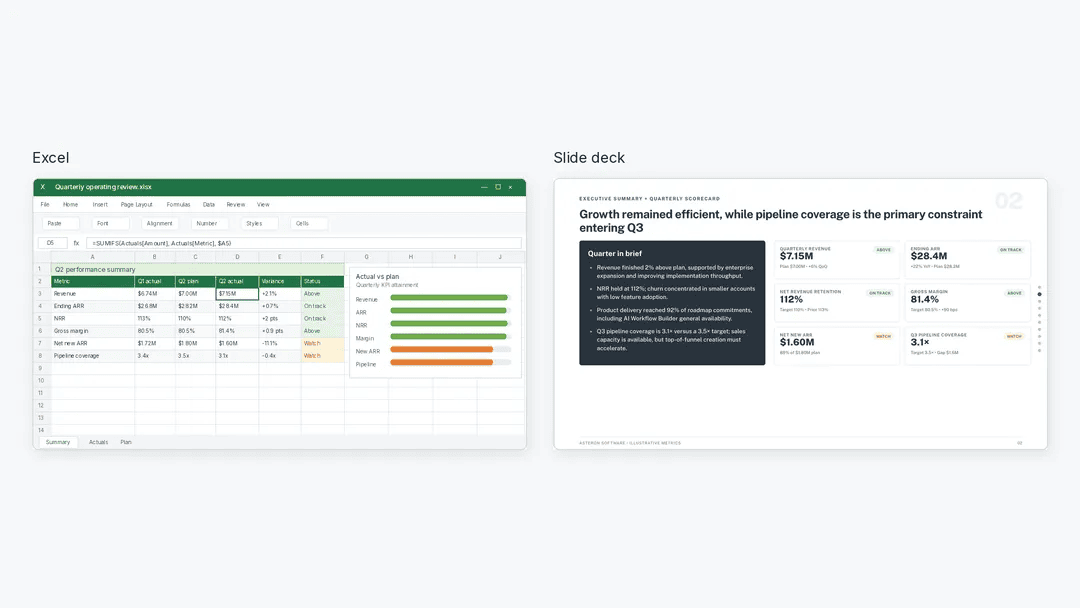
The final stage of the process involves exporting the AI-generated content into a standard PowerPoint format. While the automation handles the layout and initial chart rendering, the human analyst must perform a final quality control check. This includes verifying that chart labels are legible, brand guidelines are strictly followed, and that all data sources are properly cited on the slides.
Supporting Data: The Impact of Automation on Efficiency
The economic implications of this shift are becoming clearer. A recent study on productivity tools in the enterprise sector indicated that teams utilizing AI-integrated analytics saw a 40% reduction in the time required to prepare monthly board decks. Furthermore, the accuracy of these reports, when subjected to rigorous human oversight, remained consistent with traditional methods, while the breadth of data covered increased.
For example, in a scenario involving a quarterly marketing review, a standard manual approach might focus solely on topline revenue growth. An AI-assisted approach, however, can concurrently analyze channel performance, ROAS, and cost-per-acquisition trends, providing a more comprehensive view of the marketing ecosystem. This allows leadership teams to make more informed decisions regarding budget reallocation, as seen in the hypothetical case where a 20% revenue increase is tempered by a decline in return on ad spend, necessitating a strategic review of paid search expenditure.
Challenges and Ethical Considerations
Despite the advancements, the reliance on AI for data reporting is not without challenges. The primary concern among IT and data governance professionals remains the security of corporate data. Most reputable AI platforms now provide enterprise-grade security, including SOC2 compliance and zero-retention policies, ensuring that sensitive financial information is not used to train public models.
Furthermore, there is a risk of over-reliance on AI, where analysts may accept generated summaries without sufficient scrutiny. To combat this, best practices dictate that the AI should be used as a "co-pilot" rather than an autonomous actor. The responsibility for the narrative, the implications, and the final recommendations remains with the human expert.
Broader Implications for Business Intelligence
The democratization of data analysis, driven by these tools, is changing the skill set required for marketing and financial roles. While technical proficiency in Excel remains a baseline requirement, the ability to architect prompts and verify AI-generated insights is becoming the new standard for productivity.
As organizations continue to integrate these tools, the focus will likely shift from the mechanics of slide production to the strategy behind the presentation. If the AI can handle the "what" and the "how" of the data, the analyst is freed to focus on the "so what"—the strategic interpretation that drives company performance. The ability to present complex, multi-variable data in a coherent, professional format on short notice will become a competitive advantage in an increasingly fast-paced corporate environment.
In conclusion, the integration of AI into the data reporting lifecycle is a milestone in corporate productivity. By adopting a structured approach that prioritizes data verification and human oversight, organizations can leverage these tools to produce higher-quality, more data-driven presentations while reclaiming significant time for strategic initiatives. The future of reporting is not the total removal of human judgment, but rather the augmentation of human intellect with the rapid processing power of artificial intelligence.

