
OpenAI has officially deployed its latest iteration of generative artificial intelligence, GPT-5.6, signaling a continued commitment to high-frequency updates within its frontier model family. This release follows the success of GPT-5.5 and enters a highly competitive market currently contested by Anthropic’s Opus 4.8 and Fable 5 models. While OpenAI has positioned GPT-5.6 as an incremental advancement rather than a paradigm shift, early technical assessments suggest the model introduces significant refinements in code analysis, autonomous browser navigation, and variable reasoning architectures. The deployment arrives amidst a broader industry shift toward "inference-time scaling," where the quality of an AI’s output is directly linked to the amount of computational "thinking time" allocated to a specific query.
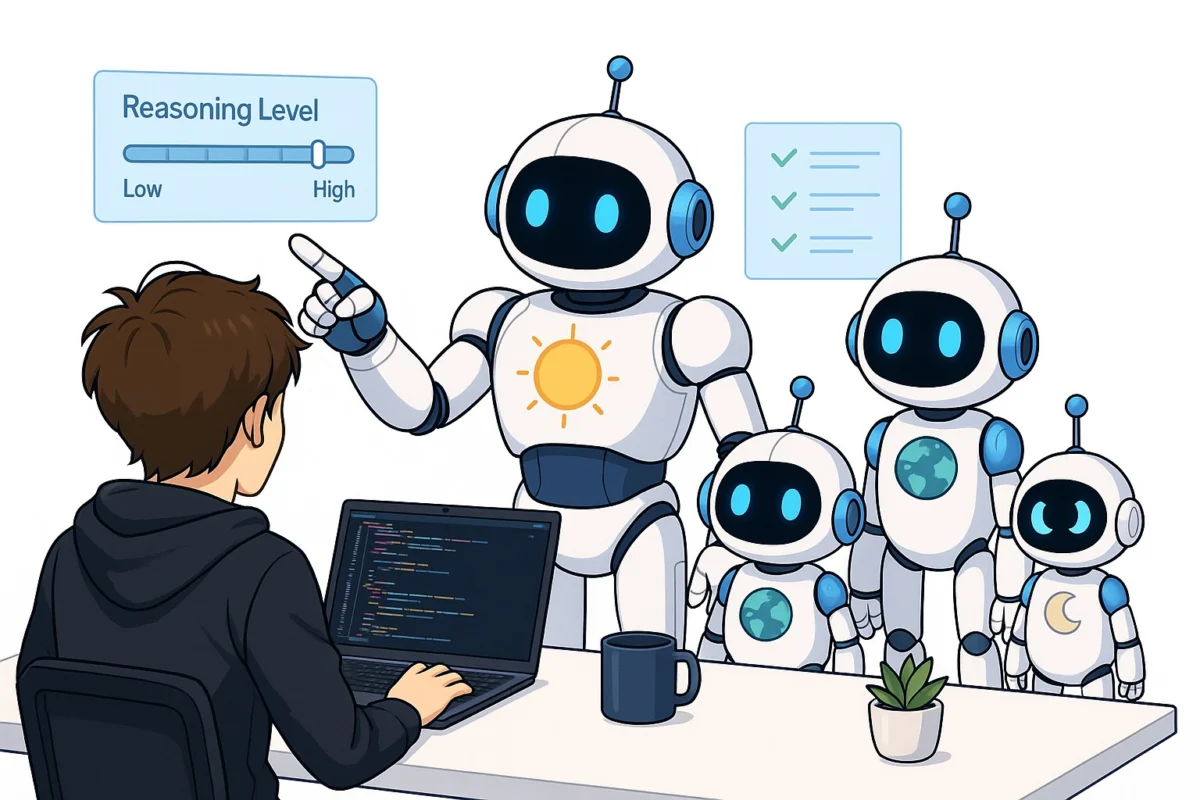
The development of GPT-5.6 comes at a critical juncture for OpenAI. Since the transition from the GPT-4 architecture to the GPT-5 series, the organization has focused on modularity and specialized performance. Industry analysts note that the rapid succession of versions—moving from 5.5 to 5.6 in a matter of months—reflects a "continuous delivery" philosophy intended to maintain a lead over Anthropic and Google. This latest model is not a monolithic entity but is instead offered in three distinct sizes, categorized by a celestial naming convention: Sol, Terra, and Luna. Sol represents the flagship frontier model designed for complex problem-solving, while Terra and Luna offer scaled-down parameters optimized for efficiency and lower-latency applications.
A core innovation within GPT-5.6 is the introduction of granular reasoning levels. Unlike previous models that operated at a fixed computational cost per token, GPT-5.6 allows users to select between various "thinking" intensities, ranging from medium to ultra-high. Technical documentation indicates that higher reasoning levels utilize extended chain-of-thought processing, allowing the model to self-correct and explore multiple logic paths before delivering a final response. However, this increased accuracy comes at the cost of speed and resource consumption. In practical applications, the "ultra-high" reasoning mode has been observed to be significantly slower than standard outputs, creating a strategic trade-off for developers and enterprise users.
In the domain of software engineering, GPT-5.6 has shown measurable improvements in code review precision and recall. Comparative data suggests that GPT-5.6 outperforms its predecessor, GPT-5.5, in identifying subtle logic flaws and security vulnerabilities within large repositories. Precision, the metric of how often the model is correct when it identifies a bug, and recall, the metric of how many total bugs the model successfully identifies, have both seen upward trends. This advancement positions GPT-5.6 as a primary tool for automated quality assurance, with some engineering firms reporting that the model’s oversight is now sufficient to bypass certain manual human review stages for non-critical infrastructure.
Despite these gains, the model’s performance in code implementation remains a point of comparative analysis. While GPT-5.6 is a robust implementer, industry benchmarks indicate that a multi-model workflow often yields superior results. Many high-level developers currently utilize Anthropic’s Fable 5 for initial architectural planning due to its perceived creative logic, before switching to GPT-5.6 or Opus 4.8 for the actual generation of code. This "best-of-breed" approach highlights the current fragmentation in the AI market, where no single model yet dominates every stage of the development lifecycle.
The integration of "Computer Use" and browser-based navigation is another pillar of the GPT-5.6 release. The model demonstrates an enhanced ability to interact with web interfaces, utilizing tools like Playwright and various Model Context Protocols (MCP) to perform end-to-end task verification. This capability allows the AI to not only write code but also to deploy it in a sandbox environment, navigate to a browser, and verify that the front-end elements are functioning as intended. This move toward agentic behavior—where the AI acts as an operator rather than just a text generator—is a significant step toward full workflow automation.

However, the high computational demands of GPT-5.6 have introduced new challenges regarding usage limits. Users on standard and professional subscriptions have reported that the "extra high" and "ultra" reasoning modes consume token quotas at an accelerated rate. To mitigate user frustration, OpenAI has introduced a "banked reset" system. Unlike traditional fixed-window resets, a banked reset allows users to manually trigger a quota refresh at a time of their choosing. While this provides flexibility for high-intensity work sessions, the system also resets the countdown for the subsequent window, effectively shifting the user’s billing and usage cycle. This reflects the ongoing struggle for AI providers to balance the high costs of inference-time scaling with the demands of power users.
From a market perspective, the release of GPT-5.6 is seen as a defensive and offensive move. OpenAI is defending its territory against Anthropic’s Opus 4.8, which has gained traction for its nuanced language understanding. Simultaneously, OpenAI is on the offensive by offering the Sol, Terra, and Luna tiers, which cater to different price points and performance needs. Statements from industry observers suggest that the "Terra" model, when paired with high reasoning levels, can occasionally match the performance of the "Sol" model at a lower base cost, though this remains a subject of ongoing benchmarking.
The broader implications of GPT-5.6 extend into the future of human-AI collaboration. As models become more capable of autonomous review and browser-based execution, the role of the human engineer is shifting from a "maker" to an "orchestrator." The ability to give the AI access to external tools—such as Gmail, Slack, and Google Calendar via MCP—further blurs the line between a chatbot and a digital employee. OpenAI’s decision to maintain compatibility with a wide range of connectors ensures that GPT-5.6 can be integrated into existing enterprise ecosystems with minimal friction.
In terms of chronological development, the GPT series has evolved from the broad-spectrum capabilities of GPT-4 to the specialized, reasoning-heavy architecture of GPT-5.6. This evolution is characterized by a shift away from simply increasing parameter counts toward optimizing how those parameters are utilized during the inference phase. The "thinking" time of the model is now a billable and adjustable commodity, representing a new era of "computational intelligence on demand."
As the AI industry moves forward, the success of GPT-5.6 will likely be measured by its reliability in production environments. While its incremental improvements in precision and recall are welcomed by the developer community, the high latency and cost associated with its most advanced reasoning modes remain hurdles for widespread adoption. Nevertheless, the model represents a clear advancement in the state of the art, providing a glimpse into a future where AI models are not only capable of generating content but are also capable of rigorous self-critique and complex environmental interaction.
The conclusion of the GPT-5.6 initial rollout marks a period of evaluation for tech leaders. The current consensus suggests that while GPT-5.6 is a formidable tool for code review and autonomous browser tasks, it is most effective when used as part of a broader suite of AI tools. The recommendation for enterprise users is to experiment with the different reasoning levels and model sizes to find the optimal balance between cost, speed, and accuracy. As OpenAI continues to refine its banked reset policies and reasoning architectures, the industry anticipates that the lessons learned from GPT-5.6 will directly inform the development of the inevitable GPT-6, which is rumored to be in the early stages of internal testing.
For now, GPT-5.6 stands as a testament to the rapid pace of AI innovation. It is a model that rewards technical proficiency and strategic implementation, requiring users to think critically about how they deploy AI rather than simply treating it as a universal solution. The competitive pressure from Anthropic and others ensures that this will not be the last update of the year, as the race for a truly autonomous and highly reasoning digital intelligence continues to accelerate.

