
The digital landscape is rapidly evolving, presenting new challenges to user authentication and privacy. With the increasing implementation of age verification laws and the pervasive growth of artificial intelligence, the need for robust, privacy-preserving authentication methods has never been more critical. This article delves into the concept of anonymous credentials, a cryptographic solution proposed to navigate these complexities while safeguarding individual privacy.
The fundamental challenge lies in the ubiquitous requirement for user authentication in the digital realm. From logging into websites to accessing online services, users are constantly compelled to prove their identity or authorization. Traditional methods like usernames and passwords, while common, are increasingly supplemented by multi-factor authentication (MFA) and passkeys, aiming to bolster security. However, the evolving regulatory environment and the economic incentives of data collection are pushing towards more intrusive forms of verification.
The Shifting Sands of Online Authentication
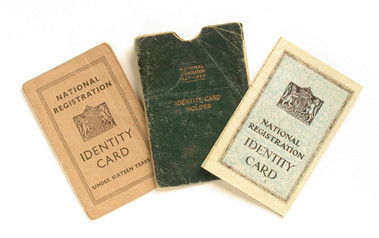
The internet of the past was often characterized by a more laissez-faire approach to authentication. Pseudonymous accounts and minimal checks were sufficient for many interactions, fostering a sense of casual online engagement. This began to change as advertising-driven business models recognized the immense value of granular user data, making personally identifiable information a lucrative asset.
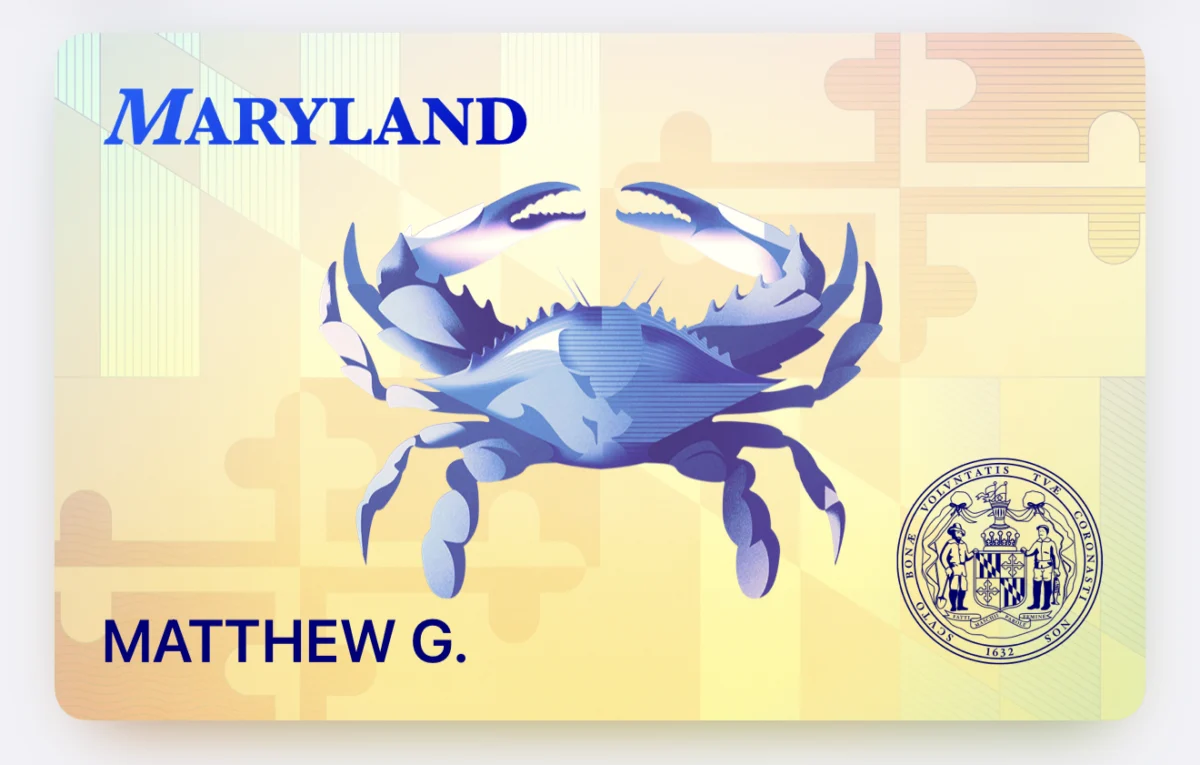
More recently, a significant impetus for stricter authentication measures has emerged from a wave of legislative efforts mandating age verification. As of 2024, approximately 25 U.S. states and over a dozen countries have enacted or are considering laws requiring websites to verify the age of their users before displaying content deemed "inappropriate." While initially conceived to curb access to explicit material, these regulations have broad implications, effectively introducing identity checks across a wide spectrum of online platforms that host user-generated content.
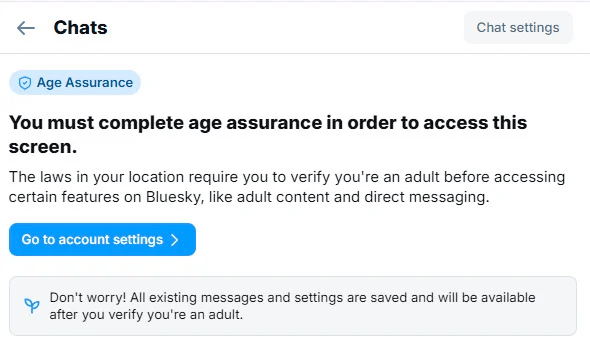
Social media giants like Facebook, X (formerly Twitter), and platforms such as BlueSky and Discord have begun implementing these age verification mechanisms. Even seemingly innocuous platforms like Wikipedia are facing pressure, as exemplified by the United Kingdom’s Online Safety Bill, which could compromise user anonymity in its pursuit of protecting children online. This trend signals a fundamental shift from pseudonymity to mandated identification.
The Privacy Peril of Routine ID Checks
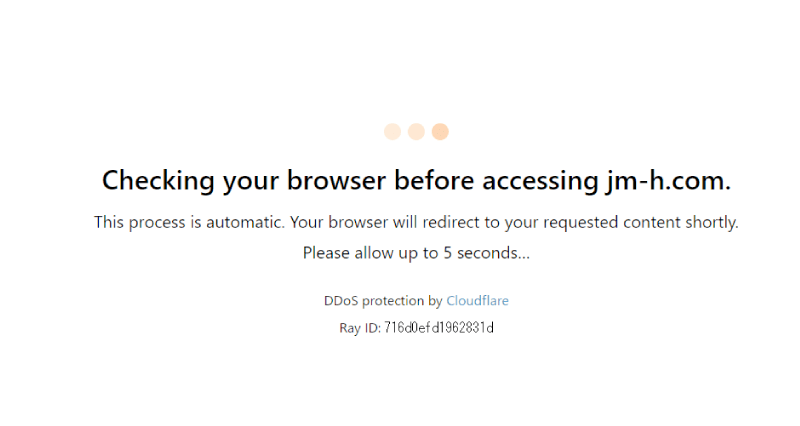
The widespread adoption of routine identity checks poses a significant privacy concern. Users may be compelled to present government-issued identification, creating the potential for a comprehensive digital transcript of their online activities, linked directly to their real-world identities. While some jurisdictions, like the UK, have provisions for data minimization, allowing websites to discard verification information after processing, these safeguards are not universally implemented or enforced. Moreover, the persistent financial incentive for advertising-supported platforms to retain valuable identity data, especially in an era of AI-driven bot mitigation, presents a formidable challenge to privacy.
This brings to the fore a critical question: how can individuals maintain their privacy in an environment where routine age verification and human identification are becoming the norm? The answer, according to cryptographic research, may lie in the concept of anonymous credentials.
Anonymous Credentials: The Cryptographic Solution
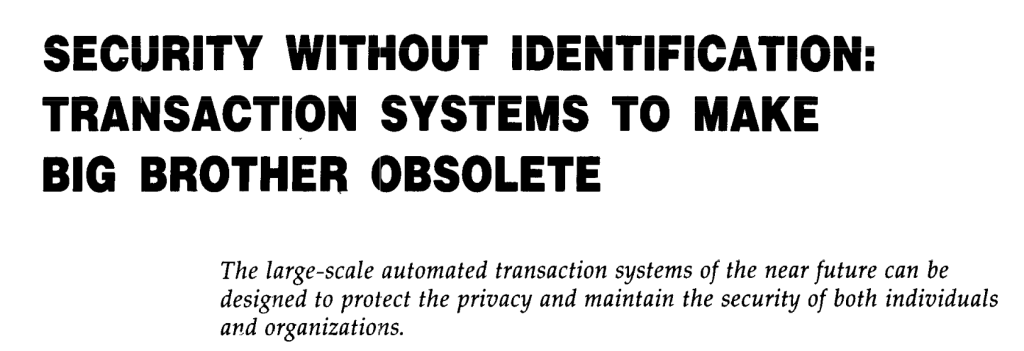
The foundational concept of anonymous credentials was first articulated by cryptographer David Chaum in the 1980s. Foreseeing a future where digital interactions would necessitate the presentation of electronic credentials, Chaum recognized the profound privacy risks associated with such a system. His proposed solution, the anonymous credential, aimed to decouple the act of proving eligibility from the revelation of one’s identity.
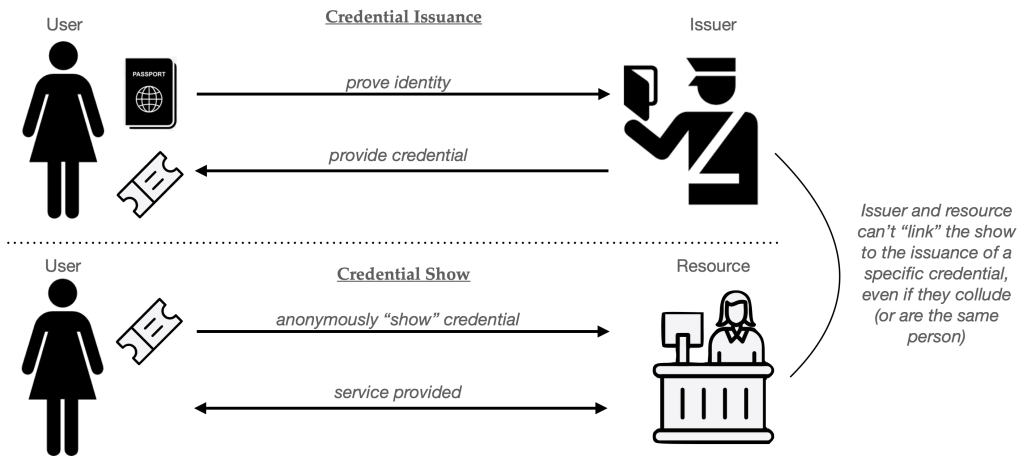
In a traditional, non-anonymous authentication flow, a user (Alice) obtains a credential, such as a cookie or a digital token, from a resource provider or a third-party issuer. This issuance process often requires Alice to reveal information about her real-world identity, such as payment details or government-issued ID. The problem arises when Alice needs to present this credential repeatedly to access various resources. Each presentation of an identity-linked credential creates a digital trail, allowing websites or advertising networks to meticulously link her online activities to her actual identity. This is a more invasive version of the current reality, where advertising companies amass extensive profiles of users’ browsing habits. The impending shift, however, is towards binding these online identities to names and government IDs, moving away from generic pseudonyms.
Chaum’s innovation was to break the direct link between the issuance and the usage of a credential. When Alice presents her anonymous credential to a resource, the resource should only learn that a valid credential has been presented, not which specific user owns it. Crucially, this anonymity must hold even if the resource colludes with or is the same entity as the credential issuer. The outcome is that Alice’s online activities remain unlinkable to her identity, allowing her to blend into the "anonymity set" of all users who possess valid credentials.
A popular analogy for this concept is the wristband system used at events. Upon verification of age or entry requirements at the door, an individual receives an unlabeled wristband. This wristband serves as proof of eligibility without revealing the individual’s name or other identifying details to subsequent vendors within the venue. The bartender, for instance, only needs to see the wristband, not the patron’s driver’s license, to serve them. This analogy highlights how a credential can convey specific attributes without disclosing the underlying identity.
The Challenge of Identical Credentials
A seemingly straightforward approach to achieving anonymity would be for the issuer to provide every user with an identical, indistinguishable credential. If every "show" of a credential is the same, then no single user can be uniquely identified. However, this digital anonymity is fundamentally undermined by the ease of digital replication. Unlike physical objects, digital credentials can be copied infinitely. If a hacker compromises a single credential, they can generate an unlimited number of duplicates, creating an army of seemingly legitimate bot accounts or enabling illicit activities, such as providing access to underage individuals.
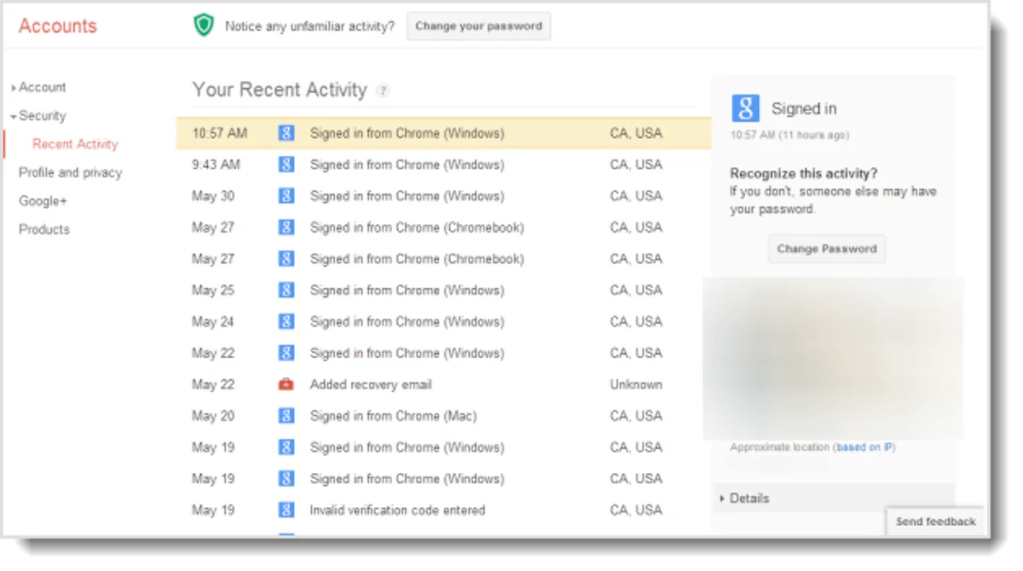
While credential cloning is also a risk with non-anonymous credentials like session cookies, detection mechanisms exist. Websites can monitor for unusual patterns, such as a single "user" logging in from multiple disparate locations or with excessive frequency, a practice known as continuous authentication. However, the inherent anonymity of anonymous credentials renders these detection methods ineffective. When every credential "show" appears identical, distinguishing between a flood of cloned credentials and a multitude of genuinely unique ones becomes impossible.
Mitigating Credential Cloning: The Need for Limitations
To ensure the practical viability of anonymous credential systems, mechanisms to limit credential duplication are essential. Several approaches have been developed to address this "clone wars" scenario:
- Single-Use Credentials: Each credential can only be used once, requiring the user to obtain a new one for each subsequent interaction.
- Time-Limited Credentials: Credentials have an expiration date, inherently limiting their lifespan and thus the window for potential theft and misuse.
- Count-Limited Credentials: Credentials can be used a fixed number of times (e.g., 100 uses) before expiring.
The academic literature on anonymous credentials explores various permutations and combinations of these strategies, all aimed at creating barriers to credential cloning.
Building a Single-Use Anonymous Credential
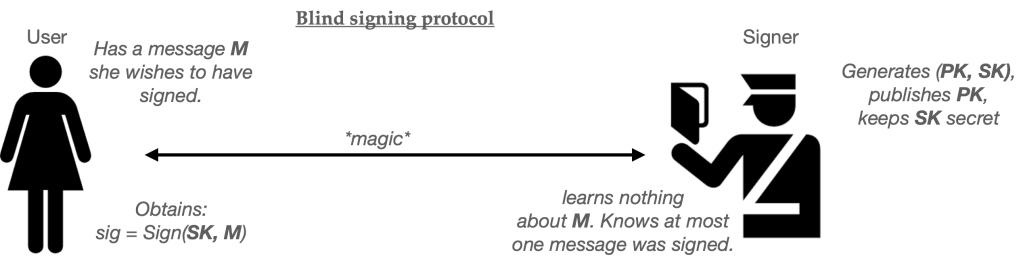
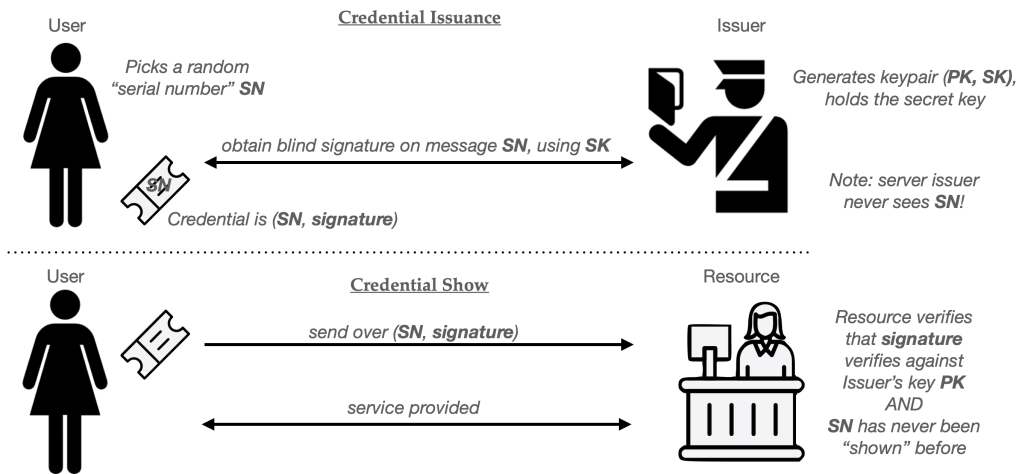
Chaum’s original proposal for anonymous credentials relied on a cryptographic primitive known as a blind signature scheme. Blind signatures are a form of digital signature that allows a user to have a message signed by a server without the server learning the content of the message it is signing. In this protocol, the user prepares a message, and through an interactive process with the server, obtains a signature on that message. The server knows it has signed a message, but not what that message is.
Using a blind signature scheme as a building block, a basic single-use anonymous credential can be constructed as follows:

- Issuance: The user (Alice) generates a unique, random serial number (SN). She then blinds this serial number and sends it to the credential issuer. The issuer, using their private signing key, signs the blinded serial number and returns it to Alice. Alice then unblinds the signed serial number, resulting in a valid signature on her original serial number (SN). This process ensures that the issuer has signed exactly one serial number, but does not know which specific one.
- Presentation: To "show" the credential to a resource (website), Alice presents the pair (SN, signature) along with a zero-knowledge proof that the signature is valid for that SN and that this SN has not been used before.
The resource can then verify the signature using the issuer’s public key and check its local database of previously seen serial numbers to ensure uniqueness. If there are multiple resources consuming these credentials, a centralized "bulletin board" or verification service can be employed to prevent reuse across different sites.
Protocols like PrivacyPass, which utilize blind RSA signatures, exemplify this approach. PrivacyPass also incorporates a "blind MAC" variant for scenarios where the issuer and resource are the same entity, enhancing performance.
However, single-use credentials, while effective for privacy, face limitations in terms of efficiency and expressiveness. For frequent online activities, such as replacing session cookies, users would need to acquire and present thousands of single-use credentials daily. While this could be mitigated by trading an initial anonymous credential for a pseudonym issued by the website, it compromises the anonymity of subsequent interactions.
The Power of Expressiveness: Beyond Simple Proofs
A more fundamental limitation of basic Chaumian credentials is their lack of expressiveness; they carry very little information. Consider the wristband analogy: it conveys a single bit of information – that the wearer is over 21. In many modern scenarios, more complex assurances are required.
Imagine a cryptocurrency exchange that needs to verify multiple attributes: residency in a specific country, absence of residency in a particular state, and an age above 25. A non-anonymous solution would involve presenting a digitally signed driver’s license containing all this information. However, this approach leaks extraneous data, such as the user’s home address, to the website.
An ideal solution would allow users to prove only the specific attributes required by the resource, without revealing any additional personal information. This is where zero-knowledge (ZK) proofs become invaluable. ZK proofs enable a Prover to demonstrate knowledge of a secret that satisfies certain constraints without revealing the secret itself.
In the context of credentials, a ZK proof can be used to:
- Prove possession of a digitally signed driver’s license.
- Demonstrate that specific fields within the license meet the required constraints (e.g., state of residency, age).
The zero-knowledge property ensures that the resource is convinced of the validity of the claims without learning any sensitive details beyond the satisfaction of those claims. This also addresses the efficiency issue of single-use credentials, as a single, re-usable credential can power multiple "show" protocol runs without linking them.
Winning the Clone Wars: Advanced Credential Management
While ZK proofs offer enhanced expressiveness and re-usability, they also reintroduce the cloning problem. A single compromised re-usable credential could be duplicated indefinitely, making detection difficult.
One optimistic approach, seen in proposals like Google’s new anonymous credential scheme, ties credentials to secret keys stored within secure elements on user devices. This theoretically makes duplication difficult. However, the security of such systems relies on the uniformity of secure element technology across a vast array of devices, a condition that is not currently met. The weakest link in the chain can compromise the entire system.
Therefore, alternative techniques are necessary to limit the utility of any compromised credential. These include:
- N-Time Use Credentials: These credentials can be "shown" a maximum of N times before expiring. This is achieved by incorporating a pseudorandom function (PRF) into the credential. Each use generates a unique serial number based on the PRF and a counter, preventing reuse.
- Time-Bound Usage: Credentials can be limited to a specific number of uses within a defined time period (e.g., 100 uses per day). This is accomplished by incorporating the current date into the PRF input.
Expiring and Revoking Credentials
Adding expiration dates to credentials is a straightforward way to limit their useful lifespan and reduce the probability of theft. This involves embedding an expiration timestamp into the credential, and users must prove that the current time is before this expiration.
Revoking anonymous credentials presents a more complex challenge. In non-anonymous systems, banning users is simple because they are identified. However, with anonymous credentials, identifying a user to ban them is inherently difficult. Despite this, several clever methods for revocation exist within the ZK framework:
- Banlist Mechanisms: When a user abuses a service, the resource can add a pair (a blinded serial number and the actual serial number) to a banlist. Subsequent credential presentations by the user require proving that their secret key does not generate a serial number matching any entry on the banlist for the corresponding blinded serial number. This adds computational overhead for the user, but is manageable if the banlist remains small.
The Future of Digital Identity
The exploration of anonymous credentials is a crucial step towards building a more private and secure digital future. While the technical intricacies of implementing these cryptographic primitives are substantial, the underlying principles offer a promising path forward. The ongoing development of real-world systems like PrivacyPass and emerging proposals from major technology companies suggest that anonymous credential technology is moving from theoretical research to practical application.
As the digital world continues to grapple with the tension between ubiquitous authentication and individual privacy, the adoption of anonymous credential systems will be a critical determinant of our ability to navigate this evolving landscape without sacrificing fundamental rights. The next phase of this evolution will likely involve a deeper examination of the practical deployment of these technologies, including the origin of digital identity certificates and their diverse applications.
(To be continued)

