
Recent days have seen a surge of attention from mainstream media outlets regarding the encryption protocols employed by WhatsApp, a departure from the usual discourse surrounding such applications. This heightened focus stems from a series of reports and a significant class-action lawsuit alleging that the widely-used messaging service may not be as secure as publicly represented, challenging its core end-to-end encryption claims. This development has ignited a debate that extends beyond the technical intricacies of cryptography, touching upon user privacy, corporate accountability, and regulatory oversight.
The controversy was significantly amplified by a class-action lawsuit filed by the prominent law firm Quinn Emanuel on behalf of several plaintiffs. The lawsuit directly challenges WhatsApp’s assertion of providing end-to-end encryption, alleging that private user data is, in fact, accessible through a specialized interface. While the legal filing does not explicitly detail a "special terminal on Mark Zuckerberg’s desk," it posits claims that, if substantiated, would represent a profound breach of user trust and a substantial deviation from the platform’s declared security posture.
This legal challenge has garnered attention from prominent figures in the technology sector. Notably, Elon Musk and Pavel Durov, both of whom operate competing messaging applications, have publicly commented on the allegations, further fueling the public discourse. The situation has escalated with reports from Bloomberg indicating that U.S. authorities are investigating Meta, WhatsApp’s parent company, based on these same claims. The weight assigned to these governmental investigations often depends on public perception of the Justice Department’s investigative capabilities and priorities.

The Genesis of the Allegations: A Legal Challenge to Encryption Claims
The core of the current controversy lies in a recently filed class-action lawsuit that questions the integrity of WhatsApp’s end-to-end encryption. The complaint, filed by Quinn Emanuel, asserts that despite WhatsApp’s public assurances of secure communication, the platform’s users’ private data is allegedly accessible to Meta. The lawsuit provides a PDF document detailing these allegations, which has been made available to the public.
While the legal document itself is the primary source of these specific claims, its lack of concrete, independently verifiable evidence has led to a polarized reaction online. Many users, already skeptical of Meta’s data handling practices, have readily accepted the allegations as fact. Conversely, others, while also distrustful of the tech giant, view the claims as unsubstantiated and potentially driven by competitive interests.
The Technical Landscape: Understanding End-to-End Encryption and WhatsApp’s Implementation
To contextualize these allegations, it is crucial to understand the principles of end-to-end encryption (E2EE) and how WhatsApp implements it. Instant messaging, a technology with roots stretching back to the 1990s and even earlier time-sharing systems, has undergone significant evolution. Two primary advancements have reshaped the landscape: an exponential increase in scale and a dramatic improvement in security, particularly through encryption.
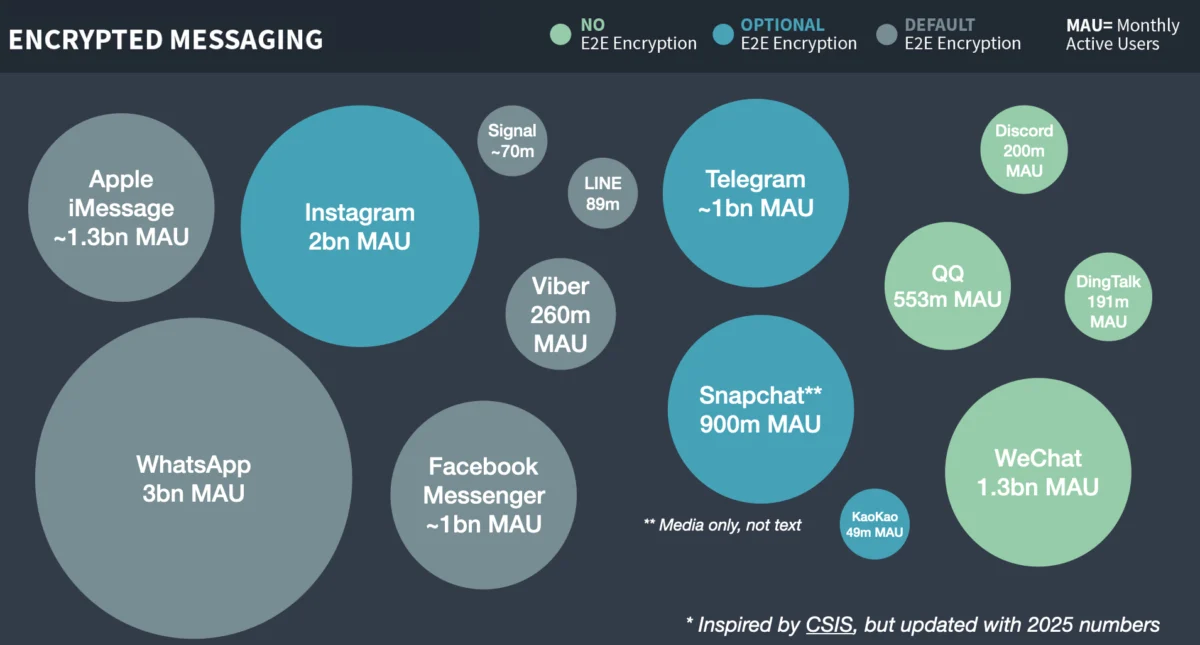
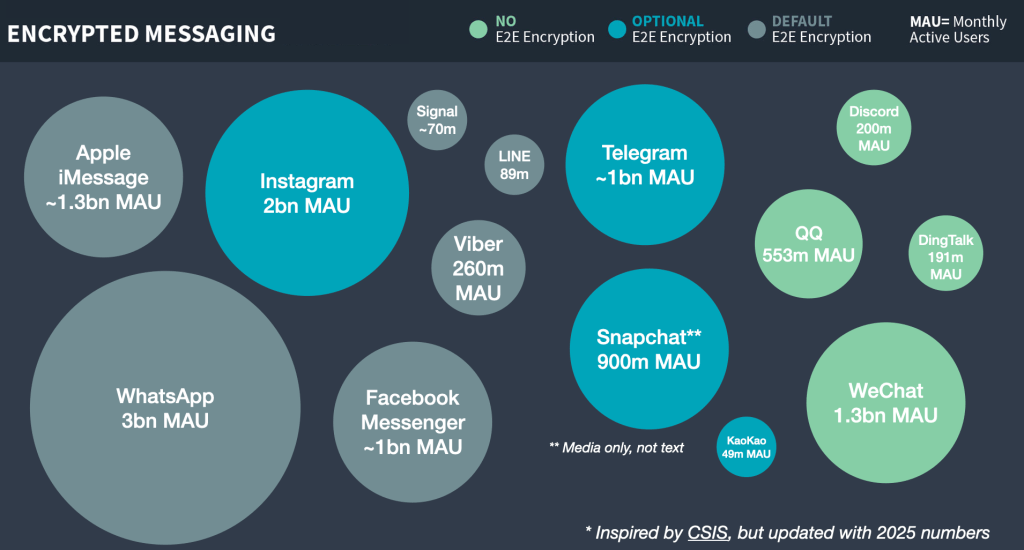
WhatsApp, at the time of the initial rollout of its encryption features, already boasted over one billion monthly active users. Today, that figure has swelled to approximately three billion users globally, representing nearly half of the world’s population. In numerous regions, WhatsApp has supplanted traditional phone calls as the primary mode of communication.
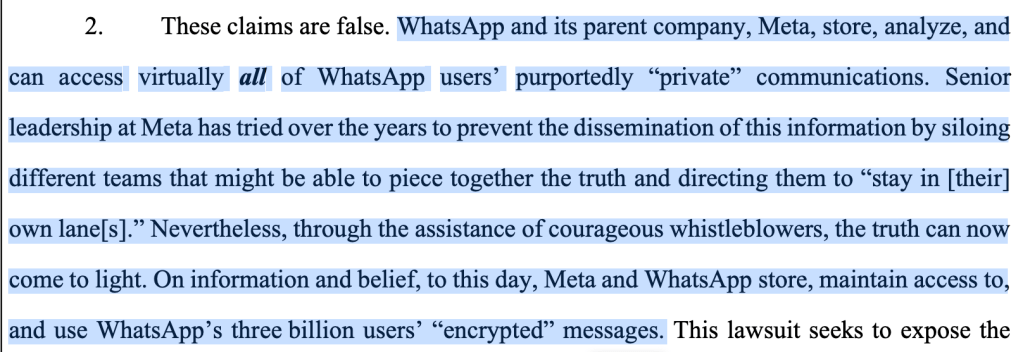
This immense scale, however, presents a significant challenge regarding data collection. Every message sent via WhatsApp is routed through Meta’s servers. In the absence of robust security measures, this architecture could facilitate the collection and long-term storage of vast quantities of user data. The risks are manifold: even if a user trusts their provider, sensitive information could be vulnerable to hackers, state-sponsored actors, or any entity capable of compelling access to Meta’s platforms.
To mitigate these risks, WhatsApp’s founders, Jan Koum and Brian Acton, adopted a strong stance on security. Following Facebook’s acquisition of WhatsApp in 2014, the company began implementing end-to-end encryption, primarily based on the Signal protocol. This protocol is designed to ensure that messages are encrypted both in transit and while stored on Meta’s servers. The critical aspect of E2EE is that the decryption keys reside solely on the users’ devices – the "ends" of the communication. This architecture theoretically prevents even Meta, or any entity compromising its servers, from accessing the content of user messages.
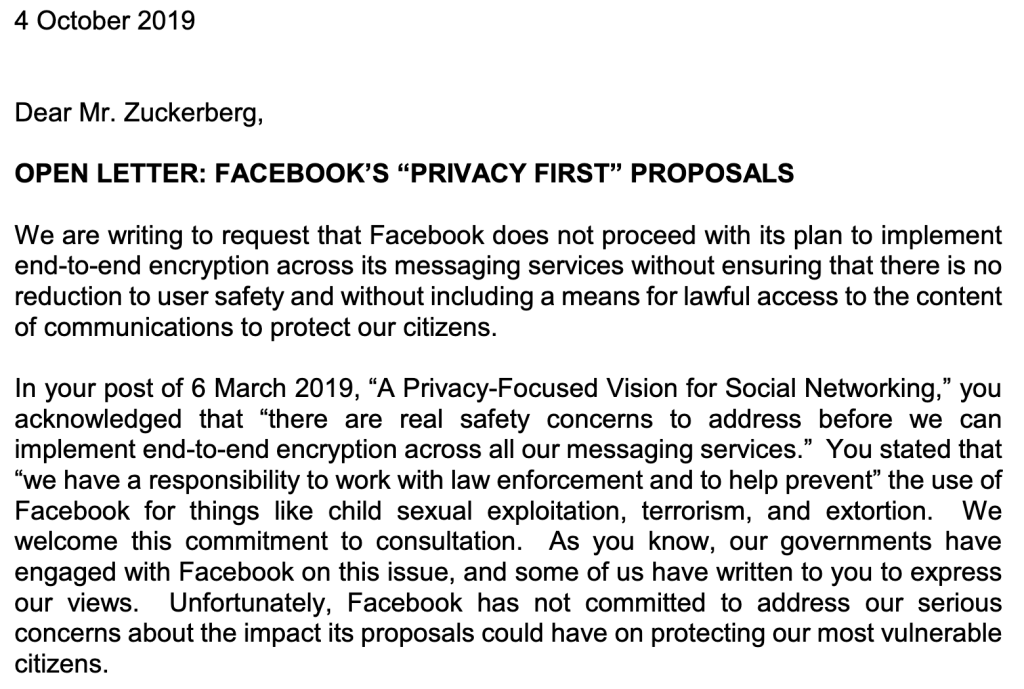
The widespread adoption of E2EE on WhatsApp was a monumental development. It not only aimed to prevent Meta from exploiting chat content for advertising or AI training but also generated considerable concern among governments worldwide. Many nations expressed apprehension about the inability to access encrypted communications, even with a warrant. This sentiment was articulated in a 2019 "open letter" from U.S. Attorney General William Barr and other international officials, urging Facebook to refrain from expanding E2EE without incorporating "lawful access" mechanisms.
Examining the Allegations: The Possibility of a Backdoor
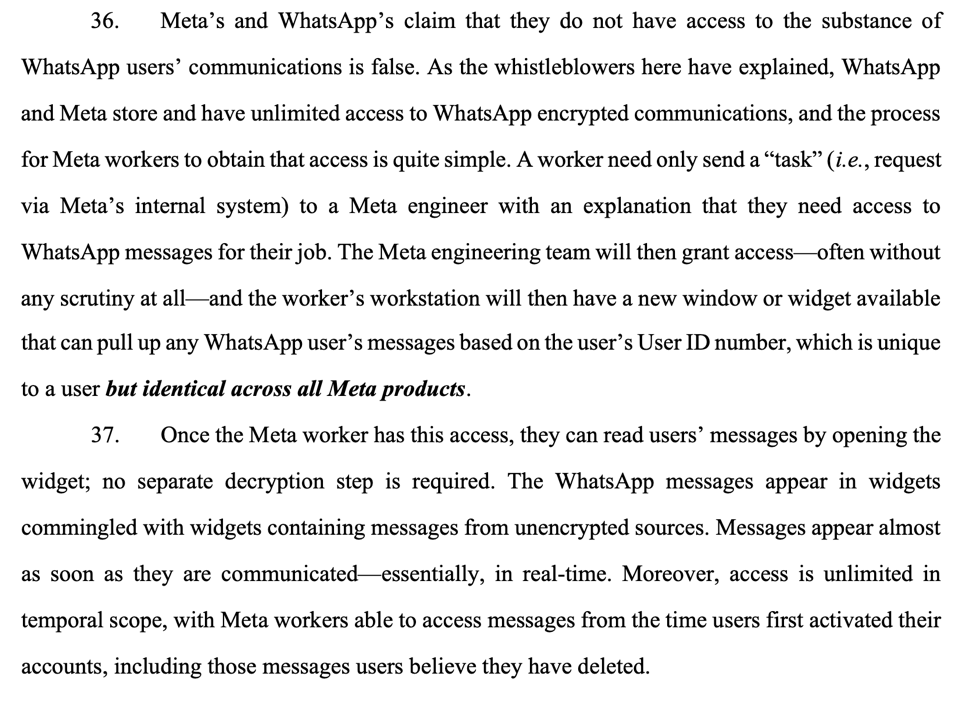
The central question arising from the lawsuit and subsequent media coverage is whether WhatsApp’s E2EE is genuinely effective or if a deliberate "backdoor" exists, allowing Meta to access message content. The architecture of E2EE relies on encryption occurring on the user’s device. This implies that only the sender and recipient possess the necessary keys for decryption.
A significant concern arises from the fact that WhatsApp is a closed-source application. Unlike open-source alternatives like Signal, which allow independent security experts to scrutinize the code for vulnerabilities or intentional weaknesses, WhatsApp’s proprietary nature necessitates a degree of trust in Meta’s implementation. While Meta claims to share its code with external security reviewers, the absence of routine public security audits means users are, to a degree, relying on the company’s integrity.
The lawsuit alleges that Meta has the capability to read user messages. If such a backdoor were in place, it would necessitate modifications to the WhatsApp application itself. Specifically, it would require the application to upload unencrypted data or decryption keys from the user’s device to Meta’s infrastructure. The lawsuit’s claims suggest this is not an occasional glitch but a systematic capability affecting a broad spectrum of users and messages.
Technically, if such a backdoor were implemented within the client application, it should be detectable through reverse-engineering the application’s code. Numerous historical versions of the compiled WhatsApp application are available for download, and these can be decompiled and analyzed by security researchers. While this is a complex and time-consuming process, it is feasible. Several security researchers have indeed undertaken such analyses of WhatsApp’s client code in the past, suggesting that evidence of a deliberate exfiltration of data or keys would likely be present within the application’s programming.
Clarifying Exceptions and Nuances in WhatsApp’s Security Model
It is important to distinguish the core allegations of the lawsuit from known limitations and features of WhatsApp’s security. Several online discussions have highlighted specific areas where WhatsApp’s encryption does not extend to all user data.
One such area involves business communications. When users engage in conversations with businesses through WhatsApp, these interactions are often not end-to-end encrypted in the same manner as personal chats. Both WhatsApp and the lawsuit acknowledge these exceptions, which are clearly outlined in the platform’s privacy policies. These exceptions primarily relate to metadata – information about who is communicating with whom, when, and the structure of social connections – rather than the content of personal messages.
Another point of discussion revolves around data backups. Users often opt to back up their chat histories to cloud services, allowing them to restore messages if they lose or replace their devices. However, these cloud backups are not always encrypted by default and can present a vulnerability if the backup service itself is compromised. WhatsApp’s backup system offers different options, and the security of these backups can vary depending on user configuration and the cloud provider’s security measures.
More recently, WhatsApp has been integrating AI features. If users opt into certain AI tools, such as message summarization or writing assistance, some content may be processed off-device using a system called "Private Processing," which leverages Trusted Execution Environments (TEEs). While WhatsApp asserts that this system is designed to protect plaintext data from Meta, it represents a newer development and is distinct from the historical context of the lawsuit’s allegations.
Crucially, these known exceptions and features, while significant for understanding WhatsApp’s overall data handling, do not directly support the lawsuit’s central claim that Meta possesses the ability to read the content of standard, end-to-end encrypted personal messages. The lawsuit posits a far more deliberate and insidious form of data access.
The Broader Implications: Trust in the Digital Age
The debate surrounding WhatsApp’s encryption touches upon a fundamental aspect of our digital lives: trust. Cryptography, at its core, does not create trust but rather extends it. It allows us to take an existing point of trust – a device, a network, a piece of software – and project that trust across potentially untrusted environments. This enables secure communication even over compromised networks and provides confidence in data security when devices are lost.
However, for this system to function, an initial anchor of trust is essential. The current allegations against WhatsApp raise the question of whether this foundational trust is misplaced. The lawsuit challenges users to consider whether WhatsApp is engaged in a massive technological deception. For many, given the absence of concrete evidence of a breach, continuing to trust WhatsApp and its three billion users remains a pragmatic choice, enabling continued communication on a widely adopted platform.
Yet, for those who harbor significant doubts about Meta’s practices, alternative solutions exist. Platforms like Signal offer open-source architectures and a strong commitment to user privacy, providing a viable alternative for individuals seeking to minimize reliance on platforms with perceived trustworthiness issues.
The implications of this controversy are far-reaching. If the allegations are proven true, it would represent one of the most significant corporate cover-ups in technology history, with profound consequences for user privacy and the regulatory landscape governing digital communication. It underscores the ongoing tension between the convenience and ubiquity of large-scale platforms and the imperative of robust, verifiable security and privacy for their users. The ongoing investigation by U.S. authorities, alongside the public discourse, will likely shape future discussions on encryption standards, corporate transparency, and user data protection in the digital age.

