
The United Kingdom has officially designated the chameleonic cryptocurrency payment processor Cryptomus—along with its various iterations and parallel entities—under its strict financial sanctions regime. British authorities target the platform for acting as a primary financial conduit for ransomware syndicates, darknet narcotics vendors, fraud networks, and cybercrime services. According to international intelligence agencies and blockchain analytics firms, these illicit payment pathways have played a critical role in helping the Russian government and associated financial institutions systematically circumvent international sanctions, thereby bolstering the Kremlin’s wartime economy.
The October 8 sanctions action freezes all assets held by Cryptomus within British financial institutions and legally bars any U.K.-based companies or citizens from conducting business, virtual or otherwise, with the enterprise. Alongside Cryptomus, the U.K. government targeted several associated virtual payment platforms, including VexPay, TokenSpot, and the Tsunami Payments service. This sweeping regulatory measure represents a decisive escalation in Western efforts to dismantle the underground financial infrastructure supporting transnational cybercrime and sanctions evasion.
Chronology of Evasion: From Certa Payments to Heleket
The evolution of Cryptomus is a case study in corporate obfuscation and regulatory evasion within the digital asset ecosystem. Emerging in 2022 under the corporate moniker Certa Payments (and later operating through Xeltox Enterprises), the platform quickly established itself as a preferred checkout gateway for dozens of Russian cryptocurrency exchanges and underground websites hawking specialized cybercrime tools.
Despite operating with minimal oversight for years, the platform faced its first major regulatory roadblock in late 2025, when Canadian authorities levied a record-breaking CAD $176 million fine against Cryptomus for severe violations of anti-money laundering (AML) regulations. Investigators discovered that the platform shared a nominal Vancouver office address with dozens of other shell companies and foreign currency dealers, none of which maintained a physical presence at the location.
Rather than complying with Canadian regulatory demands or paying the unprecedented fine, Cryptomus engaged in strategic corporate shapeshifting. The platform instituted rudimentary "Know Your Customer" (KYC) rules that caused a temporary dip in transaction volumes, but quickly countered this hurdle by launching a parallel, no-KYC service known as "Heleket." Operating seamlessly under this new identity, the enterprise continued to process immense volumes of illicit funds, demonstrating the resilience of decentralized and loosely regulated payment gateways against traditional financial penalties.

Scale of Illicit Operations and Blockchain Intelligence
Independent blockchain intelligence firms have mapped the staggering scale of the network’s operations over the years. According to a comprehensive analysis published by TRM Labs in April 2026, Cryptomus had processed more than $7 billion in cumulative transactions since its inception in 2022. This enormous volume was not limited to standard commercial transactions; the platform’s ledgers included payments linked to child sexual abuse material (CSAM) vendors, international terrorist financing networks, and sophisticated human trafficking operations.
Data from Chainalysis further underscores the systemic threat posed by these platforms. In an October 8 briefing, Chainalysis reported that Cryptomus and its parallel incarnation Heleket emerged as dominant payment hubs for illicit activity on a global scale. During late 2025, the number of illicit counterparties interacting with the network surged to more than 900 in a single month. Chainalysis noted that the collective volume of illicit funds received by these services surpassed even the decentralized cryptocurrency mixers traditionally favored by cybercriminal enterprises.
The Geopolitical Significance and Five Eyes Precedent
The implementation of U.K. sanctions marks a critical turning point in international regulatory enforcement. Richard Sanders, a prominent blockchain analyst and investigator who spent months mapping Cryptomus’s intricate payment infrastructure, emphasized the fundamental difference between monetary fines and economic sanctions.
"A fine doesn’t stop a cryptocurrency payment processor from processing payments," Sanders wrote in a public analysis following the announcement. "Sanctions kill the operation. The distinction matters."
Sanders noted that Canada’s CAD $176 million fine was ultimately unenforceable and uncollectible, allowing the platform to continue its operations unhindered. By contrast, asset freezes and prohibition orders under the U.K. sanctions regime effectively sever the enterprise’s access to legitimate financial rails and service providers.
Furthermore, legal and intelligence experts have highlighted the unprecedented geopolitical nature of this action. This enforcement represents the first known instance of a "Five Eyes" intelligence-sharing nation—comprising Australia, Canada, New Zealand, the United Kingdom, and the United States—formally sanctioning a cryptocurrency operation that was originally incorporated within the jurisdiction of another Five Eyes partner. This cross-border escalation signals a growing willingness among Western allies to bypass domestic jurisdictional deadlocks to neutralize systemic financial threats.

Phantom Regulators and the Western Sahara Shell Game
A central mystery surrounding Cryptomus and Heleket has been the legal authority under which they operated international financial services. Deep-dive investigations into the corporate lineage of Certa Payments reveal an elaborate scheme involving fake financial institutions supervised by fictitious regulatory bodies based in disputed territories.
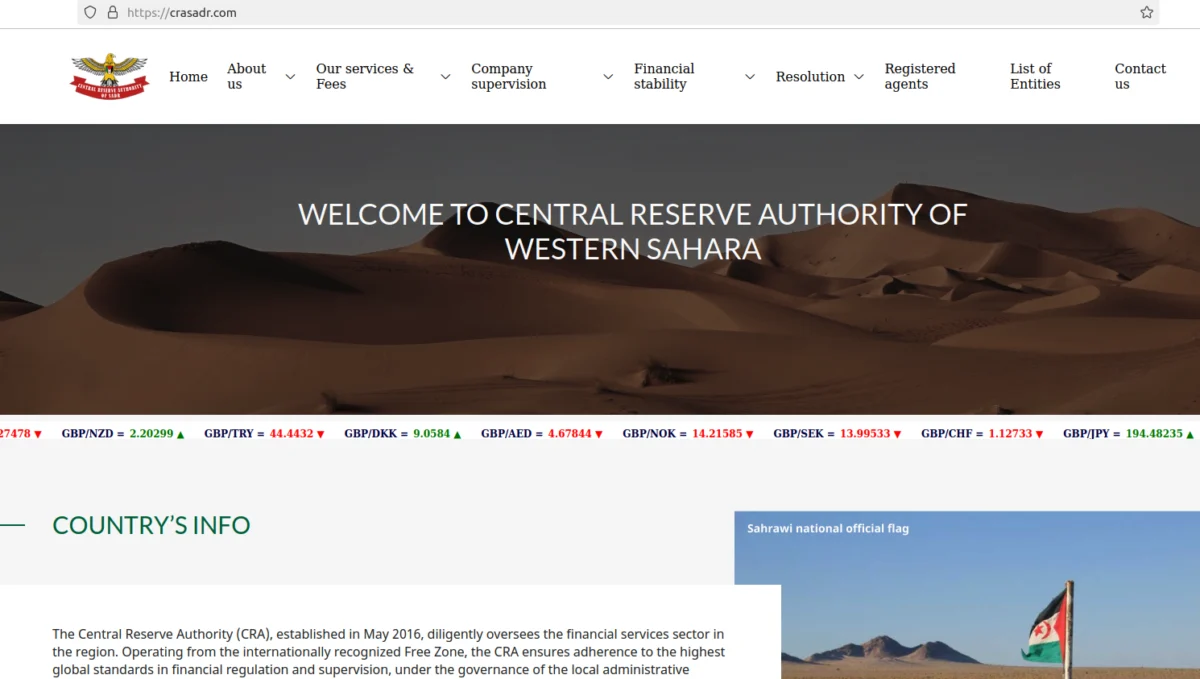
Corporate filings from the 2024 investigations revealed that the sole shareholder of Certa Payments was a 25-year-old Ukrainian national. Alongside her role at Cryptomus, she headed several other corporate entities, including the WS Management and Advisory Corporation. This firm marketed itself as an exclusive regulatory body responsible for licensing cryptocurrency exchanges, foreign exchange brokers, and online gaming businesses operating within the disputed northwest African region of Western Sahara.
The regulatory body’s official portal, crasadr.com, publicly claimed to assist international applicants with bank formation and licensing. However, technical infrastructure analysis revealed that one of Certa Payments’ former operational websites shared a server with twelve other domains, including rasd-state.ws—a fraudulent website purporting to represent the Central Reserve Authority of the Western Sahara. By leveraging a non-existent sovereign authority to issue pseudo-legal operational licenses, the network successfully deceived numerous merchants and payment partners into believing the enterprise operated within a legitimate regulatory framework.
Implications and the Future of Crypto Enforcement
The immediate aftermath of the U.K. sanctions was swift. On October 8, users attempting to interact with Cryptomus and Heleket via automated Telegram support bots were met with error messages indicating that the platforms had suddenly lost the ability to process transactions. Screenshots shared by investigators showed customer service agents frantically denying any affiliation between Heleket and Cryptomus, even as blockchain ledgers confirmed their shared infrastructure.
The downfall of Cryptomus serves as both a milestone and a cautionary tale for the digital asset industry. It highlights the ingenuity with which illicit actors exploit jurisdictional gaps, shell corporations, and synthetic regulatory bodies to launder billions of dollars. At the same time, the coordinated use of targeted economic sanctions demonstrates that modern blockchain analytics, combined with decisive international law enforcement, can effectively dismantle sophisticated cybercrime networks that treat traditional municipal fines as mere costs of doing business. As regulatory scrutiny tightens across G7 economies, payment processors operating in the shadows will find increasingly narrow margins for evasion.

