

The Ethereum Foundation’s ongoing Trillion Dollar Security initiative has officially identified blind signing and systemic transaction uncertainty as critical barriers to mass adoption and user safety within the Ethereum ecosystem. As part of a multi-pronged strategy to enhance the integrity of the blockchain’s user experience, researchers are now exploring "native transaction assertions" as a foundational security layer. This development, which would operate in tandem with the previously announced Clear Signing standard, seeks to fundamentally alter how users authorize transactions by enforcing the final economic and state-based outcomes of an interaction, rather than merely signing a request for execution.
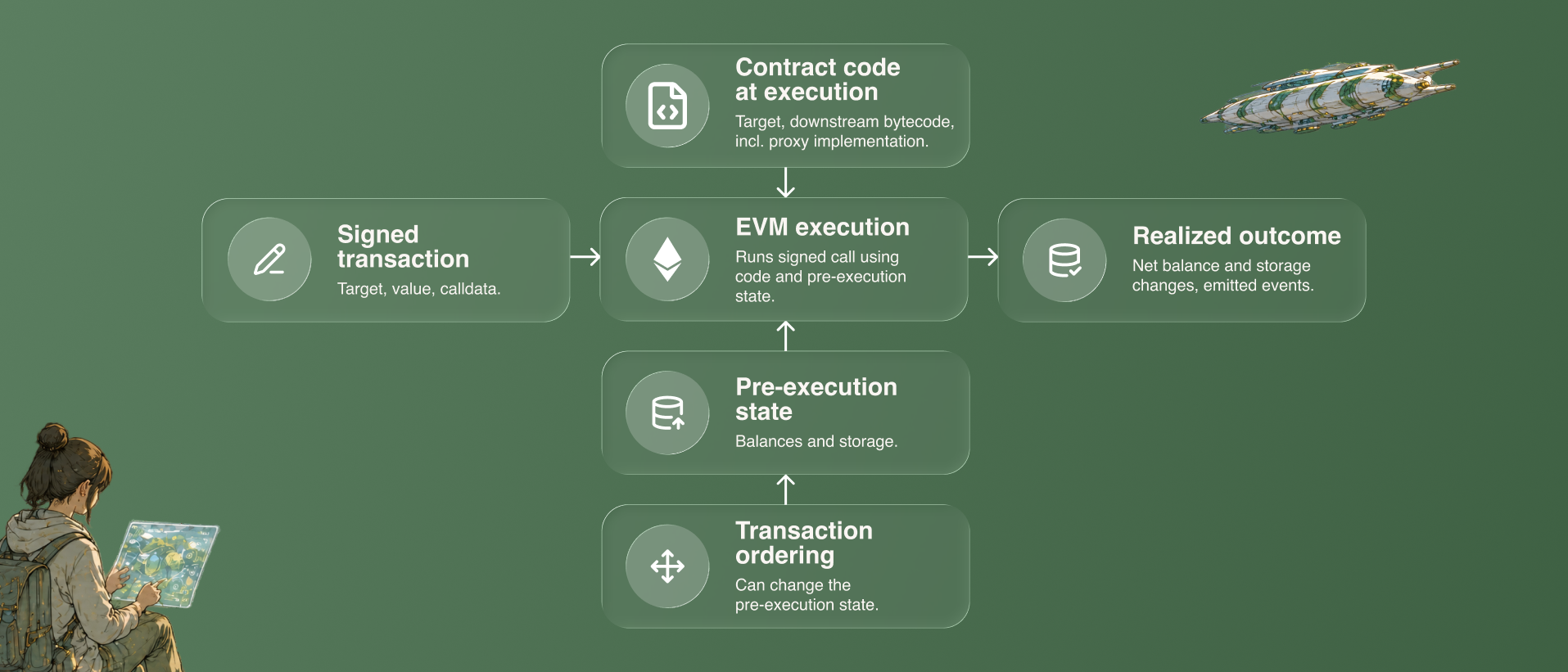
The core of the issue lies in the current architectural philosophy of the Ethereum Virtual Machine (EVM). Under the status quo, a user’s digital signature functions as an authorization for the network to execute specific bytecode or call data. However, the EVM is "outcome-agnostic"; it executes the instructions provided without verifying whether the resulting state—such as the final asset balance or the specific contract implementation—aligns with the user’s intent. This gap between authorization and outcome has become a significant vector for financial loss, ranging from sophisticated phishing attacks to unforeseen "slippage" in volatile decentralized finance (DeFi) markets.
The Anatomy of Transaction Failure: Intent vs. Outcome
The necessity for native assertions is underscored by a series of high-profile security incidents that have plagued the ecosystem over recent years. These failures generally fall into two distinct categories: intent mismatches and outcome mismatches.
An intent mismatch occurs when the user is misled into signing a transaction that executes a different action than the one they were presented with. A primary example is the Bybit-related Safe wallet incident, where a compromised frontend interface prompted users to authorize a transaction that, in reality, replaced the Safe’s underlying implementation contract. Similarly, the BadgerDAO attack saw users granting token-spending permissions to malicious contracts under the guise of legitimate interactions. In both instances, the signature was valid, but the "intent" was subverted by the interface layer.
Conversely, an outcome mismatch occurs when a user signs a transaction that is technically legitimate but results in a catastrophic financial consequence due to external market conditions or state-dependent variables. The Aave and CoW Swap collateral swap incident serves as a stark illustration. A user attempted to swap roughly $50.4 million in aEthUSDT for aEthAAVE. Due to thin liquidity in the AAVE pool and a failure to account for gas-related constraints during the validation phase, the execution resulted in a massive price impact. Despite the user technically signing the transaction—and being warned of the price impact—the system lacked an on-chain mechanism to prevent the transaction from proceeding once the state had shifted against the user’s goal.
These events highlight a systemic vulnerability: Ethereum currently lacks a general-purpose mechanism for on-chain code to introspect the full spectrum of net state changes before a transaction is finalized.

Current Defenses and Their Limitations
The industry has attempted to mitigate these risks through various stop-gap measures, yet these remain incomplete. Clear Signing, for instance, provides a human-readable summary of what a piece of calldata aims to achieve. While this is a significant improvement over hexadecimal strings, it is still vulnerable to "man-in-the-middle" attacks at the frontend level. If the frontend is compromised, it can present a benign Clear Signing display while the actual transaction data contains malicious instructions.
Simulation engines have also become standard in modern wallets. These tools allow users to see the "post-transaction" state before they sign. However, simulations are only as accurate as the state of the chain at the moment of the simulation. Because Ethereum transactions are processed in an adversarial, mempool-driven environment, the state of the blockchain can change significantly between the time of simulation and the time of inclusion. Malicious actors, such as those behind the Radiant Capital exploit, have demonstrated that malware can replace a payload at the exact moment of signing, effectively bypassing simulation checks.
Current contract-level guards, such as Uniswap’s amountOutMinimum or Safe’s checkAfterExecution hook, provide a degree of protection. However, these are rigid and limited. They often require the contract to be specifically programmed to check for certain conditions. A proxy contract, for example, may not expose its implementation address through a function, leaving guards blind to potential upgrades that could compromise the account. Furthermore, these guards cannot see the "big picture" of a transaction, such as whether a series of internal calls resulted in unexpected events or unwanted storage mutations.
Introducing Native Transaction Assertions
Native transaction assertions represent a shift from reactive security to proactive, protocol-enforced guarantees. The concept involves allowing on-chain code to inspect the "net state changes" resulting from a transaction—including balance changes, storage modifications, and emitted events—after the execution has concluded but before the transaction is finalized.
Under this model, a user includes a "rule" in their transaction. This rule is a set of assertions that the post-transaction state must satisfy. If the actual outcome of the transaction violates these rules, the transaction is automatically reverted.
This mechanism is being explored through EIP-7906, which leverages the framework established by EIP-8141 (Frame Transactions). EIP-7906 proposes a read-only POST_TX frame. This frame acts as a validator that executes at the end of the transaction lifecycle. It uses three specialized opcodes—TXTRACE, TXDIFF, and EVENTDATACOPY—to query the net changes of the transaction. By allowing the transaction to check its own results, the protocol can effectively "self-destruct" if the outcome deviates from the user’s economic requirements.
For instance, a user could set a rule stating: "Only proceed if I receive at least 1,000 tokens and the implementation contract of my wallet remains unchanged." If the transaction, due to a sandwich attack or a malicious contract update, attempts to deliver 900 tokens or modifies the implementation, the POST_TX frame will detect the violation and force a revert.
Implications for Ecosystem Security
The implications of implementing such a standard are profound. By moving security enforcement from the frontend (which is inherently vulnerable) to the protocol layer (which is trustless), Ethereum could significantly raise the cost of attack for malicious actors.
- Agent Delegation: As institutional and automated agents (such as AI-driven trading bots) become more common, native assertions provide a way to place "guardrails" on these agents. A user could delegate an agent to manage their portfolio while asserting that no more than 5% of assets can be moved in a single transaction, regardless of the agent’s instructions.
- Solver-Based Execution: In the growing sector of solver-based DeFi (like CoW Protocol or UniswapX), protocols could use assertions to guarantee that users get the best execution, with the protocol itself acting as the validator that ensures the user’s conditions are met.
- Improved UX: By standardizing these checks, wallets could automate the creation of assertions, removing the burden from the user while providing a level of security that currently requires advanced knowledge of smart contract development.
Challenges and Future Outlook
Despite the promise, the road to implementation involves significant design hurdles. The Ethereum Foundation must determine what information should be exposed to the POST_TX frame without creating new, unforeseen attack vectors or causing state bloat. There is also the challenge of adoption: for assertions to be effective, both the wallet (to generate the rules) and the protocol (to verify them) must support the standard.
Furthermore, EIP-7906 is currently in the "Considered for Inclusion" phase. While EIP-8141 (the foundation for frame transactions) is on the roadmap for the upcoming Hegot upgrade, EIP-7906 remains under heavy discussion by the community. Critics and researchers are currently debating the best way to handle gas charges for failing transactions—ensuring that the system cannot be used to spam the network with "deliberately failing" assertions while simultaneously protecting users from paying for transactions that fail due to legitimate market volatility.
The Ethereum Foundation has signaled that this research is not a solo effort. Through the Trillion Dollar Security initiative, they are actively seeking input from wallet developers, security researchers, and protocol architects. As the ecosystem matures, the transition toward "outcome-guaranteed" transactions may prove to be one of the most critical evolutions in the history of blockchain, shifting the focus from "what was signed" to "what was achieved."
For now, the project remains in the research and development phase, with the community looking toward the next set of Ethereum Improvement Proposal (EIP) meetings to determine if and when these assertions will move from the drawing board to the mainnet. As threats to user assets continue to evolve in complexity, the ability to define, enforce, and verify transaction outcomes will likely become the standard for any secure, user-centric blockchain environment.

