
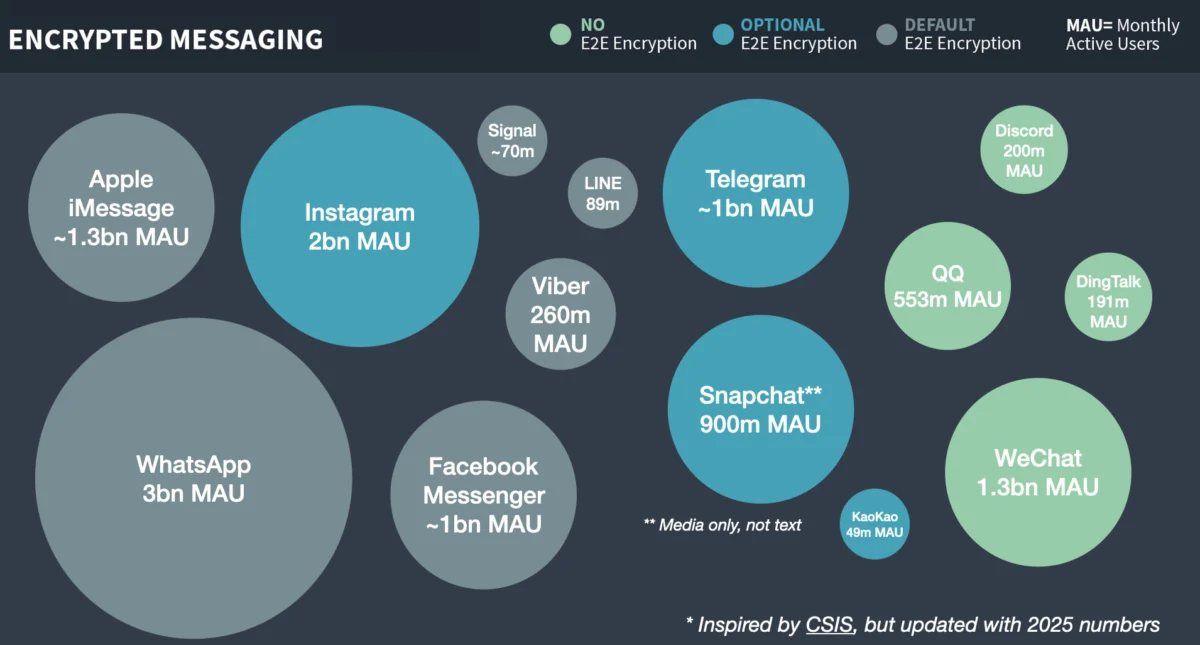
Mainstream media coverage of cryptographic messaging applications rarely captures public attention for questioning the very existence of privacy features rather than debating their strength against government oversight. Over the past several days, however, public discourse has shifted toward a striking allegation: that WhatsApp, one of the world’s most widely adopted communication platforms, fundamentally lacks end-to-end encryption. This narrative marks a sharp departure from standard regulatory debates, where law enforcement agencies typically argue that applications like WhatsApp are excessively secure and impede criminal investigations. Following a wave of high-profile commentary from industry executives such as Elon Musk and Pavel Durov, alongside reports of preliminary federal inquiries, the technology sector has been forced to re-examine the mechanics and trustworthiness of commercial encryption at scale.
Origins of the Legal Challenge and Federal Scrutiny
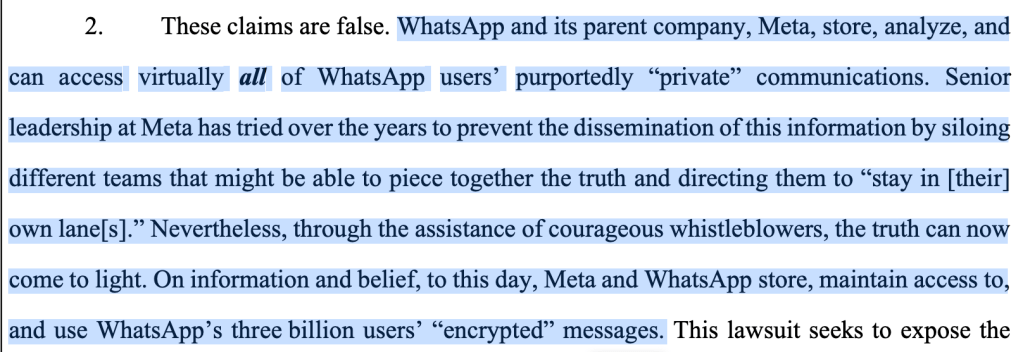
The controversy began with a class-action lawsuit filed by the prominent law firm Quinn Emanuel on behalf of several plaintiffs. The complaint alleges that while Meta—the parent company of WhatsApp—extensively markets the platform as utilizing end-to-end encryption to protect user communications, private data remains accessible to corporate infrastructure. The legal filing offers little direct technical evidence to substantiate its claims, yet it has been amplified across digital platforms by figures associated with competing messaging services.
Simultaneously, investigative reports from financial and technology media outlets have indicated that United States authorities have begun examining Meta regarding these claims. The intersection of private civil litigation and federal attention has transformed what might otherwise have been a standard legal dispute into a significant public relations and regulatory hurdle for Meta. Technologists and security researchers emphasize that while consumer skepticism toward major technology conglomerates is understandable, extraordinary allegations require rigorous, verifiable technical proof rather than speculative legal pleadings.

The Scale of WhatsApp and the Implementation of End-to-End Encryption
To evaluate the plausibility of these allegations, it is essential to examine the operational scale of WhatsApp and the architectural framework of modern messaging systems. Launched decades after the inception of primitive instant messaging technologies, contemporary communication apps operate on an unprecedented scale. WhatsApp currently serves approximately three billion monthly active users, representing nearly half of the global population. In numerous regions, the application functions as the primary infrastructure for personal and professional communication, surpassing traditional telecommunication services.
This vast scale presents profound data stewardship challenges. Historically, centralized messaging architectures required users to transmit data through corporate servers where it was stored in transit and, in many cases, at rest. This centralized storage model creates vulnerabilities, exposing vast quantities of real-time user data to potential breaches, unauthorized data harvesting, and compulsory legal demands from state actors.
In response to these systemic risks, WhatsApp’s original developers initiated the integration of end-to-end encryption beginning in 2014, adopting the robust Signal protocol following the platform’s acquisition by Facebook. Under a true end-to-end encryption architecture, messages are encrypted on the sender’s device and can only be decrypted on the intended recipient’s device. The cryptographic keys required for this process reside exclusively on the endpoints, theoretically preventing the service provider, network operators, and malicious third parties from intercepting or reading message contents.
Regulatory Friction and Government Pushback
The large-scale deployment of default end-to-end encryption across billions of accounts was a transformative development for digital privacy, but it immediately generated acute political friction. Governments worldwide—including the United States, the United Kingdom, Australia, India, and member states of the European Union—have consistently expressed concern over the inability of law enforcement agencies to access communication content, even when armed with valid judicial warrants.
In October 2019, the United States Department of Justice, alongside international counterparts, issued a formal open letter urging Meta to halt the expansion of end-to-end encryption across its ecosystem unless verifiable lawful access mechanisms, commonly referred to as backdoors, were incorporated. Meta resisted these demands, maintaining that weakening encryption for law enforcement compromises security for all users globally. Consequently, the company expanded cryptographic protections to Facebook Messenger and introduced optional encrypted features for Instagram direct messages, cementing its position as a primary target for governments seeking exceptional access capabilities.
Technical Feasibility of a Secret Backdoor
Analyzing the core allegation that WhatsApp’s encryption is illusory requires assessing what such a capability would entail from a software engineering perspective. Because WhatsApp’s client application runs locally on user devices, executing a mass surveillance or key-exfiltration scheme without detection would necessitate deliberate modifications to the client-side code. Specifically, the application would need to continuously export unencrypted plaintext messages or duplicate encryption keys to Meta’s servers for every active user.
Security researchers note that while WhatsApp is proprietary and closed-source—preventing public compilation and verification of the exact source code—historical and current versions of the compiled application are publicly accessible through various repositories. Experts routinely decompile these packages to analyze network traffic, forensic artifacts, and application behavior. Implementing a systemic bypass of end-to-end encryption at a scale encompassing three billion users would leave highly visible forensic traces within the application binaries and network telemetry.
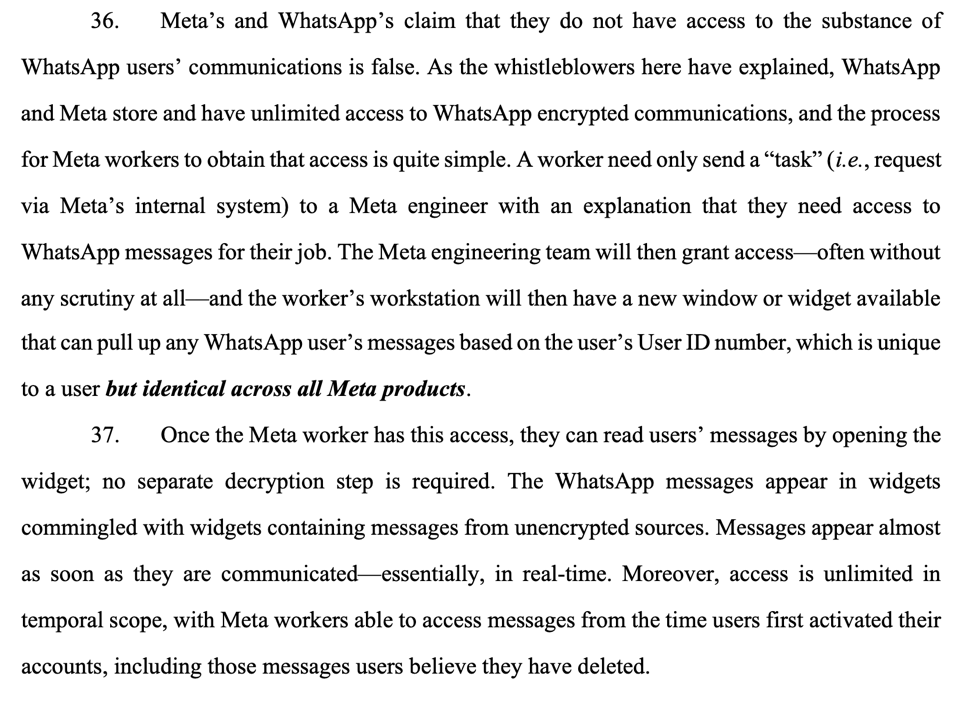
While sophisticated server-side attacks, such as man-in-the-middle key substitution, have been theoretically proposed by intelligence agencies to target specific individuals, executing a mass-scale compromise of this nature without detection is considered highly improbable by the cryptographic community. The probability that independent security researchers, reverse engineers, and forensic analysts would fail to detect systemic data exfiltration across billions of active devices over an extended period remains extremely low.
Evaluating Real-World Loopholes and Metadata Collection
Discussions surrounding messaging security often conflate the absolute protection of message content with peripheral data exposures. Critics frequently highlight existing architectural realities that, while fully disclosed by WhatsApp, are sometimes misinterpreted as evidence of compromised encryption.
First, end-to-end encryption protects the literal content of private communications, but it does not inherently shield metadata. Information regarding communication frequency, timestamps, participant identities, and social graph structures remains visible to platform infrastructure.
Second, user convenience features introduce separate security considerations. Cloud-based message backups—stored on third-party infrastructure such as Apple iCloud or Google Drive to facilitate device migration—have historically lacked default end-to-end encryption unless explicitly configured by the user with additional cryptographic keys.
Third, commercial integrations and artificial intelligence features introduced by Meta, such as automated customer service interactions or optional AI writing assistants, rely on specific processing environments. While technologies like Trusted Execution Environments are utilized to protect user data during off-device processing, these optional features represent operational boundaries distinct from core peer-to-peer messaging. However, security analysts emphasize that none of these known operational loopholes or metadata practices support the severe allegations presented in the current class-action lawsuit, which alleges a wholesale absence of encryption for standard personal chats.
Implications for Digital Trust and Industry Standards
The recent legal challenge and subsequent media coverage underscore the delicate balance of trust inherent in modern digital communications. Cryptographic protocols do not eliminate the necessity of trust entirely; rather, they extend trust from an institution to specific software implementations, hardware environments, and cryptographic primitives.
As computer scientist Ken Thompson famously demonstrated in his foundational work on computing trust, absolute verification of complex software stacks remains a persistent challenge in computer science. Users of closed-source applications ultimately place a degree of trust in the vendor’s stated architecture and independent security audits.
For users who find the requisite level of corporate trust unacceptable, open-source alternatives with reproducible builds, such as Signal, provide a verifiable cryptographic model. Nevertheless, the prevailing consensus among independent cryptographers and security engineers suggests that the extraordinary claims presented in the recent WhatsApp lawsuit lack verifiable technical backing. Absent concrete forensic evidence demonstrating a systemic cryptographic failure, the platform’s end-to-end encryption implementation continues to provide the functional privacy guarantees for which it was originally designed.

