
In an era where digital communications are increasingly scrutinized, the fundamental goal of cryptography extends far beyond solving complex mathematical equations; it is to ensure that human beings can communicate securely and privately. Today, that mission is facing mounting pressure. Across various sectors, particularly within government agencies and federal contracting firms, employees and military veterans find themselves growing anxious about the permanence of their digital footprints. Concerns over professional retaliation based on online speech—including thoughts expressed via private text messaging—have created a climate of self-censorship and digital anxiety.
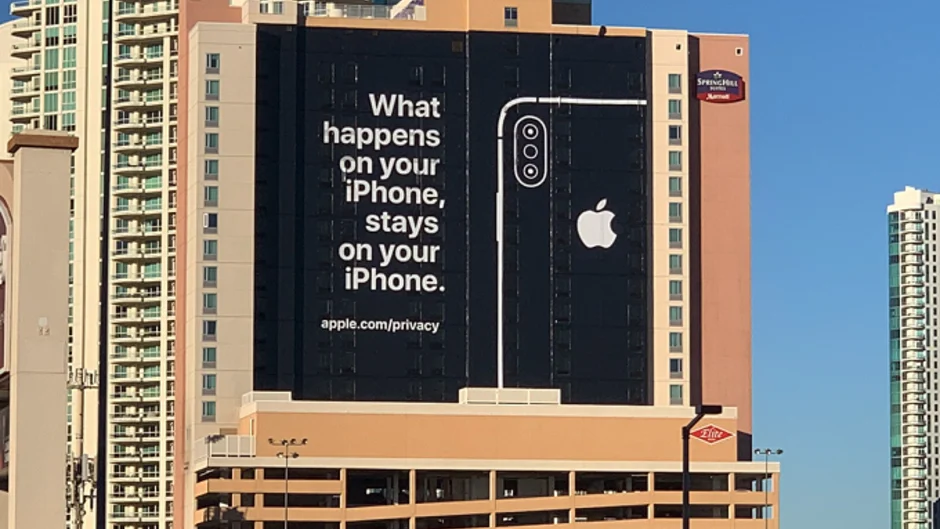
While end-to-end encryption in transit has become an industry standard, privacy advocates argue that securing data during transmission is only half the battle. As millions of mainstream users continue to rely on built-in native applications like Apple’s iMessage, a glaring security and privacy gap remains: the persistent, long-term storage of text conversations on devices and in cloud backups. Despite pioneering robust cryptographic protections, Apple’s continued omission of a native, per-conversation disappearing messages feature leaves its user base uniquely vulnerable in the modern threat landscape.

The Evolution of iMessage Security and the Modern Threat Landscape
Apple’s iMessage has long been celebrated for its robust cryptographic architecture. Since its inception in 2011, the platform has featured end-to-end encryption (E2EE), meaning that messages and attachments are locked with keys entirely unknown to Apple. Over the years, the tech giant has continued to modernize this framework. Notably, Apple introduced its PQ3 protocol, a state-of-the-art post-quantum cryptographic architecture designed to protect user data even against future quantum computing decryption capabilities.
However, cryptographers and security researchers point out a critical disconnect between theoretical security and practical user privacy. While PQ3 protects messages against speculative, high-tech adversaries wielding quantum computers, everyday users face immediate, tangible threats closer to home. If an individual gains physical access to an iPhone, bypasses the passcode, or compromises an insufficiently protected cloud backup, they gain access to a searchable, chronological archive of conversations spanning years. For federal employees, whistleblowers, activists, and ordinary citizens alike, a standard messaging app functioning as a permanent, searchable ledger of past thoughts and private interactions creates significant liability.

Industry Standards and the Missing Feature
The absence of disappearing messages within iMessage is increasingly conspicuous when compared against the rest of the messaging ecosystem. Nearly every major consumer communication platform—including Signal, WhatsApp, Meta Messenger, Snapchat, and Telegram—has long integrated ephemeral messaging options. These features allow users to establish an expiration window, ranging from minutes to months, after which messages automatically erase from both sender and recipient devices. Furthermore, these platforms typically exclude ephemeral chats from standard device backups or prevent expired messages from being restored, reinforcing the core premise of ephemerality.
Competitor Chronology and Feature Adoption:

- 2014: Snapchat standardizes ephemeral content, popularizing auto-deleting media and chats.
- 2016: Signal introduces disappearing messages, setting a privacy benchmark for encrypted communications.
- 2020: WhatsApp rolls out disappearing message controls globally.
- 2021: Telegram expands its auto-delete timer functionalities across all chat types.
- 2025: Apple’s iMessage remains a notable holdout among major consumer messaging protocols, lacking native, per-chat ephemeral messaging controls.
By omitting this capability, Apple fails to provide what privacy advocates describe as the "blast radius containment" principle. Ephemeral messaging does more than clear storage space; it actively communicates to users that their conversations are designed to be temporary, granting psychological safety and mitigating the risks associated with long-term data retention.
Technical Realities of Apple’s Ecosystem
Examining Apple’s current software settings reveals partial mechanisms that fall short of true disappearing messages. Within iOS settings, users can navigate to the "Keep Messages" menu to dictate how long text threads remain on their device, with options such as one year. However, this is a global setting rather than a per-conversation toggle, meaning users must sacrifice entire historical archives to achieve brevity. Crucially, this setting applies strictly to the local device and does not purge messages from the communication partner’s phone.

For users seeking deeper protection, Apple offers Advanced Data Protection (ADP) for iCloud, which extends end-to-end encryption to iCloud backups. When enabled, ADP ensures that encryption keys remain solely on the user’s trusted devices, preventing Apple or external entities from accessing stored cloud data.
Yet, confusion persists regarding Apple’s "Messages in iCloud" feature. While Apple promotes the synchronization service as end-to-end encrypted, standard default settings for new iCloud backups historically permitted the storage of the encryption keys on Apple-managed servers. Consequently, unless a user explicitly activates Advanced Data Protection, the contents of the Messages in iCloud database remain accessible to anyone capable of breaching the user’s Apple account credentials. Even with ADP enabled, however, backups and local storage continue to preserve complete chat histories indefinitely, bypassing the need for ephemeral controls.
Implications and the Road Ahead

The ongoing absence of disappearing messages in iMessage highlights a broader debate over corporate responsibility in digital privacy. While security engineers at Apple frequently cite user dread of data loss as a primary driver against restrictive backup policies, critics argue that withholding fundamental privacy features actively harms vulnerable populations. Speculation surrounds Apple’s hesitation, ranging from potential regulatory pressures from international governments to legacy software architectures within the Messages application framework.
As the digital landscape evolves, the definition of secure communication must expand to encompass data lifecycle management. Post-quantum encryption protects data in transit, but true operational security requires giving users control over data at rest. For a company that consistently markets its brand around user privacy, bridging this gap by introducing native, flexible disappearing messages is no longer a luxury feature—it is a critical necessity for modern digital safety.

