
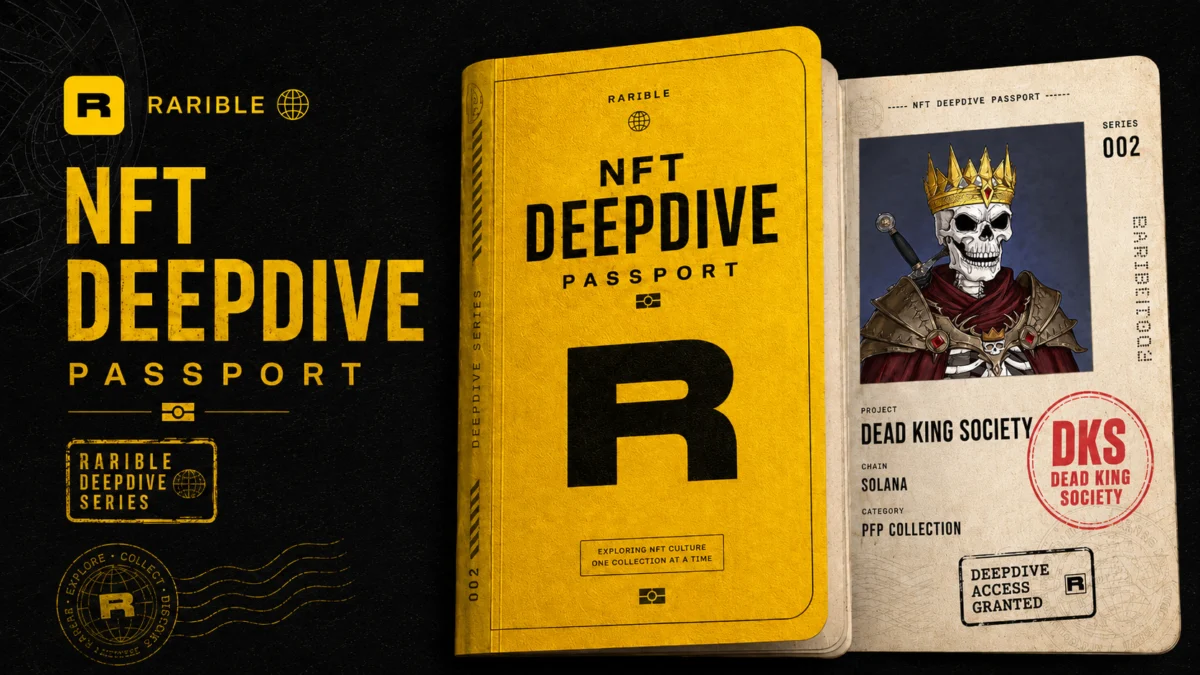
The digital asset ecosystem has evolved far beyond the speculative, high-volume profile picture (PFP) crazes of the early 2020s, transitioning into an era where select communities focus intensely on high-signal networking, private governance, and venture capital integration. Among the ecosystems navigating this maturation on the Solana blockchain is the Dead King Society (DKS), a hyper-curated membership project founded in 2021. Rather than pursuing mass-market consumer appeal or high-volume liquidity, DKS has positioned itself as an exclusive digital social club and venture-backed investment network. Operating with an extraordinarily lean token supply and a rigorous tiered structure, the project functions more like an elite private equity syndicate or a master-level founders’ circle than a traditional NFT collection. As decentralized networks seek sustainable models for community retention and real-world utility, examining the trajectory, structural framework, and operational philosophy of the Dead King Society offers critical insight into the enduring viability of micro-community economies within Web3.
Main Facts and Structural Architecture
At its core, the Dead King Society is built around exclusivity, identity, and access. Launched publicly on the Solana blockchain following its inception in 2021, the project deviates entirely from the standard 5,000-to-10,000-piece generative art model. Instead, DKS maintains a total core membership supply capped at a mere 400 digital assets. This microscopic allocation is divided into two distinct, highly coveted tiers designed to stratify utility and governance rights within the community, which members collectively refer to as "The Commonwealth."
The upper echelon of the ecosystem consists of the Dead Kings, a collection of precisely 100 animated, one-of-a-kind (1/1) NFTs. Holders of these top-tier assets command exclusive entry into private, high-level governance channels and secure direct allocation opportunities through Dead King Ventures, the project’s internal investment arm. Directly beneath the Dead Kings lie the Nobles, comprising 300 static, one-of-a-kind (1/1) profile picture assets. While serving as the primary entry point for new participants who originally acquired them at a 2 SOL mint price, the Nobles tier grants comprehensive access to the vast majority of Commonwealth operational channels, market intelligence feeds, and early-stage investment exposure.
Market valuation for these assets reflects their scarcity and utility-driven demand. By mid-2026, the floor price for Dead King Society Nobles hovered around 8.03 SOL (approximately $589), demonstrating remarkable resilience across 30-day, 60-day, and annual trading metrics despite historically thin liquidity compared to major multi-thousand-piece collections. This current valuation stands in notable contrast to the project’s all-time high floor price of roughly 31.42 SOL (valued at approximately $8,462 during the height of market optimism on January 24, 2025). Spearheaded publicly by founder Dylan Santamarina (commonly known as Turnt Up Dylan) alongside co-founder Justin, the project relies heavily on marketplace infrastructure via Magic Eden, while secondary market data and historical tracking are monitored closely through platforms like CoinGecko and SolanaFloor.

Chronology and Historical Evolution
The timeline of the Dead King Society mirrors the broader structural evolution of the Solana NFT ecosystem, weathering major macroeconomic shifts and network-wide restructuring events. Conceptualized in 2021, the project materialized during an early, foundational era of Solana’s digital asset landscape—well before the network’s significant cultural and structural reset following the collapse of FTX. Unlike numerous contemporaries that prioritized viral art drops before scrambling to engineer utility retroactively, DKS anchored its foundational model on the access layer and community curation from day one.
Public launch activities gained momentum through 2022, establishing an early adopter base composed primarily of seasoned traders, developers, and builders. As the Solana ecosystem stabilized and recovered, DKS systematically transitioned from a boutique digital art collective into a disciplined, closed-loop network. By late 2025, the project transcended traditional community boundaries by officially stepping into the broader venture capital space. A prominent milestone in this evolution occurred in December 2025, when Dead King Society formally participated as an investor in the seed funding round of Asgard Finance. This strategic deployment of capital validated the project’s long-term thesis: that high-conviction digital communities could pool resources to act as legitimate institutional participants in early-stage Web3 funding rounds.
To sustain internal engagement without resorting to inflationary tokenomics or endless roadmap promises, the project instituted "Prestige," an ongoing member-recognition and leaderboard system. By tracking social engagement, creative contributions, bounties, and community collaboration, the Prestige system rewards active participants. This culminated in mid-2026 when DKS celebrated a top Prestige Leaderboard winner by awarding a custom-engraved physical DKS sword, underscoring the team’s commitment to tangible status symbols and real-world culture.
Supporting Data and Market Dynamics
Analyzing the economic and operational metrics of the Dead King Society reveals a project governed by classic laws of scarcity, liquidity constraints, and concentrated networking value.

| Metric / Category | Details & Specifications |
|---|---|
| Project Name | Dead King Society (DKS) |
| Blockchain Infrastructure | Solana |
| Collection Classification | Curated NFT membership community, social club, and venture investment network |
| Establishment & Launch | Founded in 2021; initial public market activity in 2022 |
| Original Mint Price | 2 SOL |
| Total Core Supply | 400 NFTs total (100 animated Dead Kings and 300 static Nobles) |
| Key Leadership | Dylan Santamarina (Turnt Up Dylan, Founder) and Justin (Co-founder) |
| Primary Marketplaces | Magic Eden; tracked via CoinGecko and SolanaFloor |
| Representative Floor Price | ~8.03 SOL / $589 (As of June 2026 for Nobles) |
| Historical Peak Floor | ~31.42 SOL / $8,462 (Recorded January 24, 2025) |
The quantitative reality of DKS dictates that its market behavior diverges sharply from liquid, high-volume collections. Because the circulating supply is restricted to just 400 pieces, minor shifts in buying or selling pressure can trigger outsized price movements on very low trading volume. Consequently, financial observers emphasize that floor prices for DKS must be interpreted through the lens of private network valuation rather than public retail speculation. The asset value is intrinsically tied to the quality of the deal flow, alpha access, and professional connections facilitated inside The Commonwealth rather than generalized hype cycles.
Official Stances, Community Culture, and Operational Philosophy
The leadership team and core members of the Dead King Society consistently reject the nomenclature and operational habits of traditional consumer NFT brands. Public communications from founder Dylan Santamarina and key community figures stress that DKS is deliberately engineered to avoid mass-market dilution.
According to project documentation and internal guidelines, holders are not viewed as passive collectors holding speculative jpegs, but rather as "digital asset partners." This designation carries distinct behavioural expectations: members are encouraged to contribute active value through strategic relationships, specialized market intelligence, technical thought leadership, and collaborative enterprise. By aligning the incentives of artists, developers, founders, and venture capitalists, the community fosters an environment where reputation and personal signal carry significantly more weight than mere financial net worth.
Furthermore, the integration of Dead King Ventures serves as the primary structural bridge between digital membership and real-world startup financing. By coordinating collective investment strategies, the community provides its holders with exposure to early-stage protocols, presales, and private rounds that are typically inaccessible to retail market participants. This institutionalization of community access redefines the value proposition of holding a PFP in the modern Web3 economy.
Broader Impact and Strategic Implications
The trajectory of the Dead King Society offers critical lessons regarding the future viability of micro-communities in decentralized ecosystems. As the broader NFT market moves away from uncoordinated generative art drops toward sustainable utility models, projects like DKS demonstrate the power of intentional exclusion and high-barrier networking.
The primary strength of the Dead King Society lies in its ability to curate a high-signal environment, granting members direct access to elite Web3 founders, developers, and investment opportunities—as evidenced by their participation in the Asgard Finance seed round. However, this model is not without inherent risks. The primary vulnerability of DKS is its limited public visibility and heavy reliance on the private, often opaque value generated internally within its closed loops. Because mass-market consumer awareness is intentionally sidelined, the project’s long-term sustainability is strictly tethered to the continued professional engagement and deal-flow generation of its 400 members.
Ultimately, Dead King Society stands as a compelling case study in digital tribalism and venture-backed curation. By prioritizing network density over expansive reach, and tangible capital access over fleeting viral attention, DKS has carved out a resilient niche on the Solana blockchain. As Web3 continues to mature, models that successfully merge digital identity with private, high-value economic syndicates may well serve as the blueprint for the next generation of online societies.

