
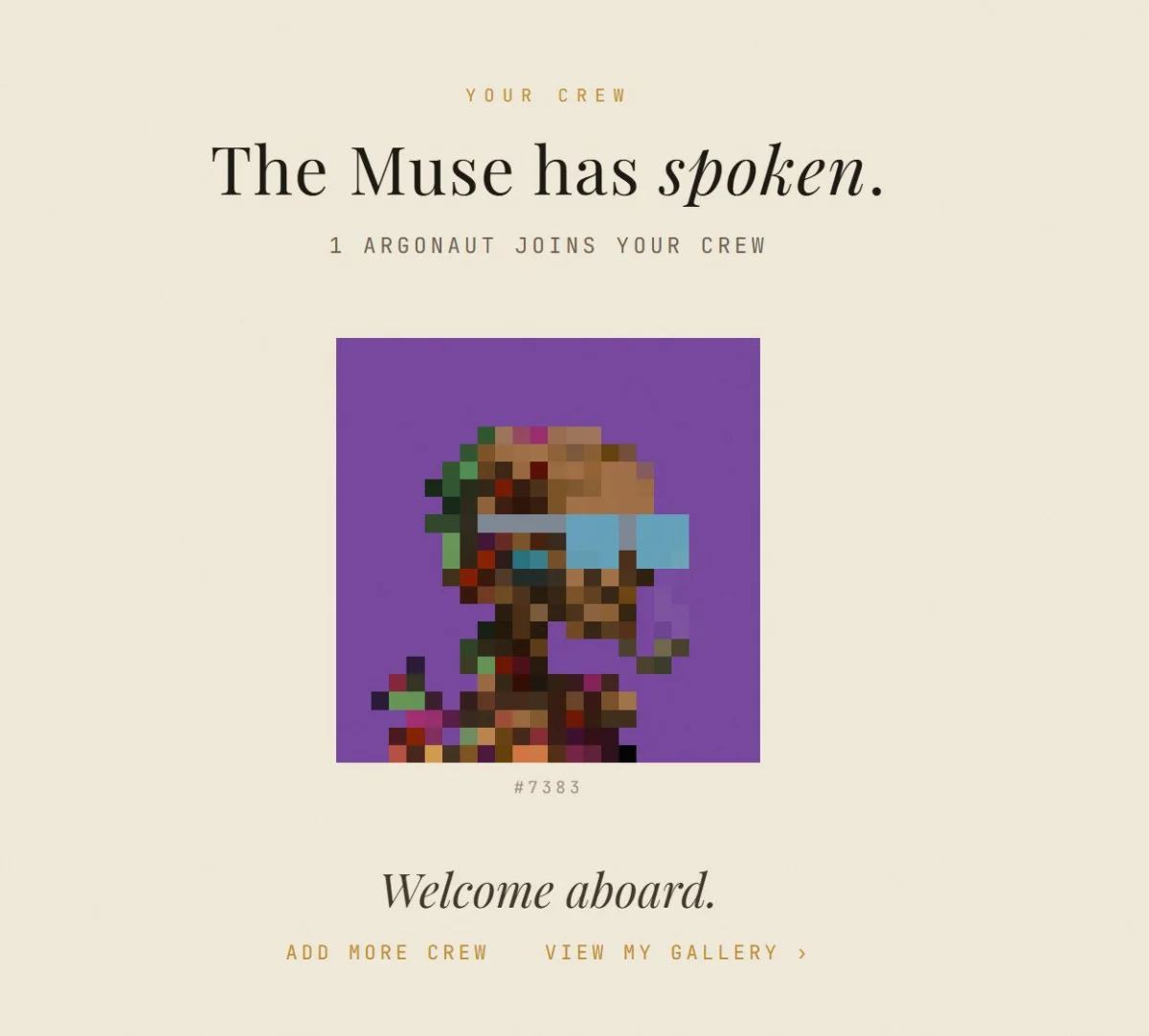
Today, the digital art landscape witnessed a notable shift as Argonauts, the latest collection by the prominent crypto-native artist a.c.k. (@lphaCentauriKid), successfully minted its 10,000-piece series. The assets were issued at a price point of approximately 0.12 ETH—roughly $300 at the time of transaction—and reached full circulation within minutes. While rapid sellouts have historically been associated with speculative fervor in the non-fungible token (NFT) sector, industry observers have noted a distinct change in the demographic composition and the underlying motivations of those participating in the Argonauts mint.
The rapid absorption of the collection suggests a departure from the "roadmap-first" model that dominated the NFT market between 2021 and 2023. Instead, the success of Argonauts underscores an emerging preference for artist-centric projects, signaling a potential maturation of the digital art market toward traditional models of provenance, aesthetic appreciation, and long-term patronage.
A Chronology of the Release
The launch of Argonauts did not emerge from a vacuum; it followed a period of deliberate community engagement led by a.c.k., an artist who has cultivated a recognizable visual language within the blockchain space over several years. Unlike many projects that utilize aggressive marketing, countdowns, and promises of future utility, the rollout for Argonauts was characterized by a focus on the visual output itself.
The minting process began with a controlled deployment, allowing early supporters and those familiar with a.c.k.’s historical body of work to participate. By opting for a 10,000-piece format, the artist effectively lowered the barrier to entry, a strategic choice that contrasts with the prohibitively high costs often associated with acquiring rare, single-edition digital works. This structure allowed a broader demographic of collectors to secure a piece of the artist’s output, effectively democratizing access to a high-profile creator’s portfolio.
The Shift in Collector Demographics
A critical metric in assessing the health of a digital collection is the "who" and "why" behind the acquisition. During the market peak of 2021, many collections were driven by liquidity providers and day traders seeking to flip assets for short-term profit. These participants often viewed the art as a secondary or even tertiary concern, prioritizing the potential for a "floor price" increase.
In the case of Argonauts, however, market data and social sentiment indicators point to a different cohort. The participation list includes established digital artists, longtime collectors of crypto-native works, and individuals who have publicly engaged with a.c.k.’s artistic evolution. This phenomenon of "artists collecting artists" is viewed by many as a hallmark of a sustainable art ecosystem. When creators invest in the work of their peers, it serves as a form of social and economic validation that is far more durable than speculative trading.
Defining the Value Proposition
To understand the significance of this mint, one must differentiate between the two prevailing models of NFT issuance. The first, which defined the previous cycle, relied on "utility"—the promise of tokens, merchandise, exclusive access, or virtual real estate. In this model, the art was frequently treated as a vehicle for the business proposition.
The second model, exemplified by Argonauts, treats the blockchain primarily as a medium for distribution and authentication. By eschewing promises of future utility, a.c.k. positioned the value of the collection on his own reputation and the inherent quality of the artwork. This approach returns the NFT to its original intent: providing a mechanism for digital artists to establish provenance, manage scarcity, and maintain a direct, unmediated relationship with their collectors.
Historical Context and Market Evolution
The NFT market has undergone several rigorous cycles since its mainstream adoption. The early days of the space were defined by experimentation and a genuine interest in the intersection of technology and art. This was followed by a period of hyper-financialization, where projects were managed as startup companies with complex tokenomics and speculative roadmaps.
The current climate, however, reflects a "flight to quality." As the broader crypto market stabilizes, collectors have become increasingly selective. They are no longer incentivized by the mere promise of a future return; rather, they are motivated by the desire to own digital assets that carry cultural weight and artistic legitimacy. Argonauts acts as a case study for this transition, demonstrating that an established artist can still command significant demand without resorting to the inflationary tactics that characterized the 2021 boom.
Broader Implications for Digital Ownership
The success of this launch invites a discussion on the role of large-edition projects in the fine art market. In traditional physical art, editioning (such as lithographs or prints) has long been a way for artists to broaden their reach while maintaining the integrity of their brand. By bringing this model to the blockchain, a.c.k. has bridged the gap between the exclusive nature of 1/1 digital art and the accessibility of mass-produced collectibles.
This strategy serves two primary functions:
- Collector Onboarding: It provides a entry point for fans who have followed the artist but were priced out of the primary market.
- Community Building: It creates a cohort of 10,000 stakeholders who are theoretically aligned with the artist’s long-term success rather than the short-term volatility of the secondary market.
Professional Analysis: Why This Matters
From a market analysis perspective, the Argonauts mint serves as a signal that the infrastructure of the NFT market is becoming more sophisticated. The emphasis has returned to the "Artist-Collector-Work" triad.
Furthermore, the data surrounding the mint—specifically the lack of reliance on hype-based marketing—suggests that the industry is moving toward a more sustainable, if more muted, reality. If the market continues to favor artists with proven track records over those who rely on speculative promises, the long-term viability of the NFT as an asset class will be significantly enhanced.
The "sellout" of 10,000 pieces in minutes is not just a monetary statistic; it is a declaration of demand. It proves that the appetite for crypto-native art remains robust, provided the product aligns with the expectations of a more educated and discerning collector base. As the industry looks toward the next phase of its development, the model presented by a.c.k. provides a blueprint for how artists can thrive in a post-speculative environment.
A New Era of Digital Collecting
The trajectory of the digital asset space suggests that we are entering an era where taste, reputation, and history are the primary drivers of value. As the "noise" of the speculative era fades, the importance of provenance becomes the focal point. For collectors, the question is no longer "what will this be worth tomorrow?" but rather "do I value this artist’s contribution to the digital medium?"
This shift, while subtle, is profound. It marks a transition from a casino-like atmosphere to a digital gallery model. By prioritizing the artwork and the artist’s legacy, projects like Argonauts are helping to sanitize the market of bad-faith actors while reinforcing the value proposition that first made blockchain technology an attractive medium for artists in the first place.
In conclusion, the rapid minting of Argonauts should be viewed as a milestone for the digital art community. It is a testament to the fact that when an artist focuses on their craft, the community responds with sustained, genuine support. Whether this trend will hold across the wider NFT market remains to be seen, but the success of a.c.k. provides a compelling argument that the future of the medium lies in the hands of the creators, not the speculators. The digital art market is not necessarily going backwards; it is finally coming home to its roots.

