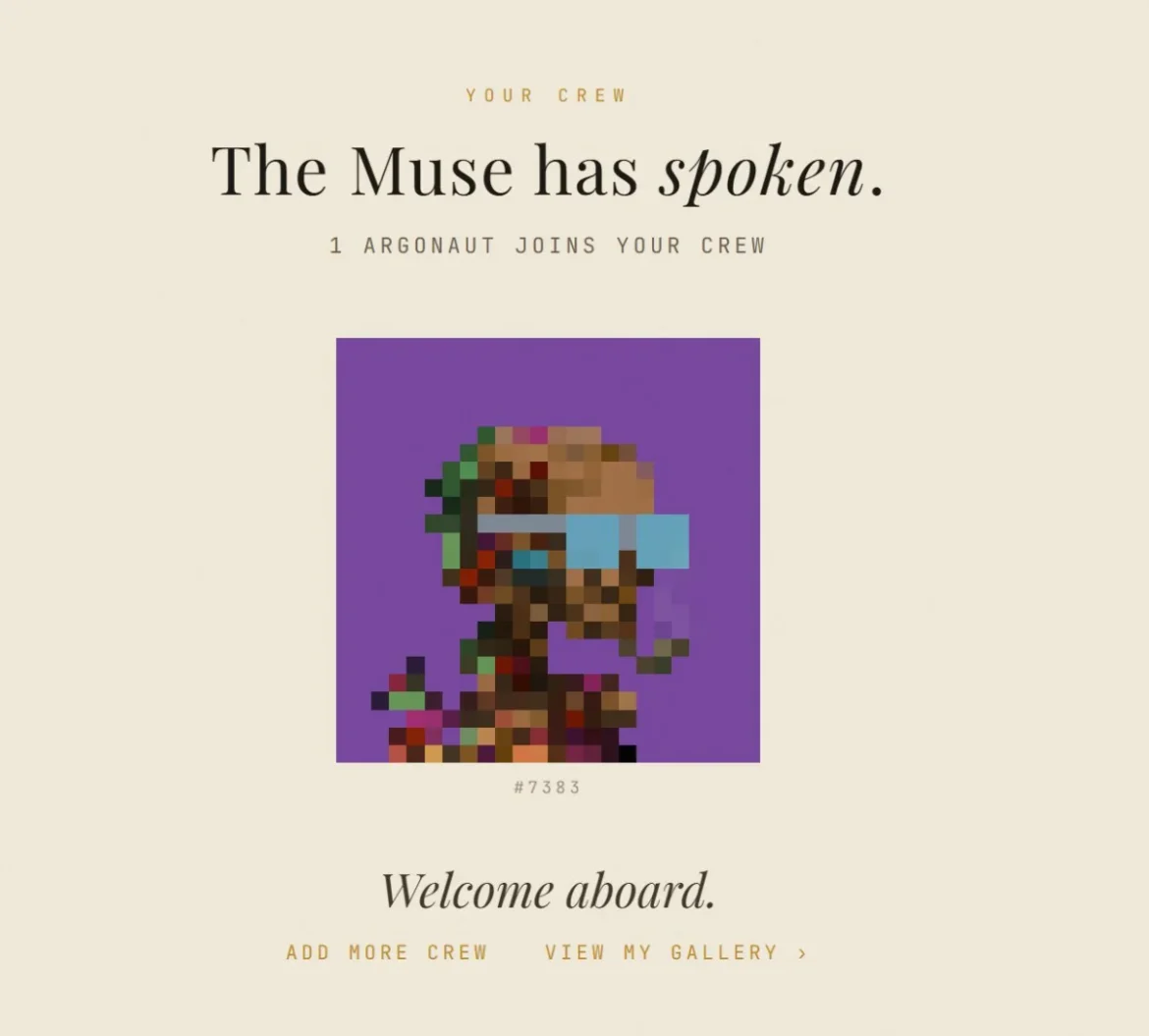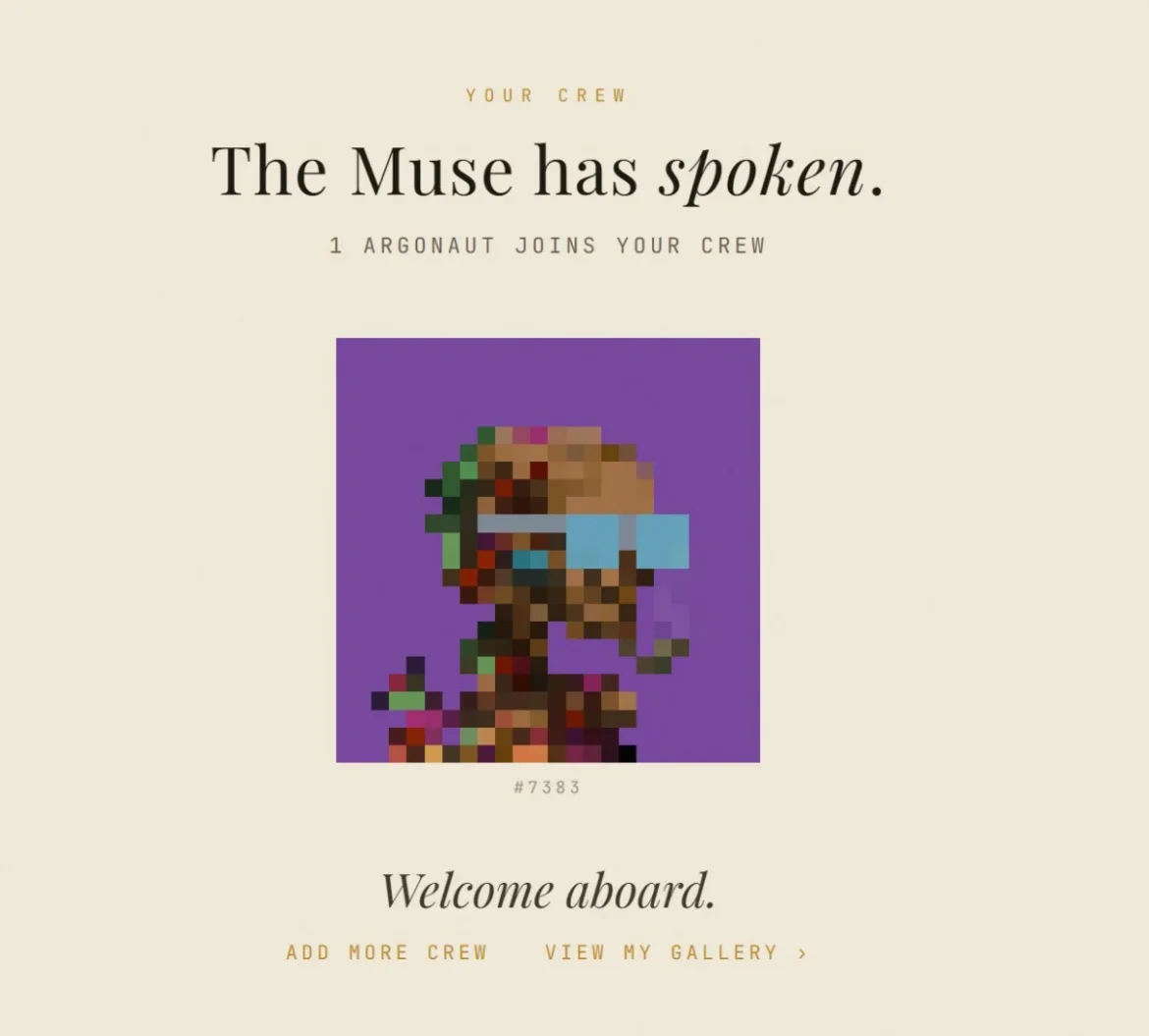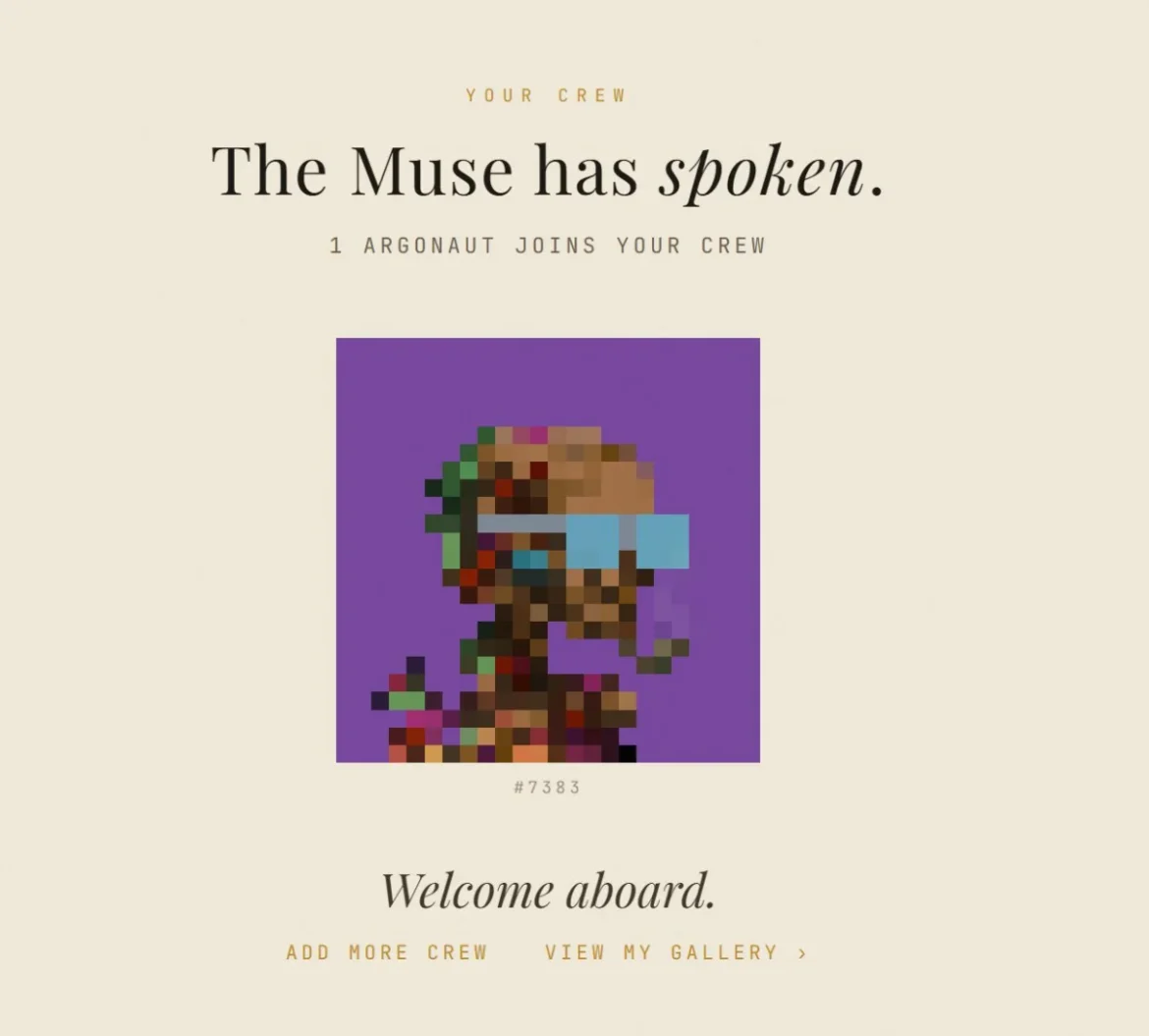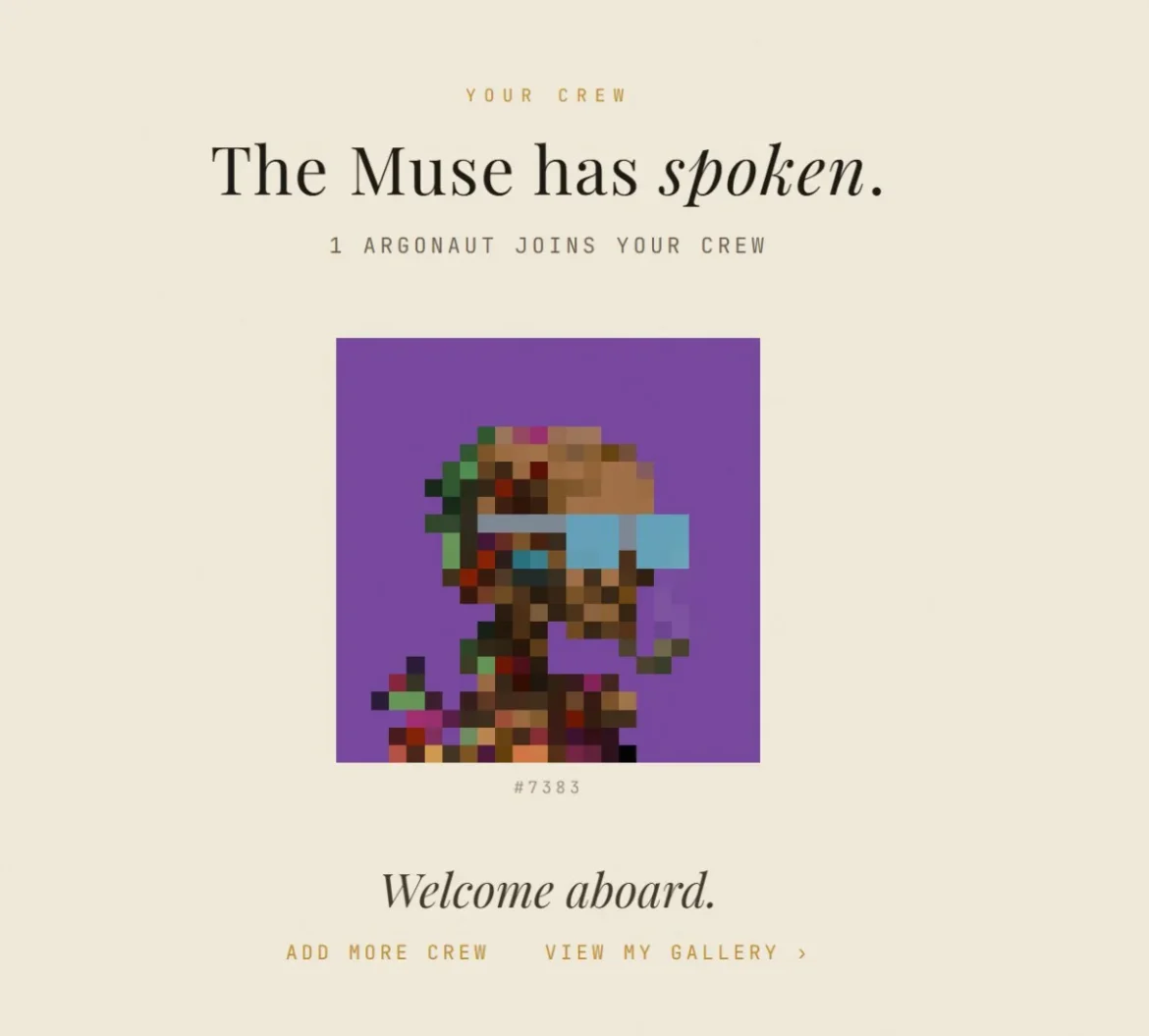
The digital art landscape witnessed a notable shift in market sentiment today as Argonauts, the latest collection by the prominent crypto-native artist a.c.k. (@lphaCentauriKid), successfully executed a sellout of its 10,000-piece series. Minted at a price point of approximately 0.12 ETH—roughly $300 at the time of issuance—the collection was fully claimed within minutes of its release. While the immediate secondary market activity is often the primary metric by which NFT projects are evaluated, the rapid distribution of Argonauts suggests a significant departure from the speculative trends that dominated the 2021–2022 market cycle. Rather than serving as a vessel for promises of future utility or token-gated roadmaps, the collection has resonated with a demographic of seasoned collectors, artists, and long-term proponents of digital provenance, signaling a potential maturation of the NFT asset class.
A Chronology of Artistic Development
The trajectory leading to the Argonauts mint is deeply rooted in the artist’s established history within the decentralized art ecosystem. Known for his distinct visual language and commitment to the "crypto-native" ethos, a.c.k. has cultivated a reputation as an artist who prioritizes the medium of the blockchain as a canvas rather than a marketing vehicle. Over the past several years, he has built a consistent body of work that explores themes of identity, digital consciousness, and artistic ownership.
The launch of Argonauts was not preceded by the typical aggressive, multi-month social media marketing campaign characterized by Discord grinding or "whitelist" contests. Instead, the project’s announcement relied on the artist’s existing reputation and his direct connection with his established collector base. By choosing a 10,000-piece format, a.c.k. provided a wider entry point into his artistic ecosystem. Historically, successful digital artists see their 1/1 works rise to price levels that become inaccessible to the broader public; the Argonauts collection effectively democratizes access to a significant chapter in the artist’s oeuvre, allowing a larger group of supporters to possess a verified piece of his creative output.
Data-Driven Observations on Market Sentiment
Data from the minting contract and early secondary activity indicate a distinct profile for the average Argonauts holder. In contrast to speculative "flipping" projects—where a high percentage of NFTs are listed on secondary marketplaces within the first hour—Argonauts has demonstrated a high degree of "stickiness."
Market analysts have noted that the participants in this mint consist largely of wallets that have historically held works from other established digital artists, such as those featured on platforms like Art Blocks, SuperRare, or Foundation. This cross-pollination of collectors suggests that the primary driver for this mint was not the prospect of an immediate return on investment, but rather a desire to secure ownership of an artist’s work. This shift is critical: when the primary motive for acquisition is the art itself, the market becomes less susceptible to the boom-and-bust cycles associated with speculative assets. By decoupling the value of the NFT from the promise of a "roadmap" or "utility," the project has established a foundation rooted in cultural significance rather than financial engineering.
Historical Context: From Utility to Provenance
The evolution of the NFT market can be categorized into distinct phases. The initial phase, spanning from 2017 to early 2020, was defined by experimentation and the proof-of-concept for digital scarcity. The subsequent phase, peaking in 2021, saw an influx of capital that treated NFTs as startup assets. Projects began to bundle digital art with promises of future tokens, DAO governance, and metaverse real estate. This era, while driving massive adoption, eventually diluted the focus on the digital object itself.
The current climate represents a necessary correction. As the industry moves away from the "startup" model of NFT collection, there is a renewed emphasis on the core utility of the technology: provenance and ownership. Blockchain-verified provenance allows for a direct, unmediated relationship between the creator and the collector. In the case of Argonauts, the lack of an elaborate, artificial narrative around "utility" is, in itself, the primary value proposition. The project operates on the principle that the art provides its own utility, a return to the foundational ethos that made digital ownership revolutionary in the first place.
Reactions and Broader Industry Implications
While a.c.k. has maintained a focused approach to his work, the reaction from the broader digital art community has been one of validation. Fellow artists and curators have lauded the collection for its lack of pretense, viewing it as a template for how established creators can successfully navigate the market without compromising their artistic integrity.
"This is what a healthy market looks like," remarked one independent analyst following the sellout. "When the participants are artists buying other artists, you are building a genuine network of value. It creates a meritocracy of taste rather than a meritocracy of trading volume."
The implications of this shift are profound for the next phase of the digital art market. If collectors continue to prioritize provenance and artistic history over speculative utility, the NFT ecosystem may evolve into a more sustainable, albeit slower-growing, market. This would mirror the traditional art world, where value is derived from exhibition history, critical acclaim, and the long-term track record of the artist.
The Significance of Large-Scale Distribution
The 10,000-piece format is often viewed with skepticism in the wake of failed "profile picture" (PFP) projects. However, when executed by an artist with a clear vision, this scale serves a specific function. It allows for a community to form around shared appreciation. Unlike smaller, exclusive collections that function as "closed shops," a larger edition allows for broader distribution among those who genuinely value the aesthetic and the artist’s creative development.
This distribution model also challenges the "whale-only" narrative that has plagued high-end crypto art. By offering 10,000 pieces, the barrier to entry is lowered, inviting a more diverse set of collectors to participate in the artist’s journey. This is essential for the longevity of any artistic medium; without a broad base of support, the market for digital art remains fragile and dependent on the liquidity of a few wealthy individuals.
Moving Toward a Sustainable Future
The success of Argonauts is not merely a data point in a market cycle; it is a signal of changing priorities. The rapid sellout proves that there is significant, latent demand for digital art that is marketed to collectors rather than traders. As the market moves forward, the projects that succeed will likely be those that treat the blockchain as a permanent archive for their work rather than a transient platform for financial schemes.
The "Argonauts" model suggests that the next generation of successful digital projects will be characterized by:
- Transparency: A clear focus on the art and the artist’s creative history.
- Community Composition: A focus on attracting long-term collectors and fellow artists rather than short-term speculators.
- Provenance: A reliance on the inherent value of digital ownership, independent of external "utility" promises.
In retrospect, the events of today may be viewed as a pivotal moment in the normalization of digital art. By proving that a project can succeed based on the reputation of an artist and the quality of the work, a.c.k. has provided a blueprint for others. The NFT space appears to be emerging from a period of excessive speculation, finally returning to the original promise that ignited the movement: a new, decentralized medium that allows artists to create, and collectors to own, the history of digital culture. The market is not necessarily shrinking; it is, perhaps, finally finding its footing.