
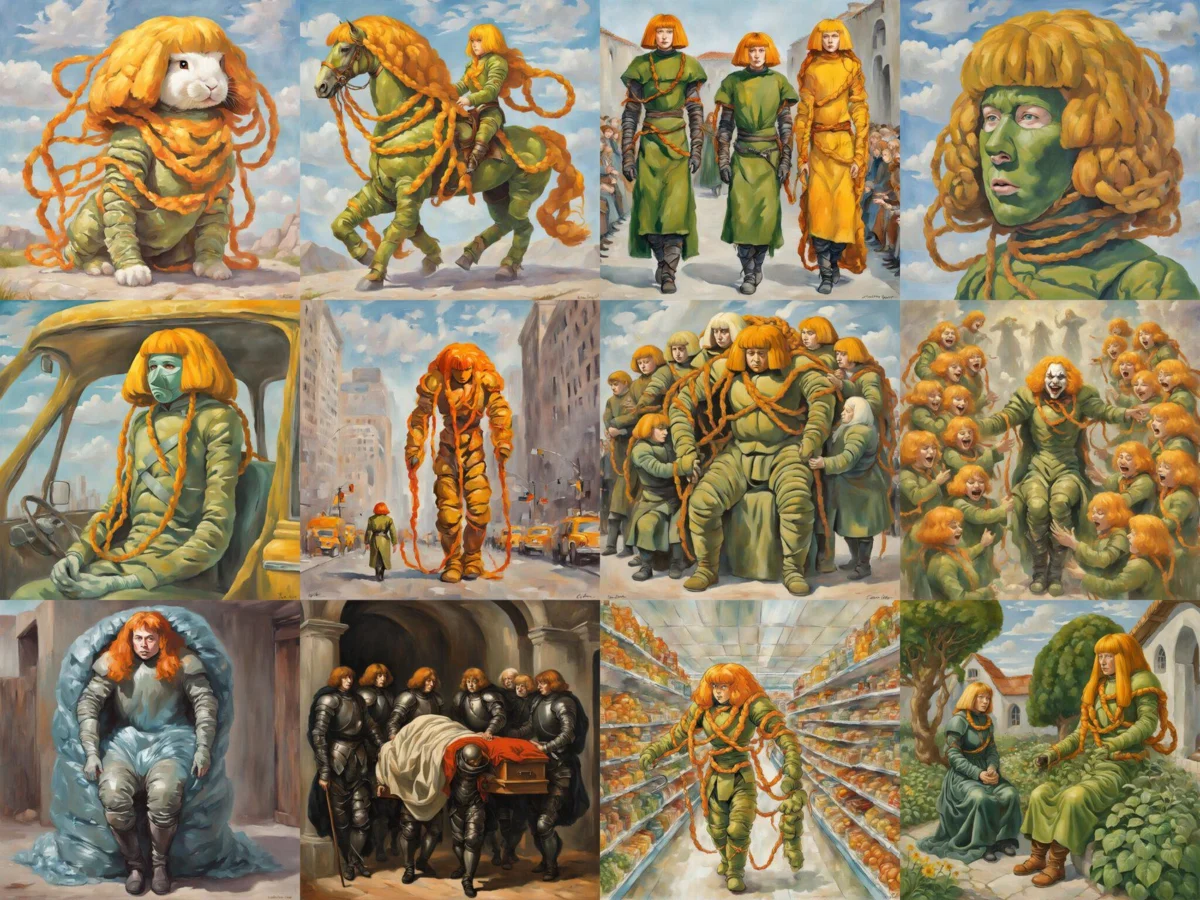
This landmark exhibition commemorates a quarter-century of the Whitney’s artport initiative—a pioneering digital platform that has served as an experimental gallery for net art commissions since its inception in 2001. As the institution marks 25 years of digital stewardship, the exhibition presents a comprehensive survey of over 100 works, tracing the evolution of the internet from an emerging frontier of creative expression to a complex, multi-layered environment defined by AI, decentralized networks, and generative code.
A Quarter-Century of Digital Curation
The exhibition is curated by Christiane Paul, the Whitney’s curator of digital art, alongside curatorial assistant David Lisbon and Colin Brooks, the museum’s head of digital development. The show is structured to mirror the fluid nature of the web, utilizing an open-floor gallery design intended to evoke the sensation of navigating floating browser windows.
The scope of the exhibition is divided into three primary programmatic pillars that have defined the history of the portal:
- The Gate Pages (2001–2006): Early commissions that served as conceptual portals, framing the artist’s website as a destination unto itself.
- Main Commissions (2001–Present): The foundational series of digital works that have pushed the boundaries of code, nonlinear storytelling, and interactive data visualization.
- The Temporal Series (2009–2024): Including the Sunrise/Sunset project and the successor On the Hour, these works interrogated the relationship between digital activity and physical time.
The inclusion of more than 100 artists—ranging from foundational net art figures like JODI, Mark Napier, and Golan Levin to contemporary practitioners such as Cory Arcangel, Morehshin Allahyari, and Maya Man—underscores the institutional commitment the Whitney has maintained toward a medium that is notoriously difficult to preserve.
Blockchain as Institutional Practice
For those tracking the intersection of institutional art and the blockchain, the exhibition serves as a critical historical archive. It documents the transition of onchain art from an avant-garde experiment to a recognized, albeit complex, medium for museum collection.
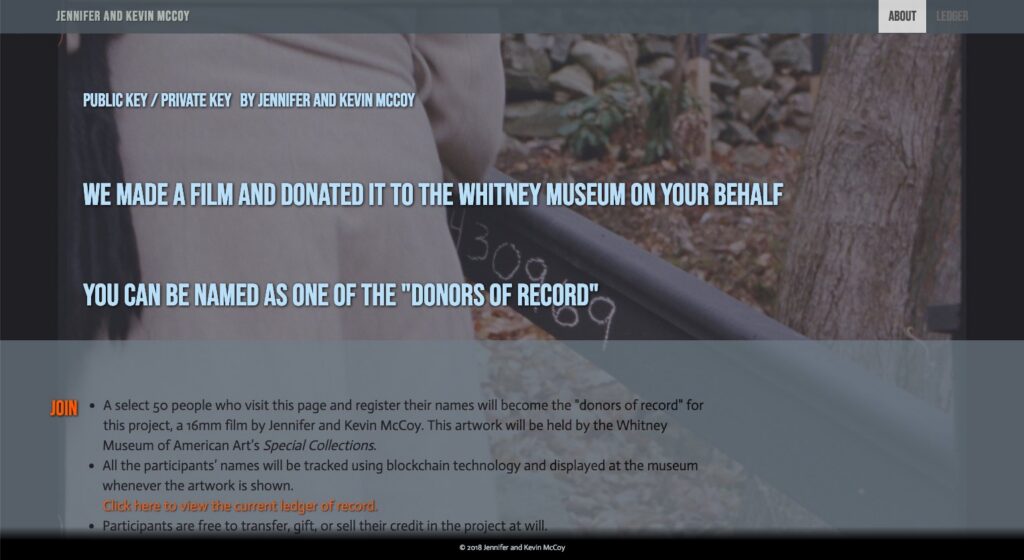
Central to this narrative is Jennifer and Kevin McCoy’s 2019 project, Public Key / Private Key. Commissioned two years before the NFT market surge, the piece remains a cornerstone of the Whitney’s digital collection. By allowing the public to become "donors of record" for a 16mm film donated to the museum, the McCoys successfully bridged the gap between traditional museum gift-giving and the transparency of blockchain ledger technology. The project’s unique mechanics, which allow for the transfer and sale of these donor credentials, turned the museum’s archival process into a live, interactive performance.
Adding an interactive layer for visitors, the Whitney revealed that the original film contains an embedded blockchain key. The first exhibition attendee to identify and report this key will be designated the 51st donor of record, illustrating the museum’s ongoing effort to gamify the experience of digital ownership and provenance.
The Generative Evolution: From Processing to AI
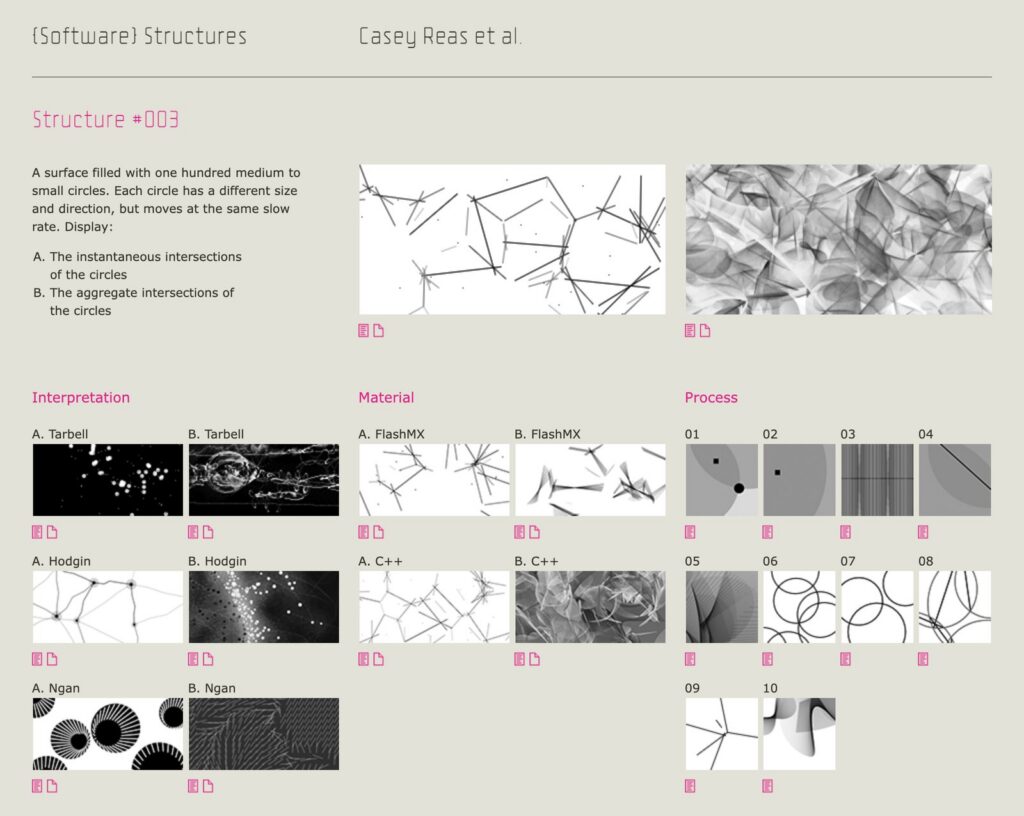
The exhibition also highlights the technical lineage of modern generative art. Casey Reas’s Software Structures (2004) stands as a foundational text in this history. By applying the conceptual rigor of Sol LeWitt’s wall drawings to software development, Reas’s project provided a template for how rules-based art could function in a digital medium.
This section is particularly relevant for contemporary audiences familiar with platforms like Art Blocks. The exhibition highlights the origins of the Processing language, co-founded by Reas and Ben Fry in 2001, which democratized generative coding. By restoring the project from its original Java-based architecture to a modern JavaScript environment, the museum emphasizes the importance of digital conservation, ensuring that works which might otherwise succumb to "link rot" or browser obsolescence remain accessible.
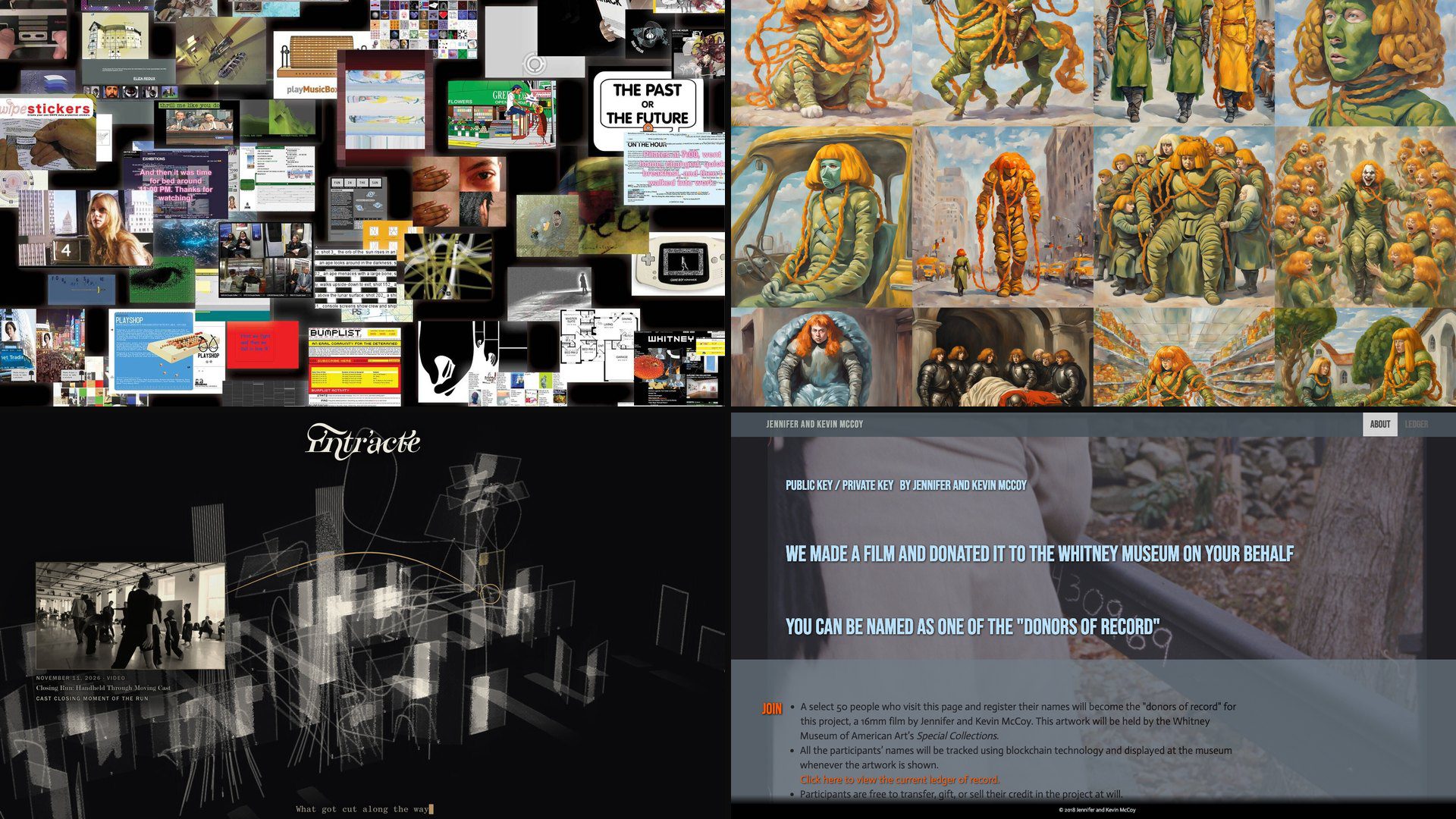
The narrative shifts to modern machine learning through the work of Holly Herndon and Mat Dryhurst. Their 2024 Biennial commission, xhairymutantx, serves as an examination of identity in the age of generative AI. By training a model on images of Herndon and allowing the public to generate infinite, distorted versions of the artist, the piece probes the ethics of AI training data and the potential for an artist to reclaim their digital likeness. This work, alongside their Holly+ project—which allows for the use of an AI-cloned voice through a Decentralized Autonomous Organization (DAO)—offers a clear demonstration of how onchain governance can be utilized to manage creative output.
Data, Archive, and Performance
The most contemporary thread in the exhibition is represented by Operator’s Entr’acte (2026), a database-driven artwork that acts as a capstone to their Human Unreadable trilogy. The project effectively utilizes the museum’s digital space to house motion-capture data, rehearsal footage, and AI-driven archival performance, marking a departure from static digital display toward a living, interactive, and ever-evolving archive.
This piece, in particular, signals a shift in how museums are beginning to handle "performance art" in a digital context. By allowing the archive to "perform itself" via an AI system, the Whitney is moving beyond simple display and into the realm of dynamic, responsive curatorial practice.
Global Accessibility and Institutional Support
A unique feature of this retrospective is the decision to extend the exhibition beyond the walls of the New York gallery. Throughout the run of the show, the Whitney is restaging the entirety of the Sunrise/Sunset and On the Hour series on their website, following a rotating daily schedule. This approach reflects the ethos of the original artport project: that net art should be accessible wherever there is an internet connection.
The financial backing for this ambitious exhibition includes support from the Adam D. Weinberg Artists First Fund, the Alan Howard Collection, the Alfred P. Sloan Foundation, and the Generative Art Foundation. Furthermore, the use of the onchain giving platform Endaoment to secure major funding highlights the degree to which the museum has integrated crypto-native infrastructure into its operational model.
Broader Implications for the Digital Art Market
The existence of artport: A History of Internet Art is a testament to the maturation of the digital art sector. For years, the volatility of the NFT market and the rapid pace of technological change led many to question the longevity of digital works. By placing these works alongside historical conceptual art, the Whitney is effectively standardizing the language of digital and onchain art.
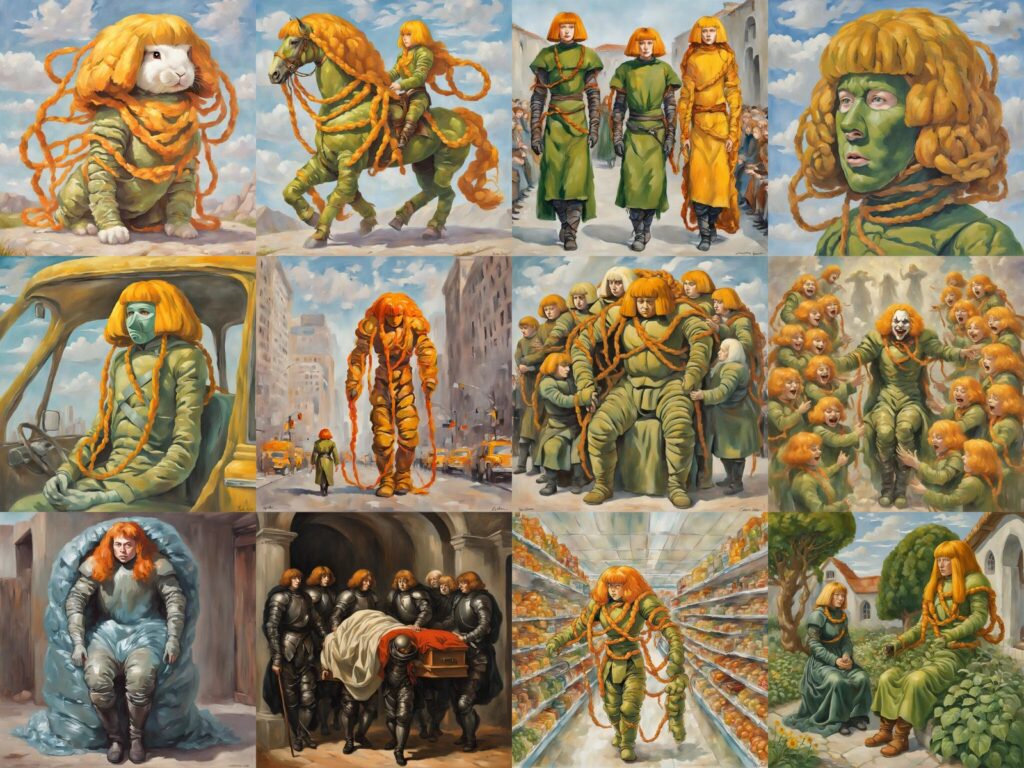
The exhibition confirms that the museum’s role is no longer just to display physical artifacts, but to act as a curator of protocols, a guardian of source code, and a facilitator of decentralized interaction. As the museum enters the latter half of the 2020s, the artport exhibition serves as a roadmap for how future institutions will continue to treat the digital landscape not as an external phenomenon, but as an essential component of the contemporary American artistic experience.
With the exhibition open until March 2027, the Whitney provides both a comprehensive look back at the origins of the digital aesthetic and a clear, albeit complex, look forward into the future of decentralized, AI-driven, and generative artistic production. The event reinforces the institution’s position at the vanguard of the digital age, ensuring that the ephemeral nature of the internet is grounded in the historical record.

