
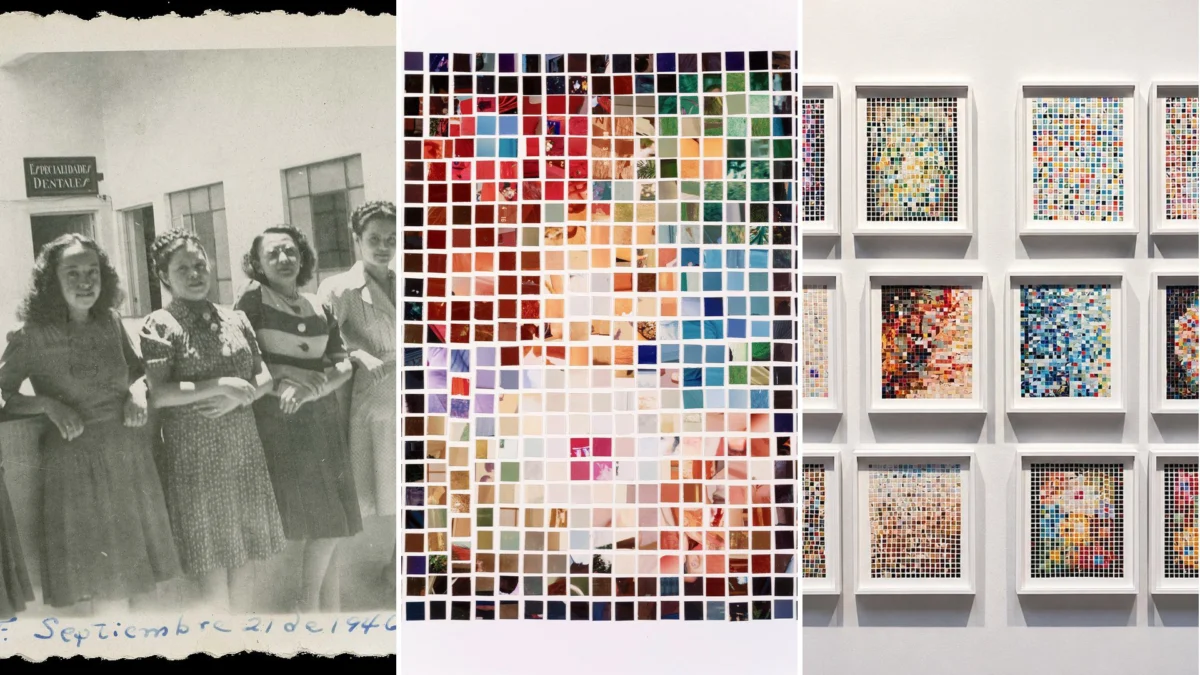
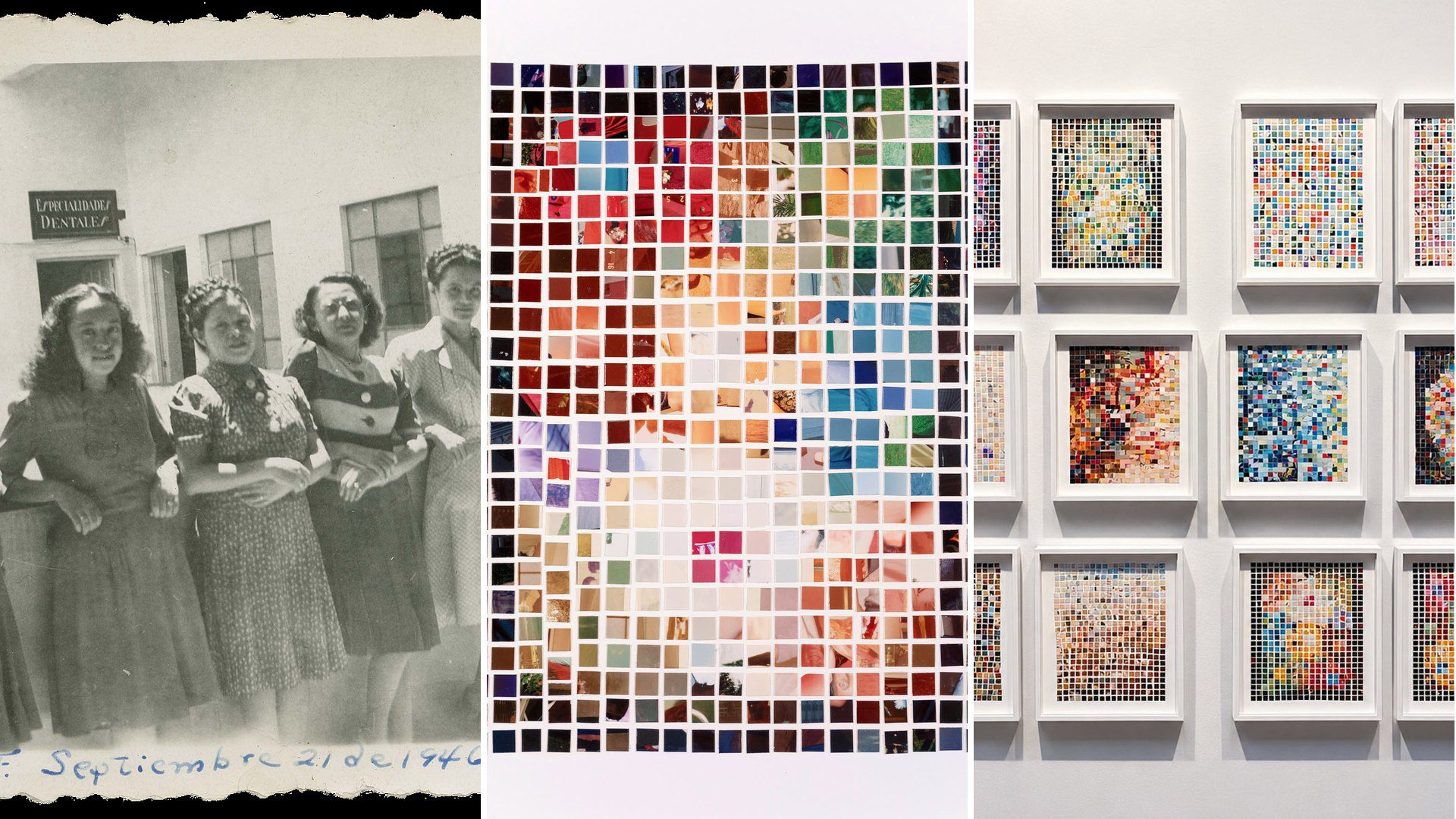
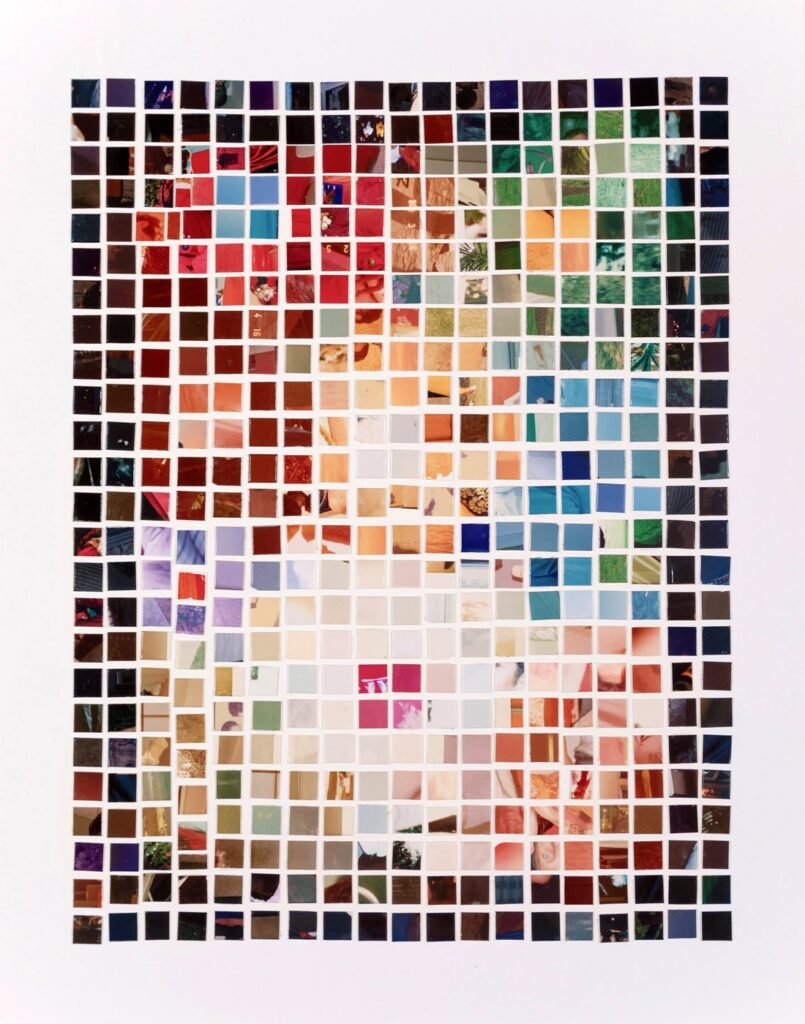
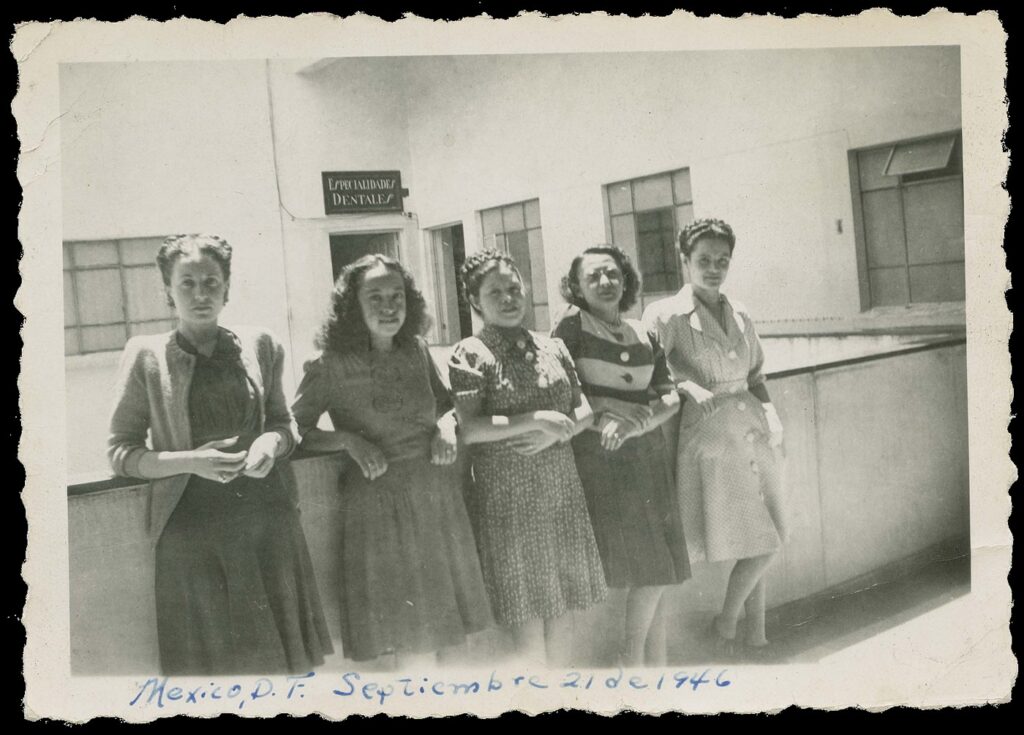
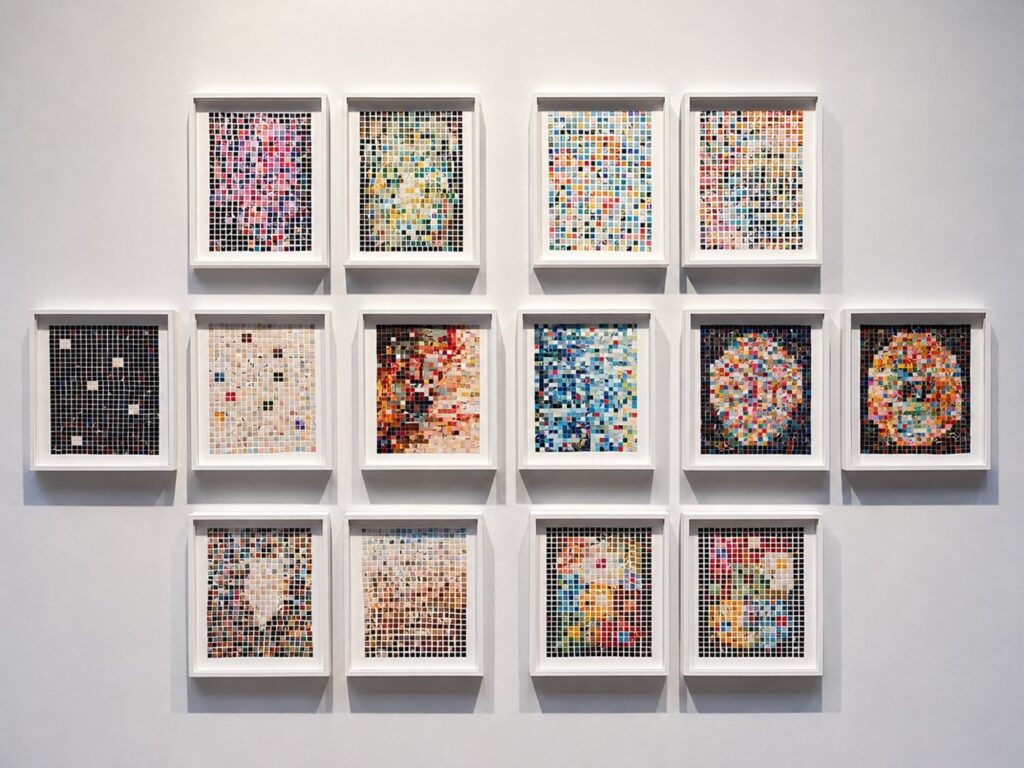
Alejandro Cartagena’s New Alphabets is a 2026 series of unique collages made by physically destroying old photographs. At the heart of this project lies a profound existential inquiry into the nature of photography as it nears its bicentenary. By dismantling discarded C-prints and silver gelatin prints—photographs rescued from the anonymity of Mexico City’s dumpsters—Cartagena reconstructs them into abstract, geometric compositions that resemble visual noise. This body of work, which debuted at Paris Photo (November 12–15, 2026) within the fair’s Digital Sector at booth F11 via the Caracas-based gallery Carmen Araujo Arte, serves as a deliberate intervention against the unchecked ingestion of human imagery by generative artificial intelligence models.
A Chronology of Artistic Evolution
To understand the gravity of New Alphabets, one must trace the trajectory of Cartagena’s engagement with the digital medium. His career has been defined by a constant tension between the physical object and its digital afterlife.
In 2021, at the height of the initial NFT boom, Cartagena launched his "20th Century Photographs" series. This project was framed as a "photography rescue mission," where he salvaged forgotten family archives, portraits, and street snapshots from the trash. By minting these images on the blockchain, he sought to grant them a form of digital immortality, preserving the ephemeral history of the 20th century in a permanent, verifiable ledger.
By 2025, his focus shifted toward the burgeoning influence of synthetic media. His video series "We Are Things" utilized an AI image generator specifically trained on his own extensive, decades-long photographic archive. In this phase, he explored the mimicry of his own stylistic "fingerprint" by machine learning, observing how his personal history could be synthesized into new, generative variations.
By 2026, the artist arrived at the antithesis of his previous efforts. With "New Alphabets," he transitioned from the role of preserver and collaborator to that of a disruptor. If the blockchain was a tool for preservation in 2021, and generative training was an experiment in 2025, 2026 represents a calculated pivot toward tactical erasure. The same physical prints that he once saved for the digital archive are now systematically destroyed, ensuring they can no longer be ingested by the "hungry" datasets that power contemporary AI models.
The Philosophy of Destruction as Production
Cartagena’s project statement invokes a somber critique of the current state of visual culture. He posits that for nearly 200 years, the photograph served as a window through which humanity learned to observe and interpret the world. However, in the current era, that vast, collective archive has been repurposed as the raw material for algorithmic synthesis. Drawing on the Victorian-era critique by Charles Baudelaire—who famously labeled photography the "humble servant of art and science"—Cartagena updates this sentiment for the modern era, warning that photography is now at risk of becoming the "secretary of AI."
The methodology behind New Alphabets is intentionally "radical and contradictory." By physically shredding, cutting, and reassembling prints into grids, circles, and triangles, the artist destroys the recognizable subject matter. The resulting works are aesthetically akin to the "noise" used as a starting point in diffusion models. Yet, where a machine sees noise as a chaotic field to be ordered into a coherent image, Cartagena’s work offers a human experience: a field where the viewer’s eye inevitably attempts to reconstruct the fragments—a partial face here, a sliver of a building there, a fragment of a flower. This process suggests that destruction, in this context, is not an end but a form of generative production that resists automation.
Paris Photo and the Digital Sector
The inclusion of New Alphabets in the 2026 Paris Photo Digital Sector, curated by Marco De Mutiis of the Fotomuseum Winterthur, provided an essential platform for this discourse. The sector was designed specifically to bridge the gap between the medium’s analog history and its digital future. Carmen Araujo Arte’s decision to pair Cartagena’s work with Diana López’s "VIA LUCIS / 11,900+ dianas"—a vast archive exploring identity and repetition—highlighted a recurring theme within the contemporary art market: how Latin American artists are interrogating the algorithm’s role in shaping reality.
The presence of New Alphabets in the Digital Sector alongside the main fair’s solo booth (C52), which showcased Cartagena’s iconic documentary works like "Suburbia Mexicana" and "Carpoolers," created a fascinating juxtaposition. Attendees were offered a rare opportunity to see the man who documented the physical reality of the Mexican landscape simultaneously attempting to shield the remnants of that reality from digital assimilation.
The Broader Implications for Onchain Art
Cartagena’s position within the art world is unique. As a cofounder of the NFT organization Fellowship, he has been a vocal proponent of the blockchain as a legitimate medium for photography and generative art. His recent public commentary on the release of Grant Yun’s "Sections" emphasizes his belief that our way of picturing the landscape must evolve alongside technological shifts.
However, his shift toward "New Alphabets" introduces a challenging question for collectors and institutions alike: What happens when the primary value of an image lies in its resistance to being seen or read by a machine?
The implications are twofold. First, there is the technical reality that the collages, once exhibited, can be re-digitized. Cartagena openly acknowledges this limitation; the work is not a permanent cure for the AI dataset problem, but rather a symbolic and conceptual barrier. Second, there is the shift in the collector’s mindset. For years, the value of onchain photography was tied to its accessibility, permanence, and ease of verification. Cartagena is now forcing a re-evaluation of this paradigm. He is proposing an "unreadable" aesthetic, a form of digital-era obscurantism that challenges the notion that all art should be instantly indexable and searchable by machine vision.
Data and Market Context
The rise of AI-trained datasets has created a paradoxical market for original, analog source material. While the total number of images in the global digital commons continues to grow exponentially, the supply of "un-scraped" or "un-digitized" physical prints remains finite. Cartagena’s decision to remove his physical archives from the potential training pool essentially creates a scarcity model based on analog integrity.
Market analysts tracking the intersection of photography and the NFT space note that artists like Justin Aversano have established significant value by placing photography on the blockchain to facilitate transparency and provenance. Cartagena, by contrast, is using the language of the NFT era—the interest in "archives" and "datasets"—to subvert the very systems that define that era. His work serves as a reminder that the history of photography is not merely a history of capture, but also a history of curation, destruction, and selection.
Conclusion: The Future of the Archive
Alejandro Cartagena has arrived at three distinct answers to the question of what to do with the photographic past: rescue it via the blockchain, synthesize it via AI, or destroy it to protect it from the machine. "New Alphabets" does not necessarily argue for one path over the others. Instead, it documents the internal struggle of an artist working through the consequences of the digital age.
As the industry moves toward 2027 and beyond, the questions raised by New Alphabets will become increasingly central. If an image is public and permanent, does it inherently belong to the training data of the future? Cartagena’s work suggests that artists may increasingly resort to physical disruption as a primary method of maintaining autonomy. Whether this becomes a broader trend in fine art remains to be seen, but for now, New Alphabets stands as a powerful, tactile rebuttal to the idea that every piece of human history is destined to be processed, analyzed, and synthesized by the models that follow. By turning photographs into noise, Cartagena is not just creating art; he is actively re-asserting the boundaries between human experience and machine interpretation.

