
As the cybersecurity community gathered in Baltimore for the annual Usenix Security conference, conversations frequently oscillated between the mundane realities of urban geography and the overwhelming industry-wide obsession with artificial intelligence. While researchers spent days debating localized security metrics and threat models, a more paradoxical and potentially disruptive hypothesis began to take shape among policy analysts and software engineers. The core of this emerging dilemma is counterintuitive: artificial intelligence may soon render software so fundamentally secure that it inadvertently triggers a severe operational crisis for national intelligence and law enforcement agencies.
For over a decade, agencies such as the Federal Bureau of Investigation have relied on offensive cyber operations, zero-day exploitation markets, and targeted malware tools to bypass digital encryption. However, the rapid evolution of automated, AI-driven vulnerability discovery threatens to eliminate the low-hanging fruit of software errors. As developers leverage advanced language models to scrub decades of latent bugs and integrate automated vulnerability scanning into continuous integration pipelines, the era of accessible software exploitation may be coming to a close. This impending security milestone threatens to plunge intelligence agencies into a state of structural darkness, potentially reigniting contentious political battles over mandated technological backdoors and exceptional access.
A Retrospective on the Golden Age of Electronic Surveillance
To understand the gravity of the current transition, it is necessary to examine the evolution of electronic surveillance over the past two decades. In the early 2000s, surveillance techniques mirrored the traditional investigative methods popularized in media depictions of law enforcement: wiretaps, physical tracking, and the monitoring of analog or early-generation digital communication devices. At the time, mobile phones primarily transmitted voice data, leaving minimal digital footprints on the devices themselves.
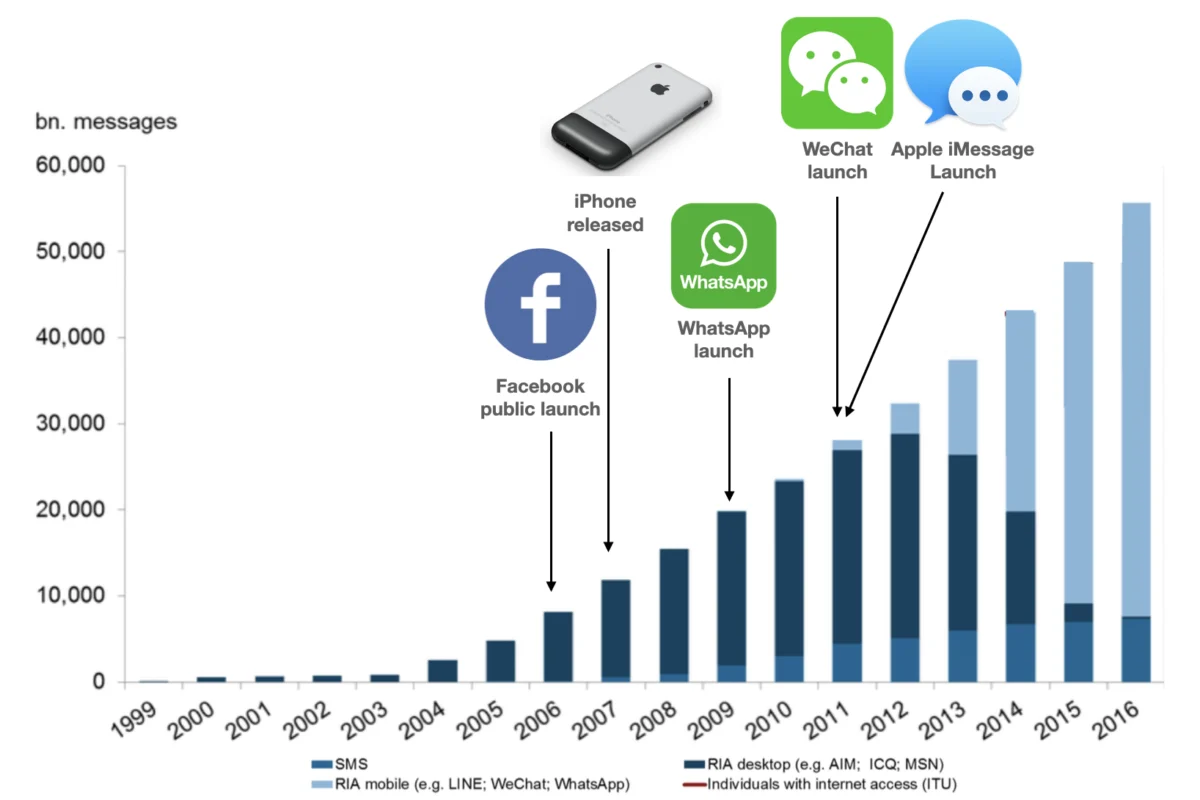
The operational landscape shifted dramatically in the late 2000s with the proliferation of smartphones capable of storing expansive volumes of user data. Law enforcement agencies quickly recognized that physical device extraction could yield critical evidence. However, this capability was abruptly disrupted around 2010 when major technology firms introduced default cryptographic protections. Apple initiated full-disk encryption on iOS devices using keys derived from user passcodes, a standard quickly adopted by Google’s Android operating system. Shortly thereafter, end-to-end encryption began migrating from niche enterprise software to mainstream consumer communication tools. By 2014, platforms such as WhatsApp were deploying end-to-end encryption at scale, safeguarding the communications of hundreds of millions of global users.

This rapid paradigm shift prompted alarm within federal oversight bodies. In late 2014, then-FBI Director James Comey launched the Going Dark initiative, initiating a public policy campaign aimed at compelling technology providers to build lawful interception mechanisms—commonly referred to as backdoors—into encrypted messaging applications and operating systems. The friction between national security imperatives and digital privacy culminated in the high-profile 2016 legal battle between Apple and the FBI over a locked iPhone linked to a domestic terror attack. That legal standoff ultimately dissolved not through a judicial mandate, but when an external third-party vendor demonstrated the technical capability to bypass the device’s security architecture independently.
For the subsequent decade, the Going Dark debate receded into a complex equilibrium. Rather than securing legislative mandates for backdoors, law enforcement and intelligence agencies adapted by purchasing proprietary, targeted exploitation tools from commercial offensive security vendors, such as GrayKey for device unlocking and sophisticated remote exploitation frameworks like NSO Group’s Pegasus. Concurrently, technology firms maintained a rigorous defensive posture, continuously patching vulnerabilities to stay ahead of exploit developers. This delicate balance of power between offensive capabilities and defensive patching has defined the cybersecurity landscape for years.
The Artificial Intelligence Shift in Vulnerability Discovery
The equilibrium that defined the post-Apple v. FBI decade is now facing an unprecedented disruption driven by advancements in generative artificial intelligence and machine learning models specialized in software analysis. In April of this year, artificial intelligence research firm Anthropic announced the deployment of a specialized frontier model, designated as Mythos, which demonstrated an exceptional aptitude for identifying complex software vulnerabilities. Recognizing the dual-use security implications of the technology, the United States government temporarily restricted its export, limiting access primarily to domestic agencies and verified enterprise partners.
Despite export controls and initial regulatory barriers, the capability to conduct automated, large-scale cyber reconnaissance has quickly diffused across the global technology sector. Major artificial intelligence laboratories, including OpenAI and prominent international open-weight model developers such as Z.ai and Moonshot, have demonstrated comparable capabilities in automated vulnerability discovery. The repository of critical, previously undiscovered flaws identified by these automated systems has expanded rapidly, altering the economics of software security.
This technological leap fundamentally changes the dynamics between attackers and defenders. Historically, software developers faced an overwhelming backlog of legacy code, making it mathematically impossible to identify and remediate every latent bug before malicious actors discovered them. Artificial intelligence alters this equation by providing scalable, automated tools capable of auditing millions of lines of code simultaneously. Major software vendors are currently overhauling their continuous integration and continuous deployment pipelines to integrate AI-driven vulnerability scanning, ensuring that code is rigorously audited before deployment.

Industry analysts project that within the next two years, widely utilized commercial software applications will largely exhaust their inventory of remotely exploitable, low-hanging security bugs. While absolute zero-bug software remains a theoretical impossibility, the practical ceiling on accessible vulnerabilities is dropping precipitously. For software engineers and privacy advocates, this outcome represents a historic victory for global digital security. For law enforcement and intelligence operations, however, it signifies an unprecedented operational crisis.
Implications for Intelligence Operations and National Security
As automated vulnerability remediation hardens commercial software against remote exploitation, intelligence agencies face the prospect of a true Going Dark scenario across advanced, well-maintained platforms. Without a steady supply of easily discoverable zero-day vulnerabilities, the commercial market for offensive hacking tools will inevitably contract. Agencies that have grown accustomed to purchasing off-the-shelf exploits to bypass encryption will find themselves unable to penetrate modern, AI-hardened device architectures.
This capability deficit is anticipated to revive intense policy pressure on the technology sector to implement exceptional access mechanisms. Intelligence and law enforcement stakeholders are likely to renew their demands for intentional architectural backdoors, arguing that national security demands legible communications regardless of commercial encryption standards. Such pressure could manifest as legislative mandates or regulatory frameworks requiring software vendors to build cryptographic key escrow systems or administrative bypasses into their products.
However, security experts emphasize that mandating exceptional access introduces profound systemic risks. Designing backdoors into cryptographic systems inherently weakens the overall security posture of the infrastructure, creating vulnerable entry points that can be exploited by foreign adversaries, criminal syndicates, and hostile nation-state actors. Furthermore, a regulatory framework that compels technology companies to weaken domestic software could fragment the global technology market, prompting international customers to migrate away from United States-based software ecosystems to avoid perceived surveillance compromises.
The overarching irony of this impending technological transition lies in its timing and self-defeating nature. Just as the global software industry achieves a historic milestone in securing digital infrastructure against systemic vulnerabilities through artificial intelligence, governments may compel the intentional reintroduction of structural weaknesses. The policy choices made by lawmakers and intelligence leadership over the coming years will determine whether the rise of secure software yields a resilient digital society or ushers in a new era of engineered vulnerability.

