
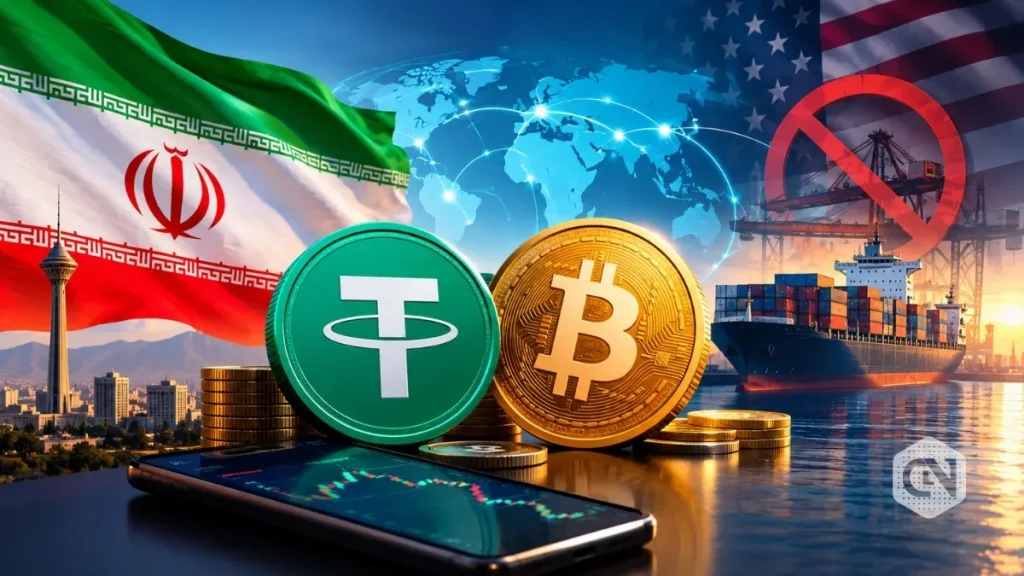
The landscape of international trade for the Islamic Republic of Iran has undergone a fundamental transformation, as the nation increasingly pivots toward decentralized digital assets to circumvent the isolating effects of long-standing United States sanctions. Facing restricted access to the SWIFT global messaging system and cut off from traditional dollar-denominated banking corridors, Iranian businesses and state entities have integrated cryptocurrencies—most notably the stablecoin Tether (USDT) and Bitcoin—into the core of their commercial operations. Data provided by blockchain analytics firm TRM Labs indicates that approximately $10 billion in cryptocurrency flowed through Iran-linked entities in 2025, underscoring a strategic shift that has turned virtual assets into a critical lifeline for a sanctioned economy.
The Evolution of Iran’s Foreign Exchange Policy
For years, the Iranian government enforced rigid controls over foreign-exchange repatriations. Under the previous regulatory framework, exporters—particularly in the lucrative oil and petrochemical sectors—were mandated to surrender a significant portion of their foreign currency earnings to the Central Bank of Iran (CBI) at government-set, official rates. This policy often led to widespread non-compliance, as exporters faced significant losses by converting revenue at rates far below the actual market value. Consequently, many firms opted to hoard funds in offshore accounts or failed to declare their full earnings, leading to a massive deficit in the state’s reported foreign currency reserves.
In a recent shift, the General Inspection Organization of Iran revealed that over 20,000 entities had failed to return approximately 94 billion euros to the domestic economy, a staggering figure that highlighted the failure of the centralized exchange mechanism. To address this, the Central Bank has introduced more flexible regulations. These reforms permit exporters to utilize their foreign currency earnings directly to fund their own imports, effectively bypassing the mandatory government conversion process. This newfound flexibility, when combined with the adoption of crypto-assets, has provided Iranian enterprises with a sophisticated, if unofficial, workaround for their international settlement needs.
Chronology of Sanctions and the Rise of Crypto-Trade
The integration of digital assets into Iran’s economic strategy did not occur overnight; it is the culmination of decades of tightening financial pressure.
- 2018: The United States unilaterally withdrew from the Joint Comprehensive Plan of Action (JCPOA) and reinstated sweeping sanctions, effectively severing Iran from the global financial system.
- 2019-2020: As traditional banking became untenable, Iran began experimenting with Bitcoin mining as a method to generate state revenue. The government legalized mining, albeit with strict licensing, to monetize subsidized electricity.
- 2021-2022: The rise of stablecoins, particularly USDT on the Tron blockchain, offered a more efficient medium of exchange than the volatile Bitcoin. Iranian importers began utilizing crypto-exchanges to pay Chinese and other international suppliers.
- 2023-2024: The U.S. Treasury Department issued multiple advisories warning that the Iranian regime was utilizing cryptocurrency to fund regional proxies and bypass anti-money laundering (AML) controls.
- 2025: Cryptocurrency activity reaches a milestone, with $10 billion in annual volume, confirming that digital assets are no longer a niche tool but a cornerstone of Iran’s trade infrastructure.
Data Analysis: The Mechanics of the Shadow Pipeline
Blockchain analytics confirm that Tether (USDT) remains the preferred vehicle for Iranian commerce. The asset’s peg to the U.S. dollar provides the stability necessary for business-to-business transactions, while the Tron network offers high throughput and relatively low transaction fees. According to market observers, the Central Bank of Iran itself has actively engaged in the acquisition of USDT, with reports suggesting the bank purchased upwards of $500 million in the stablecoin over the last fiscal year to bolster its ability to facilitate cross-border settlements.
The data further highlights a concentration of activity within the mining sector. Bitcoin, which remains the secondary choice for larger, bulkier settlements, is frequently tied to local mining operations. Analysis of on-chain flows from the fourth quarter of the previous year indicates that entities linked to the Islamic Revolutionary Guard Corps (IRGC) were responsible for nearly 50% of these transactions, suggesting that crypto-liquidity is being used not only for commercial imports but also for broader state-sanctioned financial maneuvering.
Official Responses and International Regulatory Pressure
The United States has responded to this trend with aggressive enforcement and diplomatic pressure. The U.S. Treasury has consistently labeled Iran’s use of digital assets as a primary vehicle for "sanction diversion." This has placed a significant burden on the cryptocurrency industry, as regulators now demand that centralized exchanges implement rigorous Know Your Customer (KYC) and Anti-Money Laundering (AML) protocols to detect and freeze Iran-linked wallets.
The impact of this pressure is visible in the actions taken by private sector firms. Tether, the issuer of the world’s largest stablecoin, has reported freezing hundreds of millions of dollars’ worth of USDT suspected of being linked to illicit Iranian activities. Furthermore, the U.S. government has successfully seized nearly $1 billion in crypto-assets associated with Iranian operations. Despite these seizures, industry executives in Tehran suggest that the sheer volume of daily activity is too vast to be entirely curtailed, and they argue that as long as the Iranian economy remains isolated, the demand for decentralized settlement channels will continue to grow.
Broader Economic Implications
The transition toward crypto-based trade carries profound implications for the global financial order. By effectively neutralizing the U.S. government’s ability to "see" and "block" transactions, Iran is testing the resilience of the current sanctions regime. For the average Iranian exporter—such as those in the steel, chemical, or agricultural sectors—the ability to bypass the central bank’s bureaucracy is viewed as a necessary modernization of their business model.
However, analysts warn that this reliance on crypto is a double-edged sword. While it provides immediate relief from sanctions, it exposes the national economy to the risks inherent in the digital asset market, including exchange collapses, regulatory volatility, and the potential for large-scale asset freezes by centralized stablecoin issuers.
Moreover, the normalization of crypto-trade in Iran has made it a focal point in the broader debate over the regulation of decentralized finance (DeFi). The global community is now tasked with balancing the preservation of financial integrity with the inherent anonymity of blockchain technology. If the current trajectory continues, it is likely that future sanctions will shift away from targeting individual banks and toward a more comprehensive, albeit technically difficult, effort to police global stablecoin liquidity.
Conclusion: A New Era of Financial Diplomacy
The use of Bitcoin and USDT in Iran serves as a case study in how technology can undermine traditional geopolitical leverage. While the $10 billion figure represents a significant portion of Iran’s trade volume, domestic business leaders remain cautious, noting that crypto-assets cannot fully replace the complex credit facilities and international banking relationships required for a nation of Iran’s size.
As the standoff between Tehran and Washington continues, the "crypto-pipeline" is expected to become more sophisticated. The integration of these assets into the daily operations of Iranian firms signifies a long-term adjustment to a world where financial systems are increasingly bifurcated. For global regulators, the challenge remains clear: in an era of digital borders, the traditional tools of economic statecraft are being challenged by the borderless, decentralized, and persistent nature of the blockchain. Whether this trend will lead to a permanent restructuring of how sanctioned nations interact with the global market remains one of the most significant questions in contemporary international finance.

