
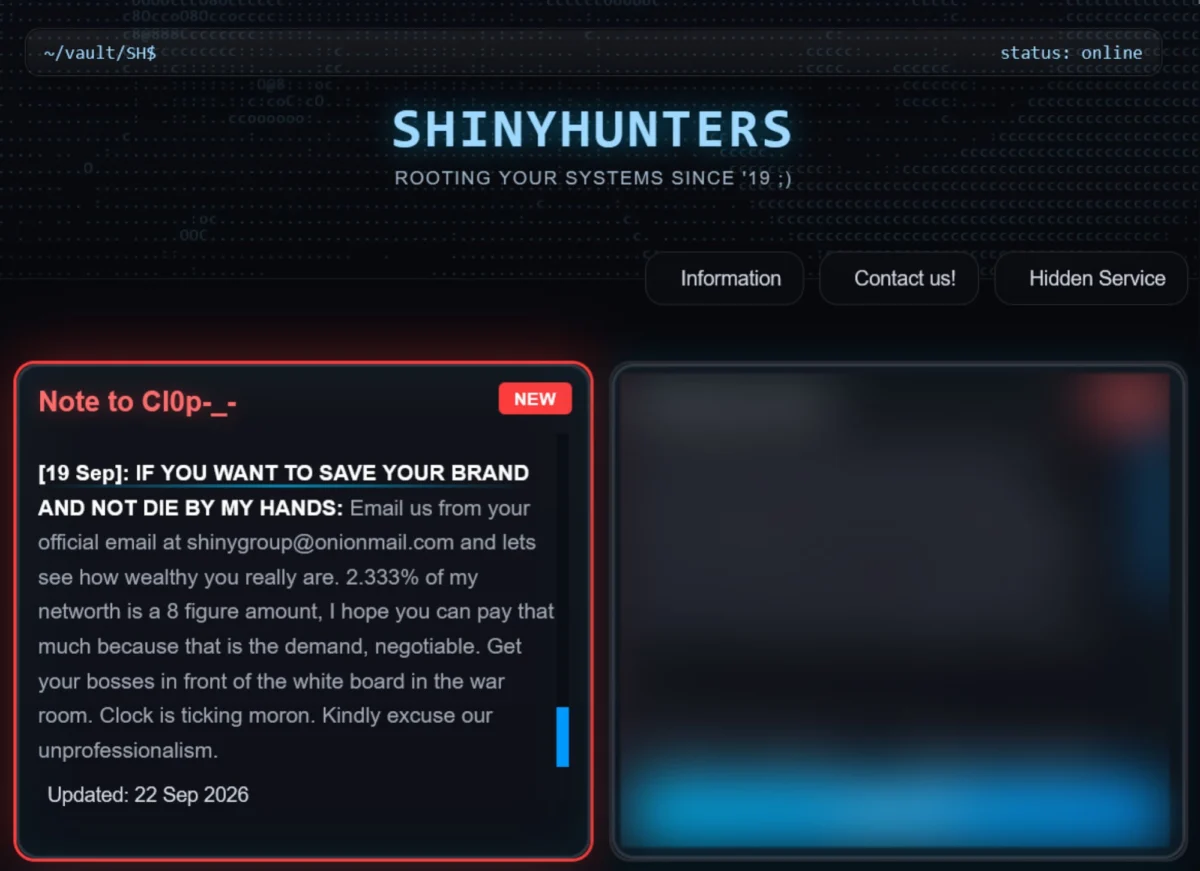
The landscape of federal cybersecurity was severely shaken as the notorious cybercrime syndicate known as ShinyHunters claimed responsibility for one of the most brazen data breaches in recent history, asserting that it successfully infiltrated the systems of the Federal Bureau of Investigation (FBI). The group’s primary objective, according to multiple cybersecurity reports and statements released by the hackers, is not financial extortion, but rather a direct retaliation against the bureau for public advisories issued earlier this year.
The unfolding crisis has raised critical questions regarding the vulnerability of federal digital infrastructure, the security of sensitive government personnel data, and the escalating aggression of elite cybercriminal organizations operating globally. As federal investigators scramble to verify the legitimacy of the breach, the potential ramifications extend far beyond a bureaucratic feud, posing severe security risks to thousands of government workers and their families.
The Genesis of the Conflict and the FBI Advisory
To understand the current standoff between ShinyHunters and the FBI, it is necessary to examine the events of May 2026. On May 15, the FBI’s Internet Crime Complaint Center (IC3) published a comprehensive public service announcement warning American institutions and organizations about an aggressive cybercriminal collective utilizing extortion tactics, harassment, and severe digital intimidation.

The advisory specifically highlighted the methodologies of ShinyHunters, accusing the group of launching devastating cyberattacks on learning management systems and educational infrastructure, which subsequently disrupted schools and students nationwide. Furthermore, the FBI’s public warning detailed the psychological and physical tactics allegedly employed by the syndicate to pressure victims into paying ransoms. These tactics included persistent threatening phone calls, targeted harassment campaigns directed at victims and their families, and "swatting"—the dangerous practice of making false emergency calls to dispatch heavily armed police units to a target’s residential address.
Rather than remaining silent or absorbing the blow to their reputation, ShinyHunters chose to push back aggressively. The syndicate disputed the characterizations made in the FBI’s Flash report, claiming that the bureau’s advisory contained substantial false allegations and exaggerated descriptions of their operations. Setting a strict one-week ultimatum, the group demanded that FBI Director Kash Patel and Brett Leatherman, the assistant director of the FBI’s cyber division, formally retract or correct the statements made in the May advisory. To prove the validity of their threats, ShinyHunters escalated from verbal pushback to direct cyber warfare against the federal law enforcement agency itself.
The Mechanics of the Alleged Breach: Exploiting PeopleSoft
According to details provided by the hacking collective to prominent cybersecurity journalists and intelligence researchers, the breach was initiated through a targeted exploitation of the FBI’s job application portal, specifically the recruitment website FBIjobs.gov.
ShinyHunters asserted that they leveraged a zero-day vulnerability—a critical, previously unknown software flaw—embedded within Oracle PeopleSoft software utilized by the platform. By exploiting this unpatched vulnerability, the hackers claimed they were able to bypass standard authentication protocols and execute unauthorized commands directly on the host servers without requiring prior login credentials.

Once inside the recruitment infrastructure, the threat actors allegedly pivoted to compromise FBI-managed servers hosted on Amazon Web Services (AWS) GovCloud. The syndicate claims to have siphoned between two and three terabytes of highly sensitive government data. Among the specific internal services reportedly compromised in the sweep are human resources databases, the MedLink system, and the Criminal Justice Information Services (CJIS) division, though the full extent of the penetration remains unconfirmed by independent technical audits.
The recruitment website itself visibly reflected the disruption. Screenshots captured by technology observers showed the FBI careers landing page displaying a "System Unavailable" banner. The message stated that Apply.fbijobs.gov and the Special Agent Applicant Portal were temporarily offline, hovering ominously above the agency’s standard recruitment slogan, "Set Yourself Apart."
Verification Efforts and Cybersecurity Analysis
In the wake of the claims, cybersecurity experts, open-source intelligence (OSINT) specialists, and investigative media outlets rushed to analyze the validity of the data samples provided by ShinyHunters.
To substantiate their claims, the group supplied 404 Media with a data sample purportedly containing personal identifiable information (PII) belonging to approximately 5,000 current FBI employees and prospective job applicants. The compromised data fields allegedly included full legal names, private home addresses, personal telephone numbers, dates of birth, and, in several instances, biographical details concerning the spouses and family members of the personnel.

Investigative researchers employed OSINT Industries—an advanced open-source intelligence verification platform—to cross-reference the telephone numbers contained within the leaked sample. The analysis revealed that numerous phone numbers actively corresponded to the names of individuals listed alongside them. Furthermore, secondary checks utilizing Darkside, a specialized tool designed to search through historical databases of previously compromised credentials and corporate leaks, successfully linked several of the targeted phone numbers directly to personnel working within the United States Department of Justice.
Despite these alarming indicators, professional cybersecurity firms have urged caution regarding the completeness of ShinyHunters’ technical narrative. In a detailed post-incident analysis published by CyPro, researchers pointed out that the syndicate’s public statements lacked the rigorous technical disclosures typically required to independently verify a complex enterprise software exploit. Specifically, ShinyHunters failed to publicly identify a specific Common Vulnerabilities and Exposures (CVE) reference number, a precise PeopleSoft component, specific exploit request strings, or affected product version configurations. Furthermore, cybersecurity analysts noted that public reporting has yet to fully explain how the attackers successfully bridged the gap from the public-facing recruitment portal into highly secure internal AWS GovCloud environments.
A Pattern of Escalation: Recent Campaign History
The alleged FBI hack does not exist in a vacuum; rather, it is part of an aggressive, high-profile escalation by ShinyHunters across the global threat landscape throughout the autumn of 2026.
The group’s operational tempo has accelerated dramatically over the summer. In June, threat intelligence researchers at Google published a comprehensive report detailing a coordinated ShinyHunters campaign specifically targeting the education sector by weaponizing vulnerabilities within Oracle software products.

More recently, on September 18, ShinyHunters executed a stunning power play within the cybercrime underworld by completely hijacking the official leak website of Cl0p, a rival and notorious ransomware gang. To rub salt in the wound, the syndicate plastered an eight-figure ransom demand across the hijacked portal, accompanied by a mock law enforcement seizure notice. This exact tactic—deploying fake federal seizure banners—was mirrored just days later when they defaced portions of the FBI’s online recruitment apparatus.
This aggressive branding and willingness to cross swords with both rival criminal syndicates and the world’s most powerful law enforcement agency underscore a significant shift in ShinyHunters’ operational posture. Moving away from purely financially motivated corporate extortion, the group appears increasingly driven by notoriety, ego, and ideological defiance against state-sponsored cybersecurity enforcement.
Broader Implications and National Security Fallout
The potential exposure of sensitive FBI employee data carries profound national security implications that stretch far beyond the immediate public relations embarrassment for the bureau.
If the stolen dataset is proven to be authentic and comprehensive, the personal exposure of federal law enforcement officers, special agent applicants, and their immediate families creates severe operational and safety vulnerabilities. Home addresses and private phone numbers in the hands of malicious actors—ranging from domestic criminal enterprises and extremist networks to hostile foreign intelligence services—provide a direct avenue for harassment, physical intimidation, surveillance, and targeted cyber-espionage against the very individuals tasked with upholding national security.

Furthermore, this incident compounds a difficult year for the bureau’s digital defenses. The latest breach follows a high-profile security lapse in March, when Iran-linked hackers successfully compromised the personal email account of FBI Director Kash Patel, subsequently publishing historical photographs and documents online. While the DOJ and FBI maintained at the time that the compromised material contained no classified government secrets, the recurrence of high-level digital intrusions points to systemic challenges in securing the personal and professional digital footprints of top federal officials.
Official Response and the Path Forward
In an official statement responding to inquiries from technology publications like PCMag, the FBI acknowledged the unfolding situation: "The agency is aware of claims regarding unauthorized activity affecting FBIjobs.gov and is currently investigating."
Federal incident response teams, alongside cybersecurity contractors and cloud infrastructure partners, are working around the clock to audit affected servers, patch vulnerabilities, and determine the exact volume of data exfiltrated during the attack. Meanwhile, the bureau faces a difficult balancing act: managing an active criminal investigation into a defiant hacker collective while reassuring its workforce—and the broader public—that federal data infrastructure remains resilient against determined state and non-state adversaries.
As the one-week ultimatum issued by ShinyHunters ticks down, the immediate future remains uncertain. For the thousands of federal employees and job applicants whose private lives may now be exposed on dark web forums, the primary concern is no longer the political posturing between a cybercrime syndicate and federal law enforcement, but the very personal reality of securing their homes, families, and digital identities in the wake of an unprecedented breach.

