
Apple’s annual hardware refresh cycle has once again pushed the boundaries of mobile computing performance. Following the commercial launch of the iPhone 18 Pro and iPhone 18 Pro Max, preliminary laboratory tests evaluating the newly integrated A20 Pro processor reveal performance metrics that significantly outpace preceding hardware generations and rival architectures currently available on the consumer market. Built upon an advanced 2-nanometer fabrication node, the silicon powering Apple’s latest flagship lineup demonstrates unprecedented capabilities in both synthetic and computational processing workloads, cementing the company’s long-standing dominance in mobile chip design.

Technical Architecture of the A20 Pro
To understand the scale of the performance leap demonstrated in recent benchmarks, one must examine the physical architecture of the A20 Pro. Fabricated using cutting-edge 2-nanometer process technology—a milestone that shrinks transistors to molecular scales to maximize energy efficiency while boosting raw compute power—the processor layout is carefully engineered for hybrid workloads.
The system-on-a-chip (SoC) features a redesigned 6-core central processing unit (CPU) configuration, comprising two high-performance "super cores" designed for intensive tasks and four efficiency cores optimized for background operations and battery preservation. Alongside the CPU is a 7-core graphics processing unit (GPU) equipped with dedicated Neural Accelerators, designed to handle advanced rendering, ray tracing, and high-fidelity mobile gaming. Furthermore, the architecture incorporates a dual 16-core Neural Engine specifically purposed for accelerated on-device artificial intelligence operations, machine learning inference, and ambient intelligence tasks integrated deeply into the operating system.

Comprehensive Benchmark Analysis and Methodology
To maintain scientific integrity and eliminate variables that could artificially suppress or inflate scores, standardized testing protocols were applied. Evaluation units of the iPhone 18 Pro were subjected to assessment immediately following initial activation. The devices operated on a clean system installation devoid of third-party applications, background synchronization routines, or active cellular data connections during the testing window.
Testing utilized industry-standard benchmark suites, specifically Geekbench 6 and Geekbench 7, which measure single-core and multi-core CPU capabilities as well as GPU computation throughput.

In the rigorous Geekbench 7 CPU evaluation—the premier benchmark framework utilized for contemporary mobile and desktop architecture assessments—the iPhone 18 Pro recorded a single-core score of 3,959 and a multi-core score of 10,854. In the corresponding Geekbench 7 GPU test, the hardware achieved an unprecedented score of 61,194.
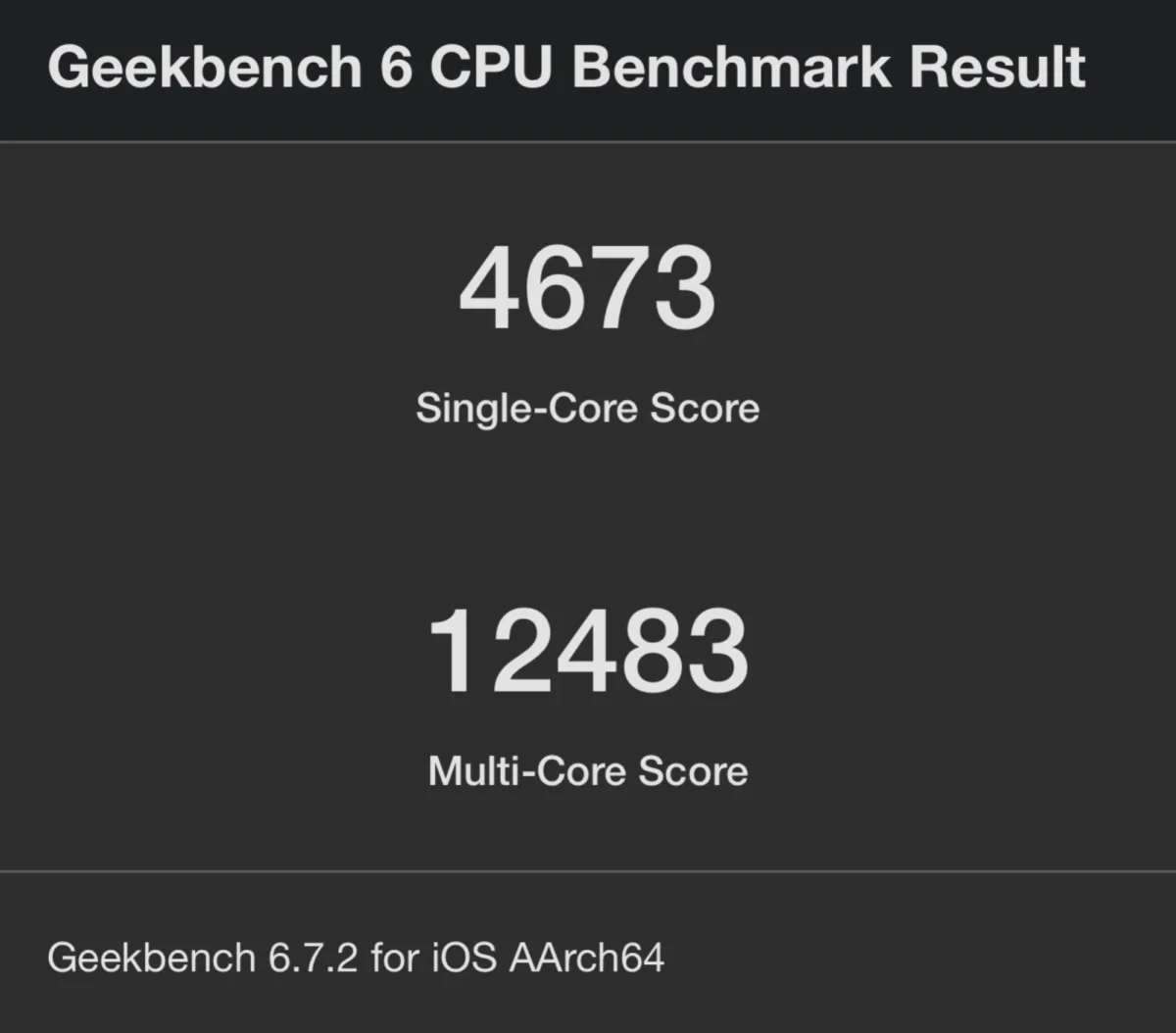
When evaluated using the legacy Geekbench 6 framework to allow direct cross-generational comparisons with previous iterations, the performance margins widened further. The device registered a single-core CPU score of 4,673 and a multi-core result of 12,483. When juxtaposed with competing flagship smartphones powered by alternative silicon—such as Qualcomm’s Snapdragon 8 Elite Gen 5 architecture featured in rival ultra-tier Android devices—the A20 Pro maintains a substantial performance lead, particularly in single-threaded operations and sustained thermal efficiency. Compared directly against its immediate predecessor, the A19 Pro found in the previous generation, the A20 Pro delivers a uniform performance uplift of approximately 25 percent across all primary testing vectors.

Historical Context and the Evolution of Apple Silicon
The ascent of Apple’s proprietary silicon program represents one of the most successful strategic transitions in the consumer electronics industry. Initiated earnestly over a decade ago under the leadership of executive teams that included former hardware engineering chiefs and current corporate leadership, the shift away from third-party merchant silicon providers allowed Apple to co-design software and hardware in tandem.
This vertical integration has consistently yielded processors that outpace industry roadmaps, forcing competitors in both the mobile and personal computer spaces to accelerate their own research and development efforts in advanced node fabrication and heterogeneous computing architecture. The A20 Pro represents the pinnacle of this multi-year evolutionary arc, serving not only as the engine for the traditional candy-bar smartphone form factor but also as the processing foundation for experimental hardware categories, such as the upcoming foldable iPhone Duo.

Real-World Implications and User Experience
While synthetic benchmarks provide an objective framework for comparing processing ceilings, industry analysts and reviewers emphasize the nuance regarding real-world application. For the average consumer executing routine tasks—such as web browsing, messaging, high-resolution media streaming, and casual photography—the computational headroom provided by the A20 Pro may remain largely underutilized.
Because Apple’s previous generations of mobile processors have consistently delivered responsive performance, the marginal velocity gains of the A20 Pro are most pronounced during specialized, resource-intensive workflows. These include complex 4K video rendering directly on a timeline, high-end mobile gaming with ray tracing enabled, and extensive on-device generative artificial intelligence tasks. For power users and developers leveraging advanced machine learning models locally on the device, the dual 16-core Neural Engine provides the necessary throughput to execute complex prompts without relying on cloud-based server infrastructure.

Industry Response and Market Reception
The arrival of the A20 Pro has prompted immediate re-evaluations from semiconductor analysts and competitors regarding the state of 2-nanometer mass production yields. Industry observers note that Apple’s ability to secure substantial allocation of cutting-edge fabrication lines has once again given the corporation a distinct competitive moat.
Concurrently, telecommunications providers and retail partners have initiated aggressive promotional campaigns surrounding the iPhone 18 Pro launch. Major carriers, including T-Mobile, have rolled out trade-in incentives offering up to $1,200 in bill credits for qualifying devices, signaling robust initial market demand despite broader economic headwinds affecting consumer discretionary spending on consumer electronics.

Future Outlook: Expanding the A20 Ecosystem
As the hardware lifecycle for the 2026 release cycle progresses, technical evaluation will inevitably expand beyond the standard Pro and Pro Max configurations. Industry researchers are particularly focused on the forthcoming performance metrics of the foldable iPhone Duo, which utilizes the exact same A20 Pro silicon package. Because the Duo incorporates an expansive, foldable primary display and a structurally distinct thermal dissipation profile compared to traditional monolithic handsets, engineers and consumers alike await independent verification of how thermal management impacts sustained performance under prolonged workloads.
Ultimately, the benchmark results of the A20 Pro reaffirm Apple’s technical leadership in mobile semiconductor engineering. Whether this computational dominance translates into long-term shifts in mobile software development—particularly regarding localized artificial intelligence capabilities—will depend heavily on how software developers harness the expanded hardware capabilities in the application ecosystem over the coming years.

