• Home
  • About Us
  • Contact Us
  • Cookies Policy
  • Disclaimer
  • DMCA
  • Privacy Policy
  • Terms and Conditions
Dr Crypton
Secure Your Future in Crypto
Artificial Intelligence & Tech

Estimators in Scikit-LLM: A KDnuggets Cheat Sheet

by admin September 16, 2026
written by admin

Integrating Large Language Models (LLMs) into production-grade machine learning pipelines has historically presented a significant architectural challenge. Data scientists and machine learning engineers often find themselves choosing between two suboptimal paths: adopting the structured, rigorous framework of scikit-learn, which is traditionally designed for static datasets, or building custom, brittle scripts that rely on iterative API calls, complex error handling, and unpredictable response formats. The latter approach frequently results in codebases characterized by nested loops, fragile string parsing, and extensive try-except blocks that fail to account for the stochastic nature of generative AI outputs.

To bridge this divide, the open-source community has introduced Scikit-LLM, a library designed to encapsulate language models within the familiar scikit-learn estimator API. By standardizing the interface through which LLMs are invoked, Scikit-LLM allows developers to leverage existing tools—such as pipelines, cross-validation, and automated metrics reporting—without reinventing the infrastructure for every new project.

The Evolution of Model Integration

The rise of LLMs has created a paradigm shift in how classification tasks are executed. In traditional machine learning, models are trained on large, labeled datasets where the underlying weights are updated to reflect patterns. In the LLM era, the model weights are typically frozen, and the task specification is moved into the prompt.

Scikit-LLM addresses the operational disconnect between these two worlds. By adhering to the scikit-learn standard, where every model possesses a consistent fit, predict, and transform method, Scikit-LLM enables LLMs to function as drop-in components. While a standard scikit-learn model uses the fit method to learn parameters from training data, Scikit-LLM estimators often utilize the fit method to establish the label space or define context, deferring the primary execution to the predict or transform stages. This architectural choice aligns with the reality of API-based model usage, where the computational cost is incurred during inference.

Key Components of the Scikit-LLM Framework

The utility of Scikit-LLM is centered on a specific suite of estimators designed for distinct NLP workflows. Understanding these components is essential for optimizing LLM integration.

ZeroShotGPTClassifier

The ZeroShotGPTClassifier is perhaps the most widely utilized component in the library. Unlike traditional classifiers that require extensive training data, this estimator relies on the intrinsic capabilities of LLMs to perform classification tasks based on descriptive labels. In this context, the labels themselves serve as the task specification. When a developer provides candidate labels during the fit process, they are effectively priming the model to categorize incoming text based on the semantic weight of those descriptors. Research indicates that the precision of these models is heavily dependent on the quality and specificity of the labels provided, transforming the role of the data scientist from a model trainer to a prompt engineer.

DynamicFewShotGPTClassifier

For complex tasks where zero-shot performance is insufficient, the DynamicFewShotGPTClassifier offers a more sophisticated approach. Rather than injecting the entire training dataset into the prompt—which would quickly exceed token limits and degrade performance—this estimator retrieves the most relevant examples per class for every individual sample. This dynamic retrieval mechanism mimics human learning, where specific contextual examples are used to guide judgment, thereby significantly increasing the accuracy of the classification output compared to static few-shot prompting.

GPTVectorizer and GPTTranslator

Beyond classification, Scikit-LLM expands the utility of language models through the GPTVectorizer and the GPTTranslator. The GPTVectorizer converts unstructured text into fixed-width numerical embeddings. These vectors can then be passed to traditional machine learning algorithms, such as logistic regression or support vector machines, allowing for the integration of state-of-the-art semantic representations with proven, high-speed classical models. Meanwhile, the GPTTranslator serves as a preprocessing transformer, normalizing multilingual inputs into a target language before they reach a classifier. This eliminates the need for maintaining multiple language-specific models or retraining existing classifiers on massive multilingual datasets.

The Economics of Token-Based Computing

While the integration of LLMs into scikit-learn pipelines provides significant convenience, it introduces a critical economic variable: the cost of inference. Unlike classical machine learning models that run locally on CPU or GPU cycles, LLM-based estimators typically rely on remote API calls.

This introduces a multiplier effect on project costs. For instance, executing a cross-validation process with a cv=3 parameter requires running the entire dataset through the LLM three times. When combined with grid searches—a standard practice for hyperparameter tuning in traditional machine learning—these operations can lead to an exponential increase in API consumption. Organizations must therefore treat token usage as a first-class metric, balancing the robustness of a Scikit-LLM pipeline against the budgetary implications of repeated API calls. Engineers are advised to implement caching strategies and optimize prompt sizes to mitigate these costs without sacrificing performance.

Broader Implications for AI Engineering

The development of Scikit-LLM is emblematic of a broader trend in the machine learning ecosystem: the professionalization of AI workflows. By wrapping LLMs in the well-understood, standard interfaces of scikit-learn, developers can maintain the modularity of their systems. This interoperability is vital for the reproducibility of research and the scalability of production applications.

The accessibility offered by this approach allows teams to experiment with LLMs within their existing comfort zones. Developers who are already proficient with scikit-learn’s API can now explore the capabilities of large models without learning the intricacies of proprietary model-specific SDKs. This lowers the barrier to entry for incorporating advanced AI into standard data pipelines, potentially accelerating the adoption of LLMs in industries ranging from finance and legal services to healthcare and retail.

Practical Implementation and Future Outlook

As the library matures, the focus is shifting toward optimizing the interface for large-scale, high-throughput environments. The recent release of specialized cheat sheets for Scikit-LLM estimators suggests a growing need for clear, actionable documentation that bridges the gap between theoretical understanding and practical deployment.

For the data scientist, the roadmap is clear: utilize the Scikit-LLM framework to standardize the integration of language models into existing workflows, treat labels as descriptive specifications rather than static categories, and maintain strict monitoring of token consumption. By adhering to these principles, practitioners can create systems that are not only robust and reusable but also economically sustainable. As the field progresses, the integration of these tools into standard CI/CD pipelines and MLOps workflows will likely become the industry standard for managing the next generation of AI-augmented applications.

In conclusion, Scikit-LLM serves as a critical bridge between traditional statistical modeling and modern generative AI. By providing a consistent, predictable, and modular interface, it empowers engineers to focus on the business logic and performance of their models, rather than the underlying infrastructure required to maintain them. As the reliance on LLMs in enterprise environments continues to grow, tools that promote standard practices and interoperability will remain essential for the long-term success of AI-driven projects.


September 16, 2026 0 comment
0 FacebookTwitterPinterestEmail
Cryptocurrency News

The Office of Justin Sun Establishes the $1 Million Justin Sun Prize to Reward Breakthroughs in Artificial Intelligence and Fundamental Mathematics

by admin September 16, 2026
written by admin

Geneva, Switzerland — The Office of Justin Sun formally announced the launch of the Justin Sun Prize on September 16, 2026. Designed as a zero-trust, decentralized academic bounty mechanism, the initiative centers on a curated "problem list" that rewards monumental breakthroughs in fundamental scientific disciplines and machine formal verification. With a top award of up to $1 million for a single resolved problem, the initiative aims to redefine scientific incentives for the artificial intelligence era, fostering accelerated research through human-AI collaboration.

Alongside the launch, the organization revealed the inaugural class of Justin Sun Prize winners, recognizing verified solutions and formalized proofs across 66 distinct mathematical problems. The premier $1 million prize was awarded to the OpenAI research team for successfully solving and providing a formalized proof of the Navier-Stokes Existence and Smoothness problem—one of the legendary Millennium Prize Problems originally designated by the Clay Mathematics Institute in the year 2000.

A New Paradigm for Mathematical Recognition

The Justin Sun Prize diverges sharply from traditional academic awards, which often rely on subjective nominations, institutional prestige, credential thresholds, or four-year evaluation cycles. Instead, the framework ties financial rewards directly to mathematically rigorous, machine-verifiable proofs. Under this model, any individual, team, or autonomous system can secure the prize by being the first to submit a qualifying, verifiable breakthrough.

The inaugural winning submission concerning the Navier-Stokes equations—which mathematically describe the motion of fluid substances and date back nearly two centuries to the work of Claude-Louis Navier and George Gabriel Stokes—was generated via OpenAI’s internal research models. The subsequent Lean formalization and verification of the proof were executed by GPT-6 Astra, highlighting a historic milestone where machine-driven reasoning successfully addressed a century-old mathematical enigma.

Organizers emphasize that the prize’s repository will remain permanently accessible and continuously updated. Once a mathematical problem is added to the official list, it becomes locked; problems cannot be removed under any circumstances, and awarded prize funds are irrevocable. The growing repository already encompasses foundational challenges such as the Poincaré Conjecture, the Riemann Hypothesis, Goldbach’s Conjecture, and numerous unsolved problems originally posed by the late mathematician and Wolf Prize laureate Paul Erdős.

Chronology of the Initiative and Core Principles

The conception of the Justin Sun Prize builds upon broader philanthropic efforts led by technology entrepreneur and diplomat Justin Sun. Over the past decade, Sun has directed substantial resources toward technological development, environmental initiatives, and global disaster relief, with cumulative donations surpassing $45 million. The establishment of this decentralized prize transitions these philanthropic commitments toward the structured advancement of fundamental science.

The initiative operates under three unwavering principles: openness, public benefit, and open-source transparency.

  • Openness: Participation is universally open, enforcing zero restrictions based on nationality, institutional affiliation, or legal identity. The framework makes no artificial distinction between human researchers and artificial intelligence agents.
  • Public Benefit: Allocated funds are dedicated strictly to prize payouts and open-source initiatives, operating entirely on a non-profit basis.
  • Open-Source Transparency: All problem parameters, validation standards, proofs, and verification codebases are publicly hosted via GitHub. Furthermore, prize disbursements are executed on-chain to ensure permanent traceability and immutability.

Winners of the prize receive an official certificate, alongside a physical medal bearing the Latin inscription "Quod probatur, solvitur," which translates to "Proved, then paid." Financial awards are distributed based on the recipient’s preference, utilizing either USDT on the TRON network (TRC-20) or USDC on the Ethereum network (ERC-20).

Context and Historical Background

The Navier-Stokes equations have served as a cornerstone of fluid dynamics since the 19th century, influencing everything from aerospace engineering to weather forecasting. Despite their widespread practical application in physics and engineering, proving mathematically whether smooth, physically reasonable solutions always exist in three-dimensional space has remained one of the most stubborn problems in modern analysis.

Justin Sun Establishes the Justin Sun Prize: “My Wealth Came from Mathematics and Will Return to Mathematics”

When the Clay Mathematics Institute declared the problem one of the seven Millennium Prize Problems in 2000, it offered a $1 million bounty to spur academic progress. While decades of traditional academic research yielded partial understandings and numerical approximations, a complete analytical proof remained elusive until the convergence of advanced neural reasoning and formal proof assistants like Lean.

The Justin Sun Prize effectively expands upon this historical model by modernizing the bounty structure for the digital age, utilizing decentralized infrastructure to bypass bureaucratic delays and traditional peer-review bottlenecks.

Statements and Official Reactions

Addressing the philosophy behind the award, founder Justin Sun remarked on the deeply personal motivation driving the initiative.

"An award named after a person is the least political thing in the world," Sun stated. "More importantly, it gives me an answer to myself—my wealth is rooted in mathematics. It came from mathematics, and it will return to mathematics."

Industry observers and academic commentators have noted that the integration of machine-verified proofs marks a pivotal turning point for mathematics. By requiring formal verification systems—such as Lean—to validate proofs automatically, the Justin Sun Prize mitigates the risk of human error in complex mathematical literature, establishing a new standard of absolute rigor.

Broader Implications and Future Outlook

The launch of the Justin Sun Prize arrives at a transformative juncture for both artificial intelligence and foundational science. As AI models transition from generative tools to autonomous reasoning agents capable of performing advanced symbolic logic, verifying their outputs has emerged as a primary bottleneck for scientific adoption.

By tying financial incentives directly to machine-verifiable code, the prize framework incentivizes the development of more robust verification engines alongside mathematical problem-solving. Analysts suggest this approach could dramatically shorten the validation timeline for complex theorems, which traditionally required years of manual vetting by specialized academic committees.

Furthermore, the decentralized, on-chain disbursement model provides a blueprint for transparent philanthropic and scientific funding. By leveraging blockchain networks for transaction tracking, the initiative ensures complete accountability, setting a potential precedent for future international scientific endowments.

About the Office of Justin Sun and the Prize

The Office of Justin Sun oversees the global business, investment, and philanthropic ventures of Justin Sun across blockchain technology, artificial intelligence, scientific research, art, and space exploration. Justin Sun is the founder of TRON—one of the largest blockchain networks globally for stablecoin processing, having handled over $13 trillion in transaction volume—and has served as the Permanent Representative of Grenada to the World Trade Organization.

The Justin Sun Prize continues this legacy by institutionalizing a permanent mechanism to support mathematical research. Complete documentation regarding the active problem list, submission criteria, and verification standards can be accessed via the official portal at www.hejustinsun.com/prize. Inquiries may be directed to the organizing committee via email at [email protected].

September 16, 2026 0 comment
0 FacebookTwitterPinterestEmail
Blockchain Technology

Latest Blockchain News, BSV Insights, and AI Web3 Trends from CoinGeek

by admin September 16, 2026
written by admin

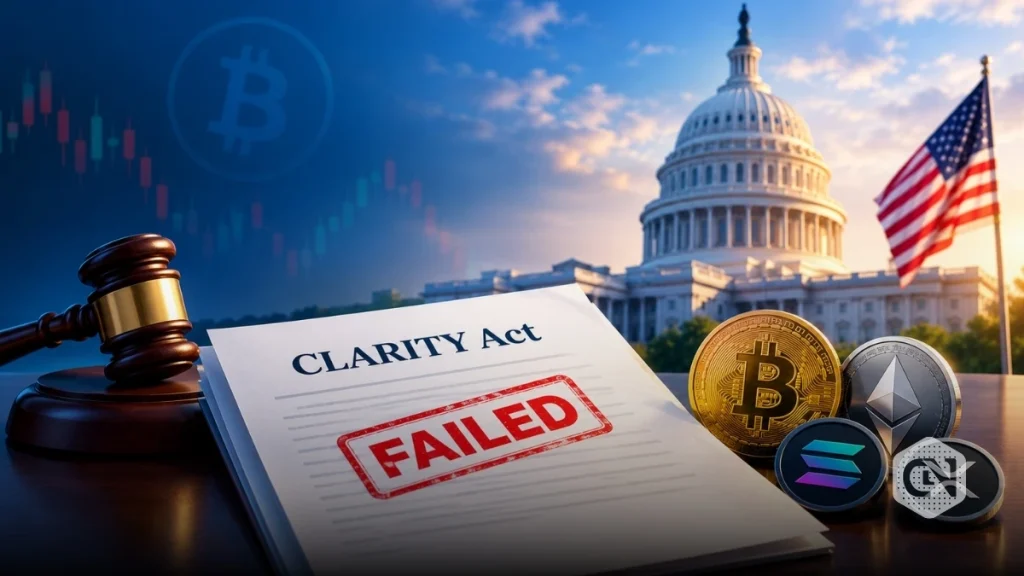
The effort to establish a comprehensive federal framework for digital assets in the United States effectively stalled on Tuesday after the Senate failed to reach the required 60-vote supermajority necessary to invoke cloture on the Digital Asset Market Structure bill, widely known as the CLARITY Act. The final tally of 49-50 underscored a deep-seated partisan divide, as every Democratic senator voted in the negative, joined by three Republican dissenters—Senators Jerry Moran of Kansas, Susan Collins of Maine, and Josh Hawley of Missouri. Senator Thom Tillis (R-NC), who initially voted in favor of the measure, switched his vote to "no" as a tactical maneuver to retain the right to move for reconsideration at a later date, though political analysts view the path to revival in the current Congress as increasingly narrow.

A Chronology of Legislative Deadlock

The failure of the CLARITY Act follows months of intense, often volatile negotiations between industry stakeholders, the White House, and congressional leadership. The legislative journey reached a critical inflection point over the weekend, when a revised draft of the bill, spearheaded by Republican proponents, failed to gain traction with Democratic negotiators.

On Monday night, Democratic senators presented a series of proposed counter-amendments aimed at tightening ethics requirements, particularly concerning the involvement of high-ranking government officials in private cryptocurrency ventures. These proposals included provisions to extend conflict-of-interest restrictions to the children of public officials and a requirement for the mandatory divestment of significant digital asset holdings into blind trusts, rather than allowing them to be held under current disclosure exemptions.

By Tuesday morning, Republican leadership rejected the Democratic counter-offer, labeling it a "bad-faith" attempt to move the goalposts. Reports from Capitol Hill indicated that efforts to reach a last-minute compromise in Senator Tillis’s office were abruptly terminated by staff representing the Senate Banking Committee, signaling a definitive end to bipartisan discussions. The subsequent floor vote served as the final confirmation that the legislative gap between the two parties remained unbridgeable.

Market Reactions and Financial Volatility

The collapse of the legislation triggered immediate volatility across digital asset markets and equity sectors closely tied to the cryptocurrency industry. Bitcoin (BTC), which had rallied above $79,000 earlier in the week in anticipation of a potential legislative breakthrough, retreated to approximately $75,700 by Tuesday night. The broader market experienced sharper declines, with Ethereum (ETH) shedding over 5% of its value in the immediate aftermath of the vote.

Equity markets mirrored this downward trend. Circle, the issuer of the USDC stablecoin, saw its share price (CRCL) decline by 11.4%. Other major industry players, including the Gemini exchange (GEMI) and various investment firms heavily exposed to digital assets, suffered losses ranging from 5% to 9%. This market reaction highlights the extent to which investor sentiment had been priced for a successful regulatory outcome, as well as the heightened sensitivity of crypto-related stocks to federal policy outcomes.

The Ethics Debate and Regulatory Control

At the heart of the impasse was a fundamental disagreement over governance and ethics. Democratic lawmakers, led by figures like Senator Ruben Gallego, argued that the bill as drafted provided insufficient oversight and risked facilitating illicit finance. Central to these concerns was the potential for the legislation to shield public officials—specifically those with significant personal ties to the crypto industry—from robust ethics enforcement.

The proposed Democratic amendments sought to lower the threshold for legal prosecution regarding ethics violations and ensure that decentralized finance (DeFi) platforms remained subject to the existing U.S. Criminal Code. Furthermore, the debate touched upon the delicate intersection of federal digital asset regulation and tribal gaming laws, with Democrats pushing for safeguards to ensure that "event contracts" offered by prediction markets did not bypass state-level sports betting regulations.

With the legislative path now effectively closed, the burden of regulation shifts to the executive branch. The chairs of the Securities and Exchange Commission (SEC) and the Commodity Futures Trading Commission (CFTC) are now expected to take a more aggressive stance in shaping market standards through enforcement and administrative rule-making. This "regulation by enforcement" approach, while functional, lacks the legal certainty that a bipartisan legislative framework would have provided.

The Role of Industry Lobbying and Political Action

The defeat of the CLARITY Act raises significant questions about the efficacy of the massive capital investment poured into lobbying efforts by the crypto industry. The sector spent approximately $130 million during the 2024 election cycle, aiming to foster a "crypto-friendly" Congress. However, the failure to secure a legislative victory despite this spending suggests a disconnect between industry goals and the broader political realities of the Senate.

Political action committees (PACs) such as Fairshake face a precarious position moving into the midterms. While these groups have been instrumental in funding campaigns, the "crypto voter" remains a contested demographic. Recent polling and analysis indicate that the crypto industry’s aggressive political posture may be generating a backlash among mainstream voters, who remain skeptical of the industry’s influence. Democratic candidates, in particular, have begun to view association with crypto-backed PACs as a potential political liability, especially as voter sentiment regarding digital assets remains largely unfavorable.

Long-term Implications for Global Competitiveness

Proponents of the CLARITY Act, including White House crypto advisor Patrick Witt, expressed deep disappointment in the outcome, warning that the lack of a federal framework could undermine American leadership in the global digital economy. The concern is that by failing to establish clear, comprehensive rules, the U.S. risks ceding influence over the evolution of global financial standards to jurisdictions like the European Union or, potentially, competitors in Asia.

The White House’s recent efforts to address the "stablecoin-to-bank" deposit flight argument—supported by economic analysis from the Council of Economic Advisers—failed to convince the banking lobby to pivot their position. The debate over whether stablecoins pose a systemic risk to traditional bank lending remains a contentious issue that will likely persist long after the current legislative session ends.

As the industry looks toward 2027, the prospect for new legislation remains uncertain. With midterm elections projected to potentially shift the balance of power in both the House and the Senate, any future attempts to revive crypto market structure legislation will likely require a fundamental realignment of political interests. For now, the "clarity" that the industry so fervently sought remains elusive, leaving both market participants and regulators in a state of continued ambiguity. The failure of the CLARITY Act stands as a stark reminder that in the complex environment of federal policy, even unprecedented levels of campaign financing cannot substitute for the consensus-building required to pass landmark financial regulation.

September 16, 2026 0 comment
0 FacebookTwitterPinterestEmail
Cybersecurity & Hacking

Microsoft Investigates Windows 11 KB5124008 Update Breaking Active Directory Domain Trust Relationships in Enterprise Environments

by admin September 16, 2026
written by admin

Recent security updates for Microsoft’s flagship operating system have once again triggered unintended consequences for enterprise IT administrators. Microsoft has officially confirmed that it is actively investigating mounting reports regarding the Windows 11 KB5124008 security update. According to widespread complaints from systems administrators across platforms like Reddit and the official Microsoft Q&A forums, the deployment of this specific update is breaking domain trust relationships on enterprise systems, effectively locking valid users out of their corporate networks.

The core of the issue centers on a breakdown of the secure communication channel between domain-joined workstations and Active Directory (AD) controllers. When affected computers install the KB5124008 update and subsequently reboot, they lose their synchronized machine account credentials. Consequently, domain-joined users attempting to log in are greeted with domain trust errors or authentication failures, erroneously being told that their username or password is incorrect even though their credentials remain entirely valid.

While Microsoft’s engineering teams continue to analyze telemetry and user reports to pinpoint the absolute root cause, early technical investigations conducted by enterprise administrators point directly toward a specific underlying security feature: Windows Machine Identity Isolation. This feature, which heavily interacts with Virtualization-Based Security (VBS) and Credential Guard, appears to trigger authentication failures when operating in certain modes. As IT departments worldwide grapple with unexpected outages, the incident highlights the persistent challenges software vendors face when attempting to balance aggressive security enhancements with operational stability in complex corporate networks.

Understanding the Mechanics: How Active Directory Trust and Machine Identity Isolation Interact

To fully comprehend the scale and nature of the disruption caused by KB5124008, it is essential to examine how Windows systems communicate with enterprise infrastructure. In standard enterprise Active Directory environments, domain-joined computers maintain a secure channel with domain controllers using unique machine account credentials. These credentials are stored locally on the workstation and must continuously synchronize with the Active Directory database.

Under normal operating conditions, if a password or account secret mismatch occurs, the secure channel fails. However, the widespread and simultaneous nature of the failures following the deployment of KB5124008 strongly suggests an external catalyst rather than isolated credential expiration.

Administrators delving into the diagnostics have identified the "Machine Identity Isolation" feature as the primary suspect. This advanced security mechanism is designed to isolate the machine account credentials used by domain-joined computers to authenticate with Active Directory. Part of Windows’ modern security architecture leveraging Virtualization-Based Security (VBS) and Credential Guard, Machine Identity Isolation works by moving the machine account secret directly into the protected environment of Credential Guard while removing the redundant copy conventionally stored in the Local Security Authority (LSA) secret store.

Technical analysis from multiple enterprise administrators indicates that upon installing KB5124008, the registry value governing this feature—located under HKEY_LOCAL_MACHINESYSTEMCurrentControlSetControlLsa as MachineIdentityIsolation—is unexpectedly toggled to enforcement mode (set to a value of ‘2’). In this state, Windows discards the LSA secret before the secure channel can properly transition or validate its state within Credential Guard, resulting in an immediate and total severance of trust between the workstation and the domain controller.

A Chronology of the Outage and Community Discovery

The timeline of the KB5124008 incident underscores how rapidly modern enterprise IT communities collaborate to diagnose and troubleshoot zero-day deployment bugs before official vendor acknowledgments materialize.

The sequence of events began shortly after Microsoft released the KB5124008 security update for Windows 11 version 25H2 systems. Almost immediately following the scheduled reboots of enterprise workstations, IT support desks began receiving a surge of tickets from employees unable to authenticate against the corporate domain.

By mid-week, the first formal threads detailing the anomaly appeared on the Microsoft Q&A forums and Reddit’s prominent system administration communities. System administrators noted a distinct pattern: while offline cached credentials allowed users to log into their local machine profiles, any attempt to access network resources or authenticate natively against Active Directory failed outright.

Alex Turner, a prominent Windows administrator who documented the issue extensively on Microsoft’s support channels, demonstrated that the failure was entirely reproducible. By testing baseline workstations running Windows 11 25H2, Turner observed that systems functioned normally prior to the update. Upon applying KB5124008, domain authentication broke post-reboot. Crucially, Turner discovered that uninstalling the update and manually repairing the domain relationship completely restored access, whereas reinstalling KB5124008 immediately reintroduced the failure.

Further compounding the administrative burden, network logs on affected systems displayed a cascading series of Kerberos authentication errors, which subsequently forced the operating system to fall back to legacy NTLM and Netlogon protocols—both of which ultimately failed due to the severed secure channel.

Official Response from Microsoft

Windows 11 KB5124008 update breaks domain trust for some users

As the volume of complaints intensified across public forums and support tickets, software giant Microsoft acknowledged the unfolding situation. Late last week, representatives from the company confirmed to cybersecurity and IT publication BleepingComputer that an internal investigation was underway.

"Microsoft is aware of these reports and is investigating. We will share guidance as it becomes available," a Microsoft spokesperson stated to the press.

To date, Microsoft has not yet published an official, automated patch, nor has it formally confirmed whether Machine Identity Isolation is indeed the definitive root cause of the deployment failure. However, corporate engineering teams are reportedly reviewing telemetry data provided by affected enterprises to formulate official remediation steps. Until an official cumulative update or hotfix is released, enterprise administrators have been forced to rely on community-sourced, manual workarounds to mitigate downtime across their device fleets.

Temporary Workarounds and Associated Risks

Faced with paralyzed corporate workstations, systems administrators have mobilized to develop and share interim fixes to restore network connectivity. However, these workarounds carry significant technical caveats and risks that require careful navigation.

The most widely discussed workaround involves altering the rogue registry key directly. Administrators have found that by manually changing the MachineIdentityIsolation registry value from enforcement mode (‘2’) back to disabled (‘0’), rebooting the system, and subsequently repairing the machine’s secure channel via PowerShell, functionality can be restored without uninstalling the KB5124008 update entirely.

One frequently shared administrative remediation script utilizes the native PowerShell cmdlet:

Test-ComputerSecureChannel -Repair -Credential(Get-Credential)

Executing this command—prompting for administrative domain credentials after disabling the isolation setting—forces the affected workstation to renegotiate and re-establish its secure channel with the nearest Active Directory domain controller. Administrators who implemented this sequence reported that their systems resumed normal operations without losing the secure channel subsequently.

Nevertheless, experts urge extreme caution when modifying security settings tied to Credential Guard and VBS. Changing the MachineIdentityIsolation registry key without a comprehensive understanding of the environment can yield cascading collateral damage.

Warning indicators published by Microsoft and echoed by seasoned enterprise architects highlight a counter-intuitive hazard: if Machine Identity Isolation was previously active or partially evaluated in audit or enforcement modes within an enterprise, manually disabling it can trigger widespread domain trust failures across systems—including workstations that never even received the KB5124008 update. In severe instances, rolling back or disabling the setting improperly forces administrators to completely unjoin and re-join affected devices to the Active Directory domain, a time-consuming manual process for large enterprise fleets.

Broader Implications for Enterprise Patch Management

The KB5124008 incident serves as a stark reminder of the delicate equilibrium required in modern enterprise patch management. As operating systems become increasingly complex, security features designed to harden endpoints against sophisticated credential-theft attacks—such as Machine Identity Isolation and Virtualization-Based Security—frequently interact with foundational network protocols in unforeseen ways.

For years, the IT industry has wrestled with the dichotomy between rapid security posture enhancement and operational continuity. Security teams face immense pressure from regulatory frameworks and threat landscapes to deploy monthly security updates immediately upon release. Conversely, operations teams are acutely aware that rapid deployment without extensive ring-fenced pilot testing can lead to catastrophic enterprise-wide outages, as demonstrated by the domain trust failures tied to KB5124008.

Furthermore, this incident underscores the growing importance of community-driven intelligence in enterprise computing. In scenarios where proprietary software updates break core functionalities, platforms like Reddit, specialized forums, and independent security research outlets frequently bridge the gap between initial failure and official vendor remediation, saving enterprise organizations countless hours of downtime.

As Microsoft finalizes its diagnostic review, enterprise IT departments are advised to exercise heightened caution regarding the deployment of KB5124008 on remaining unpatched Windows 11 25H2 endpoints. Organizations operating strict change-management protocols are encouraged to hold off on broad deployments until Microsoft issues an official advisory, a revised security patch, or explicit configuration guidance regarding the interaction between modern credential isolation features and Active Directory secure channels.

September 16, 2026 0 comment
0 FacebookTwitterPinterestEmail
Bitcoin & Altcoins

Ethereum Working Group Launches Open Standard to Eliminate Blind Signing and Enhance Blockchain Security

by admin September 16, 2026
written by admin

The Ethereum ecosystem has officially initiated a concerted effort to eradicate "blind signing," a persistent structural vulnerability that has facilitated billions of dollars in losses across the decentralized finance (DeFi) landscape. An Ethereum Working Group, comprised of leading wallet developers, prominent security firms, and the Ethereum Foundation’s Trillion Dollar Security Initiative (1TS), has launched a new open standard designed to transform how users interact with transactions. By prioritizing "Clear Signing" as the default protocol, the initiative aims to provide users with transparent, human-readable transaction confirmations, effectively replacing the obscure, machine-readable data that has historically left assets exposed to sophisticated phishing attacks and infrastructure compromises.

The Problem: The Last Line of Defense

For years, the final barrier between a user’s assets and a potential exploit has been the "transaction approval" screen. In the current paradigm, users are often presented with hexadecimal strings or low-level bytecode that is fundamentally incomprehensible to the average person. This lack of transparency forces users to rely on blind trust, assuming the interface is presenting the correct outcome. When an application’s frontend is compromised—or when a user is directed to a malicious site—this blind trust becomes the point of failure.

The systemic nature of this issue is evidenced by numerous high-profile exploits. In the Bybit hack and various other unauthorized wallet drains, the final, fatal action was a user approving a transaction they could not verify. Because the information presented to the user is typically limited to machine-readable formats, even security-conscious users struggle to discern legitimate operations from malicious ones. This "blind signing" vulnerability is not merely a bug in code; it is a fundamental design flaw in the user-experience layer of the blockchain, acting as a structural weakness that institutional investors and retail users alike must overcome to achieve mass adoption.

Historical Context and the Rise of ERC-7730

The push for a standardized, transparent confirmation process is not new, but it has gained significant momentum through the introduction of ERC-7730. Initially championed by hardware wallet provider Ledger, the standard seeks to bridge the gap between complex smart contract logic and human perception.

The timeline of this initiative reflects a growing maturity within the Ethereum community. Following the repeated, devastating impact of signature-based exploits, stakeholders recognized that incremental updates to individual wallet interfaces were insufficient. A cohesive, cross-ecosystem standard was required. The development of ERC-7730 has involved a collaborative effort spanning years, moving from initial research into library development and, finally, to the current stage of ecosystem-wide coordination. The Ethereum Foundation’s 1TS initiative has stepped into a role of a "credibly neutral steward," ensuring that the registry required to support this standard remains accessible, reliable, and secure.

The Mechanism of Clear Signing

At its core, the Clear Signing standard is built on the principle of "What You See Is What You Sign" (WYSIWYS). To achieve this, the industry is moving toward a shared format for transaction descriptions. This architecture relies on several pillars:

  1. Shared Description Format (ERC-7730): A standardized way for decentralized applications (dApps) to provide human-readable summaries of what a transaction will execute on the blockchain.
  2. Centralized/Decentralized Registry: A mechanism to store and distribute these standardized descriptions, allowing wallets to fetch accurate details in real-time.
  3. Independent Verification: A multi-layered review system where security experts and independent auditors attest to the accuracy of these descriptors.
  4. Wallet Integration: Developers must update their software to interpret these descriptors and present them clearly to the user, rather than showing raw bytecode.

Importantly, these descriptors are provided alongside the transaction rather than being embedded in the smart contract itself. This design choice is critical, as it allows for the retrofitting of existing applications without requiring them to be re-deployed, while simultaneously enabling a robust, modular verification layer.

Supporting Data and Industry Impact

The financial stakes of this initiative are immense. According to various security reports, phishing attacks and malicious signing requests represent one of the leading vectors for asset theft in the cryptocurrency space. Billions of dollars have been lost due to compromised frontends or social engineering where victims were manipulated into signing malicious transactions.

Clear Signing: Making Transaction Approvals Safer on Ethereum

The economic argument for Clear Signing is clear: for Ethereum to become a viable platform for trillions of dollars in institutional capital, the risk of "irreversible error" must be mitigated. Institutional custody providers, such as Fireblocks, and wallet providers, such as MetaMask, Trezor, and WalletConnect, have recognized that the current UX is a bottleneck for institutional adoption. By standardizing the way transactions are communicated, the industry is effectively reducing the liability and risk associated with managing digital assets.

Official Responses and Multi-Party Coordination

The launch of the initiative has drawn praise from across the blockchain industry. Representatives from the Ethereum Foundation have emphasized that this is not a proprietary solution but a public good. "Clear Signing is the necessary evolution for Ethereum," noted a spokesperson close to the initiative. "By providing a credibly neutral infrastructure, we are empowering developers and security professionals to work together to ensure that what a user approves is exactly what happens on the chain."

The collaborative nature of this project is evidenced by the diverse list of contributors. The effort involves a wide range of organizations, including ZKnox, Sourcify, Cyfrin, Zama, WalletConnect, Fireblocks, Trezor, Keycard, MetaMask, and Argot. Each participant brings a unique expertise: security firms are contributing to the auditing processes, wallet developers are working on the integration of the standard, and research teams are ensuring the registry’s long-term sustainability.

The Road Ahead: Implementation and Adoption

The Ethereum Working Group is now shifting its focus to broad-based adoption. The website clearsigning.org has been launched as a central hub for developers and stakeholders to access tools, documentation, and libraries—including those developed for Rust and TypeScript.

The transition to Clear Signing will be an incremental process. Developers of dApps are being encouraged to integrate these descriptive standards into their interfaces, while wallet providers are being urged to sunset the practice of displaying raw, unverified data. The success of this initiative will ultimately depend on the "network effect": as more wallets adopt the standard, the pressure on dApp developers to provide clear transaction data will increase.

Broader Implications for the Ethereum Ecosystem

The implications of successfully eliminating blind signing extend beyond simple security improvements. It represents a maturation of the Ethereum UX, signaling that the platform is moving toward a more professional and user-centric model. For the next wave of users—those who may not have the technical expertise to decipher complex blockchain interactions—this standard is the difference between a user-friendly interface and a hostile environment.

Furthermore, the "credibly neutral" management of the registry by the Ethereum Foundation ensures that no single entity has control over the confirmation process. This maintains the decentralized ethos of the ecosystem while providing the infrastructure stability required by financial institutions. As the industry prepares for increased regulatory scrutiny and institutional interest, initiatives like Clear Signing serve as essential benchmarks for the security standards of decentralized finance.

In conclusion, the launch of the Clear Signing standard is a significant milestone in the history of Ethereum. By aligning the interests of developers, security experts, and end-users, the working group has provided a path toward a safer, more transparent future. While the transition will require significant effort and coordination, the result—a more secure and accessible blockchain—is a foundational requirement for the long-term success of the Ethereum ecosystem. The era of "blind signing" is being phased out, making way for a new, clearer paradigm in digital asset management.

September 16, 2026 0 comment
0 FacebookTwitterPinterestEmail
Bitcoin & Altcoins

Kraken Expands Its Digital Asset Offerings with the Official Listing of TREAD, Fueling the Growth of Algorithmic and Agentic Trading Ecosystems

by admin September 16, 2026
written by admin

Cryptocurrency exchange Kraken has officially expanded its robust digital asset portfolio by introducing trading support for TREAD, the native utility token underpinning the tread.fi ecosystem. Effective September 16, 2026, global traders gain access to the token through Kraken’s primary platform and professional-grade trading interfaces. This listing bridges traditional centralized cryptocurrency exchanges with cutting-edge algorithmic infrastructure, reflecting the growing demand for sophisticated, programmatic trade execution in digital asset markets.

The integration of TREAD onto Kraken marks a significant milestone for both the exchange and the broader decentralized finance and trading technology sectors. As digital asset markets mature, retail and institutional participants increasingly demand advanced tools that were once exclusive to high-frequency trading desks on Wall Street. By listing TREAD, Kraken provides its user base with a direct gateway to a specialized token economy designed to fuel automated execution, autonomous trading agents, and cross-venue connectivity.

Funding and Trading Mechanics on Kraken

Trading operations for TREAD officially commenced on September 16, 2026, on Kraken Pro and the standard consumer-facing application. Account holders looking to acquire or deposit the token must navigate to the platform’s funding portal, select the respective asset, and initiate a deposit sequence.

Compliance and security protocols remain a top priority for Kraken during asset onboarding. The exchange has explicitly reminded its global user base to ensure that TREAD tokens are transferred exclusively via supported blockchain networks. Because TREAD was originally minted on the Ethereum network as an ERC-20 token, users must exercise caution; sending digital assets across incompatible networks or incorrect blockchain ledgers can result in the permanent loss of funds. Kraken’s support documentation outlines specific deposit guidelines to safeguard users against common transactional errors during the initial rollout phase.

Understanding the tread.fi Ecosystem and Tokenomics

To fully comprehend the significance of the Kraken listing, one must examine the underlying mechanics of tread.fi. The platform operates as an advanced algorithmic trading terminal and agentic trading ecosystem tailored for modern digital asset markets. It serves as a unifying hub for traders, decentralized application builders, and centralized exchanges, allowing participants to consolidate their activities into a single, cohesive user interface.

Users of tread.fi can seamlessly link their personal exchange accounts—such as those held on major centralized platforms—alongside Web3 self-custody wallets. Once connected, traders can route their order flow through sophisticated execution algorithms. These include Time-Weighted Average Price (TWAP) execution models, scaled orders, and intelligent smart order routing systems designed to minimize slippage and optimize liquidity acquisition across fragmented markets. Furthermore, the ecosystem incorporates autonomous trading agents capable of executing complex, multi-step strategies across various connected venues without requiring constant manual intervention.

The TREAD token functions strictly as a consumptive utility asset rather than a speculative investment vehicle promising financial returns. Token holders can lock their TREAD holdings to unlock a tiered suite of platform benefits, including reduced transaction and execution fees, priority listings within the decentralized agent marketplace, and exclusive hiring slots for autonomous trading deployments. Crucially, the protocol enforces a strict economic design: no yield, interest, or inflationary staking rewards are paid to users who lock their tokens.

Token Supply and Governance Structure

The economic architecture of TREAD is built around a strictly finite supply model designed to prevent currency devaluation and inflationary pressures. TREAD features a hard-capped, fixed supply of exactly 100,000,000 tokens, all of which were minted natively on the Ethereum blockchain. The smart contracts governing the token contain no minting function, ensuring that no new tokens can ever be created, thereby protecting long-term participants from arbitrary supply expansions.

TREAD is available for trading!

More than half of the total 100,000,000 token supply has been strategically reserved for community distribution, ecosystem incentives, and long-term development initiatives within the tread.fi network. Stewardship of the token and the overarching ecosystem is managed by the Tread Foundation, an independent entity dedicated to decentralizing governance, fostering developer adoption, and expanding cross-platform integrations. By separating token oversight from any single corporate entity, the foundation aims to establish a resilient, community-driven framework that can adapt to evolving regulatory and technological landscapes.

Broader Industry Implications for Algorithmic and Agentic Trading

The integration of TREAD into a tier-one centralized exchange like Kraken highlights a broader structural evolution within the cryptocurrency trading industry. For years, algorithmic trading was siloed behind proprietary software developed exclusively by quantitative hedge funds and elite trading shops. However, the rise of agentic ecosystems—platforms where artificial intelligence and programmatic agents execute financial strategies autonomously—represents a democratization of advanced financial engineering.

By facilitating access to TREAD, Kraken is indirectly acknowledging the shift toward automated, data-driven trading methodologies. Retail traders are no longer restricted to basic market and limit orders executed manually through browser windows. Instead, the convergence of Web3 connectivity and algorithmic terminals allows everyday market participants to leverage institutional-grade execution strategies. Analysts note that as liquidity continues to fragment across centralized order books, decentralized exchanges, and specialized execution venues, tools capable of smart order routing and autonomous execution will become indispensable infrastructure for active market participants.

Kraken’s Asset Listing Strategy and Future Roadmap

The addition of TREAD aligns with Kraken’s disciplined, highly regulated approach to asset onboarding. Unlike many decentralized exchanges that permit permissionless token creation, centralized platforms like Kraken maintain rigorous legal, technical, and security evaluations before introducing a new asset to their order books. These reviews assess a token’s smart contract security, regulatory compliance profile, team legitimacy, and genuine market utility.

In line with corporate policy, Kraken maintains a strict disclosure blackout regarding upcoming asset integrations. The exchange routinely emphasizes that it never reveals details concerning pipeline assets until moments before public launch. To maintain transparency without compromising operational security, Kraken directs its global client base to official communication channels. All currently supported cryptocurrencies are cataloged in the official Kraken Support Center, while forthcoming listings are officially previewed exclusively through the Kraken Listings Roadmap and the company’s dedicated verified social media channels. Client engagement representatives are strictly barred from answering speculative inquiries regarding unannounced asset additions.

Outlook for TREAD and Market Reception

As trading volumes for TREAD begin to establish themselves on Kraken, market participants will be closely monitoring how the token’s utility mechanisms drive adoption within the tread.fi terminal. The success of consumptive utility tokens largely depends on the organic demand for the underlying software services they unlock. If the tread.fi ecosystem continues to attract high volumes of algorithmic traders and developers deploying autonomous agents, the utility-driven lockup mechanism could absorb significant circulating supply.

Conversely, market analysts emphasize that digital asset listings on major platforms invariably invite heightened volatility during initial price discovery phases. Traders are advised to exercise robust risk management strategies, account for liquidity depth, and verify network compatibility carefully before executing transactions.

Ultimately, the listing of TREAD on Kraken represents more than just a new trading pair; it serves as a barometer for the market’s appetite for advanced, programmatic financial tooling. As the boundaries between centralized liquidity and decentralized execution continue to blur, platforms that successfully integrate algorithmic infrastructure will likely define the next chapter of digital asset evolution.

September 16, 2026 0 comment
0 FacebookTwitterPinterestEmail
Bitcoin & Altcoins

Senate Rejection of the CLARITY Act Stalls Cryptocurrency Legislative Progress and Shifts Focus to Regulatory Agencies

by admin September 16, 2026
written by admin

The U.S. Senate’s failure to advance the CLARITY Act has created a significant void in the nation’s digital asset policy, leaving the crypto industry in a state of regulatory ambiguity. By failing to secure the 60 votes required to invoke cloture, the legislation—which aimed to provide a comprehensive legal framework for virtual assets—stalled with a 49-50 vote count. This outcome not only highlights the deep partisan divisions regarding the oversight of digital commodities and securities but also forces a shift in expectations toward the Securities and Exchange Commission (SEC) and the Commodity Futures Trading Commission (CFTC) to navigate the sector’s future under existing authorities.

The Legislative Impasse: A Breakdown of the CLARITY Act Vote

The CLARITY Act, formally introduced as H.R. 3633, was designed to act as the cornerstone of U.S. digital asset regulation. Its primary objective was to clarify the jurisdictional boundaries between the SEC and the CFTC, effectively establishing a taxonomy that would categorize various crypto products as either commodities or securities. By failing to reach the necessary threshold to move toward floor debate, the bill has essentially been relegated to legislative purgatory.

The failure was not merely a procedural hurdle but a manifestation of intense lobbying and conflicting visions for the industry. Senator Cynthia Lummis, a primary architect of the bill, expressed profound disappointment following the vote. In a public statement, Lummis argued that the legislative process was hampered by shifting demands from Democratic counterparts, specifically regarding consumer protection measures and internal ethics rules concerning personal crypto holdings by lawmakers. According to Lummis, the inability of the Senate to reach a consensus on these foundational elements represents a failure to protect American investors and, more broadly, a failure to secure the United States’ position as a global leader in financial technology.

Chronology of the CLARITY Act’s Path

The journey of the CLARITY Act has been marked by high-stakes negotiations and fluctuating bipartisan support. Throughout the year, the bill underwent several iterations, each attempting to balance the need for innovation with the demands of regulators who have long argued that the crypto market is a "wild west" environment.

In the months leading up to the vote, stakeholders—including major exchange executives, venture capital firms, and digital asset policy groups—engaged in rigorous advocacy. Despite these efforts, the late-stage negotiations proved insurmountable. As the vote approached, the political climate grew increasingly polarized, with concerns regarding the potential impact on future election cycles influencing the behavior of key legislators. Following the 49-50 defeat, Senator John Kennedy and Senator Ted Cruz both suggested that the bill’s death might be premature. They pointed to the upcoming "lame-duck" session—the period between the November elections and the swearing-in of a new Congress—as a potential window for a renewed push, though political analysts remain skeptical given the limited timeframe and the urgency of other fiscal priorities.

The Regulatory Shift: SEC and CFTC Under Pressure

With the legislative path currently blocked, the burden of governance has shifted back to the executive branch. Former CFTC Chairman Christopher Giancarlo has been a vocal proponent of the idea that, while the Senate setback is discouraging, it does not mark the end of the regulatory evolution in the U.S. Giancarlo and other industry observers have noted that both SEC Chair Paul Atkins and CFTC Chair Michael Selig have expressed a willingness to engage in rule-making that could support market modernization.

The prospect of "regulation by enforcement"—a term often used to describe the current approach where regulators dictate policy through litigation rather than clear statutory law—has long been a point of contention. However, industry leaders like Ripple CEO Brad Garlinghouse and Coinbase CEO Brian Armstrong have signaled that, if Congress remains gridlocked, the agencies possess sufficient inherent authority to build a functioning framework. Armstrong, in particular, has highlighted the importance of the GENIUS Act and the broader implications of stablecoin legislation, suggesting that the industry must find a path forward even if it involves working within the confines of current, albeit imperfect, regulatory structures.

Market Volatility and Economic Implications

The market reaction to the Senate vote was swift and palpable. Following the announcement, the broader cryptocurrency market experienced a noticeable contraction. Bitcoin, the industry’s bellwether asset, saw its price dip to just under $75,000, reflecting the heightened anxiety among institutional and retail investors regarding the lack of a clear legal roadmap. While the asset later recovered to approximately $76,000, the 3.7% single-day decline underscored the sensitivity of the market to legislative news.

Beyond Bitcoin, other major assets were hit harder. XRP experienced a decline of approximately 9.74%, and the total market capitalization of the cryptocurrency sector hovered near $2.58 trillion. This volatility is indicative of a broader concern: without a federal framework, the U.S. risks losing its competitive edge. Industry proponents argue that if capital and talent are not provided with a stable regulatory environment, they will inevitably migrate to jurisdictions such as the European Union, Singapore, or the UAE, which have already implemented comprehensive crypto-asset legislation (such as MiCA).

Analytical Perspective: The "Dead vs. Mostly Dead" Scenario

Senator Ted Cruz’s comparison of the bill’s status to the distinction between "dead" and "mostly dead" captures the essence of the current political situation. While the immediate procedural motion failed, the underlying issues—consumer rights, the definition of digital assets, and the protection of U.S. economic interests—are not going away.

From an analytical standpoint, the failure of the CLARITY Act demonstrates that the legislative process for digital assets is not merely a technical challenge but a deeply ideological one. The debate centers on two competing philosophies: one that prioritizes strict investor protection and historical security definitions, and another that advocates for a flexible, industry-supportive framework designed to foster domestic growth.

If the SEC and CFTC do indeed take the lead, they will face the daunting task of creating rules that are broad enough to cover a diverse range of assets—from utility tokens to decentralized finance (DeFi) protocols—while satisfying the mandates of their respective charters. This approach, while potentially faster than waiting for a divided Congress, carries the risk of future legal challenges, as courts may question whether the agencies are overstepping their statutory authority.

Future Outlook and Policy Trajectory

As the United States heads toward the final quarter of the year, the legislative landscape remains fluid. Senator Thom Tillis’s motion to reconsider ensures that the bill remains a point of discussion, but the political window is closing rapidly.

Key areas to monitor in the coming months include:

  1. Lame-Duck Negotiations: Whether bipartisan efforts can produce a stripped-down version of the bill that avoids the most contentious political hurdles.
  2. Agency Rule-making: Any formal proposals from the SEC or CFTC that attempt to codify the status of digital assets, which could serve as a de facto framework in the absence of law.
  3. Judicial Precedent: Ongoing high-profile court cases involving major crypto firms that continue to shape the "rules of the road" through the bench rather than the ballot.

The failure of the CLARITY Act is a watershed moment for the U.S. crypto sector. It clarifies that until a broad consensus is reached in Washington, the industry will continue to operate in a high-stakes, high-uncertainty environment. For regulators, the challenge is now to prove that the existing American legal apparatus is capable of fostering the next generation of financial infrastructure without stifling the very innovation that it seeks to oversee. As the global race for digital asset dominance intensifies, the U.S. government’s ability to move beyond partisan friction will determine whether it remains at the forefront of the digital economy or continues to lag behind its international counterparts.

September 16, 2026 0 comment
0 FacebookTwitterPinterestEmail
FinTech Innovations

Baselayer and Nevermined Partner to Empower AI Agents with Secure Transactional Authority

by admin September 16, 2026
written by admin

The landscape of autonomous commerce is undergoing a significant transformation as Baselayer, a leader in business identity and risk intelligence, and Nevermined, an infrastructure provider for agentic payments, have announced a strategic partnership designed to provide AI agents with the necessary framework to transact on behalf of human users. This collaboration aims to solve one of the most pressing challenges in the development of agentic AI: the delicate balance between enabling full autonomy and maintaining robust, enterprise-grade financial controls. By integrating Baselayer’s identity verification capabilities with Nevermined’s payment delegation infrastructure, the companies are establishing a new standard for how AI agents function within the global digital economy.

The Evolution of Agentic Commerce

For years, the development of artificial intelligence focused primarily on generative tasks, such as content creation, research, and data analysis. However, the current frontier of the industry is "agentic AI"—systems capable of performing multi-step workflows, navigating digital environments, and executing complex tasks without constant human oversight.

For an AI agent to transition from a helpful assistant to an autonomous worker, it requires three core components: access to data, the ability to invoke specific services, and, most importantly, the legitimacy to interact with external business systems. Historically, this has created a binary dilemma for developers. To maintain security, organizations often require human approval for every purchase or API call, which effectively negates the efficiency gains of using AI. Conversely, granting agents broad, unrestricted access to payment credentials creates unacceptable risk, potentially exposing the enterprise to fraud, system errors, or runaway expenditures.

A New Model for Delegated Authority

The partnership between Baselayer and Nevermined introduces a "bounded authority" model. Rather than granting agents broad permissions, this approach utilizes a spending-boundary framework. Users define specific financial limits, operational durations, and scope of utility in advance.

Nevermined’s platform allows for the enrollment of payment instruments—typically enterprise cards—which are then constrained by a "mandate." This mandate governs how much an agent can spend and for what purpose. Because the underlying transaction remains within the familiar architecture of card payments, it integrates seamlessly with existing corporate treasury and reporting systems.

Baselayer enhances this architecture by incorporating its Trusted Registry. By linking the identity of the AI agent to its authorized spending limits, Baselayer ensures that when an agent attempts to transact, the counterparty can verify the agent’s credentials and the validity of its mandate. This provides a closed-loop system where both the agent and the merchant operate within a verified, trusted environment.

Chronology of the Strategic Integration

The integration is currently in its primary phase, marking a critical milestone in the development of the "agentic economy."

  • 2022: Nevermined is founded in Zug, Switzerland, by Don Gossen and Aitor Argomaniz, with the specific mission to build the payment rails required for autonomous agents to interact with the marketplace.
  • Early 2026: Baselayer continues to scale its business identity network, providing real-time Know Your Business (KYB) verification for over 2,200 financial institutions.
  • Spring 2026: Baselayer makes its high-profile debut at FinovateSpring 2026, showcasing its advanced Portfolio Monitoring solution, which integrates seamlessly with modern risk management workflows.
  • September 2026: The partnership is formally announced, signaling the first phase of integrating Baselayer’s identity and KYB solutions directly into Nevermined’s agentic commerce marketplace.
  • Future Roadmap: The companies have outlined plans to move beyond simple payment delegation to include advanced seller verification, where agents will only be permitted to transact with entities that have been vetted by Baselayer’s risk intelligence engine.

Data and Market Context

The urgency for this technology is driven by the rapid adoption of AI in procurement and B2B services. Market analysts estimate that the "agentic economy" could represent a multi-trillion-dollar shift in how business is conducted. However, trust remains the primary barrier to adoption.

Baselayer’s platform processes vast amounts of data, matching applicant input against authoritative Secretary of State (SoS) filings across all 50 U.S. states. By validating Taxpayer Identification Numbers (TINs) in real-time and screening against OFAC sanctions lists, Baselayer provides a high degree of confidence in the entities it verifies. Integrating this depth of data into Nevermined’s payment rails ensures that an agent is not only authorized to spend money but is also prohibited from engaging with high-risk or sanctioned entities—a critical compliance requirement for large-scale financial institutions.

Official Perspectives on the Partnership

The executives behind the partnership emphasize that the goal is not merely to enable transactions, but to create a foundation for professional-grade autonomy.

Nicole Dunn, General Manager of the Agentic Economy at Baselayer, noted that the industry has reached an inflection point. "Agentic commerce requires more than giving an agent the ability to pay," Dunn stated. "Agents need bounded authority to transact, and the ecosystem needs confidence in who is on either side of the transaction. Nevermined is building the delegation and payments layer while Baselayer establishes identity and trust. Together, we’re moving toward commerce where agents can act autonomously without sacrificing accountability."

Josh Wadinski, Chief Revenue Officer at Nevermined, highlighted the proactive nature of advanced AI. "The most capable agents won’t just use the tools they were given; they’ll discover and purchase the capabilities they need to get a job done," Wadinski explained. "Nevermined gives agent builders a way to enable that autonomy with clear spending boundaries. By partnering with Baselayer, we’re pairing that delegated authority with trusted identity, so agents can transact more autonomously without giving up the controls enterprises require."

Implications for Future Workflows

The implications of this partnership extend well beyond simple e-commerce. By creating a standardized, secure way to delegate authority to agents, the companies are opening doors for new workflows in high-stakes environments:

  1. Procurement and Supply Chain: Agents could autonomously identify supply shortages, compare pricing from verified vendors, and execute purchase orders within pre-set budgetary constraints.
  2. Compliance and Regulatory Onboarding: Agents could perform continuous due diligence, monitoring vendors and partners against evolving global sanctions lists and automatically updating risk profiles.
  3. Fraud and Underwriting: Agents could assist financial analysts by gathering data, performing initial risk assessments, and flagging anomalies in real-time, all while acting under the explicit authorization of the institution.
  4. Autonomous Commerce: The ability for agents to settle payments before services are delivered, using a merchant’s existing payment rails, minimizes friction and risk, creating a frictionless B2B marketplace.

A Foundation for the Future

The collaboration between Baselayer and Nevermined represents a maturation of the AI industry. By moving from the "experimental" phase of AI into a "production-ready" phase, they are addressing the fundamental structural requirements of the enterprise. As the identity of the people or businesses behind the agents becomes more tightly coupled with the financial mandates assigned to those agents, the potential for fraud is significantly reduced.

This partnership is expected to influence how software developers build agentic tools, likely establishing a framework where identity verification and payment delegation are treated as mandatory middleware rather than optional add-ons. As AI agents move from the laboratory to the corporate office, the ability to prove who an agent is, who it works for, and what it is authorized to spend will become the defining characteristics of the next generation of digital enterprise infrastructure. For Baselayer and Nevermined, the objective is clear: to build a reliable, scalable, and secure ecosystem where AI can operate as a trusted partner in global commerce.

September 16, 2026 0 comment
0 FacebookTwitterPinterestEmail
FinTech Innovations

The Ultimate Showdown: Why the Defeat of the Clarity Act is Only the Beginning of Crypto’s Integration Into Mainstream Finance

by admin September 16, 2026
written by admin

The cryptocurrency market suffered a major legislative blow in Washington, D.C., but industry insiders and financial analysts agree that the true battle for the future of digital assets has only just broken out into the open. The procedural defeat of the Digital Asset Market Clarity Act sent immediate shockwaves through domestic financial markets, triggering a sharp sell-off in crypto-linked equities and leaving digital asset enterprises facing an extended period of regulatory ambiguity. For months, the Clarity Act had been pitched by lobbyists, institutional investors, and fintech executives as the definitive, long-awaited rulebook that would finally integrate cryptocurrency deep into the regulated architecture of the United States financial system. Its failure to secure the necessary votes in the Senate has stalled comprehensive federal market structure legislation, forcing the industry to adapt to an ad-hoc regulatory environment for the foreseeable future.

The collapse of the legislative vehicle on Tuesday, September 15, was compounded almost immediately by abrupt developments on the other side of Capitol Hill. On Wednesday, September 16, House Speaker Mike Johnson announced that scheduled votes for Thursday would be abruptly canceled. Lawmakers were directed to pack their bags and head home early for an extended recess ahead of the upcoming November midterm elections, effectively bringing legislative productivity to a screeching halt.

A Stalled Congress and Shifting Political Priorities

The abrupt closure of the House capped off a remarkably unproductive autumn session. Since returning to Washington from their traditional August recess, members of Congress had logged a mere seven days of actual legislative work. This early departure came in the wake of immense political pressure; more than 100 Democratic representatives had formally petitioned Speaker Johnson to cancel the recess altogether, arguing that Congress needed to remain in session to address escalating national security concerns and the growing, unmitigated threats posed by rapid advancements in artificial intelligence.

By pulling the plug on legislative business a day early, the House leadership also managed to sidestep a highly contentious political showdown. The early recess successfully averted a scheduled floor vote on a controversial resolution introduced by Republican Representative Thomas Massie, which aimed to initiate impeachment proceedings against Defense Secretary Pete Hegseth over the handling of ongoing military conflicts involving Iran. With Capitol Hill now entirely vacant ahead of the midterms, any hope of reviving comprehensive financial legislation in the near term has evaporated.

Despite the bitter disappointment surrounding the Clarity Act’s failure, stakeholders from both the cryptocurrency sector and traditional banking institutions emerged from the wreckage singing a surprisingly harmonious tune: lawmakers must eventually act, and regulatory certainty remains paramount. Crucially, neither side views this legislative defeat as the end of the road.

The Shift to Agency-Led Regulation: SEC and CFTC Step Up

For cryptocurrency firms, the sinking of the Clarity Act represents a significant setback, but it does not represent a reversion to the chaotic, hyper-enforcement era of several years prior. The bill’s demise was ultimately sealed by a bipartisan coalition of opposition. Democrats raised persistent ethics concerns and pointed to President Donald Trump’s personal financial ties to the crypto sector, while various Republicans found alternative poison pills within the complex legislative text.

Recognizing that Capitol History has effectively closed its doors for the remainder of the year, the digital asset sector is swiftly pivoting its strategy. The industry is betting heavily that Congress is no longer the sole avenue for achieving regulatory clarity. Over the past year, federal financial watchdogs—most notably the Securities and Exchange Commission (SEC) and the Commodity Futures Trading Commission (CFTC)—have steadily advanced their own internal digital asset policies. This dual-track reality means that crypto companies have a viable, albeit imperfect, alternative route to legitimacy even if legislative efforts remain frozen on Capitol Hill.

Brian Armstrong, Chief Executive Officer of Coinbase—the crypto exchange giant that poured substantial capital and lobbying efforts into championing the Clarity Act—took to social media to outline the industry’s new reality. Writing on the platform X, Armstrong expressed clear disappointment over the Senate’s cloture vote while signaling an immediate pivot in strategy.

"The CLARITY Act didn’t advance in the Senate today, which was a disappointment," Armstrong wrote. "While it’s possible bipartisan conversations continue and it lives to fight another day, we can’t wait on Congress anymore. The SEC and CFTC have the tools they need to create clear rules under existing authority, and I expect will begin working on this in earnest. So clarity is coming to crypto regardless."

Emphasizing the permanence of the technology, Armstrong added, "Crypto can’t be uninvented. With clarity emerging through the regulators, we’ll continue updating the financial system." Following the news of the bill’s defeat, Coinbase’s stock retreated approximately 7% in pre-market trading, reflecting immediate investor jitters.

This sentiment was swiftly reinforced by top regulatory leadership. SEC Chairman Paul Atkins issued a public statement reaffirming the agency’s commitment to filling the legislative vacuum left by Congress.

"I have been unequivocal: with or without legislation, we will act decisively within the SEC’s statutory authority to deliver certainty for American investors and for the entrepreneurs shaping our technological future. Stay tuned," Atkins wrote on X.

While rules promulgated by regulatory agencies inherently carry vulnerabilities—making them susceptible to shifting presidential administrations, drawn-out litigation, and future political appointees—the reassurance from leadership signals that Tuesday’s legislative loss will not halt the relentless march of tokenization, stablecoin adoption, and the broader institutional collision between crypto and traditional banking.

Industry Perspectives: The Inevitability of On-Chain Finance

Market participants on the ground argue that commercial reality is moving much faster than the federal legislative machine. Global enterprises and major financial institutions are already transacting and settling transactions on stablecoin rails because these systems offer unprecedented speed and operate outside the rigid, restrictive hours of traditional banking infrastructure.

Eric Queathem, founder and CEO of Velocity, noted that the defeat of the legislation does not alter the fundamental utility driving digital assets into corporate treasuries. "The vote doesn’t change what we see every day," Queathem told PYMNTS. "Global businesses and financial institutions are already settling on stablecoin rails because it’s faster and works outside banking hours, and none of that depended on the Senate."

According to Queathem, the true value of formal, written rules lies in reducing friction and risk assessment for risk-averse institutions. "What clear rules do is make the next decision easier: they shorten the path from a first use case to running real volume, and they bring in the companies still waiting on the sidelines. That’s the opportunity in front of Congress. Businesses have already shown the demand is there, but written rules give more clarity and confidence to the U.S. market," he explained.

The Banking Sector’s Underlying Agenda: The Stablecoin Yield Battle

While the crypto industry adjusts its posture toward agency-led rulemaking, the reaction from traditional banking associations reveals the true friction point that ultimately doomed the legislation behind closed doors. Shortly after the vote, a formidable coalition of major banking trade groups—including the Independent Community Bankers of America, the American Bankers Association, the Association of Military Banks of America, the Bank Policy Institute, the Consumer Bankers Association, the Financial Services Forum, the Mid-Size Bank Coalition of America, and the National Bankers Association—released a joint statement.

The banking groups reiterated their theoretical support for digital-asset legislation before aggressively zeroing in on a single, highly sensitive issue: stablecoin yield policy. The subtext of their collective lobbying message was clear: regulate crypto, legitimize it, and allow it to grow, but place strict boundaries on its functionality so that stablecoins do not evolve into shadow bank accounts capable of luring away lucrative retail and corporate deposits. This underlying dispute over yield generation and deposit substitution is the real turf war that the Clarity Act dragged out into the harsh light of day.

Legal and regulatory experts emphasize that while general market structure bills are struggling, other legislative pillars remain fully operational. Samson Leo, co-founder and chief legal officer of StraitsX, pointed out that the broader regulatory puzzle is being assembled piece by piece.

"Agency rulemaking can continue to provide guidance, but legislation can offer a more durable foundation for institutions making long-term decisions," Leo told PYMNTS. "It is worth being precise about what this does and does not affect. U.S. stablecoin policy was settled by the GENIUS Act in 2025 and is now in implementation, including Treasury’s consultation on the rules for foreign issuers. That work continues."

Leo cautioned, however, that piecemeal implementation creates global friction. "The longer major markets operate without clear and compatible frameworks, the harder it becomes to address fragmentation and build genuinely interoperable cross-border financial infrastructure."

Corporate Cautiousness and the Road Ahead

Despite the relentless drive toward tokenization by fintech innovators, empirical data indicates that mainstream corporate adoption remains guarded. Findings from Waiting for Certainty: Why Most CFOs Are Holding Back on Crypto and Stablecoins—a comprehensive March installment of the PYMNTS Intelligence Certainty Project—highlight that the vast majority of middle-market corporate chief financial officers remain deeply hesitant. Current utilization rates underscore this caution, with just 13% of surveyed firms actively utilizing stablecoins and a meager 5% employing other digital cryptocurrencies in their daily treasury operations.

Ultimately, the failure of the Digital Asset Market Clarity Act marks the end of a legislative chapter, but it far from spells the doom of crypto’s integration into the global financial architecture. As federal agencies prepare to step into the regulatory breach and corporations continue to vote with their feet by adopting high-speed blockchain rails, the financial sector is barreling toward a future where digital assets are deeply embedded—legislated rulebook or not. The battleground has simply shifted from the halls of Congress to the boardrooms of Wall Street and the administrative offices of Washington’s top regulators.

September 16, 2026 0 comment
0 FacebookTwitterPinterestEmail
FinTech Innovations

Trump Slams Federal Reserve Rate Hike in Fiery Truth Social Outburst, Demanding Immediate Monetary Easing

by admin September 16, 2026
written by admin

Washington — In a swift and vehement response to monetary policy tightening, President Donald Trump took to his Truth Social platform just hours after the Federal Reserve announced a 25-basis-point increase in benchmark interest rates. The president’s latest online outburst reignites a long-standing public feud between the executive branch and the nation’s central bank, underscoring deep-seated philosophical divisions over the direction of the American economy.

The Federal Reserve’s decision to hike rates—which immediately triggered upward movements in Treasury yields and a downward correction in major equity markets—was framed by central bank officials as a necessary step to manage macroeconomic stability. However, President Trump rejected this assessment outright, arguing that borrowing costs should be plummeting rather than climbing. His remarks not only targeted the current trajectory of monetary policy but also touched upon broader economic nationalist themes, including sweeping criticisms of international trade deficits and foreign policy burdens.

The clash places Federal Reserve Chair Kevin Warsh in a politically precarious position. While Warsh has historically enjoyed a warmer relationship with Trump than his predecessor, Jerome Powell, the central bank’s recent policy action directly defies the administration’s explicit preferences. Financial markets and political analysts alike are now watching closely to see whether this policy divergence will strain relations between the White House and the independent monetary authority.

Presidential Demands and the Logic of Economic Nationalism

In his widely circulated social media post, President Trump laid out a radical vision for U.S. monetary and trade policy, insisting that the exceptional strength of the American economy warrants ultra-low interest rates.

"Interest Rates in the United States should be 1%, or less, because we are the Best Credit in the World — BY FAR," Trump wrote on Truth Social. "Our Country is BOOMING with new Investment! If we stopped trading with every country that we have a Deficit with, which is most of them, we would make at least 1.5 Trillion Dollars a year. The word ‘Deficit’ is nothing more than a fancy word for LOSS."

The president went on to frame the United States as an unfairly burdened superpower, asserting that American taxpayers and consumers are subsidizing the global economy. "We are ‘carrying’ almost every country in the World, and that cannot go on any longer. LOWER THE INTEREST RATES FOR THE UNITED STATES OF AMERICA, AND FAST!"

Economists and trade experts, however, quickly pushed back against the administration’s characterization of trade deficits. Standard economic theory dictates that a trade deficit is not inherently a "loss," but rather a reflection of robust domestic consumption, foreign capital inflows, and the status of the U.S. dollar as the world’s primary reserve currency. Severing trade ties with deficit partners, as suggested in the post, would likely cause severe supply chain disruptions, ignite inflationary pressures, and trigger a contraction in global economic output.

A Historical Precedent: The Executive Branch vs. The Federal Reserve

The tension between President Trump and the Federal Reserve is far from new. Throughout his political career, Trump has consistently challenged the traditional convention of central bank independence, which is designed to insulate monetary policy from short-term political pressures.

During his first term in office, Trump frequently locked horns with then-Fed Chair Jerome Powell. Dissatisfied with Powell’s interest rate hikes, Trump publicly lambasted the Fed chief on numerous occasions, questioning his competence and famously referring to him as an "enemy" of the economy. The friction reached unprecedented levels when the administration reportedly explored legal avenues to demote Powell or force his exit, utilizing investigations into a multi-million-dollar renovation of the Federal Reserve’s Washington headquarters as leverage.

The appointment of Kevin Warsh to lead the central bank was initially viewed by financial markets as a bridge between conventional monetary stewardship and the White House’s growth-oriented agenda. Warsh, a former Fed governor with deep ties to both Wall Street and policymaking circles, was widely perceived as more sympathetic to deregulation and market-friendly policies than his predecessors. Yet, this recent 25-basis-point hike demonstrates that the central bank’s statutory mandate—focusing on maximum employment and stable prices—will routinely supersede political lobbying, even when led by a Fed chair favored by the sitting president.

Anatomy of a Rate Hike: Market Reactions and Central Bank Credibility

The Federal Reserve’s decision to raise rates by a quarter of a percentage point came after months of deliberation over sticky inflation metrics, resilient labor market data, and robust consumer spending. While central bank leadership maintains that monetary policy remains data-dependent, the latest hike was widely interpreted by institutional investors as a signal that the Fed remains steadfast in its commitment to anchoring inflation expectations near its 2% target.

Here Is President Donald Trump's Comments On Fed's Decision To Raise Interest Rates | Crowdfund

Immediately following the announcement, financial markets experienced noticeable turbulence. Benchmark Treasury yields ticked upward as fixed-income investors repriced debt securities to reflect higher near-term borrowing costs. Concurrently, major stock indices surrendered early-session gains, closing lower as traders factored in the dampening effect of tighter credit conditions on corporate profit margins and consumer borrowing.

Despite the immediate market volatility, many macroeconomists and institutional observers praised the Fed’s fortitude. By moving forward with the rate hike in the face of intense political scrutiny, the central bank sought to reinforce its institutional credibility and demonstrate that monetary decisions are insulated from political interference.

"The Federal Reserve’s primary responsibility is to safeguard the long-term purchasing power of the U.S. dollar and maintain financial stability," noted a prominent Washington-based economic analyst who spoke on condition of anonymity. "Yielding to presidential pressure on interest rates would permanently damage the Fed’s credibility, remove a vital anchor against inflation, and ultimately destabilize the very markets the administration wants to see thrive."

The Dilemma Facing Federal Reserve Chair Kevin Warsh

For Kevin Warsh, navigating the current political landscape requires a delicate balancing act. As a central banker who has previously voiced skepticism regarding excessive regulatory overreach and bureaucratic inertia within the Fed, Warsh shares some common ground with the White House’s economic philosophy. However, as the head of an independent institution, he is legally and professionally bound to follow empirical economic indicators rather than executive directives.

Insiders suggest that while Warsh likely anticipated political blowback from tightening monetary policy, the public nature and intensity of President Trump’s Truth Social tirade presents a formidable communications challenge. Maintaining the appearance of absolute independence is paramount for a central bank chief; responding directly to presidential critiques risks dragging the institution further into the partisan fray, whereas remaining completely silent can be misconstrued as weakness or acquiescence.

So far, leadership at the Federal Reserve has maintained a policy of stoic silence regarding the president’s social media posts, adhering to the traditional protocol of ignoring political commentary to let policy actions speak for themselves.

Broader Implications for the U.S. Economy and the 2026 Policy Outlook

As the dust settles from the latest Federal Reserve announcement and the subsequent political fallout, economists are assessing the broader implications for the U.S. economy moving forward. The divergence between the White House’s push for hyper-growth and cheap capital versus the central bank’s cautious management of inflationary risks sets the stage for a tense policy environment through the remainder of 2026.

Key areas of focus for financial markets and policymakers include:

  1. Consumer Borrowing Costs: Higher benchmark rates will continue to flow through to commercial lending products, including mortgages, auto loans, and credit card interest rates. This is expected to cool sectors of the economy that are highly sensitive to borrowing costs, particularly residential real estate and durable goods retail.

  2. Foreign Exchange and Trade Dynamics: The persistence of higher yields in the United States relative to other developed nations is likely to sustain strength in the U.S. dollar. A strong dollar makes American exports more expensive overseas while cheapening imports, directly conflicting with the administration’s stated goals of reducing trade deficits through protectionist measures.

  3. Institutional Independence: The ongoing public friction serves as a stress test for the American institutional framework. Observers globally will be monitoring whether political pressure ultimately influences future FOMC (Federal Open Market Committee) voting patterns or structural proposals aimed at reforming the Federal Reserve’s mandate.

Ultimately, the clash between President Trump and the Federal Reserve highlights the enduring tension between political imperatives for short-term economic stimulation and technocratic mandates for long-term monetary prudence. As Chair Warsh and his colleagues on the FOMC weigh incoming data for their upcoming meetings, they do so under an unremitting spotlight, knowing that every basis point change will be scrutinized not just by Wall Street, but from the highest office in the land.

September 16, 2026 0 comment
0 FacebookTwitterPinterestEmail
Newer Posts
Older Posts

Recent Posts

  • The Evolution of the Web3 Wallet: From Private-Key Vault to the Command Center of the Agentic Web
  • Ethereum Foundation Announces Annual Protocol AMA Session Scheduled for September 16
  • Kraken Expands Its Digital Asset Offerings with the Official Listing of Doppler Finance (Xdp)
  • CSD BR and Ripple Collaborate to Integrate XRP Ledger into Brazilian Financial Market Infrastructure
  • Web3 Venture Funding Surges to Record $22 Billion in Third Quarter 2025 Driven by Institutional Adoption

Recent Comments

No comments to show.
  • Facebook
  • Twitter

@2021 - All Right Reserved. Designed and Developed by PenciDesign


Back To Top
Dr Crypton
  • Home
  • About Us
  • Contact Us
  • Cookies Policy
  • Disclaimer
  • DMCA
  • Privacy Policy
  • Terms and Conditions

We are using cookies to give you the best experience on our website.

You can find out more about which cookies we are using or switch them off in .

Dr Crypton
Powered by  GDPR Cookie Compliance
Privacy Overview

This website uses cookies so that we can provide you with the best user experience possible. Cookie information is stored in your browser and performs functions such as recognising you when you return to our website and helping our team to understand which sections of the website you find most interesting and useful.

Strictly Necessary Cookies

Strictly Necessary Cookie should be enabled at all times so that we can save your preferences for cookie settings.