
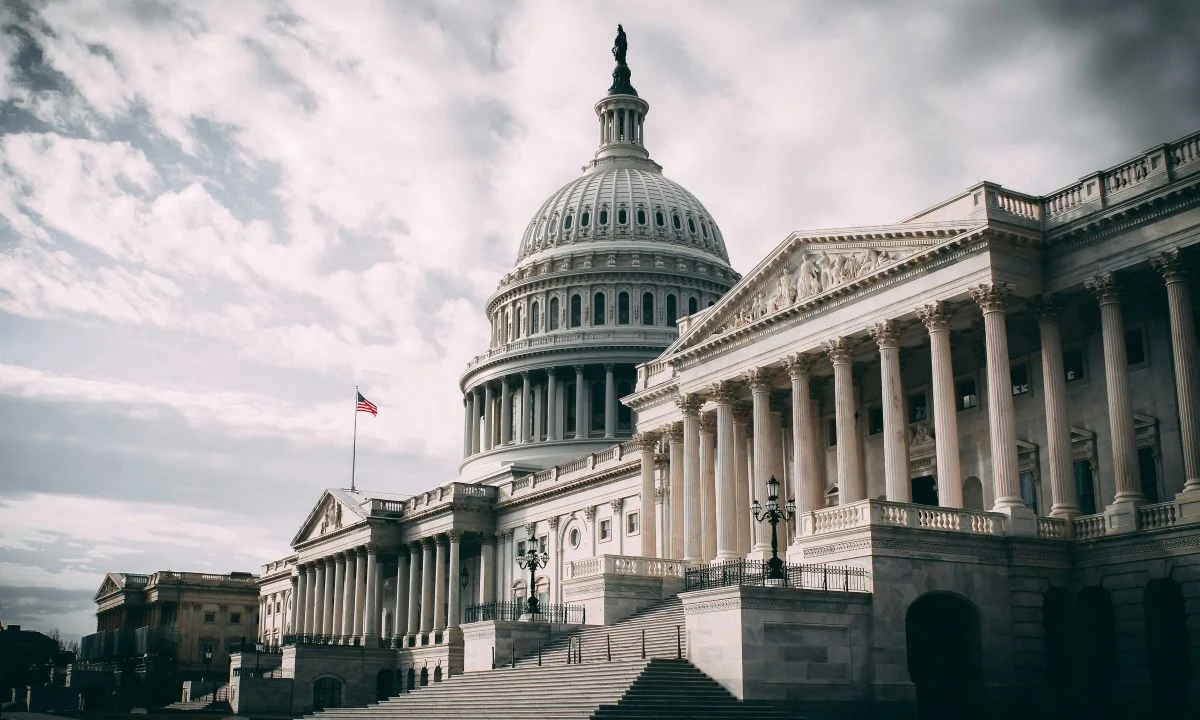
The cryptocurrency market suffered a major legislative blow in Washington, D.C., but industry insiders and financial analysts agree that the true battle for the future of digital assets has only just broken out into the open. The procedural defeat of the Digital Asset Market Clarity Act sent immediate shockwaves through domestic financial markets, triggering a sharp sell-off in crypto-linked equities and leaving digital asset enterprises facing an extended period of regulatory ambiguity. For months, the Clarity Act had been pitched by lobbyists, institutional investors, and fintech executives as the definitive, long-awaited rulebook that would finally integrate cryptocurrency deep into the regulated architecture of the United States financial system. Its failure to secure the necessary votes in the Senate has stalled comprehensive federal market structure legislation, forcing the industry to adapt to an ad-hoc regulatory environment for the foreseeable future.
The collapse of the legislative vehicle on Tuesday, September 15, was compounded almost immediately by abrupt developments on the other side of Capitol Hill. On Wednesday, September 16, House Speaker Mike Johnson announced that scheduled votes for Thursday would be abruptly canceled. Lawmakers were directed to pack their bags and head home early for an extended recess ahead of the upcoming November midterm elections, effectively bringing legislative productivity to a screeching halt.
A Stalled Congress and Shifting Political Priorities
The abrupt closure of the House capped off a remarkably unproductive autumn session. Since returning to Washington from their traditional August recess, members of Congress had logged a mere seven days of actual legislative work. This early departure came in the wake of immense political pressure; more than 100 Democratic representatives had formally petitioned Speaker Johnson to cancel the recess altogether, arguing that Congress needed to remain in session to address escalating national security concerns and the growing, unmitigated threats posed by rapid advancements in artificial intelligence.
By pulling the plug on legislative business a day early, the House leadership also managed to sidestep a highly contentious political showdown. The early recess successfully averted a scheduled floor vote on a controversial resolution introduced by Republican Representative Thomas Massie, which aimed to initiate impeachment proceedings against Defense Secretary Pete Hegseth over the handling of ongoing military conflicts involving Iran. With Capitol Hill now entirely vacant ahead of the midterms, any hope of reviving comprehensive financial legislation in the near term has evaporated.
Despite the bitter disappointment surrounding the Clarity Act’s failure, stakeholders from both the cryptocurrency sector and traditional banking institutions emerged from the wreckage singing a surprisingly harmonious tune: lawmakers must eventually act, and regulatory certainty remains paramount. Crucially, neither side views this legislative defeat as the end of the road.
The Shift to Agency-Led Regulation: SEC and CFTC Step Up
For cryptocurrency firms, the sinking of the Clarity Act represents a significant setback, but it does not represent a reversion to the chaotic, hyper-enforcement era of several years prior. The bill’s demise was ultimately sealed by a bipartisan coalition of opposition. Democrats raised persistent ethics concerns and pointed to President Donald Trump’s personal financial ties to the crypto sector, while various Republicans found alternative poison pills within the complex legislative text.
Recognizing that Capitol History has effectively closed its doors for the remainder of the year, the digital asset sector is swiftly pivoting its strategy. The industry is betting heavily that Congress is no longer the sole avenue for achieving regulatory clarity. Over the past year, federal financial watchdogs—most notably the Securities and Exchange Commission (SEC) and the Commodity Futures Trading Commission (CFTC)—have steadily advanced their own internal digital asset policies. This dual-track reality means that crypto companies have a viable, albeit imperfect, alternative route to legitimacy even if legislative efforts remain frozen on Capitol Hill.
Brian Armstrong, Chief Executive Officer of Coinbase—the crypto exchange giant that poured substantial capital and lobbying efforts into championing the Clarity Act—took to social media to outline the industry’s new reality. Writing on the platform X, Armstrong expressed clear disappointment over the Senate’s cloture vote while signaling an immediate pivot in strategy.
"The CLARITY Act didn’t advance in the Senate today, which was a disappointment," Armstrong wrote. "While it’s possible bipartisan conversations continue and it lives to fight another day, we can’t wait on Congress anymore. The SEC and CFTC have the tools they need to create clear rules under existing authority, and I expect will begin working on this in earnest. So clarity is coming to crypto regardless."
Emphasizing the permanence of the technology, Armstrong added, "Crypto can’t be uninvented. With clarity emerging through the regulators, we’ll continue updating the financial system." Following the news of the bill’s defeat, Coinbase’s stock retreated approximately 7% in pre-market trading, reflecting immediate investor jitters.
This sentiment was swiftly reinforced by top regulatory leadership. SEC Chairman Paul Atkins issued a public statement reaffirming the agency’s commitment to filling the legislative vacuum left by Congress.
"I have been unequivocal: with or without legislation, we will act decisively within the SEC’s statutory authority to deliver certainty for American investors and for the entrepreneurs shaping our technological future. Stay tuned," Atkins wrote on X.
While rules promulgated by regulatory agencies inherently carry vulnerabilities—making them susceptible to shifting presidential administrations, drawn-out litigation, and future political appointees—the reassurance from leadership signals that Tuesday’s legislative loss will not halt the relentless march of tokenization, stablecoin adoption, and the broader institutional collision between crypto and traditional banking.
Industry Perspectives: The Inevitability of On-Chain Finance
Market participants on the ground argue that commercial reality is moving much faster than the federal legislative machine. Global enterprises and major financial institutions are already transacting and settling transactions on stablecoin rails because these systems offer unprecedented speed and operate outside the rigid, restrictive hours of traditional banking infrastructure.
Eric Queathem, founder and CEO of Velocity, noted that the defeat of the legislation does not alter the fundamental utility driving digital assets into corporate treasuries. "The vote doesn’t change what we see every day," Queathem told PYMNTS. "Global businesses and financial institutions are already settling on stablecoin rails because it’s faster and works outside banking hours, and none of that depended on the Senate."
According to Queathem, the true value of formal, written rules lies in reducing friction and risk assessment for risk-averse institutions. "What clear rules do is make the next decision easier: they shorten the path from a first use case to running real volume, and they bring in the companies still waiting on the sidelines. That’s the opportunity in front of Congress. Businesses have already shown the demand is there, but written rules give more clarity and confidence to the U.S. market," he explained.
The Banking Sector’s Underlying Agenda: The Stablecoin Yield Battle
While the crypto industry adjusts its posture toward agency-led rulemaking, the reaction from traditional banking associations reveals the true friction point that ultimately doomed the legislation behind closed doors. Shortly after the vote, a formidable coalition of major banking trade groups—including the Independent Community Bankers of America, the American Bankers Association, the Association of Military Banks of America, the Bank Policy Institute, the Consumer Bankers Association, the Financial Services Forum, the Mid-Size Bank Coalition of America, and the National Bankers Association—released a joint statement.
The banking groups reiterated their theoretical support for digital-asset legislation before aggressively zeroing in on a single, highly sensitive issue: stablecoin yield policy. The subtext of their collective lobbying message was clear: regulate crypto, legitimize it, and allow it to grow, but place strict boundaries on its functionality so that stablecoins do not evolve into shadow bank accounts capable of luring away lucrative retail and corporate deposits. This underlying dispute over yield generation and deposit substitution is the real turf war that the Clarity Act dragged out into the harsh light of day.
Legal and regulatory experts emphasize that while general market structure bills are struggling, other legislative pillars remain fully operational. Samson Leo, co-founder and chief legal officer of StraitsX, pointed out that the broader regulatory puzzle is being assembled piece by piece.
"Agency rulemaking can continue to provide guidance, but legislation can offer a more durable foundation for institutions making long-term decisions," Leo told PYMNTS. "It is worth being precise about what this does and does not affect. U.S. stablecoin policy was settled by the GENIUS Act in 2025 and is now in implementation, including Treasury’s consultation on the rules for foreign issuers. That work continues."
Leo cautioned, however, that piecemeal implementation creates global friction. "The longer major markets operate without clear and compatible frameworks, the harder it becomes to address fragmentation and build genuinely interoperable cross-border financial infrastructure."
Corporate Cautiousness and the Road Ahead
Despite the relentless drive toward tokenization by fintech innovators, empirical data indicates that mainstream corporate adoption remains guarded. Findings from Waiting for Certainty: Why Most CFOs Are Holding Back on Crypto and Stablecoins—a comprehensive March installment of the PYMNTS Intelligence Certainty Project—highlight that the vast majority of middle-market corporate chief financial officers remain deeply hesitant. Current utilization rates underscore this caution, with just 13% of surveyed firms actively utilizing stablecoins and a meager 5% employing other digital cryptocurrencies in their daily treasury operations.
Ultimately, the failure of the Digital Asset Market Clarity Act marks the end of a legislative chapter, but it far from spells the doom of crypto’s integration into the global financial architecture. As federal agencies prepare to step into the regulatory breach and corporations continue to vote with their feet by adopting high-speed blockchain rails, the financial sector is barreling toward a future where digital assets are deeply embedded—legislated rulebook or not. The battleground has simply shifted from the halls of Congress to the boardrooms of Wall Street and the administrative offices of Washington’s top regulators.

