
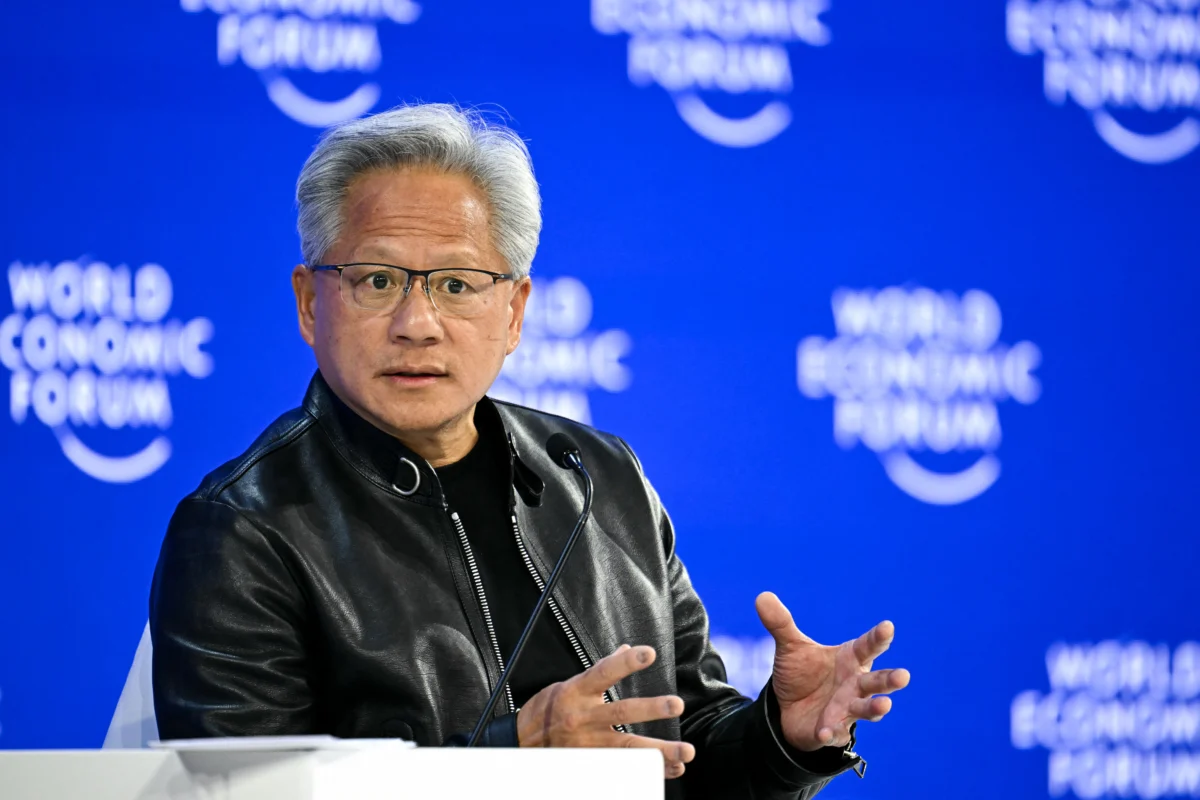
The intersection of artificial intelligence, high-stakes geopolitics, and executive showmanship produced a surreal spectacle in Los Angeles on Monday morning. Nvidia Chief Executive Officer Jensen Huang, speaking live onstage at the prominent All-In Summit, received an unexpected telephone call that could not be dismissed to voicemail: it was a direct line from President Donald Trump.
The moment, which sent an immediate wave of anxiety through public relations professionals watching in the audience and online, highlighted the increasingly tight-knit relationship between Washington’s political leadership and Silicon Valley’s foundational hardware titans. Rather than quietly stepping off stage or declining the call, Huang embraced the interruption. He flashed his smartphone to the crowd, acknowledged the identity of the caller, and openly traded pleasantries with the commander-in-chief in front of thousands of tech investors, founders, and media personnel.
“I’m onstage with the besties,” Huang told Trump, using a colloquialism familiar to listeners of the All-In podcast. The reference was directed at the venture capitalists and podcast co-hosts moderating the event, a roster that includes prominent tech investors Chamath Palihapitiya and Jason Calacanis, alongside influential figures with direct ties to the current administration, such as White House advisers David Friedberg and David Sacks.
An Impromptu Speakerphone Moment
In a move that immediately dominated social media feeds and technology news cycles, Huang attempted to project the conversation to the live audience. Scrambling to find an available microphone to amplify the audio from his cellular device, Huang’s slight technical fumbling prompted a sharp quip from the president.
“The great thing about life is Jensen can develop the most complex computer chip in the world… but he can’t figure out how to put you on speaker,” Trump joked over the phone line, drawing laughter from the auditorium.
Once the logistical hurdles of stage microphones and cellular audio were resolved, the conversation swiftly pivoted from lighthearted banter to the core geopolitical and philosophical debates currently consuming the technology sector.
The AI Acceleration Debate and Geopolitical Concerns
Prior to the phone call, Huang and the All-In hosts had been deep in discussion regarding recent public commentary from Anthropic CEO Dario Amodei. Amodei had recently published an essay advocating for a deliberate deceleration in the pace of artificial intelligence capability scaling, arguing that safety measures and societal guardrails need time to catch up with raw compute advancements. This cautious approach has found surprising alignment among other industry leaders, including OpenAI CEO Sam Altman and SpaceX and xAI CEO Elon Musk, both of whom have voiced support for carefully managed development timelines.
Huang’s perspective, however, has historically stood apart from these calls for voluntary deceleration. As the chief architect of the graphics processing units (GPUs) that power the vast majority of global AI training infrastructure, Huang has consistently advocated for aggressive, uninterrupted technological expansion to unlock new frontiers in productivity and scientific discovery.
When Trump joined the conversation via speakerphone, he echoed Huang’s sentiments, framing calls for deceleration not as prudent risk management, but as a strategic vulnerability that could benefit foreign adversaries.
“They’re just playing right in the hands of a lot of people that don’t want to see it happen,” Trump stated, referencing proponents of slowing down AI development. “That could be political people. It could also be China. And we’re not going to let that happen. It’s a hoax.”
“You’re right. We’re not going to let that happen, sir,” Huang responded, eliciting sustained applause from sections of the audience.
The president elaborated on his stance regarding the regulation and pacing of the industry, reassuring the Nvidia CEO of the administration’s unwavering support for American dominance in critical technology sectors.
“We have to be a little bit careful… We have to do things and we have to do them prudently, but that doesn’t mean we’re going to stop an industry,” Trump said. “So I’m with you all the way. I didn’t even know how you felt about it. I just hoped you felt the same way as me. We’re going to lead.”
Grassroots Backlash Versus Administration Rhetoric
The alignment between the White House and Silicon Valley’s elite on AI acceleration stands in stark contrast to the growing wave of local resistance facing the physical infrastructure required to build out these advanced systems.
Trump and several of his allies—including Y Combinator CEO Garry Tan—have publicly characterized the rising tide of local opposition against data center construction as part of an orchestrated international campaign designed to stunt American economic growth and technological supremacy. Proponents of this view argue that environmental and zoning challenges are weaponized proxies intended to halt the rapid scaling of data-heavy artificial intelligence workloads.
However, comprehensive public opinion data suggests that the friction surrounding data centers is driven less by foreign psyops and more by immediate, tangible community concerns regarding quality of life. Recent polling conducted by Gallup indicates that approximately seven in ten Americans actively oppose the construction of large-scale data centers in their immediate geographic areas.
A granular breakdown of the polling data reveals that more than 50% of respondents cite the heavy environmental footprint of data centers—particularly their immense demands on local electrical grids and water resources for cooling—as their primary grievance. Furthermore, roughly 20% of surveyed citizens expressed acute anxieties regarding potential cost-of-living increases, strain on municipal utilities, and broader disruptions to their local communities.
Implications for the Tech Sector and Policy Landscape
The unexpected phone call at the All-In Summit underscores a profound structural reality of the modern technology economy: hardware manufacturers, software developers, and federal policymakers are operating in an increasingly unified theater.
For Nvidia, maintaining a direct line of communication with the executive branch is vital. The company operates at the absolute epicenter of the global semiconductor supply chain, navigating complex export controls, international trade negotiations, and domestic subsidies such as the CHIPS Act. By publicly cementing a shared vision of unchecked technological advancement between the nation’s highest political office and its most valuable chipmaker, the exchange signals that the current administration views semiconductor leadership as an issue of paramount national security.
At the same time, the divergence between federal tech policy and local grassroots sentiment poses a persistent challenge. While executive leaders in Washington and Silicon Valley push for rapid infrastructure expansion to maintain a competitive edge against global rivals like China, local municipalities continue to grapple with the realities of power grid strains and environmental zoning disputes.
As the race for artificial intelligence supremacy accelerates into the latter half of the decade, events like the All-In Summit demonstrate that the debate over AI is no longer confined to research papers and corporate boardrooms. It has become a central pillar of domestic politics, international diplomacy, and everyday civic life.

