
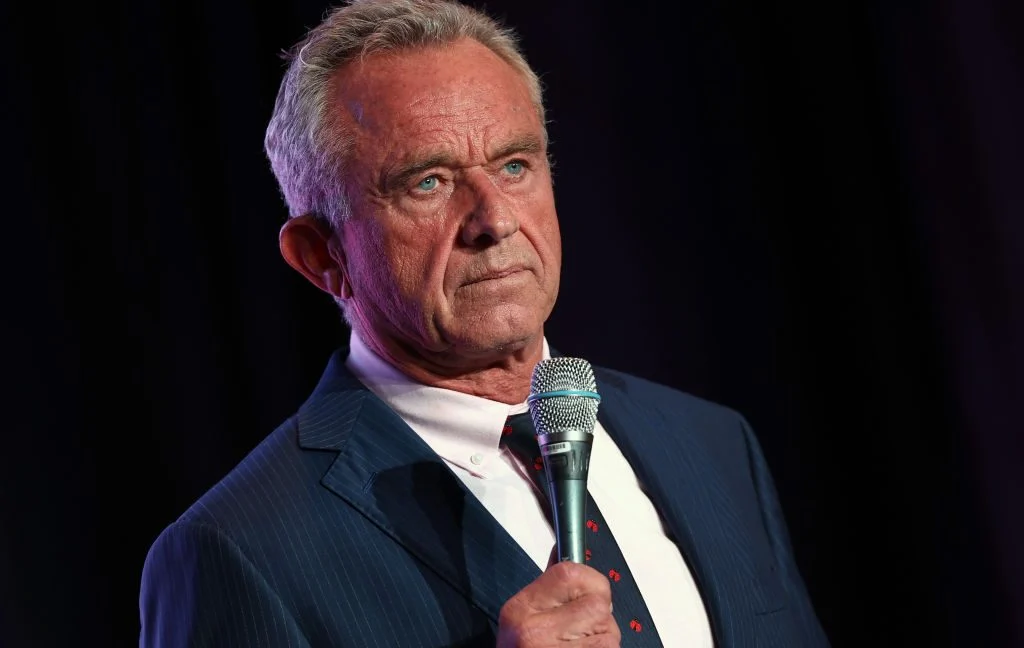
The upcoming Children’s Health Defense (CHD) conference, framed by organizers as a “pursuit of a more perfect future,” has become a focal point of scrutiny regarding the intersection of federal health policy and the “health freedom movement.” Scheduled for September 17, with an opening reception slated for the evening prior, the event is set to feature a high-profile roster of political figures and activists. The gathering arrives at a precarious moment for public health discourse, as the line between official government mandate and fringe medical skepticism continues to blur.
While the conference is sold out for in-person attendance at the $250 price point, the organization continues to offer $125 "overflow" seating passes and $100 virtual access tickets, suggesting a robust demand among the organization’s core base. The inclusion of high-ranking U.S. senators and influential media figures as speakers underscores the growing institutional legitimacy that anti-vaccine advocacy has found within certain sectors of the American political establishment.
A High-Profile Agenda and Political Alignment
The guest list for the CHD conference reads like a who’s-who of the modern skepticism movement. Senator Ron Johnson (R-Wisc.) and Senator Rand Paul (R-Ky.) are prominent fixtures on the agenda. Both men have spent years challenging the consensus of federal health agencies, including the CDC and FDA, regarding vaccine efficacy and safety protocols. Their participation suggests that the ideological framework promoted by the CHD—which often emphasizes personal autonomy over public health mandates—has moved from the periphery of political discourse into the halls of the U.S. Congress.
Also scheduled to speak are Mark Gorton, president of the MAHA (Make Americans Healthy Again) Institute, and Jan Jekielek, a senior editor at the Epoch Times. These figures represent the convergence of grassroots activism, media amplification, and political lobbying. The presence of CHD’s internal leadership, including CEO Mary Holland, ensures that the event will maintain a consistent organizational message that has historically sought to dismantle the regulatory frameworks governing childhood immunization schedules.
The Evolution of the Kennedy Stance
The participation of Robert F. Kennedy Jr. at this event marks a significant point of contention. Since assuming his role as a high-level health official in early 2025, Kennedy has navigated a complex public relations landscape. During his confirmation hearings, Kennedy attempted to distance himself from his decades-long history of vaccine skepticism, famously characterizing himself as “pro-vaccine” in an effort to appease legislative concerns.
However, his decision to headline the CHD conference—an organization he founded and long steered—suggests a pivot back to his ideological roots. This move contradicts his earlier promises to prioritize evidence-based science over personal conviction. The decision to participate in a forum explicitly dedicated to the “health freedom movement” calls into question the durability of his stated shift toward mainstream medical alignment. Analysts suggest that this behavior is part of a broader, ongoing strategy to maintain his influence over a constituency that views his government role as an opportunity to disrupt the established pharmaceutical order.
Chronology of the Anti-Vaccine Movement and CHD
To understand the weight of this event, one must look at the historical trajectory of the Children’s Health Defense. Founded in the early 2000s, the group initially operated under the banner of the World Mercury Project. Its primary goal was to lobby against the use of thimerosal in vaccines, a claim that has been repeatedly debunked by the global scientific community.
- 2005–2015: The organization focused on litigation and public awareness campaigns, gaining traction through social media and alternative news outlets.
- 2020: The COVID-19 pandemic served as a massive accelerant for the organization. As lockdowns and vaccine mandates became central to public life, CHD saw its funding and membership base expand exponentially.
- 2025: Kennedy transitions into his government role, ostensibly severing ties with CHD to adhere to federal ethics guidelines.
- 2026: Reports emerge indicating that the Executive Branch, under President Trump, has pressured health leadership to provide further investigations into the debunked link between vaccines and autism, signaling that the CHD’s messaging has penetrated the highest levels of the current administration.
Data-Driven Context: The Cost of Skepticism
The influence of the CHD and similar organizations has had measurable effects on public health metrics. According to data from the Centers for Disease Control and Prevention (CDC), childhood vaccination rates for diseases such as measles, mumps, and rubella (MMR) have seen a slight but persistent decline in several states since 2020. This trend is often correlated with areas where anti-vaccine sentiment is most concentrated.
Epidemiological studies have consistently shown that when vaccination rates dip below the 95% threshold, herd immunity begins to break down. This creates vulnerability for immunocompromised individuals and infants who are too young to be vaccinated. The economic burden of preventable outbreaks is also significant; a single measles outbreak can cost a local health department hundreds of thousands of dollars in contact tracing and containment efforts. Despite this, the “health freedom” narrative continues to prioritize individual exemption over collective immunity, creating a persistent challenge for public health authorities.
Official Responses and Academic Skepticism
Medical associations, including the American Academy of Pediatrics (AAP) and the American Medical Association (AMA), have maintained a firm stance against the rhetoric promulgated by the CHD. In recent statements, these organizations have reiterated that there is no credible evidence linking vaccines to autism—a claim that Kennedy has frequently pushed.
“The scientific consensus is robust and has been replicated across decades of rigorous research,” said one representative from a leading medical research university. “The danger of an event like this is not just the dissemination of misinformation, but the erosion of trust in the institutions that protect the public from preventable diseases. When political figures use their platform to validate debunked theories, it makes the work of frontline clinicians significantly harder.”
Broader Implications for Public Health Policy
The implications of this conference extend beyond a single weekend of speeches. It represents a potential shift in how public health policy is formulated in the United States. If the current administration continues to lean into the rhetoric of the MAHA Institute and CHD, the nation may see a fundamental restructuring of how vaccines are evaluated, approved, and recommended.
Legislative analysts suggest that the pressure from the executive branch could lead to a loosening of vaccine requirements for school entry or changes in the composition of advisory boards that dictate the U.S. vaccination schedule. This would essentially institutionalize the skepticism that was once relegated to the fringe.
Furthermore, the involvement of mainstream political figures in this event signals a change in campaign strategy. For many politicians, embracing the “health freedom” cause is now seen as a way to tap into a highly motivated and loyal voter base. This shift suggests that vaccine skepticism is no longer a political liability but, in some circles, a strategic asset.
As the September 17 conference approaches, the global health community will be watching closely. The event serves as a bellwether for the future of American public health. Will the government continue to uphold the scientific consensus, or will it succumb to the pressure of a movement that views the very foundations of modern medicine with deep-seated suspicion? The answer to that question will likely shape the health outcomes of the American population for years to come. The upcoming proceedings in the main conference hall will provide a clear indication of where the balance of power currently rests.

