
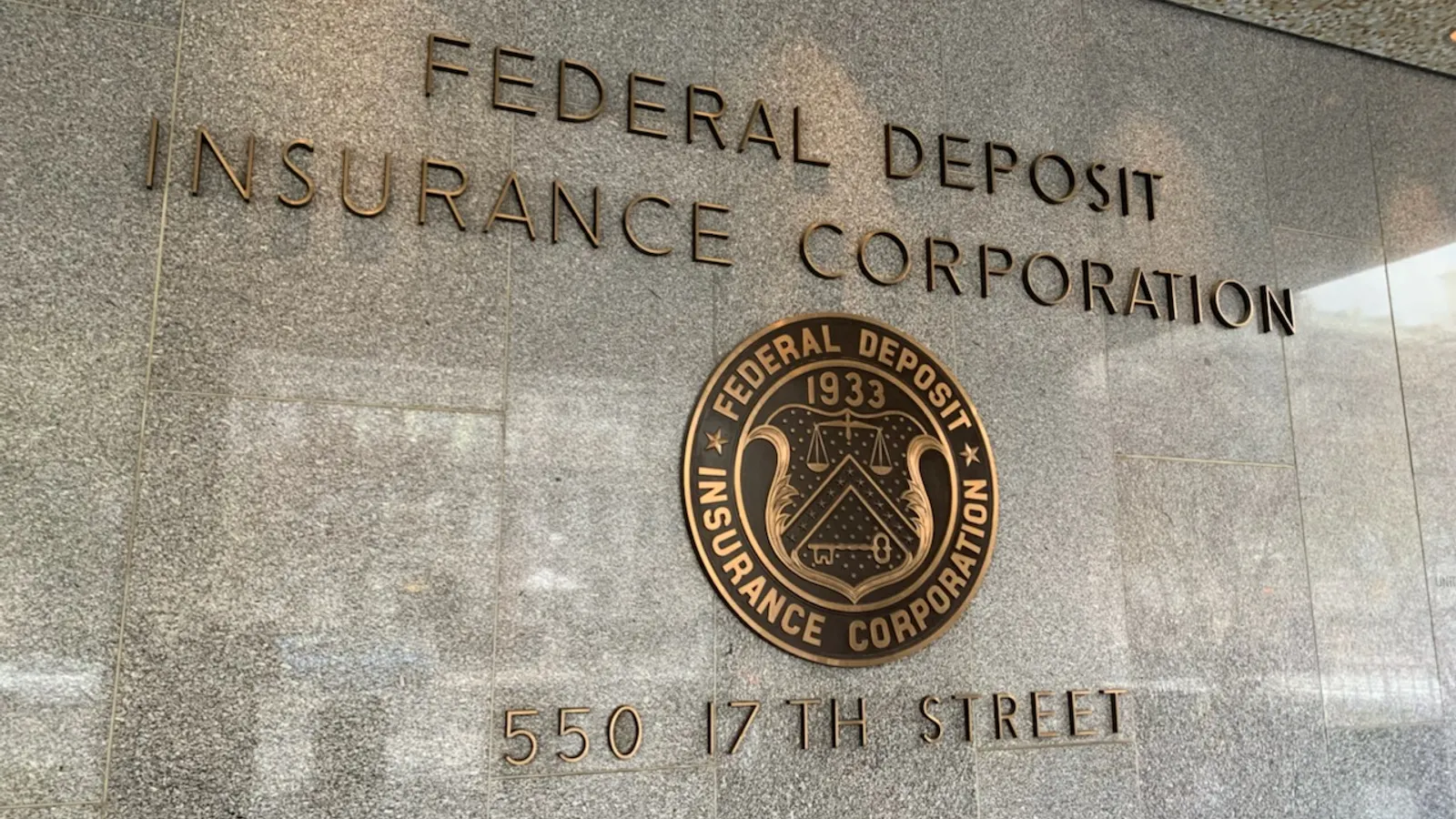
The failure of Irvine, California-based Nano Banc on Friday marks a somber milestone for the American financial landscape, as the institution’s closure establishes 2026 as the most active year for bank failures in the current decade. With the California Department of Financial Protection and Innovation (DFPI) shuttering the lender and appointing the Federal Deposit Insurance Corporation (FDIC) as receiver, the event brings the total number of U.S. bank collapses this year to six. This figure surpasses the five failures recorded in 2023, signaling a period of heightened volatility for smaller regional and community financial institutions across the country.
The resolution of the failure was swift, with Sandy, Utah-based Sunwest Bank entering into a purchase and assumption agreement with the FDIC. Under the terms of the deal, Sunwest Bank has agreed to assume all of Nano Banc’s deposits and a significant portion of its assets. The transition is designed to be seamless for customers; the sole branch formerly operated by Nano Banc is scheduled to reopen on Monday morning as a Sunwest Bank location, ensuring continuity of service for depositors.
A History of Regulatory Friction
The collapse of Nano Banc was not an isolated incident but rather the culmination of a multi-year period defined by persistent management instability and regulatory scrutiny. According to the DFPI, the bank’s deteriorating financial condition was exacerbated by a consistent pattern of governance failures and non-compliance with statutory requirements.
As early as 2020, regulators identified systemic risk management weaknesses, which included unauthorized changes to the board of directors and the executive C-suite, as well as instances of executive self-dealing. These early red flags prompted aggressive intervention from federal and state oversight bodies. In February 2021, the Federal Reserve and the DFPI issued coordinated enforcement actions against the bank. The Federal Reserve’s directive highlighted deep-seated concerns regarding the bank’s heavy concentration in commercial real estate loans, a sector that requires stringent risk controls, while the state regulator mandated that Nano Banc provide advance notification regarding any changes to its leadership or board composition.
Despite these interventions, the bank’s internal culture proved resistant to reform. By December 2021, the DFPI was forced to issue a formal cease-and-desist order after finding that Nano Banc had replaced directors and appointed a new CEO and chair without obtaining the required regulatory clearance. The Federal Reserve subsequently ordered wide-ranging changes to the bank’s governance, demanding greater oversight of insider lending and a forensic review of corporate expenses. While the Federal Reserve eventually terminated its enforcement action in April 2025, the institution’s underlying health had already been irreparably compromised by years of operational mismanagement.
The Final Descent
The definitive turning point for Nano Banc occurred in March 2026, when the DFPI issued a final directive requiring the bank to bolster its tangible shareholders’ equity ratio to at least 9.5%. The regulator provided a clear ultimatum: if the bank failed to meet this threshold through an injection of capital, it would be forced to pursue a voluntary liquidation, sale, or merger.
Nano Banc ultimately proved unable to satisfy these requirements. Its shareholder equity plummeted below the statutory minimum of 3%, a threshold that legally necessitated an "unsafe and unsound" designation. The bank’s downward trajectory was further evidenced by a staggering $75.3 million net loss reported in the lead-up to the closure.
The instability extended into the highest levels of the bank’s leadership. In a particularly damaging chapter, the Federal Reserve banned former interim CEO Anthony Gressak III and former board member James Chung from the banking industry in 2024. The bans followed investigations into the fraudulent procurement of COVID-19-era financial assistance, specifically through the Paycheck Protection Program (PPP) and Economic Injury Disaster Loan (EIDL) initiatives. These revelations of executive malfeasance further eroded public and regulatory confidence in the institution’s integrity.
Financial Impact and Industry Implications
The financial fallout of the Nano Banc collapse will be absorbed by the Deposit Insurance Fund (DIF). The FDIC has estimated that the failure will result in a cost of approximately $114 million to the fund, though this figure remains subject to adjustment as the remaining assets of the failed institution are liquidated.
Discrepancies in asset valuation have highlighted the complexity of the bank’s final days. While the FDIC reported the bank held roughly $736 million in assets as of June, the California DFPI cited a lower figure of approximately $690 million at the time of closure. Under the acquisition agreement, Sunwest Bank will purchase about $476 million of these assets, while assuming $605 million in deposits and $227 million in loans.
For Sunwest Bank, this acquisition represents a strategic expansion. CEO Carson Lappetito noted that this is the sixth time the FDIC has selected Sunwest as a partner to resolve a bank failure, describing the acquisition as a testament to the bank’s long-standing financial discipline. "This opportunity reflects the financial strength, stability, and high-touch service that have defined Sunwest Bank for more than five decades," Lappetito stated.
A Broader Trend of Bank Failures
The collapse of Nano Banc is the largest in a string of failures that have defined 2026 as a volatile year for the U.S. banking sector. Previous closures occurred in Illinois, Georgia, Indiana, Kansas, and Pennsylvania. This trend stands in sharp contrast to the stability observed in previous years; 2021 and 2022 saw zero bank failures, and 2024 and 2025 each recorded only two.
Analysts suggest that the surge in failures this year reflects the compounding pressure on smaller institutions. While the broader U.S. banking system remains largely resilient, community banks with high concentrations in commercial real estate or those lacking diversified revenue streams are finding it increasingly difficult to navigate the current economic environment. Rising interest rates, the lingering effects of pandemic-era loan programs, and the high cost of compliance are creating a "survival of the fittest" landscape for regional lenders.
The failure of Nano Banc specifically underscores the critical importance of corporate governance. Regulators have increasingly signaled that they will no longer tolerate banks that operate with "significant risk management weaknesses," particularly when those weaknesses involve executive self-dealing or the obfuscation of board-level decisions. As the industry moves forward, the scrutiny on smaller banks is expected to intensify, with regulators likely to focus more on the early detection of governance rot before it necessitates a total failure.
For the depositors of Nano Banc, the immediate disruption has been mitigated by the swift intervention of the FDIC and the entry of Sunwest Bank. However, for the banking industry at large, the sixth failure of 2026 serves as a sobering reminder of the structural risks that persist in a tightening economic climate. As the year progresses, market participants will be watching closely to see if this trend of regional bank instability continues or if the regulatory crackdown on mismanagement will lead to a period of consolidation and stabilization. The closure of Nano Banc, with its long history of regulatory friction and eventual downfall, serves as a definitive case study in the consequences of unchecked institutional failure.

