
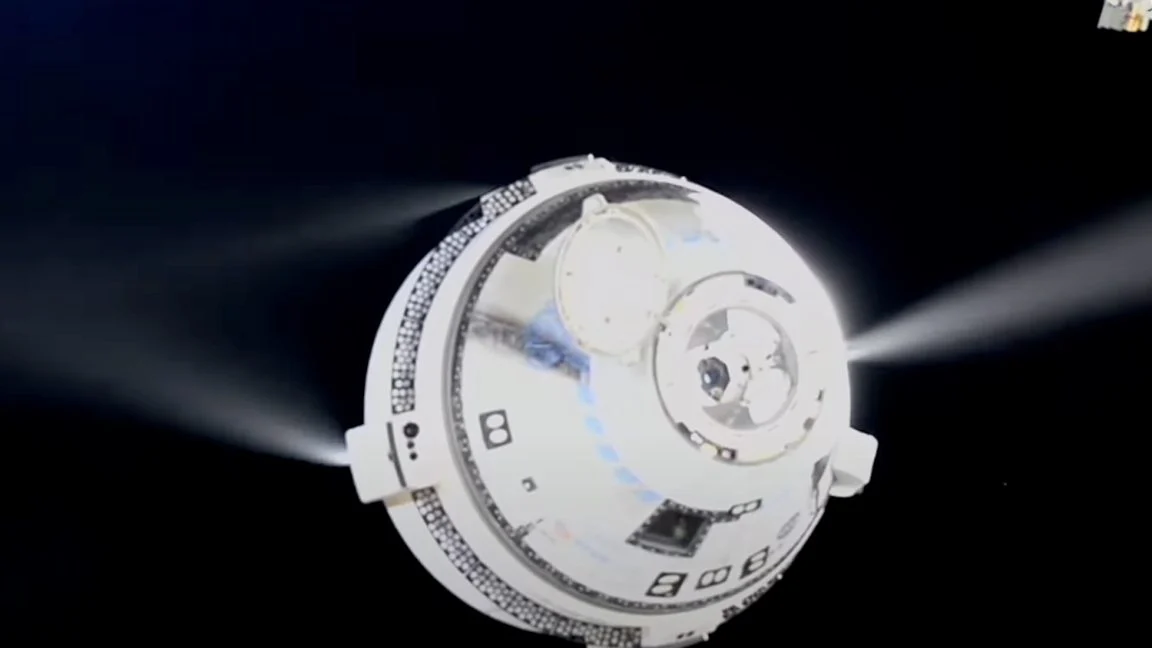
As the horizon for human spaceflight shifts toward the 2030s, NASA finds itself at a critical strategic crossroads. The impending retirement of the SpaceX Crew Dragon—the workhorse of the Commercial Crew Program—scheduled for no later than 2030, has forced the agency to confront the future of American access to low-Earth orbit (LEO). With the International Space Station (ISS) slated for decommissioning by 2031 and subsequent efforts focused on transitioning to Commercial LEO Destinations (CLDs), NASA is tasked with ensuring a seamless continuity of operations. The core of this challenge lies in balancing the need for reliable, cost-effective transportation while navigating the turbulent development history of Boeing’s Starliner spacecraft.
The Strategic Landscape of LEO Access
NASA’s strategy for the next decade is predicated on a two-pronged approach: extending the life of the ISS to 2032 to maximize research output and fostering the growth of a robust private space station economy. To realize these goals, the agency requires a reliable transportation architecture. While SpaceX has revolutionized the industry with the Crew Dragon, the agency’s historical mandate for redundancy—ensuring at least two independent launch providers—remains a pillar of its risk-mitigation strategy.
Despite its well-documented technical hurdles, including propulsion system anomalies and software malfunctions that delayed its first crewed flight test, the Starliner remains the primary candidate to fill the void left by the Dragon. The debate regarding whether to initiate a new, broader competition for a secondary crew vehicle has gained traction among industry observers. Some analysts argue that a fresh solicitation could incorporate emerging players like Blue Origin, which is developing its own crew vehicle, or European-based entities like The Exploration Company. However, such a move would require billions in additional federal funding and years of development, a timeline that risks creating a capability gap.
A Chronology of the Commercial Crew Program
The genesis of this dilemma dates back to 2010, when NASA initiated the Commercial Crew Development (CCDev) program to move away from sole reliance on Russian Soyuz flights. The timeline of this transition has been fraught with both innovation and delay:
- 2014: NASA awards multi-billion dollar contracts to Boeing and SpaceX to develop human-rated spacecraft.
- 2020: SpaceX successfully completes Demo-2, restoring domestic launch capabilities to the United States.
- 2023–2024: Starliner undergoes multiple delays to its Crew Flight Test (CFT), testing the limits of NASA’s patience and budget.
- 2025–2028: Projected window for the final operational missions of the Crew Dragon fleet.
- 2030: The projected expiration of current ISS service contracts and the sunsetting of the Dragon program.
- 2032: Planned deorbiting of the ISS and full reliance on commercial private stations.
NASA’s internal analysis suggests that the demand for crew flights will remain relatively modest, projected at two seats every six to nine months. Given this low flight cadence, the business case for a third or fourth commercial provider is difficult to justify. Officials have emphasized that abandoning the significant investment already sunk into the Starliner program—which has cost taxpayers billions—would be fiscally irresponsible, especially now that the vehicle is approaching full certification.
Financial Implications and Market Monopoly
The economic dynamics of the post-Dragon landscape present a complex problem for NASA’s procurement office. Currently, NASA and Boeing have negotiated a price point of approximately $90 million per seat for the missions designated Starliner-2 through Starliner-6. This figure represents a premium compared to the costs associated with the competitive landscape of the last decade.
The concern for both NASA and the nascent CLD providers—companies like Axiom Space, Orbital Reef, and Starlab—is that Boeing may find itself in a monopolistic position. If the Starliner becomes the sole certified vehicle after the Dragon’s retirement, the lack of competition could drive seat prices higher or stagnate technical innovation. When pressed on future pricing for commercial clients, Boeing leadership has been notably non-committal.
John Mulholland, vice president and program manager of Commercial Crew at Boeing, highlighted the technical dependencies currently clouding the financial picture. "We couldn’t provide detailed pricing to the CLD suppliers as the Vulcan rocket has not been certified, and the spacecraft has not been certified, and we don’t have detailed pricing on the Vulcan," Mulholland stated during a recent press briefing. He added that the company remains committed to being "as competitive as possible" once the supply chain and launch vehicle architectures reach maturity.
The Role of the Vulcan Centaur
Central to Boeing’s future viability is the United Launch Alliance (ULA) Vulcan Centaur rocket. The certification of this launch vehicle is a prerequisite for Boeing’s long-term sustainability in the crewed spaceflight sector. Unlike the SpaceX Falcon 9, which has an extensive flight history, the Vulcan is still establishing its reliability record. Boeing’s ambition to become the "preferred transportation supplier" for the private space station operators hinges on the Vulcan proving it can meet the stringent safety standards required for human spaceflight.
If the Vulcan certification process encounters significant setbacks, NASA may be forced to reconsider its reliance on a single provider, potentially re-opening the door for alternative launch vehicles or forcing a renegotiation of the Dragon’s retirement timeline.
Implications for the Commercial Space Economy
The shift toward a commercialized LEO economy is intended to liberate NASA from the costs of maintaining infrastructure, allowing the agency to focus its resources on deep-space exploration, specifically the Artemis program and lunar surface operations. However, this transition is contingent on the private sector’s ability to operate efficiently.
The broader implications of this "difficult decision" are twofold:
- Industrial Base Stability: By committing to Boeing, NASA ensures that a major aerospace partner remains active in the human spaceflight sector. This preserves critical engineering expertise and infrastructure that might otherwise be lost if the company were to withdraw from the crewed market.
- The "Market Failure" Risk: If the commercial stations fail to attract sufficient non-NASA demand—such as research from private corporations or sovereign space agencies—the cost of "buying a seat" will fall almost entirely on the taxpayer. NASA’s current strategy assumes that as CLDs come online, the cost per seat will drop due to economies of scale. If this assumption proves incorrect, the agency may find itself trapped in an expensive, long-term contract for a service that the private market cannot sustain.
Conclusion: A Calculated Risk
As the 2030 deadline approaches, NASA is betting on the stabilization of the Starliner platform and the eventual maturity of the commercial space station market. The agency’s reluctance to fund a new, expensive competition for a secondary vehicle is a testament to the current fiscal climate and the belief that the current industrial base is sufficient to meet the nation’s needs.
While critics suggest that a lack of competition will stifle innovation and keep prices artificially high, NASA officials maintain that the path forward is one of optimization rather than replacement. The coming five years will be the ultimate test of this hypothesis. If Boeing can successfully execute its flight schedule, demonstrate the reliability of the Vulcan launch system, and provide competitive pricing for the next generation of space stations, the current strategy will be viewed as a prudent, risk-averse transition. Conversely, should technical delays continue to plague the Starliner, the agency may be forced to confront a much more difficult decision: whether to extend the life of the Dragon or pivot entirely to a new generation of commercial providers, regardless of the sunk costs.
For now, the trajectory remains clear: NASA is moving toward a future where it is a customer rather than an operator, a shift that is as much about economic policy as it is about the exploration of the final frontier.

