
India’s digital payment landscape is poised for a transformative leap, driven by the burgeoning success of the Unified Payment Interface (UPI) and a strategic embrace of artificial intelligence (AI). Dilip Asbe, the Managing Director and CEO of the National Payments Corporation of India (NPCI), the organization overseeing UPI, envisions AI as the cornerstone of the next phase of growth, aiming to propel daily transactions from the current staggering figure of over 750 million towards an ambitious target of exceeding one billion. This vision encompasses not only expanding user adoption but also bolstering fraud prevention mechanisms and revolutionizing credit distribution across the nation’s vast digital economy.
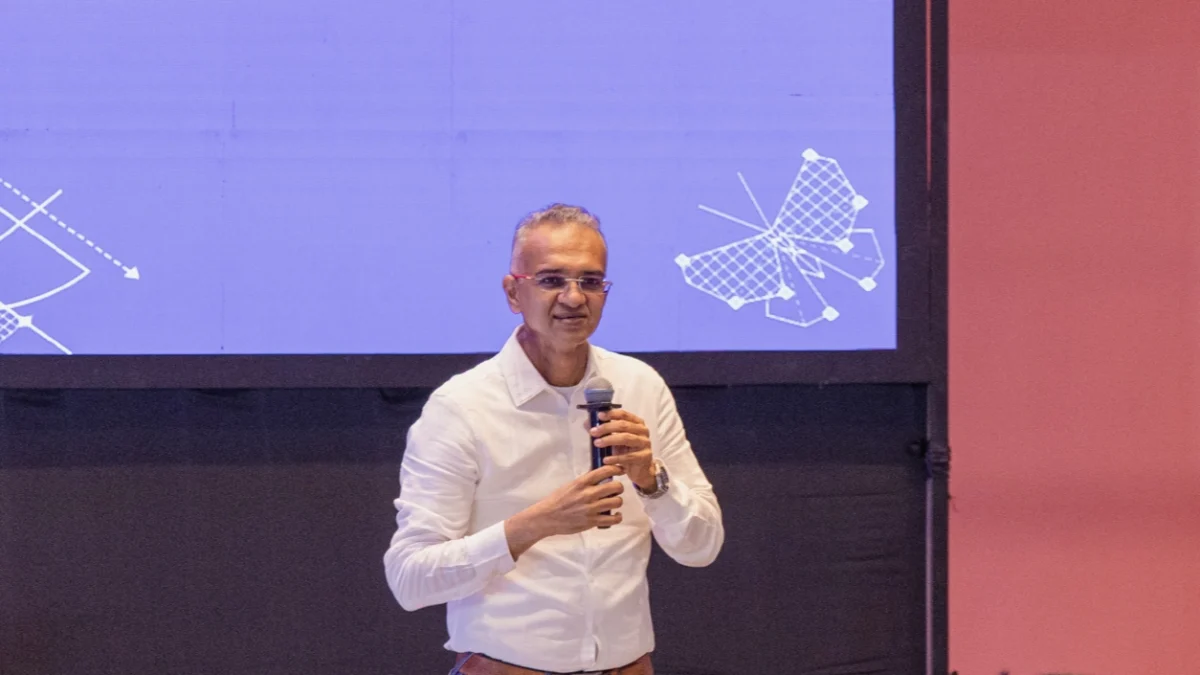
Speaking at the recent Mumbai Tech Week (MTW) 2026, Asbe articulated his conviction that AI will be instrumental in onboarding the next half a billion users onto the digital payment ecosystem. This monumental undertaking, he emphasized, will be a collaborative effort between the NPCI, India’s central bank, and the government, underscoring the strategic importance of this technological evolution for the nation’s financial infrastructure.
The NPCI’s proactive approach to integrating AI into the UPI framework was evident in Asbe’s detailed outline of its multifaceted applications. "AI will be used very effectively when we look at the next wave of UPI, and that includes all aspects, including reaching new users," Asbe stated. "We must use AI effectively to protect our current citizens, to find fraud, and to find mules. AI must also be used to provide credit to all the users and merchants who have digital footprints." This multifaceted approach highlights a comprehensive strategy to leverage AI for enhanced security, broader financial inclusion, and more efficient credit access.
Embracing Voice and Multilingual AI for Seamless Onboarding
A key area where Asbe sees AI making a significant impact is in simplifying the user onboarding process, particularly for India’s diverse linguistic landscape. "We must use AI to look at the voice and multilingual solutions to make onboarding simpler," he remarked. While the concept of voice as a primary interface for interacting with companies and systems has been a topic of discussion in India, Asbe acknowledged that the technology is still in its nascent stages, with voice models requiring further refinement for greater accuracy.
The NPCI had taken a significant step in this direction in 2023 with the launch of "Hello UPI," a voice assistant-based interactive system designed to facilitate seamless transactions. However, Asbe noted that the adoption of this feature has yet to reach its full potential. He expressed optimism that with the right use cases and continued development, voice technology could indeed become a critical component of the payment ecosystem, breaking down language barriers and making digital payments more accessible to a wider population.
The Ascendance of AI in Indian Finance and Regulatory Frameworks
The global financial sector is witnessing a rapid integration of AI, with companies in the U.S., for example, actively exploring its applications. Platforms like Coinbase and Robinhood are already enabling AI-driven trading on behalf of users, while OpenAI’s ChatGPT is allowing individuals to load personal account data for financial advice. India, too, has been exploring these frontiers. The NPCI, in collaboration with payment gateway Razorpay, showcased demonstrations of agentic commerce and payments leveraging AI chatbots in October 2025. These pilot programs, while promising, have not yet seen a widespread rollout of advanced capabilities.
Asbe firmly believes that with the establishment of robust regulations and a well-defined framework, India is well-positioned to adopt AI-powered financial solutions. He stressed the paramount importance of user protection and risk mitigation, stating, "There should be enough protection for users and mitigation for risk – and in case something goes wrong, the system should be able to look at the instructions and consent given by the user to an agent." This cautious yet progressive approach underscores the NPCI’s commitment to fostering innovation while safeguarding the interests of its users.
Beyond the utilization of large language models (LLMs), Asbe highlighted a significant opportunity for the Indian finance ecosystem to develop its own specialized small language models (SLMs). "We believe that the models will differentiate from each other based on the datasets that are made available to them," he explained. "We have a very rich dataset in our ecosystem. I think there is a big opportunity for Indian companies – the banks, fintechs, and the ecosystem – to create small language models which are sharp, specific, and as deterministic as possible." This focus on developing indigenous AI capabilities tailored to the Indian context could lead to highly effective and contextually relevant financial solutions.
As an example of this, the NPCI launched FIMI (Financial Inclusion & Management Intelligence) last year, an AI language model designed to address user disputes. Asbe reported that FIMI is currently serving over a million users in resolving issues such as mandate cancellations and other transactional problems, and its adoption is rapidly scaling. This initiative exemplifies the NPCI’s strategy of leveraging AI for enhanced customer service and dispute resolution within the payments ecosystem.
Navigating UPI Competition and Market Dynamics
The NPCI has consistently advocated for a healthy competitive environment within the UPI app space. However, data indicates a significant market concentration, with Walmart-owned PhonePe and Google Pay dominating over 80% of the market share. To address this, the regulator had planned to implement a market share cap of 30% for any single UPI app, a deadline initially set for December 31, 2026, with the possibility of deferral.
During his conversation, Asbe acknowledged the challenges in fostering competition, noting that UPI apps offer similar core functionalities and incur low switching costs for users. He attributed the current market dominance of PhonePe and Google Pay to their substantial investments in their respective applications. Asbe suggested that the emergence of viable business models within the fintech ecosystem is crucial for attracting new players and fostering greater competition. "I believe that there are multiple issues why we see this concentration risk exist, and one of the important reasons is the availability of a viable commercial model. The moment we see the commercial model being available to the ecosystem, I believe newer players will start investing very heavily," he stated.
In an effort to invigorate competition and broaden usage, the NPCI spun off its BHIM UPI app in 2024, transforming it into a wholly-owned subsidiary. While BHIM’s transaction volume has seen growth, its overall market share remains around 1%. Asbe clarified that NPCI does not have a specific market share target for BHIM. Instead, the focus is on positioning it as a sovereign and secure alternative to other payment applications, reinforcing India’s self-reliance in its digital payment infrastructure.
The Road Ahead: Innovation, Regulation, and Global Investment
India’s position as one of the world’s largest and fastest-growing digital economies makes its regulatory landscape a critical factor for global investors looking to inject capital into newer fintech solutions and enhance market competitiveness. The NPCI’s strategic roadmap, heavily reliant on AI integration, coupled with its commitment to fostering a balanced competitive environment, sets the stage for continued innovation and expansion in India’s digital payments sector.
The integration of AI promises to not only enhance the efficiency and security of existing payment systems but also to unlock new avenues for financial inclusion and credit access, particularly for underserved populations and small businesses. As India continues its digital transformation journey, the NPCI’s proactive stance on embracing cutting-edge technologies like AI, while meticulously addressing regulatory concerns, positions the nation at the forefront of global digital finance innovation. The success of these initiatives will be closely watched by stakeholders worldwide, as they could serve as a blueprint for other emerging economies aiming to harness the power of digital payments and AI for economic growth and development. The interplay between technological advancement, regulatory foresight, and market dynamics will ultimately shape the future of digital payments in India and beyond.

