
The roar of the crowd has faded, and the confetti has settled. Spain has clinched the 2026 FIFA World Cup trophy, a triumphant moment etched in football history. However, the true victors of this quadrennial spectacle were not confined to the hallowed turf. The digital economy, in its pervasive and undeniable influence, claimed every other facet of the event, capturing global attention, dictating sleep schedules, influencing discretionary spending, and fundamentally reshaping our perception of distance. Data from ride-sharing giant Uber, shared with PYMNTS, reveals astonishing fan engagement metrics, with one supporter undertaking a 266-mile journey from Arlington to Houston for a single match, while another meticulously logged trips across 10 venues spanning all three host nations. This level of dedication, amplified by digital convenience, has undoubtedly created a new archetype of the “power user” in the realm of major sporting events.
The 2026 World Cup, a sprawling tournament that spanned 39 days and featured 104 matches, transcended its role as a mere sporting competition. It evolved into a global behavioral experiment, probing the collective human response to synchronized emotional stimuli. As the tournament progressed, FIFA’s engagement figures painted a vivid picture of this digital saturation. By the conclusion of the round of 16, an estimated 5.2 billion individuals had interacted with the World Cup in some capacity. By the quarterfinals, the tournament’s digital channels had amassed an staggering 34 billion impressions and generated a remarkable two billion engagements, underscoring the universal impulse to connect and participate in the digital sphere.
The Social Media Frenzy: A Digital Extra Time
The sheer volume of digital activity generated during the group stage alone was unprecedented. FIFA reported an astounding 11 billion video views, 17 billion impressions, and a surge of 39 million new followers across its social media platforms. The emotional resonance of key moments, such as Argentine soccer icon Lionel Messi’s decisive goal against Algeria, captivated audiences, garnering 53 million views on TikTok. The electrifying opening ceremony performance by global superstars Shakira and Burna Boy reached an even wider audience, amassing 131 million views on Instagram and 44 million on YouTube. This phenomenon was far removed from the traditional concept of a "second screen" experience; it became a multi-layered engagement, where fans not only watched the game but also sought out commentary, analysis, and even explanations of internet memes related to the event. The digital landscape became the primary canvas for experiencing the World Cup, demanding constant attention and interaction.
Television Viewership: A Resilient Giant in a Digital Age
Despite the dominance of digital platforms, traditional television viewership for the 2026 World Cup also shattered existing records, demonstrating its enduring appeal. Brazil’s crucial match against Haiti, for instance, drew an impressive 51.3 million viewers across Globo’s broadcasting network. Simultaneously, CazéTV set a new YouTube record for the most-watched football match ever streamed on the platform, highlighting the evolving consumption habits of younger demographics. Mexico’s second group stage match captivated a significant audience of 25.5 million linear viewers, setting a new benchmark for the country’s highest FIFA World Cup viewership in the 21st century.
In the United Kingdom, the BBC experienced a monumental surge in viewership for the final, averaging 9.7 million viewers and peaking at an extraordinary 13.6 million, as reported by The Guardian. Complementing this traditional viewership, the BBC’s newly launched football YouTube channel independently garnered 100 million views. Furthermore, tournament clips, exclusive interviews, and in-depth analysis collectively amassed a staggering 2.55 billion views across social media platforms. This indicates that while the living room remained the focal point for many, it was increasingly augmented by a multitude of digital tabs, offering diverse and immediate access to World Cup content.
Merchandise Mania: The Tangible Echo of Digital Excitement
The fervor ignited by the World Cup translated directly into robust sales for official merchandise, proving that even in a digitally saturated world, fans still crave tangible connections to their passion. By the tournament’s kickoff, Nike reported that sales of its national team kits had already surpassed comparable figures from the 2022 World Cup by a remarkable 2.5 times, according to Reuters. Adidas, the outfitter for both finalists, experienced a significant commercial boost, booking approximately 250 million euros (an estimated $285 million) in World Cup product sales during the first quarter and anticipating a similar performance in the second quarter. This trend underscores a fundamental consumer behavior: while fans may stream matches in high-definition 4K, they retain a strong desire to express their support through wearable declarations of allegiance, turning jerseys into personal billboards of national pride.
Travel and Logistics: The Search for the Ultimate Fan Experience
The emotional rollercoaster of the World Cup also triggered unprecedented demand in the travel and logistics sectors. Following Argentina’s advancement to the final, searches for flights to New York on the travel booking platform Despegar surged by an astonishing 6,000% within hours. The demand was so acute that two special charter flights were arranged from Buenos Aires to New York, offering 540 seats. These flights, priced at approximately $5,000 for economy class and $10,000 for business class, sold out by the following morning. This surge exemplifies how dynamic market forces, fueled by irrational fan devotion and the pursuit of an unforgettable experience, can lead to extraordinary economic responses.
The Snack Economy: Fueling the Global Fan Base
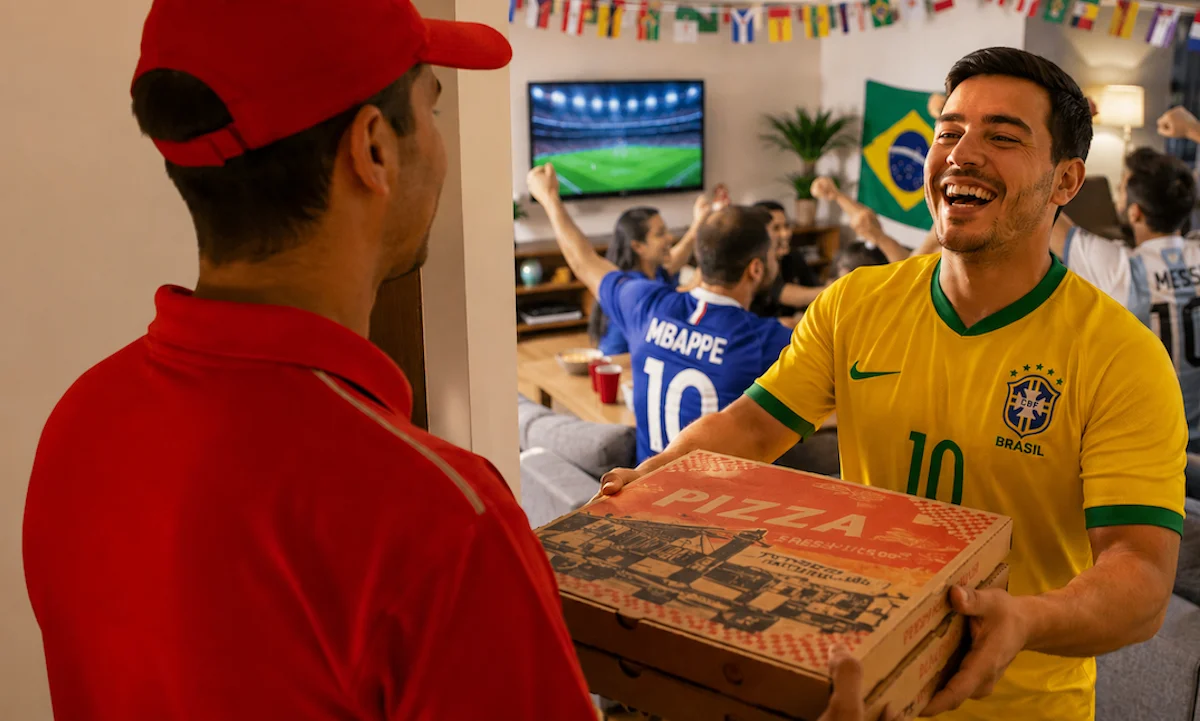
The global nature of the World Cup, with matches played across different time zones, profoundly impacted the food and beverage industry. In India, midnight matches necessitated a surge in late-night food delivery orders for pizzas, burgers, fries, and beverages, extending well into the early morning hours. One remarkable order in Chandigarh reportedly totaled 16,444 rupees (approximately $140) for finger foods alone, as highlighted by Business Standard. In Israel, food delivery company Wolt observed a significant increase in orders during match hours, with family pizza orders up by 35% and ice cream consumption rising by 44%. Uber’s data further illustrates this trend, reporting over 10 million ranch dressing delivery orders during the tournament, alongside a substantial demand for convenience store staples such as water, electrolytes, and over-the-counter pain relievers. This phenomenon demonstrates how global events can synchronize consumer behavior, creating localized booms in specific sectors, even across vast geographical distances.
The overarching impact of the 2026 World Cup on mobility was equally significant. Uber reported the use of its services by fans from an impressive 122 countries, with 35,000 shuttle rides facilitated. A single driver in Dallas completed over 70 stadium trips, showcasing the intense local transportation demand. Los Angeles emerged as the city with the most lost and found items, a testament to the enthusiastic, and perhaps slightly distracted, fan base. Retailers like Bass Pro Shops also experienced a notable tourism bump of 20%, indicating that the event’s influence extended beyond immediate fan-centric activities.
The profound lesson from the 2026 World Cup’s digital economy integration is that a goal scored on the field now triggers a cascade of actions in the digital and physical realms. It is no longer merely a sporting achievement; it is a catalyst for ride requests, jersey searches, delivery spikes, digital streams, viral social media clips, and even urgent searches for misplaced travel documents.
As Spain proudly displays another star above its crest, the digital platforms involved are left with invaluable case studies in audience engagement and monetization. Ranch dressing, perhaps unexpectedly, has earned its own golden bottle of recognition. And for that one dedicated fan, the 266-mile Uber receipt stands as a tangible testament to a glorious five weeks where the concept of "too far" was simply redefined as a surge-pricing category, a minor inconvenience in the pursuit of global sporting passion. The 2026 World Cup was not just a tournament; it was a powerful demonstration of how deeply intertwined our lives have become with the digital economy, and how major events serve as potent accelerants for its growth and influence.

