
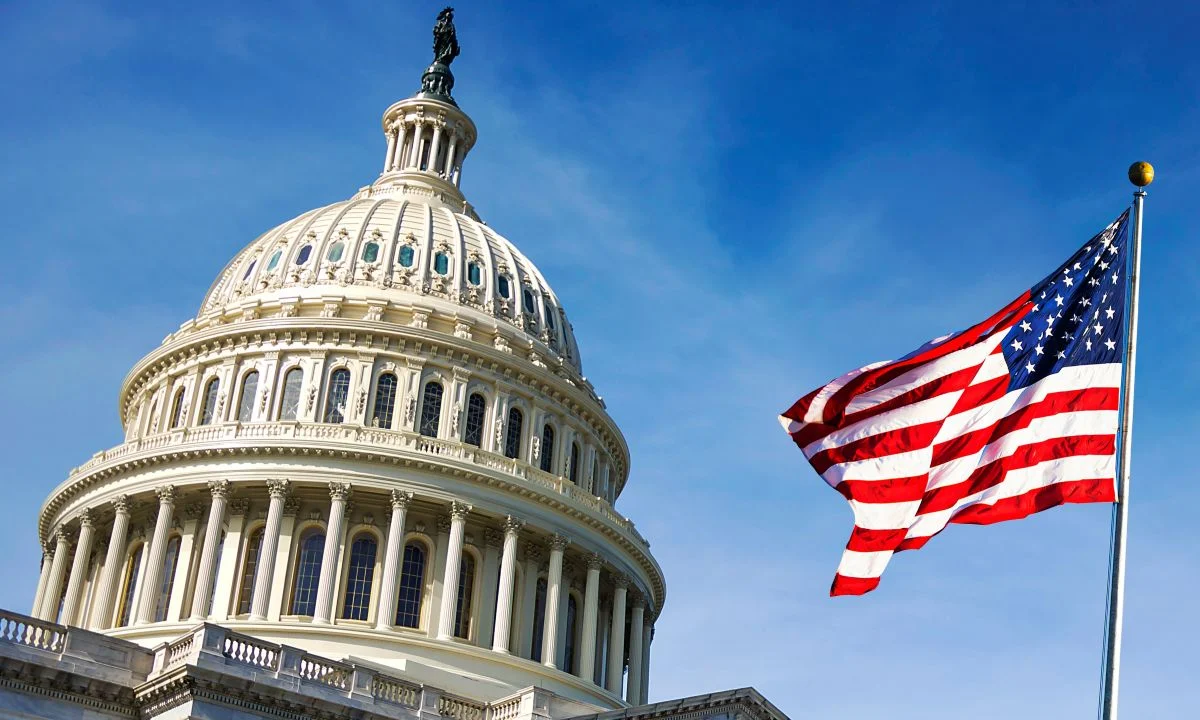
With the United States Senate slated to commence its August recess in just three weeks, the path forward for the comprehensive cryptocurrency legislation, known as the Clarity Act, has become increasingly fraught with obstacles. Despite ongoing efforts by proponents to secure its passage before the looming deadline of August 7, the bill is encountering significant resistance, raising concerns about its immediate future and the broader implications for the burgeoning digital asset industry. Reports indicate that key legislative players are grappling with unresolved issues, casting a shadow of uncertainty over the much-anticipated federal framework for cryptocurrencies.
Deepening Divisions and Lingering Concerns
Sources close to the negotiations reveal that several Democratic senators have expressed reservations regarding the most recent iteration of the Clarity Act. These concerns are multifaceted, encompassing anxieties over potential ethical implications and, notably, the entanglement of President Donald Trump’s personal financial dealings in the cryptocurrency space. This latter point has emerged as a significant sticking point, with Democrats seeking to ensure robust safeguards against conflicts of interest for public officials involved in or benefiting from the digital asset market.
Beyond the ethical considerations, other substantial hurdles remain. A primary demand from Democratic lawmakers centers on the implementation of more stringent measures designed to combat the use of cryptocurrencies for illicit financial activities. The current bill, while addressing regulatory aspects, is perceived by some as insufficiently robust in its anti-money laundering and counter-terrorism financing provisions. Furthermore, the legislative process is complicated by the need to reconcile the distinct versions of the bill that have emerged from both the Senate Banking Committee and the Senate Agriculture Committee. These committees, while both involved in cryptocurrency oversight, have approached certain aspects of regulation from different perspectives, necessitating careful harmonization to produce a unified and effective piece of legislation.
The Shadow of a Tight Timeline
Adding to the legislative pressure is the acute scarcity of time available for senators to thoroughly review and debate the Clarity Act before their scheduled departure. For those senators who are not directly involved in the committee work that has shaped the bill, a comprehensive understanding of its intricacies may still be developing. This lack of familiarity could lead to a surge of questions and concerns that, given the tight timeline, may prove impossible to adequately address and resolve before the recess. The risk is that important legislative deliberation could be curtailed, potentially leading to rushed decisions or a postponement of critical discussions.
The impact of this tight timeline is already being felt among lawmakers who previously supported related legislation. Some senators who voted in favor of the GENIUS Act, an earlier bill focused specifically on stablecoins, and were thus considered potential supporters of the Clarity Act, have either voiced specific concerns about the current bill or have remained notably silent on the matter. This shift or reticence suggests that the Clarity Act, in its current form, is not a guaranteed bipartisan consensus, even among those with prior engagement in crypto legislation.
The Trump Factor and Conflict of Interest Debates
A pivotal development that has significantly impacted the Clarity Act’s trajectory is the disclosure earlier this year that President Donald Trump generated a substantial sum of $1.4 billion from his cryptocurrency ventures since the commencement of his second term. This revelation has intensified scrutiny and fueled a specific demand from Democrats: the inclusion of provisions to address potential conflicts of interest for public officials in the cryptocurrency sector. Axios reported on July 17 that this particular provision is now considered the primary impediment to the Clarity Act’s progress.
The debate over conflicts of interest is not solely confined to the executive branch. CoinDesk also reported on July 17 that several Democrats have raised concerns about the broader issue of public officials potentially holding conflicts of interest related to their cryptocurrency holdings or activities. The lack of bipartisan agreement on language to effectively address these ethical quandaries has further stalled progress. This suggests a fundamental disagreement on the scope and enforcement of regulations designed to prevent undue influence or personal gain by those in positions of power within the digital asset ecosystem.
The Urgency for a Federal Standard
The push for the Clarity Act’s passage has been ongoing, with advocates emphasizing the critical need for a unified federal standard for cryptocurrency assets. As PYMNTS reported on July 8, proponents have been actively lobbying for the bill’s enactment before the August deadline, arguing that such a framework is essential to provide regulatory certainty and foster responsible innovation within the industry. The absence of clear federal guidelines has created a fragmented and often unpredictable environment for businesses and investors alike.
The current legislative deadlock also highlights a growing divergence between private sector innovation and public policy development. On July 1, PYMNTS noted that while private capital continues to flow into the implementation of blockchain-based financial services, public policy, particularly concerning cryptocurrency regulation, remains ensnared in the complexities of legislative timing and partisan negotiations. This disconnect could lead to the U.S. falling behind other jurisdictions in establishing a clear and supportive regulatory environment for digital assets, potentially impacting its global competitiveness in this rapidly evolving technological landscape.
Background and Context of the Clarity Act
The Clarity Act represents a significant legislative effort to establish a comprehensive regulatory framework for digital assets in the United States. The bill aims to address a wide array of issues, including the classification of various digital assets, consumer protection, market integrity, and the role of regulatory bodies such as the Securities and Exchange Commission (SEC) and the Commodity Futures Trading Commission (CFTC). Its development has been a response to the rapid growth and increasing adoption of cryptocurrencies and blockchain technology, which have outpaced existing regulatory structures.
The genesis of the Clarity Act can be traced back to ongoing discussions and debates within Congress regarding how to best integrate digital assets into the existing financial system while mitigating associated risks. Various stakeholders, including industry participants, consumer advocacy groups, and financial regulators, have provided input, leading to a bill that attempts to balance innovation with prudent oversight. The inclusion of provisions related to stablecoins, digital asset exchanges, and investor protection reflects a broad understanding of the multifaceted nature of the crypto market.
Precedent and Previous Legislative Efforts
The journey towards a comprehensive crypto bill has been a protracted one, marked by several previous legislative attempts. The aforementioned GENIUS Act, focused on stablecoins, served as a precursor, signaling a willingness within Congress to address specific segments of the digital asset market. However, the Clarity Act represents a more ambitious undertaking, seeking to provide a holistic regulatory approach.
The evolving landscape of digital assets means that legislative efforts must constantly adapt. Early discussions often centered on whether cryptocurrencies should be treated as securities, commodities, or a new asset class entirely. The Clarity Act attempts to provide clearer definitions and jurisdictional boundaries, aiming to reduce regulatory arbitrage and provide greater certainty for market participants. The complexity of these classifications and the differing views among regulators and lawmakers have contributed to the protracted nature of legislative progress.
Supporting Data and Market Indicators
The urgency for regulatory clarity is underscored by the significant growth of the digital asset market. Global cryptocurrency market capitalization has reached trillions of dollars, with daily trading volumes often exceeding hundreds of billions. The increasing institutional adoption of cryptocurrencies, coupled with the development of decentralized finance (DeFi) and non-fungible tokens (NFTs), highlights the expanding influence of this sector.
Despite the market’s dynamism, the lack of a clear federal regulatory framework in the U.S. has led to a degree of caution among some traditional financial institutions and institutional investors. Concerns about regulatory uncertainty, potential enforcement actions, and the risk of investing in assets with undefined legal status can deter significant capital from entering the market. This, in turn, can stifle innovation and lead to a loss of competitive advantage for U.S. businesses compared to those operating in more crypto-friendly jurisdictions.
Data from market analysis firms indicates that a significant portion of global crypto trading volume occurs on exchanges that may not be subject to direct U.S. oversight. This creates challenges for law enforcement and regulators seeking to monitor and prevent illicit activities. The Clarity Act aims to bring more of these activities under a defined regulatory umbrella, potentially enhancing transparency and security.
Potential Implications of Further Delays
The continued delay in passing the Clarity Act could have several significant implications:
- Stifled Innovation: Without a clear regulatory roadmap, U.S.-based crypto startups and established companies may face increased uncertainty, potentially leading them to relocate or scale back their operations. This could hinder the development of new technologies and services within the United States.
- Regulatory Arbitrage: As mentioned, U.S. businesses may be at a disadvantage compared to international competitors operating under more established and predictable regulatory regimes. This could lead to a loss of market share and investment.
- Increased Risk for Consumers and Investors: The absence of robust consumer protection measures could leave individuals vulnerable to fraud, scams, and market manipulation. A clear regulatory framework would provide stronger safeguards and recourse for investors.
- Challenges for Law Enforcement: The lack of comprehensive oversight can make it more difficult for law enforcement agencies to track illicit financial flows and prosecute criminal activity involving digital assets.
- Fragmented Market: The current environment, where different states may adopt varying approaches to crypto regulation, creates a complex and fragmented market. A federal standard would bring much-needed consistency.
Looking Ahead: A Race Against Time
As the August recess looms, the fate of the Clarity Act remains uncertain. The legislative process is a delicate dance of negotiation, compromise, and consensus-building. The current hurdles, particularly those surrounding ethical considerations and the need for stricter illicit finance controls, will require significant effort to overcome. Whether senators can bridge these divides and find common ground in the limited time remaining will be a critical determinant of the future regulatory landscape for cryptocurrencies in the United States. The industry, investors, and policymakers alike will be closely watching to see if the Clarity Act can navigate the turbulent waters of Capitol Hill before the legislative session takes its break.

