
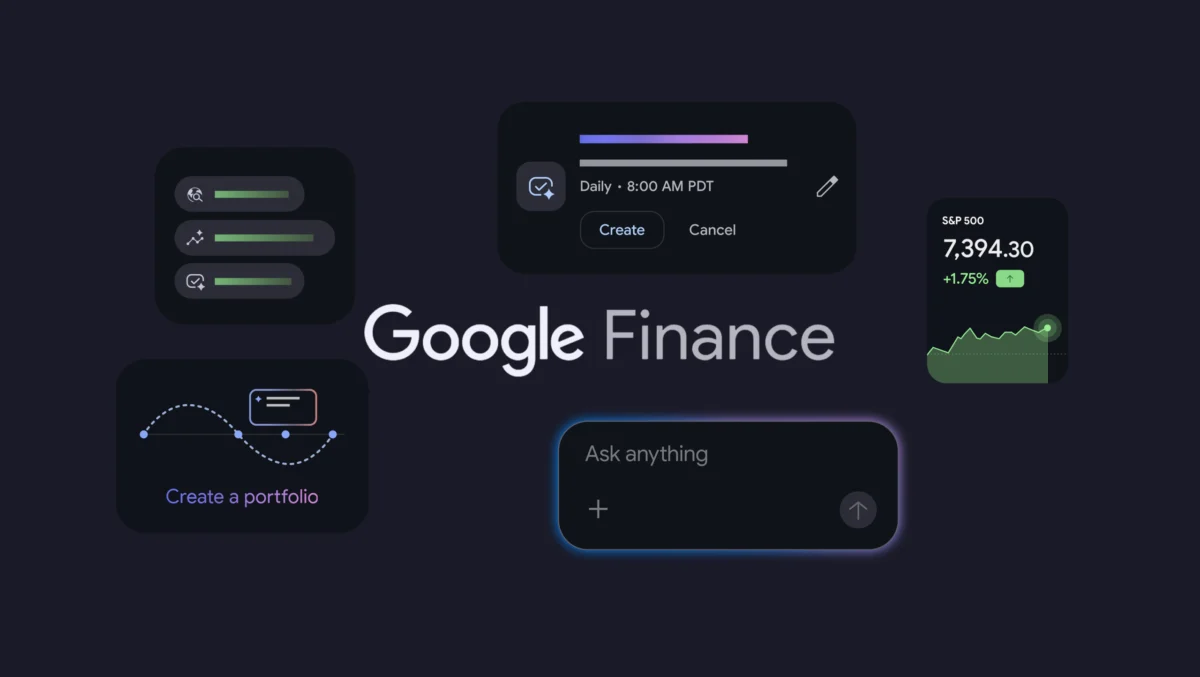
Google has officially launched a dedicated mobile application for Google Finance, marking a significant expansion of its financial information services. This new app aims to provide users with a comprehensive and integrated platform for tracking investments, accessing real-time market data, and leveraging AI-powered insights. The initial release is available on Android, with an iOS version slated for rollout in the coming months. This strategic move by Google signals its intent to capture a larger share of the increasingly competitive financial information app market.
The Google Finance app brings together several key features, including personalized watchlists, real-time market data streams, and a live financial news feed. A standout feature is Google’s AI-powered "Key Moments," designed to explain the driving forces behind stock price movements. This technology seeks to demystify market volatility by offering concise, AI-generated explanations for significant fluctuations, providing users with context beyond raw price changes.
This launch represents a deliberate step by Google to solidify its presence in the financial technology (fintech) sector, moving beyond its established web-based offerings. The move directly positions Google as a competitor to established financial information giants like Yahoo Finance and disruptive trading platforms such as Robinhood, indicating a broader ambition to become a central hub for consumer financial management and analysis.
The development of a standalone finance app is not an isolated event but rather a continuation of Google’s ongoing investment in its financial services ecosystem. Last year, Google unveiled a revamped Google Finance web experience, which has been in beta and is now emerging with enhanced features, including the integration of AI tools. The introduction of the mobile app is expected to complement and extend the capabilities of this web platform, offering users greater flexibility and accessibility.
Expanding AI-Driven Insights and Portfolio Management
A core tenet of Google’s enhanced financial offerings is the sophisticated integration of artificial intelligence. The new mobile app and the web experience are designed to provide users with more than just data; they aim to deliver actionable intelligence. The "Key Moments" feature, for instance, utilizes AI to analyze vast amounts of financial news, company reports, and market trends to identify and explain the most impactful events affecting specific stocks. This proactive approach to information delivery aims to equip investors with a deeper understanding of market dynamics.
Beyond real-time market analysis, Google is also bolstering its portfolio management capabilities. The company is rolling out its portfolio features globally within the new Google Finance web experience. This allows users to consolidate their investments into a single dashboard, providing a unified view of their holdings and their performance over time. Existing Google Finance portfolios will be automatically accessible, and new portfolios can be created by uploading existing data or by describing investment portfolios to a chatbot interface.

This AI-driven portfolio management is designed for ease of use and powerful analysis. Once portfolios are established, users can leverage Google Finance’s AI research tools to ask complex questions in natural language. Examples provided by Google include queries such as "what sectors are currently underrepresented in my portfolio?" or "which of my holdings have seen the most significant revenue growth in the past quarter?" This allows for highly personalized financial analysis, catering to individual investor needs and strategies.
Furthermore, Google is introducing an AI feature that enables users to set up recurring tasks and receive timely briefings. These tasks can range from daily market change analyses to summaries of portfolio performance. By using their watchlists or portfolios as a basis, users can receive insights tailored specifically to their investments. Once a task is configured, Google Finance will operate in the background, continuously monitoring and providing updates, effectively acting as a personalized financial analyst. These advanced portfolio and task features are available on the web starting today and are scheduled to be integrated into the Google Finance app in the coming months, signifying a phased rollout to maximize user adoption and feedback.
Strategic Positioning in a Crowded Market
The launch of a dedicated Google Finance mobile app is a strategic move that reflects the evolving landscape of financial information consumption. While many users may already have access to stock prices through various platforms, Google’s entry into the dedicated app space is less about offering another ticker and more about establishing a significant foothold in the highly competitive fintech market. The company is leveraging its existing brand recognition and technological prowess to create a more integrated and intelligent financial experience.
The financial information app market has become increasingly crowded, with a proliferation of platforms catering to different user needs, from casual investors to active traders. Yahoo Finance, with its long-standing reputation and comprehensive data, has been a dominant player. Simultaneously, platforms like Robinhood have disrupted the market by offering simplified trading interfaces and commission-free trading, attracting a new generation of investors.
Google’s approach appears to be a multi-pronged strategy:
- Data Aggregation and Analysis: By integrating real-time market data, news, and advanced AI analysis, Google aims to provide a more holistic view of financial markets than many single-purpose apps.
- AI-Powered Personalization: The emphasis on AI features like "Key Moments" and personalized portfolio insights differentiates Google Finance from platforms that primarily offer raw data. This focus on intelligence and explanation can be a significant draw for users seeking to understand market movements.
- Ecosystem Integration: As a tech giant, Google can potentially integrate its finance offerings with other services, such as Google Pay or Google Assistant, creating a more seamless user experience across its digital ecosystem.
The success of this initiative will depend on Google’s ability to consistently deliver accurate, timely, and user-friendly financial information and analysis. The company’s track record in developing and scaling complex AI technologies provides a strong foundation, but user adoption in the fintech space is often driven by trust, ease of use, and tangible value.
A Timeline of Google’s Financial Service Evolution
Google’s foray into dedicated financial services has been a gradual process, marked by several key developments:

- Early Web Presence: Google Finance initially launched as a web-based platform, offering basic stock tracking and financial news. Over the years, it evolved to include more comprehensive data and analytical tools.
- AI Integration Experiments: Recognizing the potential of AI in finance, Google began integrating experimental AI features into its web experience. This included features aimed at providing more context and explanations for market events.
- Revamped Web Experience (2025): The unveiling of the significantly upgraded Google Finance web experience marked a pivotal moment, signaling a renewed commitment to its financial services. This iteration emphasized AI-driven insights and a more intuitive user interface.
- Global Portfolio Rollout (2026): The recent announcement of the global rollout of portfolio management features on the web demonstrates Google’s intent to offer robust investment tracking and analysis capabilities to a wider audience.
- Dedicated Mobile App Launch (June 2026): The launch of the dedicated Google Finance mobile app for Android, with an iOS version to follow, represents the culmination of these efforts, providing a portable and integrated platform for users on the go.
This chronological progression highlights Google’s strategic, phased approach to building out its financial offerings, from basic data provision to sophisticated AI-driven analysis and personalized portfolio management. Each step appears designed to build upon the last, creating a comprehensive and intelligent financial ecosystem.
Potential Implications and Future Outlook
The introduction of a feature-rich Google Finance app and enhanced web platform carries significant implications for both consumers and the broader fintech industry.
For consumers, the promise of AI-powered explanations for market movements and personalized investment insights could democratize financial analysis, making it more accessible to a wider range of users, from novice investors to experienced traders. The ability to manage portfolios and receive tailored updates directly from their mobile devices offers unparalleled convenience.
For the fintech industry, Google’s aggressive expansion signals heightened competition. Established players will need to innovate and differentiate themselves to retain users. This could lead to further advancements in AI integration, personalization, and user experience across the sector. The move also underscores the increasing convergence of technology giants and financial services, as companies leverage their vast data resources and technological capabilities to enter and influence the financial markets.
Looking ahead, Google is likely to continue refining its AI capabilities, potentially offering more sophisticated predictive analytics, personalized financial advice, and even integration with trading execution services, though this remains speculative at this stage. The company’s commitment to this space suggests a long-term vision to become an indispensable tool for individuals managing their financial lives. As the Google Finance app evolves and new features are introduced, its impact on how people access, understand, and manage their investments will undoubtedly be a key area to watch in the evolving digital finance landscape.

