
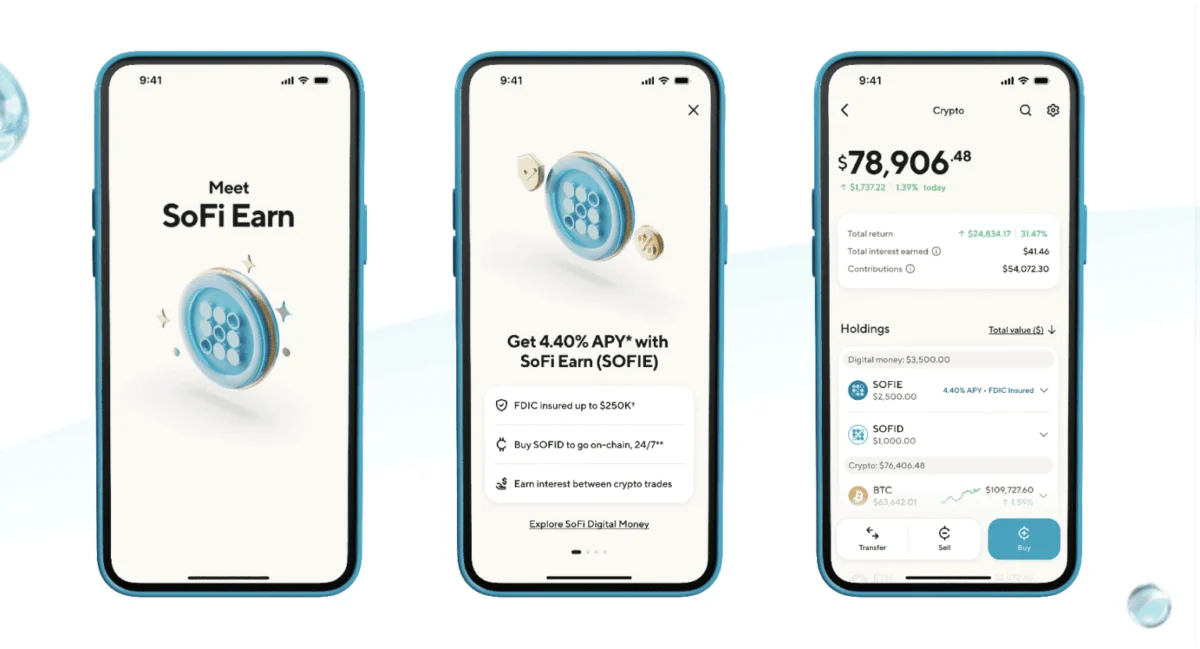
SoFi has officially launched SoFi Earn (SOFIE), a pioneering, bank-issued tokenized deposit designed to allow consumers to earn interest on digital dollars while maintaining immediate accessibility for blockchain-based transactions. This strategic move positions the fintech giant at the intersection of traditional regulatory protections and the high-velocity world of digital assets. By offering a 4.40% Annual Percentage Yield (APY) on tokenized deposits that are fully eligible for FDIC insurance, SoFi is attempting to solve a pervasive problem in the digital economy: the "idle capital" dilemma.
The Mechanism of SOFIE
At its core, SoFi Earn operates as a bridge between the regulated banking sector and the burgeoning stablecoin ecosystem. Users holding funds in SOFIE benefit from the interest-bearing nature of a standard bank deposit. When a user wishes to engage with decentralized finance (DeFi) protocols, purchase cryptocurrencies, or execute cross-border blockchain transfers, they can convert their SOFIE holdings into SoFiUSD—the company’s proprietary stablecoin—at a one-to-one ratio.
This integration effectively eliminates the opportunity cost of holding non-interest-bearing digital assets. By maintaining the regulatory framework of a bank deposit, SoFi provides a safety net that pure-play stablecoin issuers cannot match, particularly as global regulators begin to tighten their grip on the digital asset market.
Regulatory Context and the GENIUS Act
The timing of the SOFIE rollout is significant, occurring mere hours after the Office of the Comptroller of the Currency (OCC) finalized rules implementing the GENIUS Act. This landmark legislation, set to take effect on January 18, 2027, establishes a rigid framework for the digital asset sector, most notably prohibiting stablecoin issuers from paying yield to holders.
The regulatory environment has been increasingly hostile toward stablecoins that function as de facto interest-bearing accounts without the backing of traditional banking licenses. The GENIUS Act aims to mitigate systemic risk by stripping stablecoins of their "yield-generating" status, effectively forcing them to act more like cash equivalents. However, the law contains a specific, albeit controversial, loophole: it does not explicitly regulate interest payments from third-party rewards programs or, crucially, tokenized bank deposits.
By classifying SOFIE as a tokenized deposit rather than a "payment stablecoin," SoFi has successfully navigated around the prohibitions set by the GENIUS Act. This legal distinction allows SoFi to continue providing competitive yields to its users while remaining fully compliant with federal banking statutes. Analysts suggest that this pivot represents a masterclass in regulatory arbitrage, transforming a potential industry-wide setback into a competitive advantage.
A Chronology of SoFi’s Digital Asset Expansion
SoFi’s entry into tokenized deposits is the culmination of a year-long, aggressive expansion into the crypto-asset space. The company’s trajectory underscores a broader institutional shift toward integrating blockchain technology into traditional retail banking.
- Q4 2025 – Early 2026: SoFi initiates a comprehensive audit of its digital product pipeline, focusing on the convergence of fiat-based banking and blockchain rails.
- May 2026: Launch of SoFiUSD, the company’s internal stablecoin, designed to facilitate internal liquidity management.
- July 2026: Introduction of "Big Business Banking," a corporate-facing platform allowing enterprises to manage both traditional fiat and digital asset treasuries in a single, regulated environment.
- September 2026: Expansion of consumer-facing crypto trading features, providing the liquidity backbone necessary for future product integrations.
- October 2026: The official launch of SoFi Earn (SOFIE), marking the transition from a trading-focused crypto strategy to a deposit-centric digital finance strategy.
This rapid development cycle demonstrates SoFi’s commitment to building a "walled garden" ecosystem. By capturing the full lifecycle of a user’s digital funds—from earning interest to trading and payment—SoFi is positioning itself as a comprehensive financial hub for the next generation of investors.
Market Implications: The Future of Digital Liquidity
The launch of SOFIE raises critical questions regarding the future of the stablecoin market. If retail investors can achieve competitive yields on insured, tokenized deposits, the value proposition of non-interest-bearing stablecoins diminishes significantly. Currently, the global stablecoin market exceeds $200 billion in total circulating supply, much of which remains unremunerated.
Industry analysts observe that SoFi’s model could set a precedent for traditional banks. For years, traditional financial institutions have viewed the rise of stablecoins as a threat to their deposit base. SoFi’s approach suggests an alternative: integration. By offering the utility of blockchain payments alongside the security and yield of a bank account, banks can prevent "deposit leakage" into the crypto ecosystem.
"Too much money in the digital asset ecosystem is sitting idle, leaving massive potential earnings on the table for millions of people," said SoFi CEO Anthony Noto in a statement following the launch. "We believe your money should keep working for you until the moment you need it. SoFi Earn combines the earning power and protections of a bank deposit with the speed and utility of digital assets."
Analytical Overview: Risks and Rewards
While the launch is viewed as a strategic victory, it is not without risks. The primary challenge for SoFi will be managing the volatility of user behavior. If a large percentage of customers convert their SOFIE deposits to SoFiUSD during periods of high crypto market activity, the bank must ensure it maintains sufficient liquidity to satisfy withdrawal requests while managing the underlying assets.
Furthermore, the legal landscape remains fluid. While SOFIE is currently compliant with the GENIUS Act, the definition of "payment stablecoins" could be expanded by future amendments or regulatory interpretations. Critics of the current landscape argue that the distinction between a tokenized deposit and a stablecoin is becoming increasingly blurred, and the OCC may eventually seek to impose stricter capital requirements on banks that bridge these two worlds.
However, the consumer response appears positive. As of the current rollout, which is being limited to SoFi Crypto members, the demand for high-yield, low-risk digital assets remains robust. Data from the broader fintech sector indicates that consumers are increasingly seeking "yield-plus-utility" products, moving away from simple savings accounts that offer stagnant returns.
Industry Reactions and Competitive Landscape
Competitors in the fintech space, such as Coinbase, PayPal, and various neo-banks, are watching the SOFIE launch closely. While crypto-native firms struggle with the restrictions of the GENIUS Act, traditional banking incumbents are often too slow to innovate in the blockchain space. SoFi occupies a unique "sweet spot" as a licensed bank with a deep understanding of digital product architecture.
Financial experts suggest that if SOFIE proves successful, it could trigger a "tokenized deposit arms race" among mid-sized and large commercial banks. This would be a significant development for the decentralized finance sector, as it would effectively bring billions of dollars of institutional-grade liquidity onto blockchain networks, potentially lowering transaction costs and increasing the efficiency of global payments.
Conclusion
The introduction of SoFi Earn marks a pivotal moment in the evolution of digital finance. By successfully bridging the divide between interest-bearing bank deposits and the speed of blockchain-based transactions, SoFi has created a product that addresses both the regulatory realities of the post-GENIUS Act era and the consumer demand for more efficient, high-yielding digital money.
As the rollout continues through November, the industry will closely monitor adoption rates and the potential impact on SoFi’s overall deposit base. For now, the launch serves as a testament to the fact that the future of banking is not merely a choice between tradition and innovation, but rather the seamless, secure synthesis of both. Through its latest offering, SoFi has effectively signaled to the market that it intends to lead the transition, ensuring that digital assets are not just held, but are actively working for the end user in a secure, regulated environment.

