
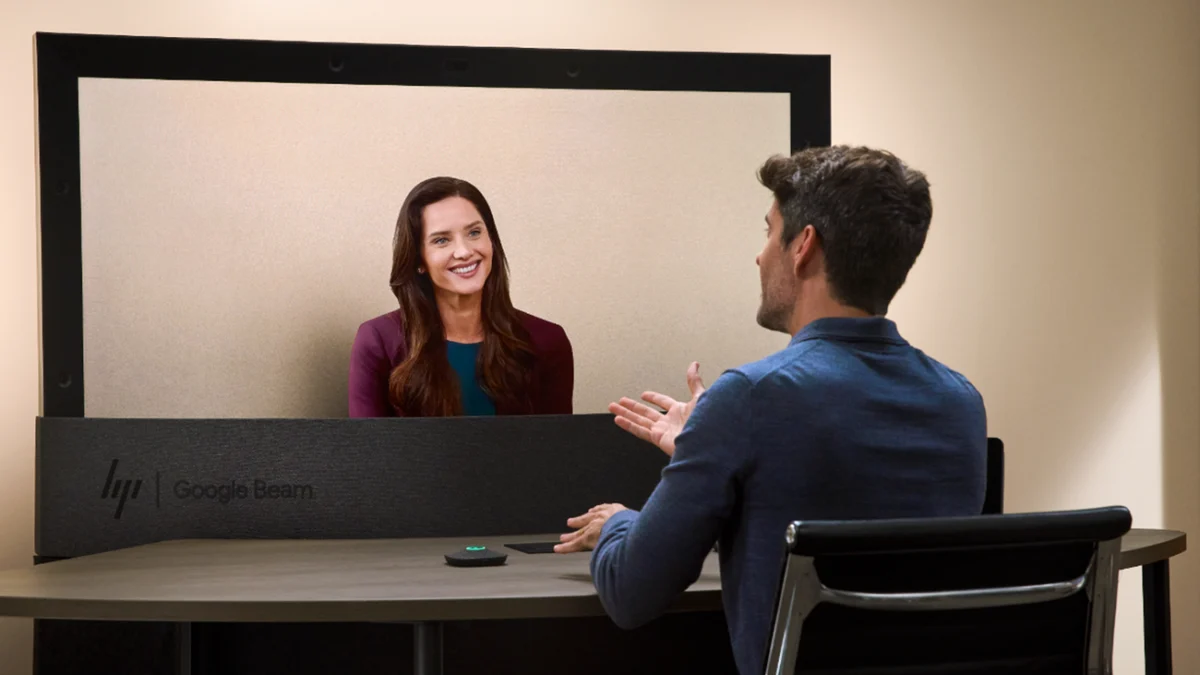
The Evolution of the Beam Ecosystem
The journey of Google Beam began as an internal effort to bridge the gap between distributed teams during the shift toward hybrid work. After successful internal deployments, Google identified a clear market demand for technology that could replicate the experience of being in the same room. Today’s announcement marks a transition from a controlled, internal experiment to a scalable global product.
The expansion strategy is multi-faceted, focusing on both hardware distribution and physical access. Google is now shipping Beam units to six key countries: the United States, Canada, the United Kingdom, France, Germany, and Japan. This rollout is supported by an international network of 18 strategic channel partners. These partners are specialized audiovisual integrators and distributors tasked with the logistical complexity of installing and maintaining the high-performance hardware, ensuring that enterprises can deploy the system without significant technical overhead.
Data-Driven Impact: Beyond Video Conferencing
To validate the efficacy of the system, Google conducted an extensive eight-week internal study, comparing traditional video conferencing methods against sessions facilitated by Google Beam. The metrics collected provide a compelling case for the technology’s utility in high-stakes environments.
According to the study, teams utilizing the Beam hardware reported a 50% increase in the sense of connection to their colleagues. More significantly, participants found it 33% easier to ensure their feedback was accurately interpreted, a metric that highlights the importance of spatial audio and life-sized visuals in preventing communication drift. Perhaps most impactful for operational efficiency, the company observed a 21% reduction in the necessity for follow-up meetings. By improving the clarity and efficacy of the initial interaction, the technology effectively reduces the "meeting fatigue" often caused by the need for repeated clarifications or fragmented communication.
Strategic Industry Partnerships
A significant milestone in this expansion is the collaboration with Bain & Company, which serves as a prime example of how the technology is being utilized in high-touch, human-centric sectors. The recruiting process, traditionally reliant on physical presence to gauge a candidate’s fit, has been modernized through the use of HP Dimension with Google Beam.
Keith Bevans, EVP and Partner at Bain & Company, noted the critical role of non-verbal communication in their assessment process. "One of the most challenging things for us to assess with candidates is how they’ll be with clients," Bevans stated. "There are so many nuances in body language and eye contact, and Google Beam allows us to virtually understand how people will engage in person, which is critically important for their success at Bain and the success of our mission with our clients."
This partnership underscores a shift in how firms view remote interviewing. By eliminating the necessity for cross-continental travel while maintaining the "human" element of the interview, firms can widen their talent search pool without compromising on the quality of their candidate assessment.
Democratizing Access: The Industrious Network
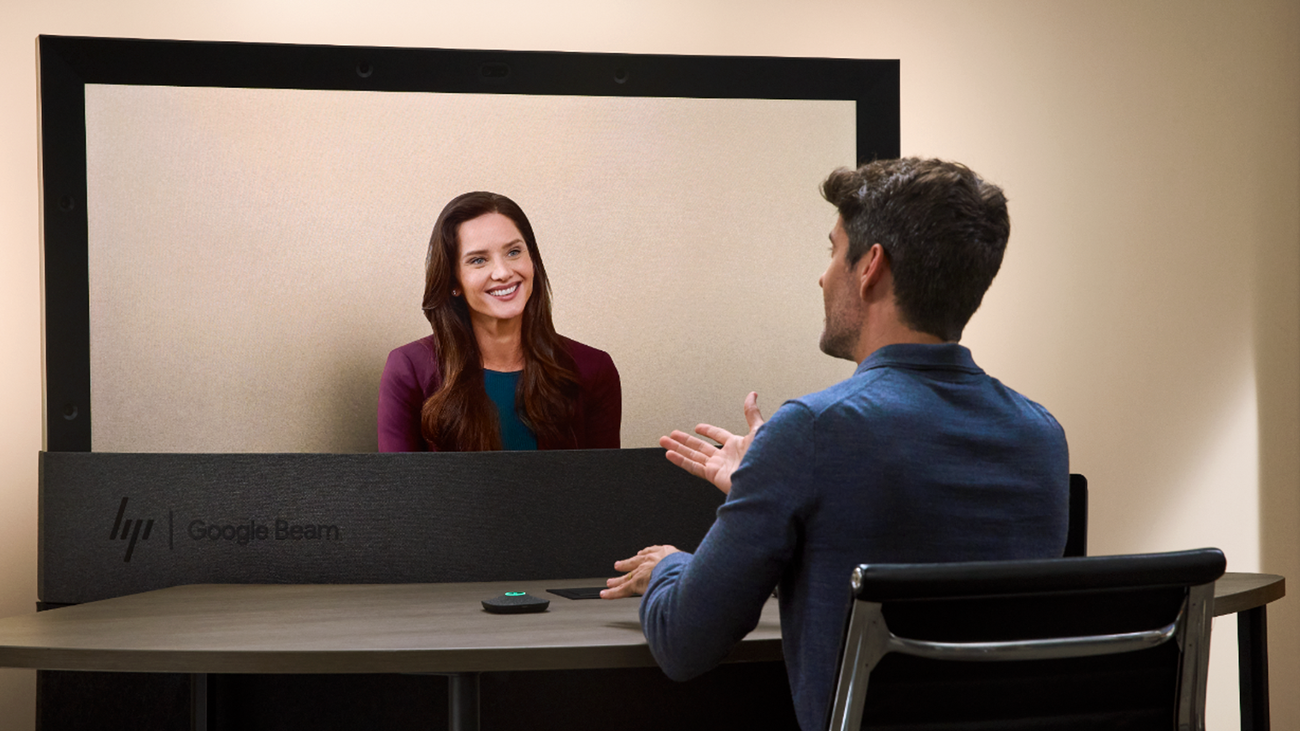
Perhaps the most ambitious component of this expansion is the partnership with Industrious, a leading provider of premium flexible workspaces. Recognizing that not all companies—particularly startups and mid-market firms—can afford or justify the installation of dedicated telepresence suites in every office, Google is creating the "Beam Extended Network."
Starting this October, organizations will be able to book and utilize HP Dimension with Google Beam units at select Industrious locations in major business hubs, including Atlanta, Chicago, New York City, and Palo Alto. This "on-demand" model effectively lowers the barrier to entry for enterprise-grade communication technology. It allows remote-first startups to host client consultations or board meetings in a professional environment that conveys the presence and gravity of an in-person interaction, regardless of where their distributed team members are based.
Implications for the Future of Work
The broader implications of this expansion are significant for the enterprise software and hardware sectors. By integrating support for both Google Meet and Zoom, Google has positioned Beam as a neutral, high-end infrastructure layer rather than a walled-garden solution. This interoperability is key to its adoption in complex corporate environments where different departments may utilize disparate collaboration tools.
From a macroeconomic perspective, the adoption of such technology represents a shift in how companies approach their real estate footprints and talent acquisition. If high-fidelity telepresence can successfully mimic the social and collaborative benefits of physical offices, firms may continue to downsize their central headquarters in favor of decentralized, flexible hubs equipped with advanced communication tools.
Furthermore, the technology addresses the psychological toll of prolonged remote work. By facilitating more "natural" conversations, the system addresses the "Zoom fatigue" that has plagued global workforces since 2020. The ability to see colleagues at a human scale, with natural eye contact and spatial audio, helps restore the social fabric that is often frayed by the grid-view format of standard webcams.
Technical and Operational Outlook
As Google continues to roll out these units, the focus will likely shift toward latency reduction and the integration of AI-driven features. Future iterations could potentially include real-time translation or advanced gesture analysis, further enhancing the "copresence" experience. However, the current priority remains infrastructure stability and partner enablement. The 18-partner ecosystem is designed to ensure that the hardware functions with the reliability of a standard office appliance—a necessity for any technology that aims to be a cornerstone of business operations.
For enterprises considering the shift, the ROI is becoming increasingly clear: reduced travel costs, increased speed in decision-making, and an enhanced ability to retain global talent. As companies like Netflix, Capital Group, and others begin to incorporate these systems into their workflows, the standard for what constitutes a "productive remote meeting" is likely to rise.
The expansion of Google Beam is not merely a hardware rollout; it is a strategic maneuver to define the next era of professional interaction. By combining the accessibility of flexible workspaces with the high-fidelity capabilities of dedicated telepresence, Google is attempting to ensure that geography is no longer a limiting factor in human performance. As the pilot programs transition into permanent fixtures at locations like Industrious, the business world will be watching to see if this technology becomes the new standard for the modern, distributed global enterprise. The era of the "virtual office" is evolving into the era of the "connected workspace," and Google is positioning itself at the very center of that transformation.

