
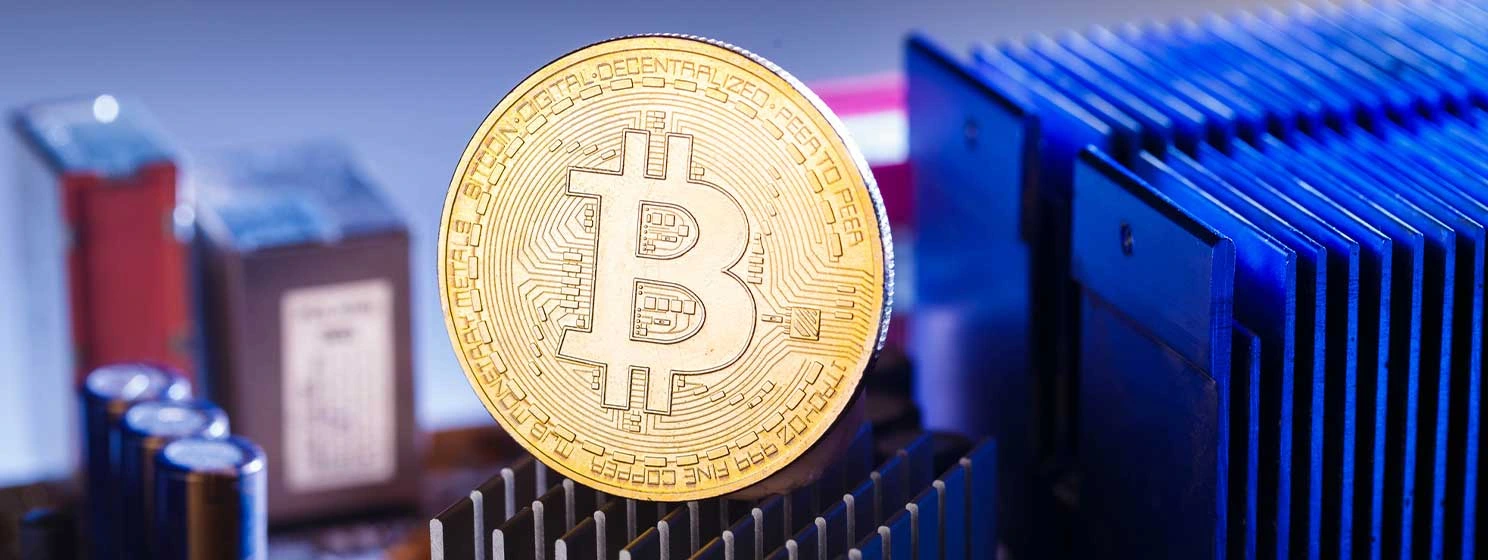
The landscape of the global Bitcoin mining industry has undergone a seismic shift throughout 2024, as the traditional model of block-reward mining faces increasing pressure from rising energy costs, halving events, and a cooling market for mining hardware. Q3 earnings reports from the sector’s leading publicly traded companies reveal a definitive trend: major operators are aggressively liquidating Bitcoin treasuries and pivoting away from pure-play mining to reconfigure their data centers for the more lucrative demands of artificial intelligence (AI) and high-performance computing (HPC).
This transformation is not merely a tactical adjustment but a structural response to the declining profitability of mining. As ASIC (Application-Specific Integrated Circuit) manufacturers struggle with collapsing demand and plummeting sales, the mining giants that once competed for hash rate dominance are now vying for power capacity—the most critical commodity in the burgeoning AI economy.
The Financial Realignment of Marathon Digital Holdings
Marathon Digital (NASDAQ: MARA), once the industry’s most vocal proponent of holding Bitcoin as a primary treasury asset, has undergone a radical change in strategy. As of November 10, the company had offloaded 40,581 BTC over the course of the year, generating over $3 billion in proceeds. This divestment marks a departure from its previous accumulation-heavy stance, which saw the company holding as many as 53,250 tokens in its reserves. By the end of the third quarter, that figure had dropped to 34,012, with further liquidations occurring in the fourth quarter to service debt.
The financial rationale behind these sales is rooted in the high cost of capital. Much of Marathon’s previous Bitcoin acquisition was financed through debt instruments collateralized by the assets themselves. With the market volatility observed throughout the year, the company utilized $750 million from its recent sales to settle these high-interest, BTC-collateralized loans. While Marathon reported a Q3 profit of $632 million, analysts note that this figure is heavily bolstered by fair-value accounting gains on its remaining Bitcoin holdings—a metric that remains sensitive to ongoing price fluctuations.
Despite this pivot, Marathon maintains that mining remains a core operational pillar. However, the company is increasingly utilizing its infrastructure for a dual-purpose strategy. In his post-earnings commentary, CEO Fred Thiel emphasized that Marathon is now allocating power based on risk-adjusted returns. In certain locations, Bitcoin mining continues to provide value, but in others, the company is actively converting its energy-dense facilities into infrastructure capable of supporting AI and HPC workloads.
Bitdeer and the Collapse of the ASIC Manufacturing Market
The situation for Bitdeer (NASDAQ: BTDR) underscores the broader malaise within the hardware manufacturing segment. Bitdeer, which had previously captured a significant share of the global hash rate, saw its ASIC sales crater, with revenues falling to a negligible $300,000 in Q3—a 97% decline compared to the same period in the previous year.
This collapse has forced a change in operational focus. Bitdeer has shifted its internal strategy to utilize its own "SEALMINER" rigs for self-mining, as third-party demand for the hardware has largely evaporated. While this helped the company reach record revenues of $320.7 million, the high overhead associated with running these mining operations, combined with rising interest costs, led to a net loss of $125.5 million for the quarter.
Bitdeer’s strategic decision to bypass the ZCash mining market, despite current profitability in that niche, highlights a broader industry trend of risk aversion. CEO Jihan Wu noted that the company has "no plans" to manufacture rigs for alternative coins, citing the extreme competition and the desire to focus capital on the company’s emerging AI Cloud services. This move suggests that for manufacturers, the path forward lies in diversified computing rather than hardware sales for speculative mining.
Canaan’s Struggle for Nasdaq Compliance
Canaan Inc. (NASDAQ: CAN), a veteran in the ASIC manufacturing space, is currently grappling with a severe existential threat. The company reported a 96% year-on-year decline in product revenue, reflecting the broader "profound structural changes" identified by CEO Nangeng Zhang. Canaan’s revenue from mining hardware plummeted from $118.6 million in Q3 2023 to just $4.8 million in the most recent quarter.
The company is now in a desperate bid to maintain its Nasdaq listing. With shares trading significantly below the $1.00 threshold, Canaan has implemented multiple defensive measures, including an authorized $100 million share repurchase program and a 1-for-25 reverse stock split. The company is effectively in a holding pattern, reducing its R&D spending on next-generation hardware while awaiting more favorable market conditions. The future of Canaan rests on its ability to transition from a pure hardware seller to a more versatile provider of energy-intensive computing infrastructure, though the window of opportunity is narrowing.
Hive Digital and the Measured Approach to Growth
Hive Digital (TSXV: HIVE) represents the more cautious end of the industry spectrum. While the company saw a modest revenue increase of 7.3% in its fiscal Q2, it continues to face significant pressure from equipment impairment charges and depreciation. Unlike its competitors, who are rushing to pivot, Hive has adopted a "nothing significant" approach to further mining expansion.
CEO Aydin Kilic has stated that any future investment in mining equipment will be purely opportunistic—limited to small, high-efficiency orders to replace aging machines—rather than large-scale capacity expansion. Hive’s focus is on the long-term integration of its BUZZ HPC and AI services, which currently account for roughly 10% of total revenue. This measured approach reflects a consensus among smaller miners that the era of aggressive, debt-fueled mining expansion has effectively concluded.
TeraWulf’s Strategic Exit
Perhaps the most definitive stance in the industry belongs to TeraWulf (NASDAQ: WULF), which has signaled its intent to exit the Bitcoin mining sector entirely by 2027. TeraWulf has aggressively rebranded itself as an infrastructure company, with its HPC lease revenue surging ninefold to $63 million in Q3, while its mining revenue fell by 70%.
The market appears to be rewarding this transition. Unlike many of its peers, TeraWulf has seen its stock price climb over the past year, suggesting that investors are increasingly valuing energy-rich data center capacity over the volatile and unpredictable cash flows of Bitcoin mining.
Implications for the Broader Blockchain Ecosystem
The transition of the mining industry into a component of the AI supply chain carries significant implications for the Bitcoin network. As mining becomes less of a standalone enterprise and more of a secondary utility for diversified data centers, the hash rate of the network will likely be driven by companies that view power as their primary asset rather than the Bitcoin itself.
Historically, the industry functioned on the belief that hash rate expansion was always the primary objective. Today, the reality is that high-performance computing demand is outbidding mining for energy capacity. As companies like Marathon, Bitdeer, and TeraWulf continue to reallocate power, the mining industry is becoming leaner, more professionalized, and inextricably linked to the broader technology sector.
This consolidation may lead to increased stability for the remaining miners, as the "weak hands" are removed from the network, but it also signals the end of the speculative hardware cycle. The era of rampant ASIC sales and explosive growth in home-based or small-scale mining has given way to an era of massive, grid-scale data centers that view Bitcoin mining as just one of many ways to monetize electricity. For the industry at large, the lesson is clear: survival now depends on the ability to provide utility to the AI revolution, rather than simply securing the block reward.

