
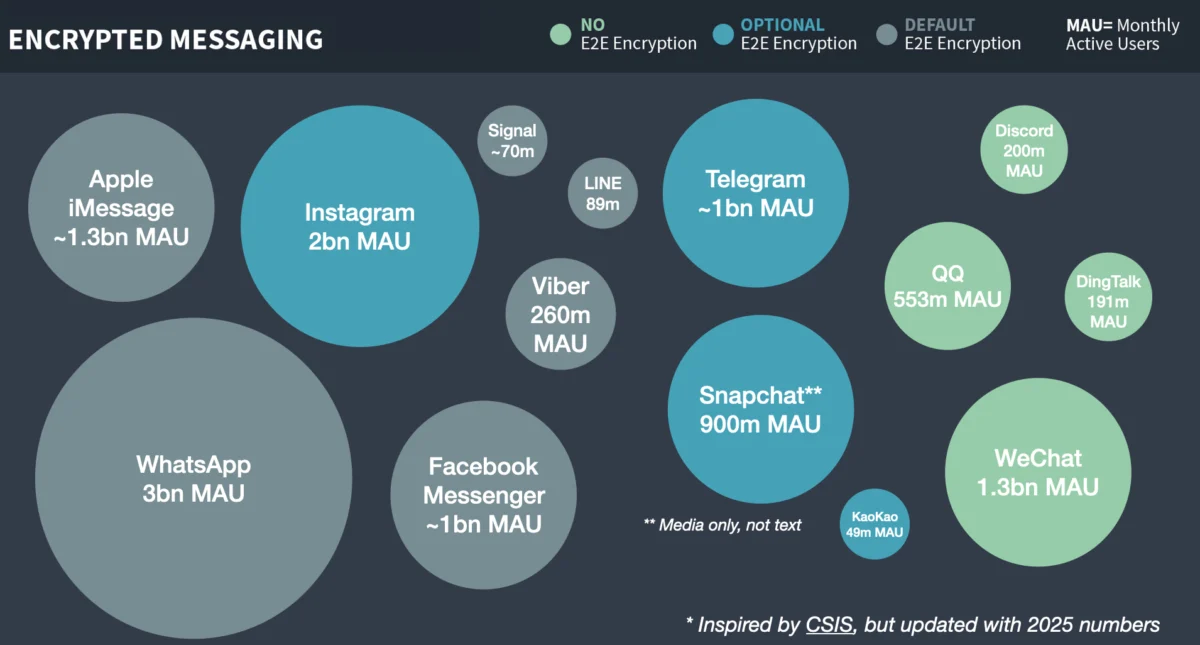
The global conversation surrounding digital privacy has taken an unexpected turn following the emergence of a high-profile class-action lawsuit and subsequent regulatory scrutiny targeting Meta Platforms. For years, the primary policy battleground involving end-to-end encrypted messaging applications centered on government complaints that platforms like WhatsApp were secured too effectively, shielding communications from lawful intercept orders and criminal investigations. However, the legal and media landscape shifted dramatically with explosive claims alleging that Meta’s flagship messaging platform does not actually employ end-to-end encryption at all, leaving billions of user messages vulnerable to internal corporate access.
This comprehensive overview examines the origins of the litigation, the technological architecture underpinning modern instant messaging, the technical feasibility of the plaintiffs’ claims, and the broader implications for the global digital ecosystem.
The Genesis of the Litigation and Regulatory Scrutiny

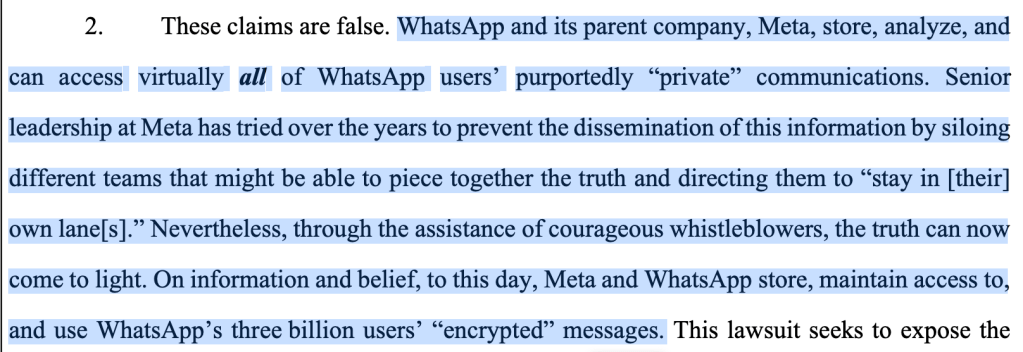
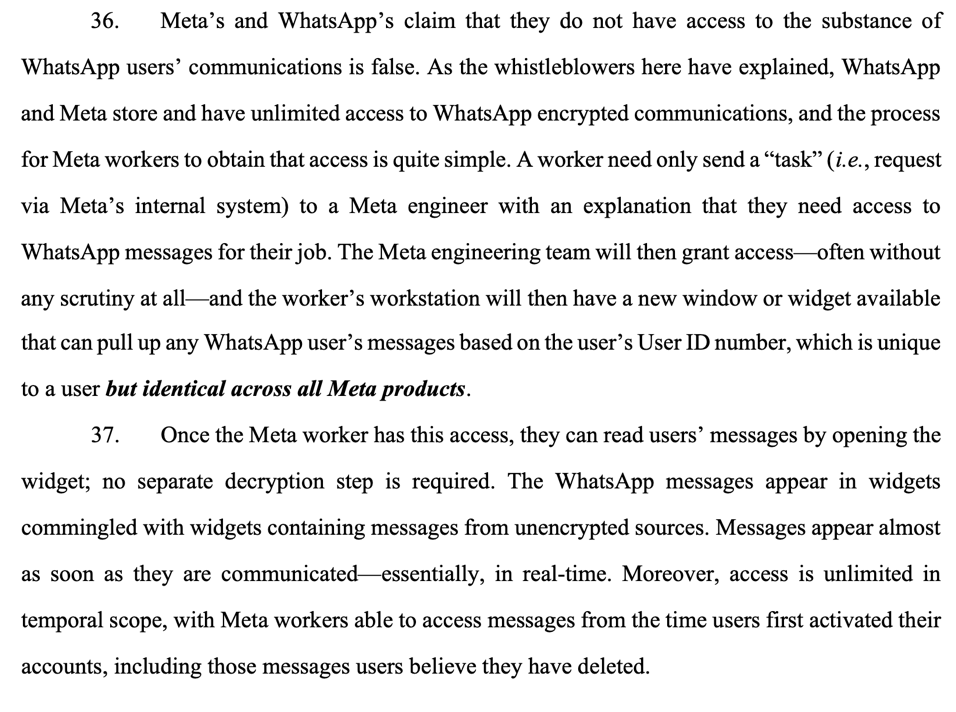
The controversy began with a class-action complaint filed by the prominent law firm Quinn Emanuel Urquhart & Sullivan on behalf of several anonymous plaintiffs. The legal document contends that while Meta aggressively markets WhatsApp as a bastion of end-to-end encryption, the underlying infrastructure secretly permits unauthorized access to private user data. Although the complaint lacks granular technical documentation to substantiate its sweeping assertions, it has nonetheless catalyzed significant downstream effects.
High-profile technology executives and operators of competing messaging services—including X owner Elon Musk and Telegram founder Pavel Durov—amplified the allegations across social media platforms, drawing intense public focus to the dispute. Concurrently, investigative reporting by Bloomberg revealed that United States federal authorities have initiated inquiries into Meta regarding the veracity of its privacy and encryption representations. This confluence of civil litigation, public commentary from rival technology leaders, and regulatory interest has elevated a specialized cryptographic debate into mainstream public consciousness.
Technical Foundations: The Scale and Mechanics of WhatsApp Security
To evaluate the merit of these allegations, it is necessary to examine the technical architecture of modern messaging applications. Instant messaging technology dates back to the late twentieth century, but contemporary platforms operate at a scale previously unimaginable. When WhatsApp was acquired by Facebook (now Meta) in 2014, the platform served tens of millions of users. By the time the events referenced in the legal filings unfolded, that user base had surpassed one billion monthly active users, eventually scaling to approximately three billion active participants worldwide. Today, WhatsApp functions as critical communications infrastructure in numerous countries, frequently eclipsing traditional telephony in daily usage volume.
Managing data transmission at this magnitude introduces severe systemic vulnerabilities. Every digital message transmitted via a centralized architecture must initially route through servers controlled by the hosting provider before reaching its destination. Absent rigorous cryptographic safeguards, this creates an unprecedented repository of real-time communication logs and long-term data archives, exposing users to risks ranging from sophisticated nation-state espionage to corporate data harvesting.
To mitigate these risks, WhatsApp’s original founders implemented the Signal Protocol, a robust end-to-end encryption framework. Under this paradigm, messages are encrypted on the sender’s device and can only be decrypted by the intended recipient’s device. Meta’s servers act purely as blind conduits, possessing neither the cryptographic keys nor the capability to read message content in transit. The deployment of this protocol fundamentally altered the relationship between technology conglomerates and sovereign governments.
Political and Regulatory Friction
The implementation of robust encryption across billions of endpoints immediately generated intense political friction. Law enforcement agencies and intelligence apparatuses across the United States, the United Kingdom, Australia, India, and the European Union repeatedly expressed alarm over the inability to access plaintext communications, even when armed with judicial warrants.
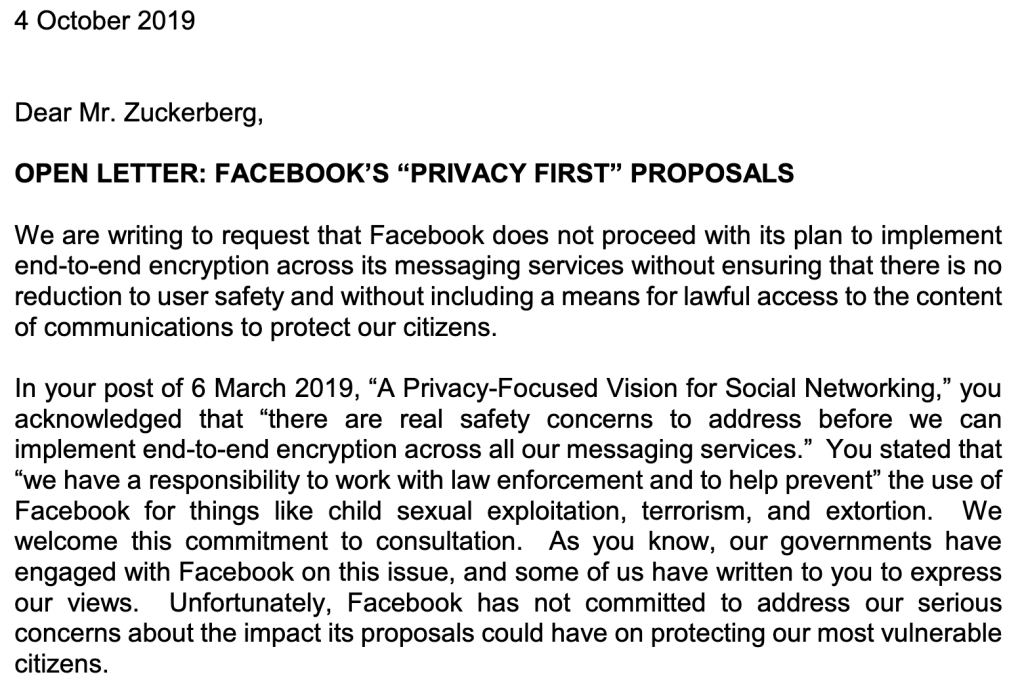
A prominent milestone in this friction occurred in October 2019, when a multi-nation open letter spearheaded by then-U.S. Attorney General William Barr formally requested that Facebook halt the expansion of end-to-end encryption unless accompanied by lawful access mechanisms or secure backdoors. Despite sustained international pressure, Meta maintained its deployment of default encryption across personal messaging channels, positioning user privacy as a core product feature. Given this historical backdrop, any finding that Meta systematically undermined its own encryption protocols would represent one of the most substantial corporate deceptions in technological history.
Feasibility Analysis: Could a Secret Backdoor Exist?
Evaluating the technical plausibility of the lawsuit’s claims requires an objective examination of software engineering realities. Because WhatsApp is a closed-source application, external security researchers cannot independently review the raw source code or compile their own verified binaries from scratch—a capability available with open-source alternatives like Signal. Instead, users must place a degree of institutional trust in Meta’s software development practices.
Nevertheless, security experts note that introducing a covert backdoor or data exfiltration mechanism at the scale alleged would require altering the client application running on billions of individual handsets. Specifically, the software would need to systematically duplicate and upload unencrypted plaintext messages or private cryptographic keys to Meta’s servers for every user, continuously, over extended periods.
Such widespread data exfiltration would introduce observable anomalies in network traffic and client-side behavior. Furthermore, security researchers routinely decompile and analyze historical versions of the compiled WhatsApp application packages available through public repositories. While reverse-engineering complex mobile applications requires specialized expertise, independent forensic analyses of client code have been conducted repeatedly by academic and industrial researchers. Executing a mass-surveillance backdoor without leaving detectable forensic artifacts in the application code or network telemetry is considered highly improbable by the cryptographic engineering community.
Alternatively, critics have raised the theoretical possibility of server-side key manipulation, such as a mass man-in-the-middle (MITM) attack executed during key exchange protocols. However, executing such an operation globally would require disabling the application’s built-in cryptographic verification safety numbers and evading detection by millions of technical users and external auditors over many years.
Metadata, Backups, and Ancillary Services
While the core content of personal messages remains protected by end-to-end encryption, various features and operational metadata fall outside these security guarantees. A rigorous factual assessment must distinguish between encrypted content and auxiliary data streams:
- Metadata: End-to-end encryption conceals message payloads but does not obscure transactional metadata, including sender and recipient identities, connection timestamps, and frequency of interaction. This information remains accessible to the platform provider for operational purposes.
- Business Communications: Communications directed toward commercial entities using WhatsApp Business accounts may be processed and stored on corporate servers rather than remaining strictly end-to-end encrypted between private individuals.
- Cloud Backups: Restoring chat histories across device replacements often necessitates cloud storage integrations. Unless users utilize end-to-end encrypted cloud backup options, chat archives stored on third-party infrastructure (such as Apple iCloud or Google Drive) may be accessible to cloud providers or via lawful government requests.
- Artificial Intelligence Integration: Recent feature additions, such as optional AI-powered writing assistants and message summaries, utilize specialized architectures like Trusted Execution Environments (TEEs) under Meta’s "Private Processing" framework. While designed to isolate data processing from platform operators, these features represent distinct operational domains introduced long after the timeline of the current legal allegations.
Despite these recognized loopholes and operational exceptions, security analysts emphasize that none of these ancillary data practices account for or substantiate the fundamental premise of the lawsuit: that Meta possesses universal, real-time access to the core end-to-end encrypted messaging content of all global users.
Implications and the Economics of Trust
The core function of modern cryptography is not to eliminate the necessity of trust entirely, but rather to extend trust from a known anchor point—such as an audited software binary, a verified hardware module, or a mathematical protocol—across untrusted networks and storage mediums. Cryptographic systems empower individuals to communicate securely even when utilizing infrastructure managed by commercial entities with expansive data collection incentives.
Ultimately, the controversy highlights an unavoidable reality of consumer technology: absolute zero-trust verification remains difficult to achieve when utilizing proprietary software ecosystems. Users must decide whether to trust the cryptographic architecture of platforms like WhatsApp based on independent security audits, historical resilience, and external expert analysis, or transition to alternative open-source applications that provide full source code verifiability. As the litigation proceeds through the legal system, the burden will rest upon the plaintiffs to transition unverified allegations into verifiable empirical evidence—a standard that will require far more than public conjecture in the complex domain of modern cryptographic engineering.

