

The architecture of the decentralized internet is undergoing a structural transformation. In the early formative years of Web3, digital wallets served a singular, highly specialized purpose: functioning as cryptographic key-vaults designed strictly for signing transactions, managing private keys, and holding digital tokens. Standard tools like MetaMask or hardware solutions like Ledger operated on a strict paradigm of self-custody—summarized by the prevailing ethos of owning your keys to own your crypto. However, as the digital landscape matures into what industry analysts term the Post Web, this rudimentary model has rapidly become obsolete. The digital wallet is no longer merely a peripheral tool for financial transactions; it now occupies the absolute center of the modern user experience, evolving into a living interface capable of managing complex identities, granular permissions, diverse system resources, and autonomous artificial intelligence agents.
This paradigm shift is thoroughly examined in Chapter 2 of The Post Web Thesis, a comprehensive publication released by Outlier Ventures in 2025. According to the research, wallets are transitioning into the fundamental control center of the Agentic Web, acting as the primary coordination hub where human intent seamlessly converges with intelligent, automated software systems.
From Cryptographic Keys to Digital Personhood
The historical evolution of wallets reflects a broader maturation of blockchain technology itself. While early iterations prioritized security and cryptographic isolation, contemporary frameworks place digital identity and composability at the forefront. Analysts note that wallets are rapidly transforming into self-sovereign identity frameworks. Rather than just storing a balance of tokens, a modern wallet anchors user identity, verifiable reputation, and actionable agency into a single, cohesive system.
In this new era, your wallet effectively functions as you in digital form. It serves as an immutable anchor for personhood, continuous ownership, and cryptographic trust. This transition addresses long-standing bottlenecks that have historically hindered mainstream crypto adoption. For years, cumbersome onboarding processes, the terrifying prospect of losing all funds due to a misplaced seed phrase, and the friction of manually tracking assets across dozens of fragmented blockchains stifled consumer growth.
Smart wallets have actively intervened to solve these systemic user experience failures. Pioneering platforms like Safe have demonstrated how modern infrastructure can improve usability while allowing users to automate recurring intents. Safe enables deep wallet customization through automation—such as scheduling recurring transactions, establishing enhanced security rules like spending limits and whitelists, and integrating directly with decentralized finance (DeFi) protocols without manual intervention.
The Wallet as a Resource Management Hub
As the technological landscape moves beyond simple asset tracking, the Post Web wallet is tasked with orchestrating complex resources rather than just static tokens. Within this decentralized ecosystem, the wallet manages access to specialized computational grids, decentralized physical infrastructure networks (DePIN), and cross-chain liquidity pools.
This functional expansion effectively turns the wallet into an operating system for autonomy. It mediates interactions across disparate networks and specialized protocols, ensuring that users retain absolute control over how their digital footprint interacts with the broader web. As smart agents become deeply integrated into the digital economy, these wallets naturally graduate to serving as dedicated command consoles.
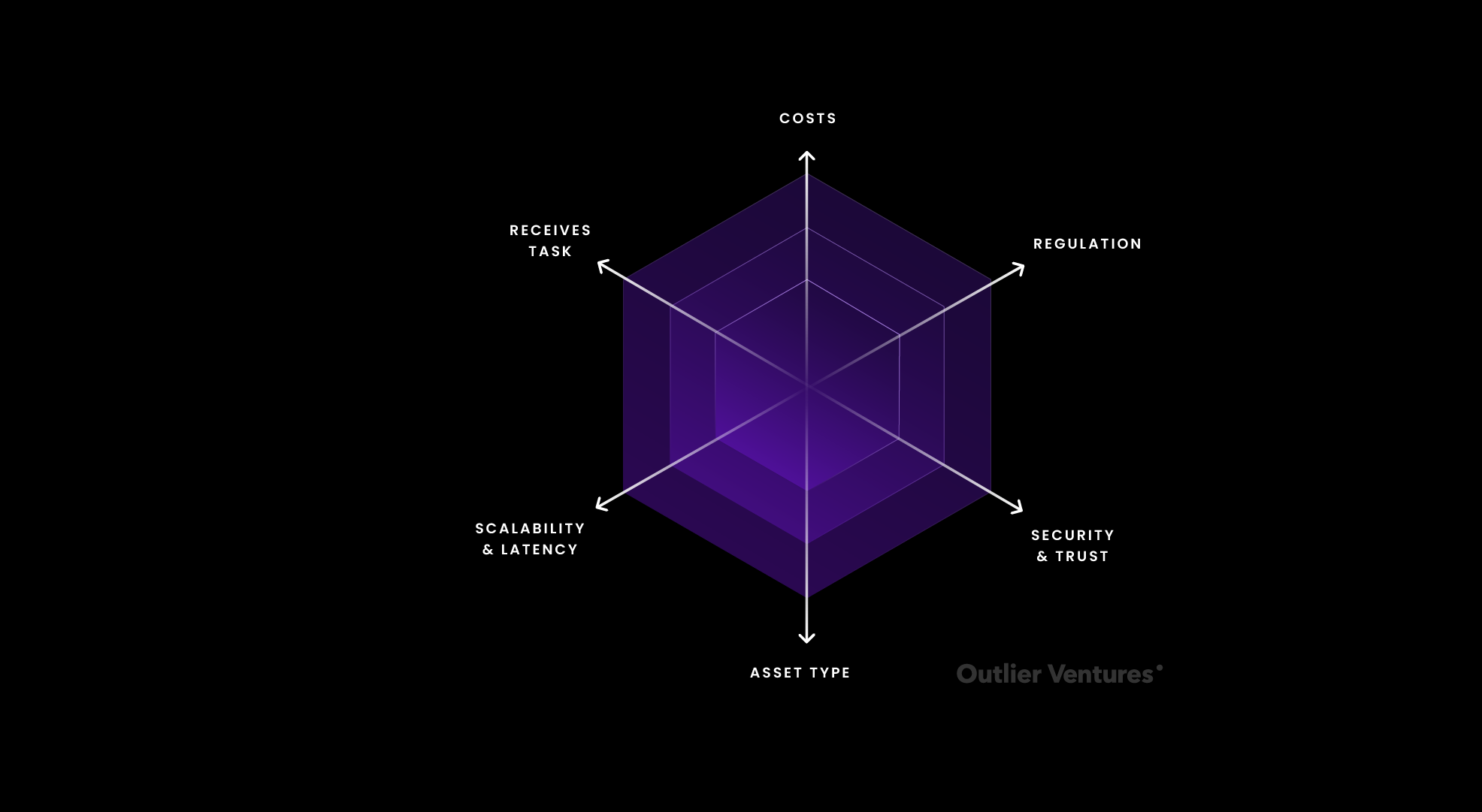
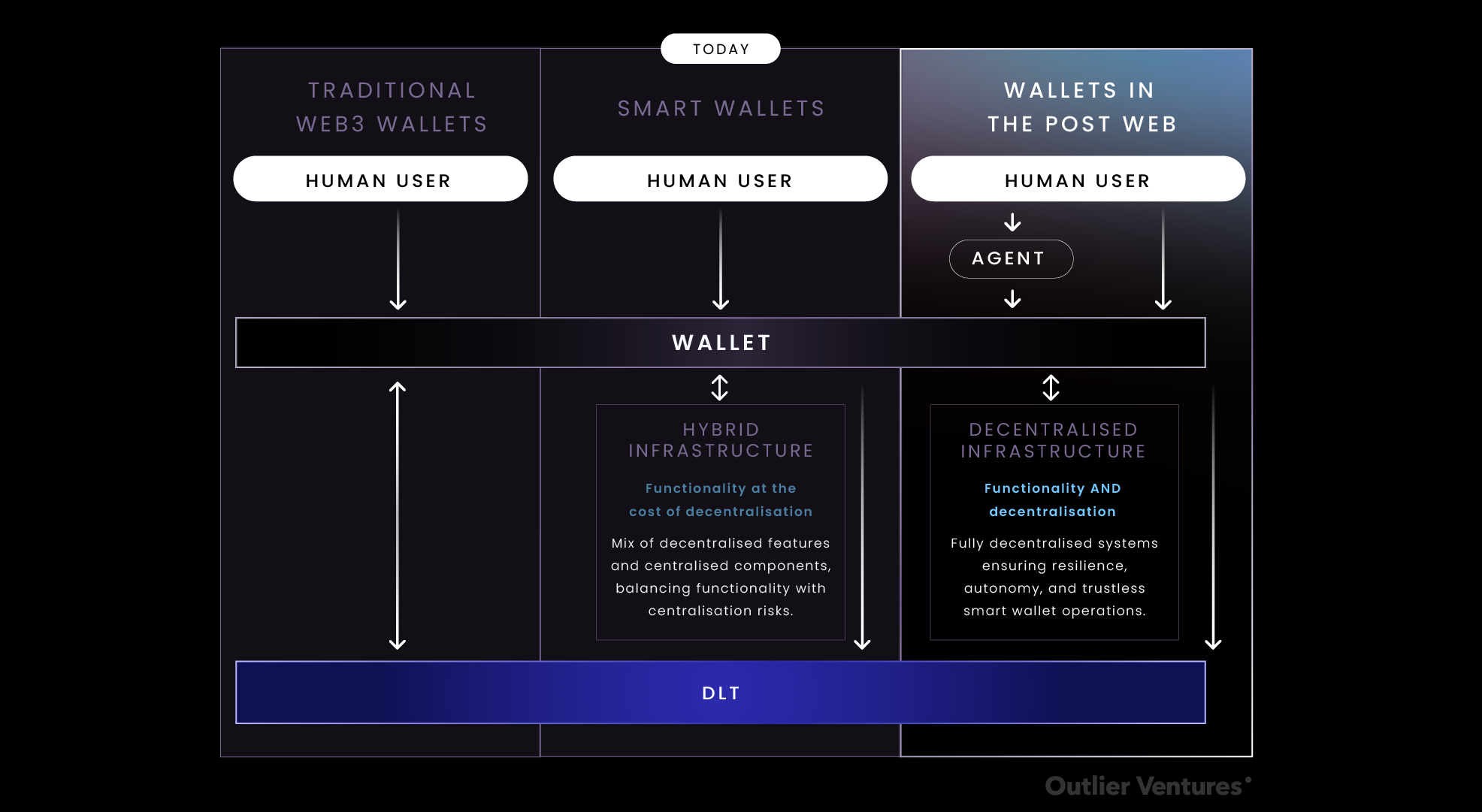
Every autonomous agent connects to the blockchain through a user’s designated wallet. The wallet acts as a crucial governance layer, establishing permission loops, verifying transaction boundaries, and executing safety checks. This architecture guarantees that while smart agents are empowered to act on behalf of human users, they operate strictly within predefined safety parameters. The wallet thereby establishes a robust governance layer for digital autonomy itself, preventing unauthorized actions while maximizing efficiency.
Privacy and Security in an Agentic World
The expansion of wallet capabilities naturally introduces new vectors for vulnerability. Because Post Web wallets store significantly more than just cryptocurrency—including behavioral data, digital credentials, persistent permissions, and active agent connections—privacy and security have become mission-critical priorities for developers and users alike.
To maintain user trust in an increasingly automated environment, next-generation wallet architectures are implementing advanced cryptographic frameworks. These systems utilize advanced zero-knowledge proofs and decentralized identity protocols to ensure privacy by design. By hiding sensitive behavioral data while verifying the validity of underlying transactions, these architectures protect user confidentiality without sacrificing the transparency required by distributed ledgers. Users remain in complete command of their data sharing preferences, even as their autonomous agents execute complex operations across global networks.
Interoperability, Intent, and the Future of Interaction
Perhaps the most profound shift in the Post Web wallet ecosystem is the transition from manual task execution to intent negotiation. Historically, interacting with blockchain infrastructure required users to manually approve individual smart contract calls, gas fees, and token approvals across multiple steps. In an agentic economy, this manual friction is replaced by natural language or programmatic intent.
Users and their autonomous agents will no longer need to execute granular steps. Instead, they will simply express high-level goals, such as finding the optimal yield strategy under a strict five percent risk threshold, or participating in decentralized governance proposals that align with specific sustainability criteria. The smart wallet acts as the intelligent mediator, interpreting these intents, routing them through the most efficient protocols, and cryptographically verifying execution across diverse networks.
This evolution from mechanical task execution to strategic intent negotiation marks the final metamorphosis of the digital wallet. It ceases to be a cold storage tool or a basic browser extension, becoming instead a living, adaptive interface for human purpose and machine execution.
Implications and Industry Outlook
The maturation of smart wallets and agentic command centers carries profound implications for the broader technology and financial sectors. By bridging the gap between human desire and autonomous on-chain execution, these technologies lower the barrier to entry for decentralized systems, paving the way for mass consumer adoption. Financial institutions, enterprise software developers, and decentralized application builders must adapt to an ecosystem where users delegate execution to intelligent agents governed by self-sovereign wallets.
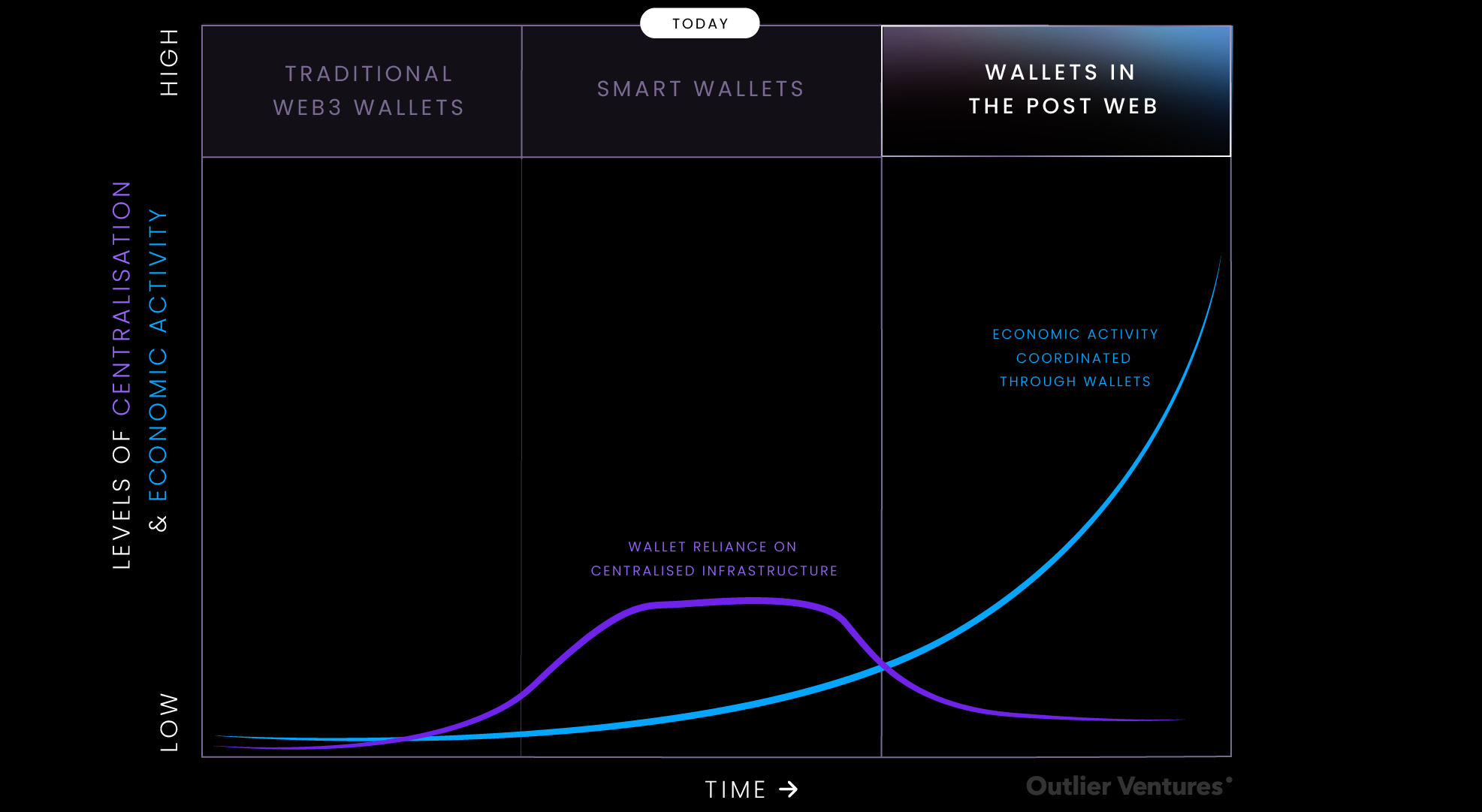
As outlined in Outlier Ventures’ ongoing research series, the trajectory of the decentralized web points toward a hyper-connected, agent-driven economy. With Chapter 2 establishing the foundational framework for the Post Web stack, anticipation is already building for the release of Chapter 3, titled Zero to Many, which promises to further explore the scaling of decentralized networks and autonomous systems.
Ultimately, the reimagined digital wallet represents more than just a software upgrade; it is the true manifestation of digital selfhood. Serving as the nexus of ownership, verifiable identity, and autonomous agency, the wallet will define how humanity navigates the emerging agentic economy for decades to come.

