
The architecture of the decentralized web is undergoing a profound structural shift that is rendering traditional cryptographic tools obsolete for everyday users. In the nascent stages of Web3, digital wallets functioned primarily as basic private-key vaults. Their utility was strictly confined to signing transactions, holding tokens, and displaying rudimentary portfolio balances through interfaces like MetaMask or hardware devices such as Ledger. The foundational ethos of that era centered on absolute cryptographic custody: owning one’s private keys equated to owning one’s digital assets. However, as the digital economy transitions into what industry researchers term the "Post Web," this minimalist model no longer meets the complex demands of modern internet infrastructure.
Recent findings outlined in Chapter 2 of The Post Web Thesis, published by Outlier Ventures, indicate that the modern digital wallet has migrated from the periphery to the very core of the user experience. Rather than acting as a static vault for dormant coins, the contemporary wallet has evolved into a dynamic, living interface capable of managing intricate digital identities, granular network permissions, scarce computational resources, and autonomous artificial intelligence agents. This transformation marks the dawn of the "Agentic Web," where human intent and machine-driven intelligence converge within a single verifiable control center.
The Historical Trajectory: From Cold Storage to Smart Infrastructure
To understand the current metamorphosis of the digital wallet, one must examine the friction-laden history of blockchain user experience. Throughout the past decade, cumbersome onboarding procedures, the existential threat of lost seed phrases, and the immense fragmentation of assets across dozens of competing Layer-1 and Layer-2 networks created severe bottlenecks for mainstream adoption. Users were forced to manually execute every single action, pay gas fees across multiple chains, and navigate confusing smart contract interfaces at the risk of losing their entire portfolio to malicious actors or human error.
The turning point began with the advent of account abstraction and smart wallets, exemplified by platforms like Safe. These innovations fundamentally decoupled user accounts from static private keys, introducing programmability directly to the wallet layer. Smart wallets enabled crucial user experience enhancements, including automated recurring transactions, social recovery mechanisms, customized spending limits, and native integration with decentralized finance (DeFi) protocols.
According to Andres Acevedo, Investment Manager at Outlier Ventures, this transition from manual execution to automated smart infrastructure lays the groundwork for the current shift toward intention-based interaction. By bridging user intent with autonomous on-chain action, smart wallets have successfully bridged the chasm between human goals and complex blockchain mechanics.
From Keys to Personhood: The Anchor of Digital Identity
In the Post Web paradigm, the function of the wallet expands far beyond financial asset management. Industry analysts emphasize that wallets are rapidly becoming the primary interface for digital personhood, successfully anchoring identity, reputation, agency, and ownership into one cohesive, verifiable system.
Rather than merely holding currency, a modern self-sovereign identity framework allows a wallet to act as a digital manifestation of the user. It manages cryptographic credentials, zero-knowledge proofs, and verifiable claims that prove authenticity without leaking sensitive personal data. This evolution turns the wallet from a passive storage container into an active participant in digital society—an anchor for trust in an increasingly automated and anonymous digital landscape.
Resource Orchestration in the Post Web
As decentralized physical infrastructure networks (DePIN), modular blockchains, and cross-chain communication protocols proliferate, the scope of what a wallet manages has broadened from financial assets to a wide array of digital resources.
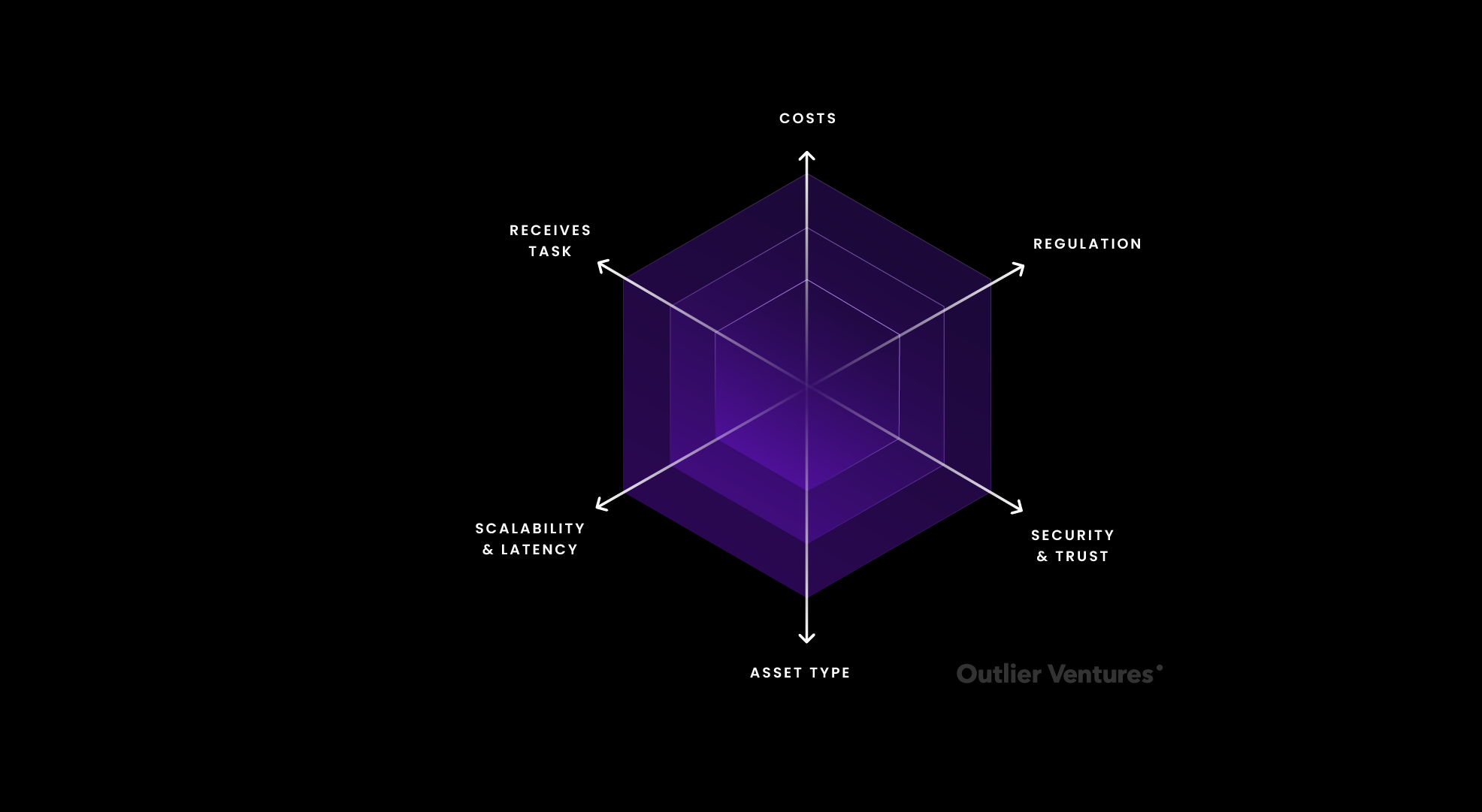
The wallet now orchestrates computational power, decentralized storage allocations, bandwidth access, and protocol-level governance rights. By functioning as an operating system for autonomy, the modern wallet mediates complex interactions across disparate networks and protocols seamlessly. Users no longer interact directly with the underlying infrastructure; instead, their wallet handles the orchestration of resources in the background based on predefined parameters and dynamic needs.
A Command Center for Autonomous AI Agents
Perhaps the most significant catalyst for the wallet’s evolution is the rise of autonomous smart agents. As artificial intelligence models become increasingly sophisticated and capable of performing complex economic tasks independently, they require a secure, verifiable interface to interact with the blockchain ecosystem.
Within the Post Web architecture, the user’s wallet serves as the ultimate command console and governance layer for these autonomous agents. Each AI agent connects directly through the user’s wallet, which establishes strict permission boundaries, verification loops, and spending constraints. This relationship ensures that while AI agents are empowered to act autonomously on behalf of users—such as negotiating yield strategies or purchasing data services—they remain strictly tethered to human oversight and cannot operate outside established safety parameters.
Privacy and Security in an Agentic World
The centralization of identity, behavioural data, credentials, and agent connections within a single wallet interface naturally introduces unprecedented security and privacy challenges. Because the stakes are significantly higher than holding simple token balances, modern wallet architectures must integrate advanced cryptographic frameworks to maintain user trust.
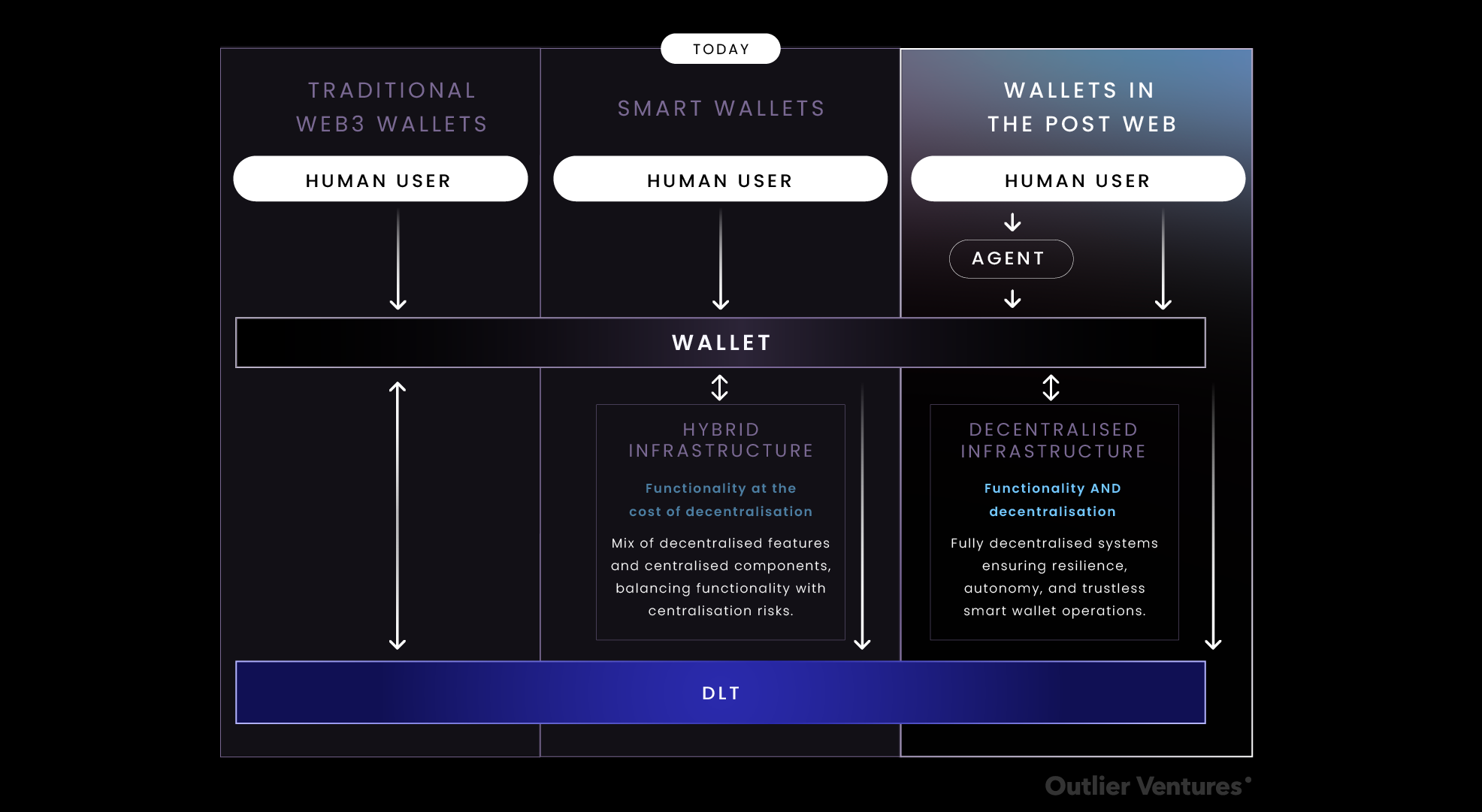
To mitigate these risks, Post Web wallets incorporate privacy-preserving technologies such as zero-knowledge cryptography, decentralized identifiers (DIDs), and multi-party computation (MPC). These systems ensure "privacy by design," allowing users to prove authorization, verify credentials, and execute complex agentic workflows without exposing their underlying personal data or private keys to external entities.
The Shift to Intent-Based Interaction
The ultimate realization of the Post Web wallet is its transition into an interface for pure intent. In legacy systems, users were burdened with the mechanical execution of tasks: finding liquidity pools, approving token swaps, bridging assets, and adjusting gas limits. In the agentic economy, this burden is entirely removed.
Users and their autonomous agents will simply express high-level goals, such as finding the optimal yield strategy under a strict five percent risk threshold, or casting governance votes aligned with specific environmental sustainability metrics. The smart wallet acts as an intelligent mediator, interpreting these intents, negotiating across various protocols, verifying outcomes, and executing the necessary on-chain transactions without requiring manual intervention.
Implications for the Broader Digital Economy
The reimagining of the digital wallet carries profound implications for financial institutions, software developers, and everyday consumers alike. As wallets transform into comprehensive operating systems for digital personhood and autonomy, the boundary between traditional web applications and decentralized protocols will continue to dissolve.
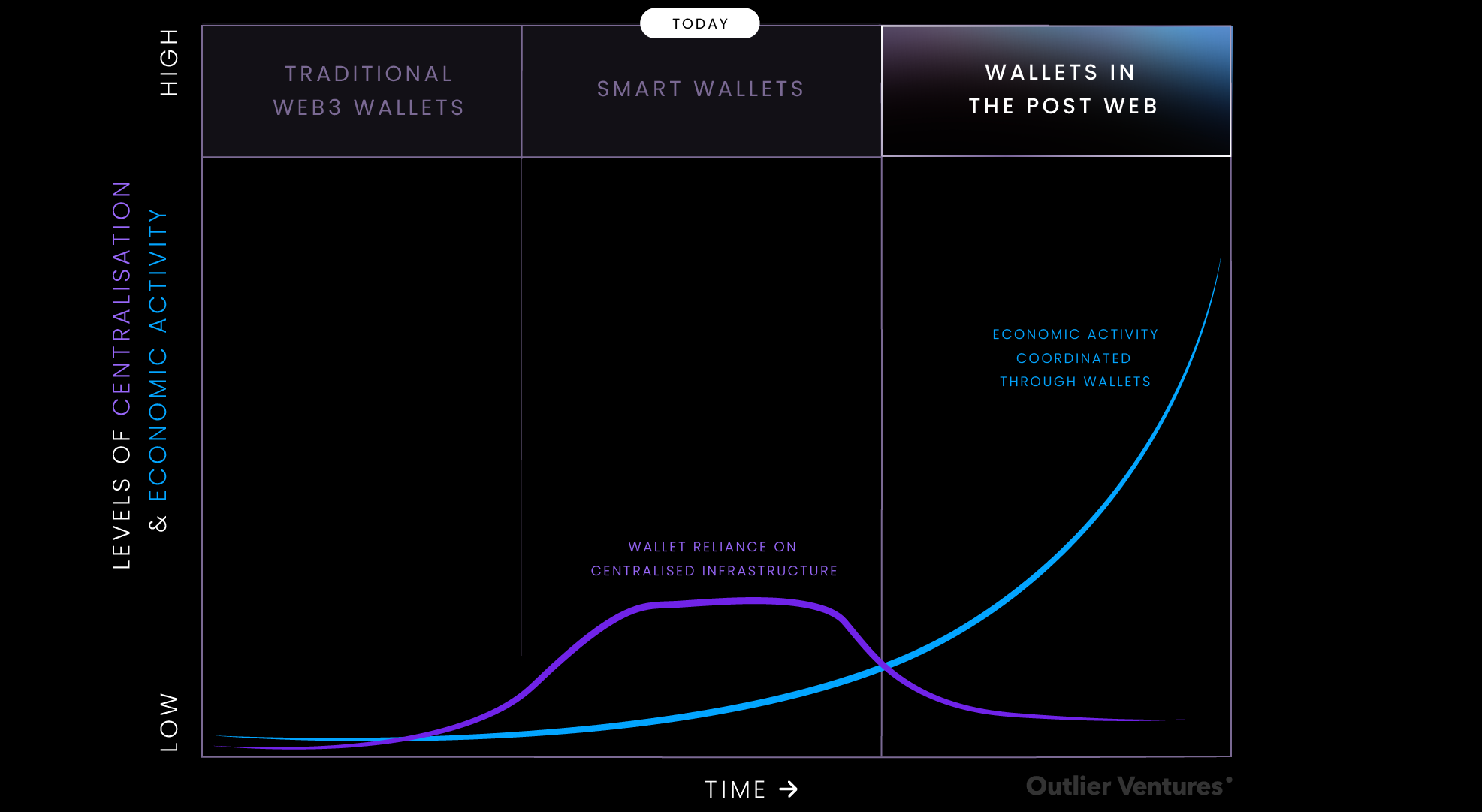
Industry observers note that this shift will likely accelerate mainstream enterprise adoption of blockchain technology, as complex cryptographic interactions are abstracted away behind intuitive, agent-driven interfaces. Furthermore, the establishment of standardized frameworks for digital identity and agent governance could pave the way for entirely new economic models built on autonomous machine-to-machine commerce.
As the digital landscape prepares for the rollout of subsequent developmental phases, such as Chapter 3 of The Post Web Thesis titled "Zero to Many," the definition of a digital wallet has been permanently rewritten. No longer a cold storage tool for speculative tokens, the modern wallet has emerged as the definitive nexus of ownership, identity, and agency—the true digital embodiment of the user in the emerging agentic economy.