
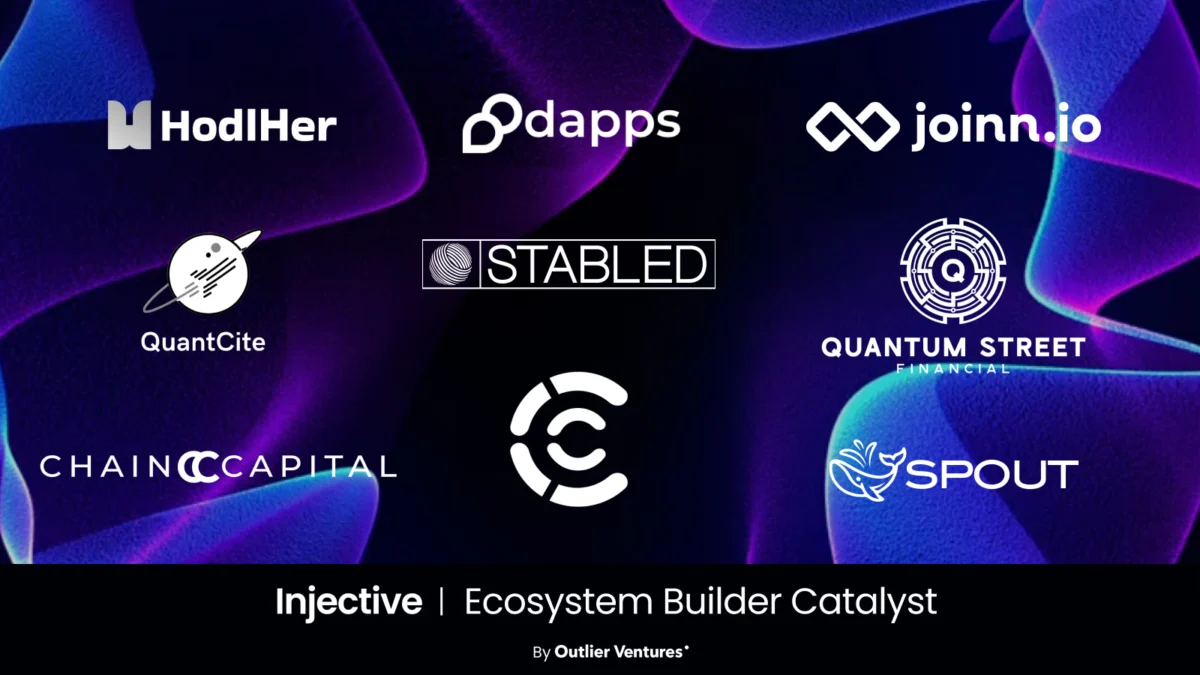
The landscape of decentralized finance (DeFi) is undergoing a monumental architectural shift, transitioning away from rudimentary token exchanges toward robust, institutional-grade financial layers. Amid this rapid evolution, global Web3 accelerator Outlier Ventures and Layer-1 blockchain Injective have officially announced their latest cohort of early-stage startups selected for the Injective Ecosystem Builder Catalyst. This intensive, nine-week virtual accelerator program is strategically engineered to mentor, fund, and scale the next wave of high-growth founders constructing infrastructure and advanced financial applications natively within the Injective ecosystem.
The launch of this cohort arrives at a critical juncture for the broader digital asset economy. Decentralized finance Total Value Locked (TVL) is hovering near the $140 billion threshold, while Real-World Assets (RWAs) have experienced explosive scaling, expanding by more than 380% since 2022. By leveraging Injective’s high-performance architecture—characterized by sub-second transaction finality, gasless execution environments, and MultiVM interoperability—the newly selected startups aim to bridge the gap between traditional finance (TradFi) and decentralized execution.
Chronology and Program Mechanics
The Injective Ecosystem Builder Catalyst operates as a rigorous, milestone-driven virtual acceleration framework. Spanning nine consecutive weeks, the curriculum is designed to move participating founding teams from early-stage product refinement to institutional readiness. Throughout the program, cohort members receive hands-on mentorship from domain experts, regulatory and legal guidance tailored to cross-border financial compliance, and direct access to specialized ecosystem incentives and liquidity pools.

The initiative culminates in a highly anticipated Demo Day scheduled for late February, where founders will pitch their refined protocols to an exclusive audience of top-tier venture capitalists, institutional investors, and liquidity providers. This structured chronology ensures that companies emerging from the Catalyst accelerator possess not only superior technical primitives but also clear pathways to market adoption and enterprise-grade security.
Driving Institutional Adoption and Innovation: The Cohort Breakdown
Rather than simply porting legacy applications from other blockchain networks onto Injective, the nine startups chosen for this cohort are pioneering novel financial primitives. These include agentic trading systems, tokenized equities frameworks, and automated on-chain repo markets made viable by Injective’s native financial modules and shared liquidity infrastructure.
The selected companies span diverse sectors of the modern digital economy:
- QuantCite: Operating as an institutional-grade Order and Execution Management System (OEMS) combined with a smart-routing platform, QuantCite unifies execution across centralized exchanges and decentralized venues. It equips quantitative funds and professional traders with high-performance infrastructure and deep liquidity access.
- Joinn: Focused on emerging markets, Joinn functions as a fintech application designed to protect and grow everyday savings via stable, yield-generating tokenized financial assets. Delivering a Web2-like user experience underpinned by secure blockchain rails, Joinn facilitates gasless, signless multi-chain transactions, 24/7 account access, a connected Visa card experience, and integrated artificial intelligence agents for automated compounding.
- Choice: A decentralized exchange and liquidity aggregation layer optimized explicitly for Injective. Choice utilizes a sophisticated routing algorithm designed to tap into liquidity pools across multiple venues, guaranteeing users optimal swap execution with minimized slippage.
- Stabled: An international enterprise payments platform created to execute compliant cross-border stablecoin transactions instantly. By bypassing legacy correspondent banking networks, Stabled minimizes foreign exchange losses and eliminates traditional settlement delays.
- Quantum Street: Comprising capital market veterans and financial engineering specialists, Quantum Street bridges the gap between traditional off-chain assets and on-chain systems. By structuring robust transactions for cash-flowing businesses, the platform introduces genuine utility to stablecoins while driving meaningful growth in network TVL.
- Spout: Revolutionizing the traditional equities market, Spout enables the seamless borrowing and lending of U.S. public equities. By tokenizing equities and deploying a Collateralized Debt Position (CDP) model, the platform delivers zero-percent APR margin loans alongside attractive lending yields hovering around 10% APY.
- Dapps.co: A Web3-native social network designed to restore digital agency to content creators through tokenized communities and vibrant on-chain economies. The platform integrates an advanced AI provenance layer to combat low-quality generative content, allowing creators to monetize directly via micro-tips and paid direct messaging.
- Chain Capital: Transforming illiquid private debt into highly tradable securities. By tokenizing invoices and corporate receivables, Chain Capital automates complex securitization workflows, cutting middle-office administrative costs by up to 75% while providing institutional investors with compliant access to high-yield exposures.
- HodlHer: Positioning itself as the world’s first AI-driven Web3 operating system built on Injective, HodlHer employs intelligent personas to assist users, creators, and projects in navigating the complete operational lifecycle—from market perception and analytical reasoning to automated on-chain action.
Fact-Based Analysis of Implications
The convergence of institutional capital and high-performance blockchain infrastructure marks a distinct maturation point for the digital asset industry. Historically, decentralized finance suffered from fragmentation, high gas fees, and settlement latencies that rendered it incompatible with institutional risk management frameworks. However, ecosystems built around sub-second finality and native modularity are rapidly dissolving these technical barriers.

By supporting startups that focus heavily on regulatory compliance, real-world asset tokenization, and institutional execution layers, the Outlier Ventures and Injective collaboration addresses the core bottlenecks holding back mass enterprise adoption. Platforms like Stabled and Chain Capital signal a clear migration toward utility-driven blockchain applications that solve tangible enterprise inefficiencies—such as cross-border payment friction and private debt illiquidity—rather than relying solely on speculative retail trading volumes.
Furthermore, the integration of artificial intelligence agents within consumer-facing applications like Joinn and HodlHer points toward a future where blockchain infrastructure abstracts away entirely from the user experience. This invisible integration of decentralized rails is widely regarded by market analysts as a prerequisite for onboarding the next billion users into the digital economy.
Broader Impact and Future Outlook
As the nine-week accelerator program progresses toward its concluding milestones, the broader fintech and blockchain sectors will be watching closely to evaluate the commercial viability of these emerging primitives. The ability of these startups to achieve functional parity with traditional financial market structures—while offering programmable advantages unattainable in legacy systems—will serve as a bellwether for the next cycle of venture investment.
Industry observers note that the success of the Injective Ecosystem Builder Catalyst cohort could catalyze a wider migration of quantitative funds, traditional fintech developers, and institutional asset managers toward specialized, high-performance L1 architectures. With total value locked maintaining robust health and real-world asset tokenization accelerating across global markets, the groundwork laid by these nine pioneering teams may well define the structural backbone of global finance for the coming decade.

