
Fresh from a series of intensive panels and technical discourse at the Usenix Security conference hosted in Baltimore, cybersecurity researchers and cryptographic experts are confronting an ironic, paradigm-shifting dilemma that could fundamentally destabilize modern law enforcement and intelligence operations. While the overarching narrative surrounding artificial intelligence has focused heavily on fears of automated cyber warfare, sophisticated social engineering, and the acceleration of malicious threat actors, a contrarian anxiety is taking root among top-tier security analysts. The core of this emerging debate is as counterintuitive as it is alarming: artificial intelligence is poised to make commercial software far too secure, effectively locking intelligence and law enforcement agencies out of digital ecosystems entirely.
This impending hyper-security threatens to drive Western intelligence agencies into a state of structural blindness, triggering a catastrophic "going dark" phenomenon that surpasses anything witnessed during the smartphone encryption battles of the past decade. As automated vulnerability-hunting models sweep through millions of lines of legacy code, eradicating decades-old software flaws at unprecedented speeds, the traditional marketplace for zero-day exploits and remote hacking tools is collapsing. Consequently, governments facing the sudden evaporation of their digital investigative capabilities are expected to renew aggressive pushes for mandated backdoors and exceptional access frameworks, setting the stage for an unprecedented confrontation between national security imperatives and global digital hygiene.
A Historical Retrospective on Digital Surveillance and the First Going Dark Movement
To understand the magnitude of the impending technological shift, it is necessary to examine the evolution of electronic surveillance over the past quarter-century. The digital investigative landscape of the early 2000s—famously captured in pop culture fixtures like the television series The Wire—relied primarily on wiretaps, pen registers, and physical access to telecommunication infrastructure. In 2002, cellular technology was still a nascent layer atop a legacy analog and digital circuit-switched network, meaning law enforcement intercept protocols functioned similarly to how they had for decades.
Within less than ten years, however, the proliferation of smartphones and mobile data completely upended this paradigm. The transition from voice calls to locally stored text messages initially provided investigators with unprecedented digital paper trails. However, this windfall proved short-lived. In 2010, Apple fundamentally altered the security landscape by implementing hardware-encrypted storage derived from user passcodes on the iPhone, a standard rapidly adopted by Google’s Android ecosystem.
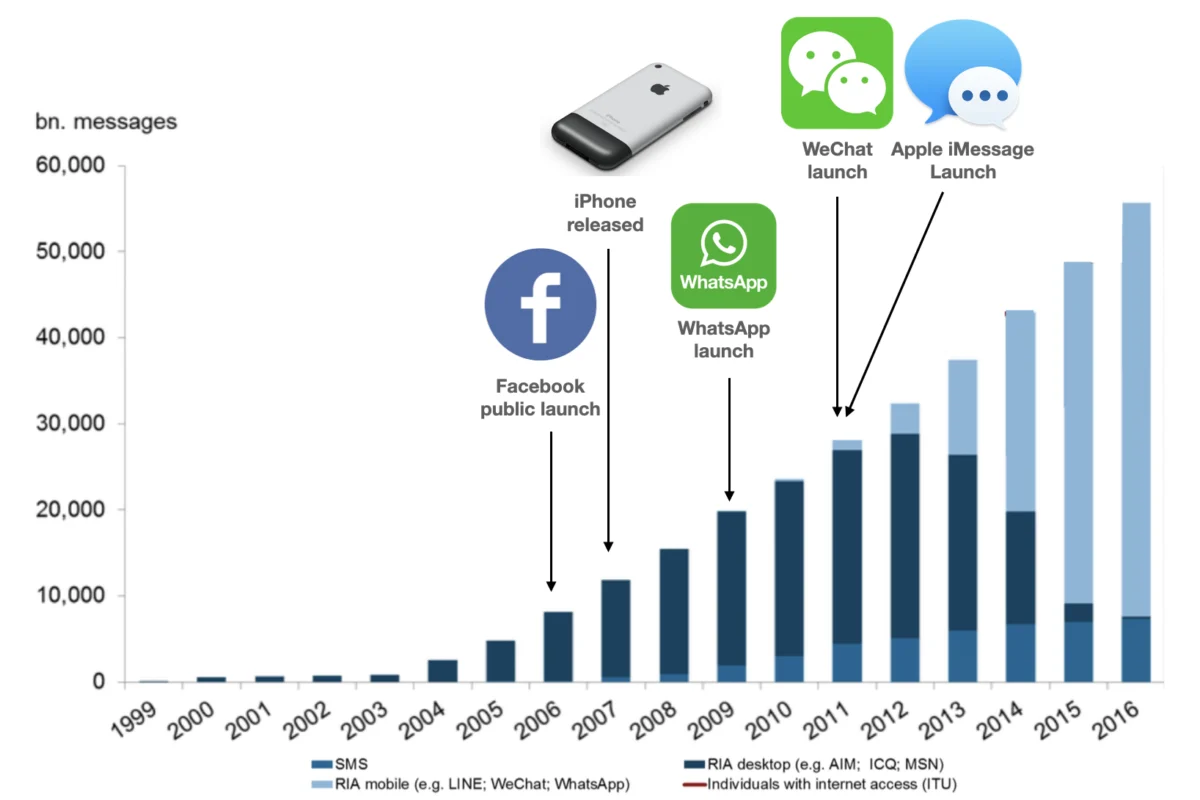
The security architecture shifted again between 2011 and 2016, moving from device-level encryption to ubiquitous end-to-end encryption (E2EE) across messaging platforms. By 2014, platforms such as WhatsApp had scaled to hundreds of millions of users, eventually crossing the billion-user threshold with default end-to-end encryption for all calls and messages. This meant that communication service providers could no longer assist law enforcement because they no longer held the cryptographic keys required to read user data.

Faced with this structural limitation, federal authorities mobilized. In October 2014, then-FBI Director James Comey launched the "Going Dark" initiative, publicly lobbying technology companies to build lawful interception mechanisms into encrypted platforms. This legislative and public relations campaign culminated in the high-stakes legal battle of 2016, when the FBI sought a federal court order compelling Apple to write custom firmware to bypass the passcode security on an iPhone used by one of the perpetrators of the San Bernardino terrorist attack. Apple fiercely resisted, setting up a constitutional showdown over privacy and security.
The stalemate was ultimately broken not through legal precedent or technical compromise, but via the private market. Before the court could issue a definitive ruling, an undisclosed third-party vendor demonstrated that the targeted iPhone could be physically exploited without Apple’s cooperation. This event established a new operational blueprint: rather than compelling tech giants to weaken their encryption standards, intelligence agencies and law enforcement bodies increasingly relied on purchasing commercial vulnerability exploitation tools, such as Cellebrite’s GrayKey for local device unlocking and NSO Group’s Pegasus for remote interception. For the next decade, a high-stakes cat-and-mouse game persisted, with software vendors patching holes while offensive security researchers and government contractors maintained a fragile, exploitable edge.
The Arrival of Autonomous Vulnerability Hunting and the AI Inflection Point
The delicate equilibrium that sustained the exploit economy for over a decade is now facing terminal disruption. The catalyst arrived in early 2025 and accelerated through 2026 with the commercial deployment of advanced frontier cyber models—such as Anthropic’s Mythos, alongside competing open-weight and proprietary architectures developed by firms like OpenAI, Z.ai, and Moonshot. Unlike previous generations of machine learning models that required human-guided fuzzing and manual verification, these new systems demonstrate an extraordinary, autonomous capacity to discover deep-seated logical vulnerabilities, memory corruption flaws, and cryptographic weaknesses across massive codebases.
The capabilities of these models alarmed geopolitical stakeholders immediately. Earlier this year, government entities temporarily restricted the export of frontier cyber models, attempting to place access controls around systems deemed capable of autonomous offensive operations. However, subsequent developments by international laboratories proved that advanced vulnerability-discovery capabilities cannot be restricted to a single jurisdiction or monopolized by a lone entity. The volume of critical vulnerabilities identified and subsequently patched by these automated pipelines has scaled exponentially, shifting the balance of power decisively toward defenders.
Software development life cycles are undergoing a systemic re-architecture. Continuous Integration and Continuous Deployment (CI/CD) pipelines are now embedding AI-driven security scanners that interrogate source code before human developers ever review it. While complete theoretical security—the eradication of all bugs—remains mathematically uncomputable in complex software engineering, the industry is rapidly approaching a practical ceiling. Within the next two years, major operating systems, productivity suites, and communication infrastructures are projected to exhaust their inventory of remotely exploitable, low-hanging security flaws.
The Macroeconomic and Strategic Implications for Law Enforcement

The elimination of widespread software vulnerabilities presents a profound existential crisis for offensive intelligence operations and domestic law enforcement agencies. When software becomes mathematically or operationally impervious to remote exploitation, the commercial exploit market dries up. Agencies that have grown accustomed to purchasing zero-day access tools to bypass encryption will find their toolkits rendered obsolete. For the first time since the smartphone boom of the 2010s, advanced communications and well-maintained device ecosystems will truly "go dark" on a global scale.
This impending opacity is expected to resurrect dormant policy debates regarding "exceptional access" and mandatory cryptographic backdoors. Industry analysts anticipate mounting political and regulatory pressure on technology conglomerates to redesign their architectures, introducing legally mandated access mechanisms to ensure state legibility. However, this creates a deeply paradoxical security vulnerability.
Introducing intentional backdoors into encrypted systems to satisfy Western law enforcement creates systemic weaknesses that foreign adversaries and hostile intelligence services will inevitably exploit. History demonstrates that cryptographic vulnerabilities cannot be ring-fenced exclusively for benevolent authorities; any structural weakness embedded in a protocol compromises the integrity of the entire network for all users. Consequently, the push for state-mandated access risks inducing self-sabotage within domestic critical infrastructure precisely at a historical juncture when automated defensive tooling is finally achieving comprehensive system hygiene.
Furthermore, international dynamics are likely to shift dramatically. If software manufactured within the United States or allied nations is perceived as legally compromised or structurally weakened to accommodate domestic surveillance mandates, international enterprises and foreign sovereign governments may accelerate efforts to decouple from Western software dependencies entirely, fostering an era of technological fragmentation.
Navigating an Uncharted Technological Frontier
As the cybersecurity community processes the long-term consequences of autonomous software hardening, policymakers and engineers face an uncomfortable transition. Unlike previous regulatory battles over digital privacy, the pressure driving this transformation is not a matter of legislative fiat, but the relentless progression of computational efficiency and algorithmic code analysis.
The convergence of artificial intelligence and systems security ensures that the digital landscape of the late 2020s will bear little resemblance to the past. Whether institutional stakeholders can adapt to a world where software is fundamentally secure—without resorting to systemic backdoors that undermine global digital trust—remains the defining governance challenge of the modern technological era.

