

The architecture of the global internet is undergoing its most profound structural shift since the commercialization of the World Wide Web in the 1990s. While successive technological eras transitioned society from static web pages to interactive social networks, and subsequently into decentralized ownership models via Web3, industry analysts and venture capital firms are now pointing toward an entirely new operational paradigm. According to recent whitepapers released by digital asset investment and research firms like Outlier Ventures, the next evolutionary leap of the internet will not focus on automating execution, but rather on automating intention. This foundational shift marks the emergence of the "Agentic Layer" within what is being defined as the "Post Web"—a technological stratum where autonomous artificial intelligence entities act directly on behalf of human users, interpreting complex goals, making real-time decentralized decisions, and executing multi-step protocols across distributed systems.
To understand the magnitude of this transition, industry experts point to the limitations of previous internet generations. Web1 introduced read-only information networks. Web2 brought read-write capabilities driven by centralized platforms, social media giants, and cloud computing infrastructures. Web3 subsequently introduced a decentralized internet of ownership, leveraging distributed ledger technology (DLT) and smart contracts to trustlessly automate financial transactions and agreements between disparate parties. While Web3 successfully established a new paradigm of programmable money, analysts argue that the Post Web introduces a revolutionary sibling concept: programmable agency. In this new era, digital systems are no longer passive tools waiting for explicit human commands line-by-line; they are active, autonomous participants capable of reasoning, negotiation, and value creation.
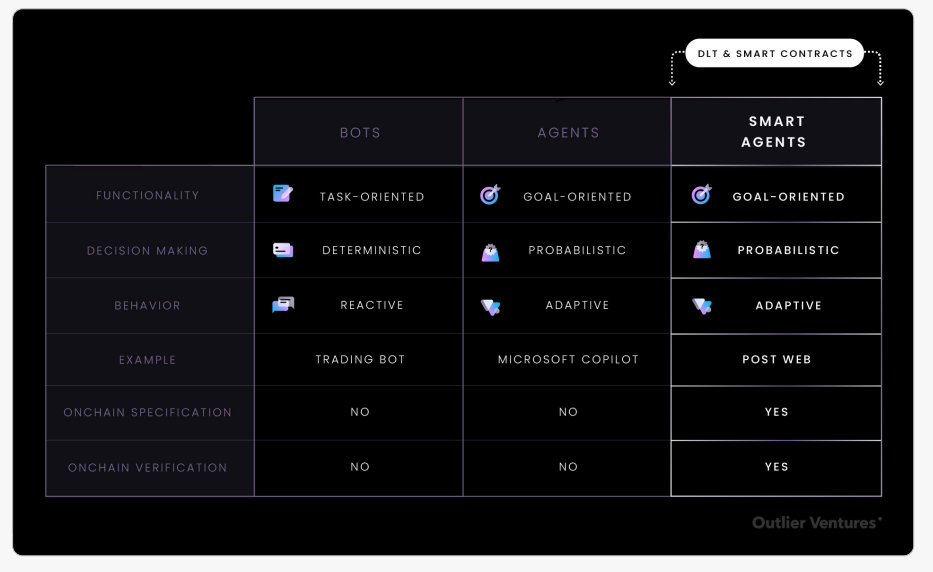
The technological catalyst behind this shift is the evolution of AI agents—systems that bear little resemblance to the rigid, rule-bound bots and scripts that have populated the internet for decades. Traditional bots operate within deterministic parameters, following fixed inputs to produce predetermined outputs. They are task-based, reactive, and completely devoid of learning capabilities. In stark contrast, modern AI agents are probabilistic, goal-oriented systems designed to adapt dynamically to complex virtual environments. They operate proactively, continuously learning from their interactions, optimizing their decision-making processes, and collaborating seamlessly with other autonomous entities.
This behavioral transformation effectively turns digital interactions into living, context-aware processes. Within the framework of the Post Web thesis, a specialized class of these entities known as "Smart Agents" has emerged. Unlike standard large language model chat interfaces that merely consume application programming interfaces (APIs) or data feeds, Smart Agents are capable of directly interacting with distributed ledger technology and smart contracts. They can securely own cryptographic tokens, independently sign transactions, and execute complex legal or financial agreements autonomously. Consequently, Smart Agents function as the primary economic actors of the Post Web, managing digital assets, verifying ownership, enforcing agreements, and navigating digital marketplaces in real time without continuous human intervention.
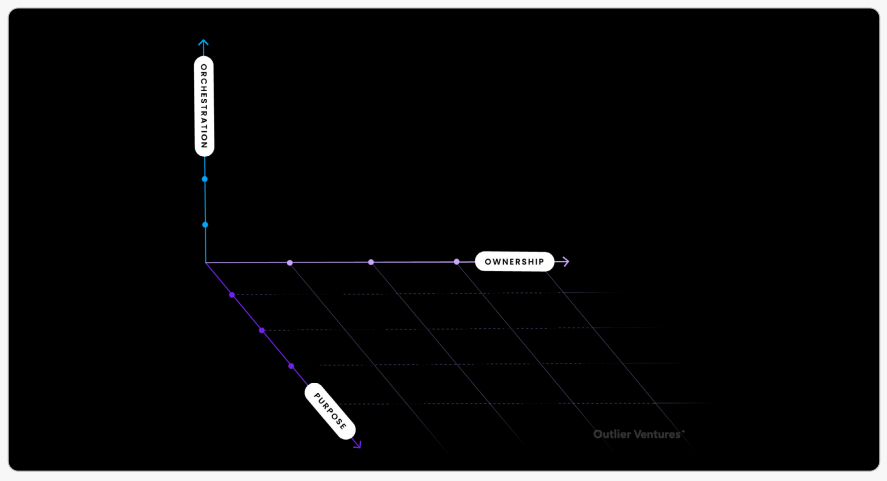
The operational architecture required to support these advanced entities relies heavily on a structured classification system. Industry frameworks categorize Smart Agents along three primary axes: orchestration, ownership, and purpose. Orchestration refers to how agents coordinate their actions, ranging from single-purpose local assistants to complex, multi-agent swarms capable of collective problem-solving. Ownership dictates whether an agent is self-sovereign, corporate-owned, or decentralized through community-governed protocols. Purpose defines the functional domain of the agent, spanning decentralized finance management, automated legal compliance, supply chain logistics coordination, and personal digital concierge services. This diversity of form and function illustrates a future internet that behaves less like a rigid telecommunications network and more like a living, self-optimizing biological ecosystem.
The economic and structural implications of moving from automation to autonomy are far-reaching. In the Web3 era, smart contracts automated trust by executing code without trusted intermediaries, but they still fundamentally relied on human users to supply intention—writing the source code, initiating the transactions, and manually managing the outcomes. The Post Web changes this dynamic entirely by allowing smart agents to interpret human goals expressed in natural language, determine the optimal operational strategy, and negotiate directly with decentralized protocols to achieve desired results. For instance, rather than a human user manually researching cryptocurrency yields, bridging assets across multiple Layer-2 blockchains, and executing swaps, a personal smart agent can interpret a broad financial goal, continuously monitor market conditions, optimize risk parameters, and execute the strategy autonomously while adhering strictly to predefined safety boundaries.
As this agentic infrastructure matures, the question of interoperability and network architecture becomes paramount. Drawing parallels to early internet development and insights from prominent technologists like Chris Dixon, industry observers emphasize that the design of the network ultimately dictates who builds and owns it. Open, permissionless protocol networks built on shared, transparent standards must prevail over closed, rent-extractive corporate silos. Without interoperable standards, the emerging agentic economy risks fracturing into isolated, proprietary gardens that replicate the worst inefficiencies of the legacy web.
To prevent such fragmentation, developers are increasingly focusing on composable communication standards such as Model Context Protocols (MCP), Agent-to-Agent (A2A) frameworks, and Agent Communication Protocols (ACP) pioneered by ecosystems like Virtuals. However, experts stress that these technological standards must be rooted firmly in a Web3 ethos: they must remain open-source, transparent, and anchored to distributed ledgers that hold autonomous agents cryptographically accountable. These open protocols will serve as the connective tissue of the agentic web, ensuring that agents can safely coordinate, transact, and reason across disparate technological boundaries without central points of failure.
The integration of the Agentic Layer into the global technology stack represents a fundamental re-architecting of digital interaction. By shifting the focus from passive user interfaces to active, autonomous participants, the Post Web establishes an intent-based, adaptive, and verifiable digital economy. In this environment, humans, autonomous agents, and decentralized protocols collaborate continuously to optimize efficiency, resource allocation, and value creation. As reinforcement learning models, advanced natural language processors, and decentralized compute infrastructures continue to converge, the internet is evolving into a living network—one where humanity expresses the destination, and autonomous agents handle the journey.

