
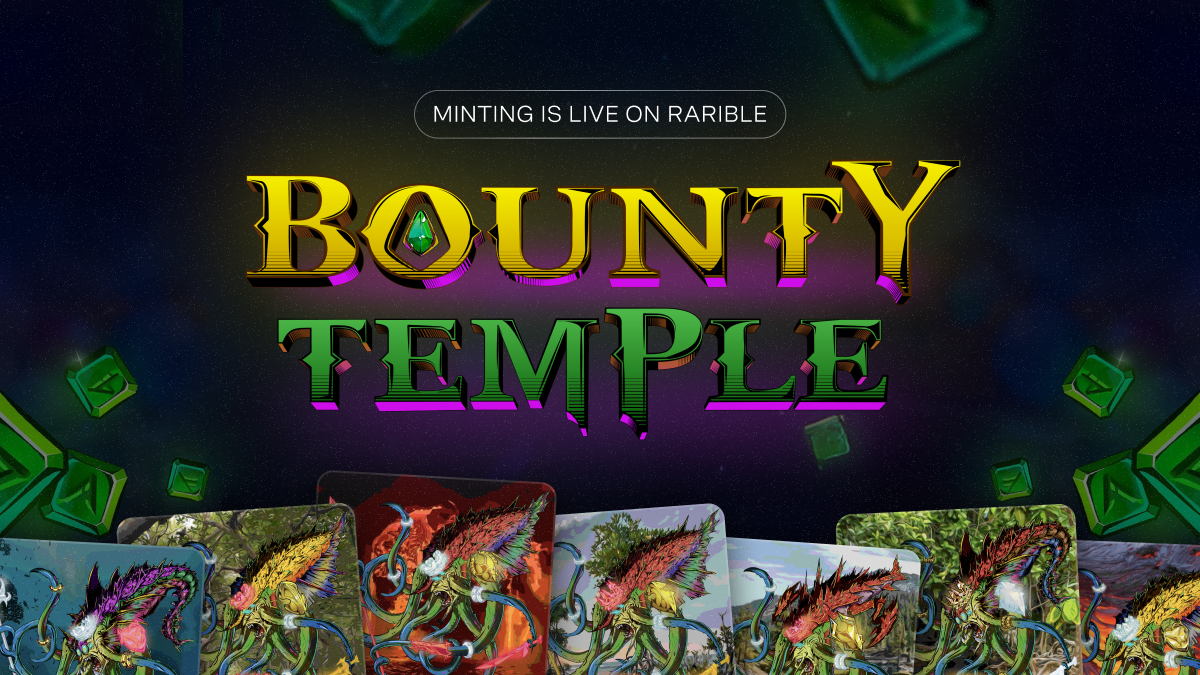
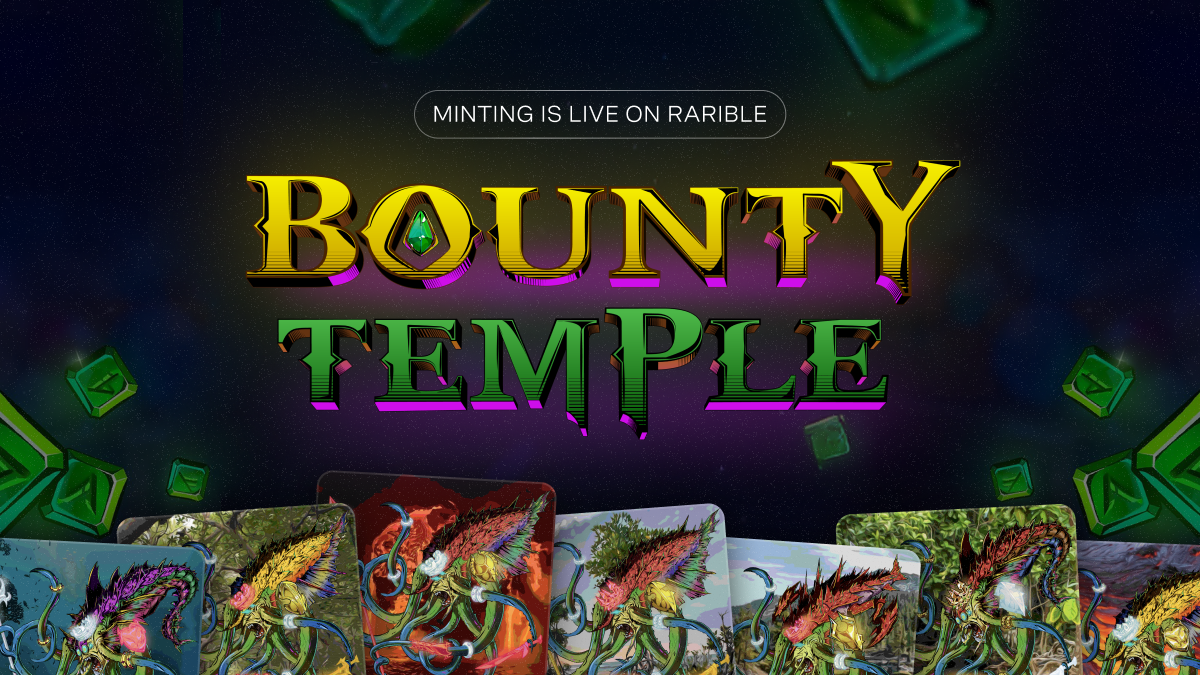
The digital asset landscape is witnessing a strategic pivot in the blockchain gaming sector as Bounty Temple officially launches its K-Runes Box mint on the Rarible marketplace. This release signifies more than a mere collection of non-fungible tokens (NFTs); it represents the operational debut of the Play-to-Earn Evolution (P2EE) model, a framework designed to address the systemic instabilities that led to the decline of the first generation of GameFi projects. By integrating sophisticated economic dampeners and player-centric accessibility features, Bounty Temple aims to transition the industry from a speculative "gold rush" mentality to a sustainable, entertainment-first ecosystem. The K-Runes, minted on the Polygon network, serve as the primary entry point for players into this new environment, offering unique traits and utility that are central to the game’s long-term progression mechanics.
The Context of the GameFi Transition
To understand the significance of Bounty Temple’s approach, it is necessary to examine the historical trajectory of the Web3 gaming sector. Between 2020 and 2022, the "Play-to-Earn" (P2E) model experienced a meteoric rise, characterized by projects like Axie Infinity. These early iterations proved that blockchain technology could facilitate true ownership of in-game assets and provide income opportunities for players. However, the model relied heavily on a continuous influx of new capital to sustain reward payouts. When player growth plateaued, the hyper-inflationary nature of the native tokens led to a rapid devaluation of assets, causing massive player drop-offs and a loss of confidence in the sector.
The industry has since entered a period of "GameFi 2.0" or "Play-and-Earn," where the focus has shifted toward high-quality gameplay and sustainable tokenomics. Bounty Temple’s P2EE model is the latest iteration of this evolution. It acknowledges that for a game to survive, its economy must be able to withstand market volatility and avoid the "death spiral" common in previous models. The launch of the K-Runes Box on Rarible is the first practical application of these theoretical safeguards, providing a case study for whether algorithmic economic management can foster a stable gaming environment.
Technical Specifications of the K-Runes Mint
The K-Runes Box is currently live as a "blind mint" on Rarible.com, utilizing the Polygon blockchain to ensure low transaction costs and high-speed execution. A blind mint implies that the specific attributes and rarity of the NFT are not revealed until after the purchase is finalized, a mechanic designed to ensure a fair distribution of assets across the community.
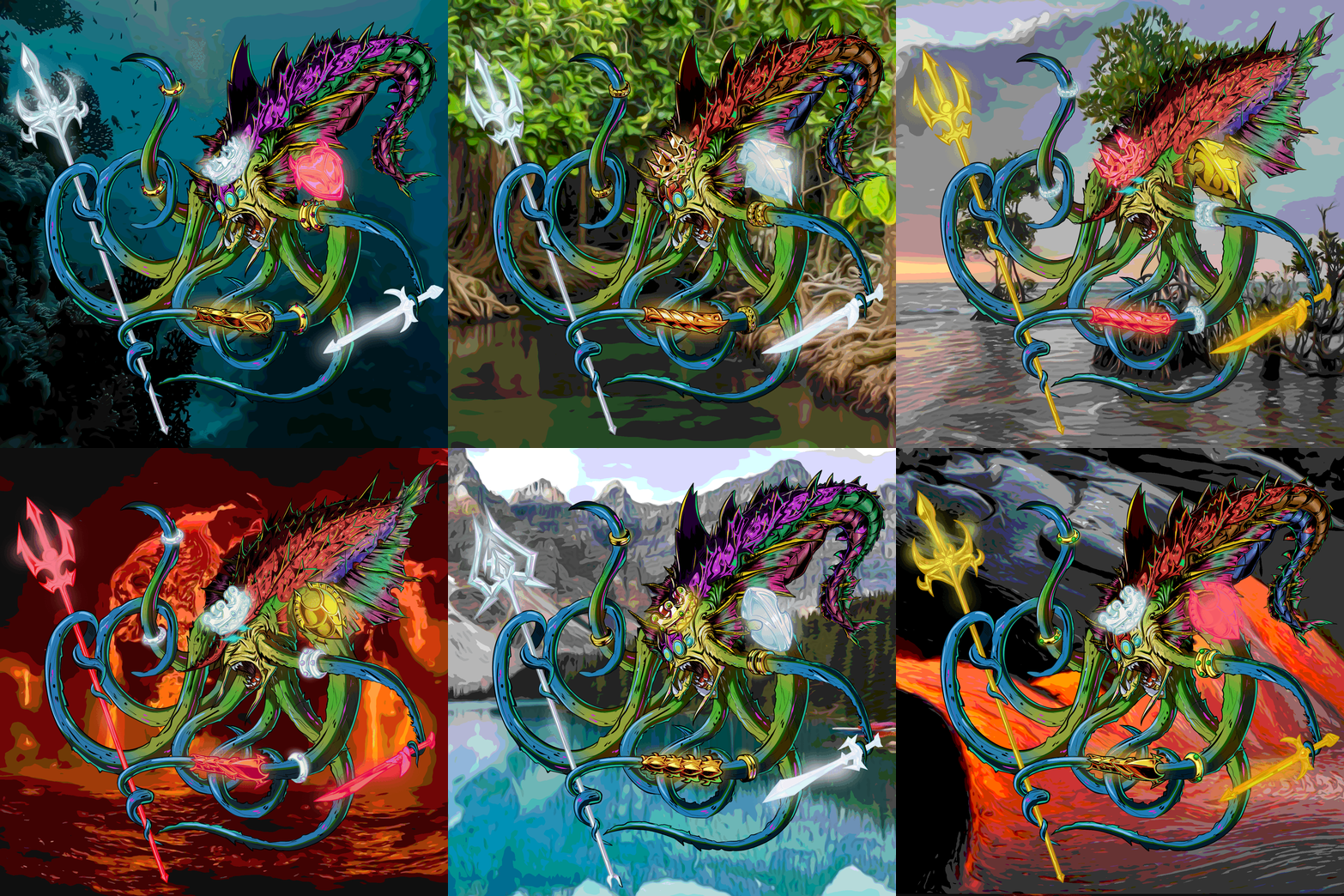
Each K-Rune functions as a digital collectible with functional utility within the Bounty Temple world. These assets unlock specific character features and gameplay pathways, acting as a "key" to the broader ecosystem. By launching on Rarible, one of the industry’s most established NFT marketplaces, Bounty Temple leverages a platform known for its commitment to creator royalties and decentralized infrastructure. This partnership ensures that the secondary market for K-Runes remains transparent and accessible to a global audience.
Architectural Innovations: The P2EE Framework
At the core of Bounty Temple’s value proposition are two distinct mechanisms designed to solve the longevity issues of Web3 gaming: the Weather System and the Barrier Effect.
The Weather System: Algorithmic Economic Stability
The most significant challenge for blockchain games is the management of token supply. In traditional P2E games, rewards were often static, leading to oversupply during periods of high activity. Bounty Temple’s "Weather System" functions as an automated central bank for the game’s economy. It monitors the total circulation of assets and tokens, dynamically adjusting the difficulty of rewards and the rate of production based on real-time data.

If the ecosystem detects an inflationary surge, the "weather" shifts to a more challenging state, slowing down the creation of new assets to preserve the value of existing ones. Conversely, during periods of low activity or deflation, the system can provide incentives to stimulate the economy. This algorithmic approach removes the need for manual developer intervention and provides a predictable, data-driven environment for players and investors alike.
The Barrier Effect: Protecting the New Entrant
Another systemic flaw in early GameFi was the "first-mover advantage," where early adopters accumulated so much power and wealth that new players found it impossible to compete or earn rewards. Bounty Temple addresses this through the "Barrier Effect," which implements a 75-day grace period for new participants.
During this window, new players are shielded from the competitive pressures of veteran users, allowing them to explore the game mechanics, upgrade their K-Runes, and establish a foothold in the economy without being outpaced by "whales" or early-stage speculators. This mechanism is intended to create a "fair launch" experience that remains accessible months or even years after the initial minting event, solving the onboarding friction that has plagued the industry.
Gameplay Mechanics and User Experience
While the economic backend is complex, the user-facing gameplay is designed for accessibility and efficiency. Bounty Temple focuses on a "micro-gaming" philosophy, where sessions are designed to last approximately 15 minutes. This strategy targets the mainstream mobile gaming demographic, which often seeks engaging experiences that can be integrated into daily routines rather than requiring hours of dedicated "grinding."
The gameplay involves dungeon exploration, strategic decision-making, and character progression. By utilizing the K-Runes obtained during the Rarible mint, players can engage in crafting and forging systems. These systems are designed to be "sink" mechanisms, where players spend tokens and assets to upgrade their characters, thereby removing excess supply from the market and increasing the utility of the underlying NFTs.
Chronology of Development and Market Entry
The launch of the K-Runes Box follows a multi-year development cycle. The project emerged from the post-2022 market correction, with the founding team specifically analyzing the failures of the 2021 bull market.
- Phase 1 (Conceptualization): Development of the P2EE whitepaper and the mathematical modeling of the Weather System.
- Phase 2 (Technical Build): Integration with the Polygon network and the development of the smart contracts governing the Barrier Effect.
- Phase 3 (Community Building): The project established a presence on social platforms, focusing on "education-first" marketing to explain the P2EE model to a skeptical post-P2E audience.
- Phase 4 (Current): The live minting of K-Runes on Rarible. This phase marks the transition from a closed beta environment to a public-facing economy.
- Future Outlook: Following the completion of the K-Rune mint, the roadmap includes periodic "content drops," including mini-games and community-driven events, intended to maintain engagement without relying on artificial FOMO (fear of missing out).
Industry Implications and Analysis
The success or failure of Bounty Temple will likely serve as a bellwether for the future of the GameFi sector. Industry analysts suggest that the move toward "Evolutionary" models is a necessary step for blockchain technology to gain mainstream gaming acceptance.
If the Weather System successfully stabilizes the in-game economy, it could provide a blueprint for other developers looking to integrate DeFi (Decentralized Finance) elements into gaming without risking a total economic collapse. Furthermore, the partnership with Rarible highlights a trend toward cross-platform collaboration, where game developers focus on the experience while leveraging specialized marketplaces for liquidity and asset distribution.
From a broader perspective, the use of the Polygon network for this launch underscores the ongoing dominance of Layer-2 solutions in the gaming space. The requirement for low latency and near-zero gas fees makes Ethereum mainnet impractical for high-frequency gaming interactions. By choosing Polygon, Bounty Temple ensures that the "cost to play" remains low, aligning with its goal of global accessibility.
Official Stance and Community Reaction
While official statements from the development team emphasize "long-term sustainability" and "player-first" design, the community reaction has been one of cautious optimism. Early participants in the Rarible mint have noted that the 15-minute gameplay loop is a significant departure from the labor-intensive models of the past.
Market observers have pointed out that by launching during a period of market consolidation, Bounty Temple is avoiding the "hype bubbles" that characterized earlier projects. This allows for a more organic growth trajectory, where the value of the K-Runes is derived from their utility within a functioning game rather than purely on secondary market speculation.
Conclusion
The launch of Bounty Temple’s K-Runes Box on Rarible represents a critical moment in the maturation of Web3 gaming. By replacing the fragile P2E model with the P2EE framework, the project is attempting to solve the fundamental contradictions of blockchain economies. Through the implementation of the Weather System’s algorithmic stability and the Barrier Effect’s newcomer protections, Bounty Temple is positioning itself as a leader in the next generation of digital entertainment. As the mint continues on the Polygon network, the industry will be watching closely to see if this "evolutionary" approach can finally deliver on the long-held promise of a sustainable, player-owned gaming future.

