
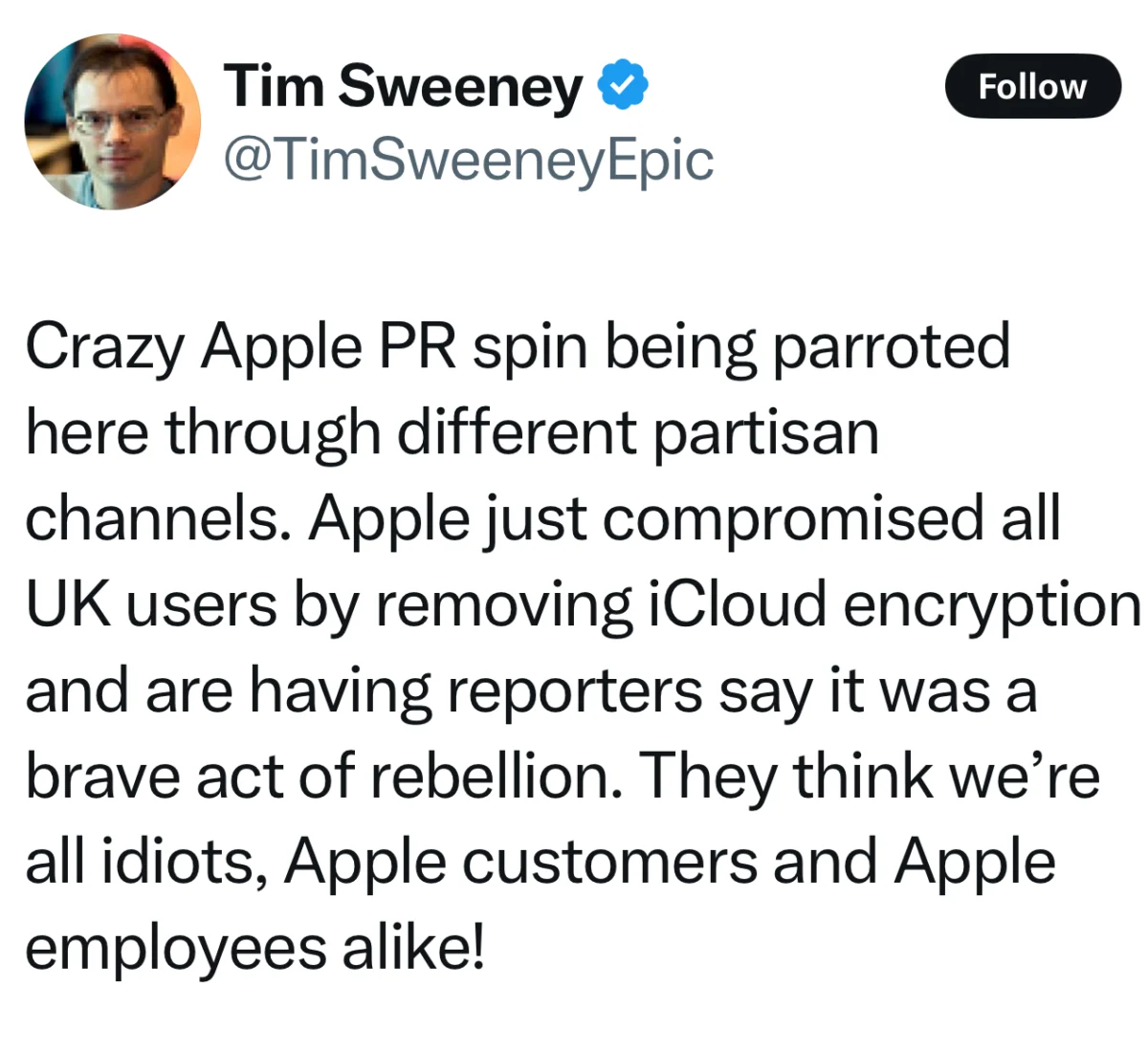
The United Kingdom government issued a secret order to Apple Inc. last month, compelling the technology giant to implement a "backdoor" into its end-to-end encrypted iCloud Backup feature. This unprecedented directive, revealed by The Washington Post, demands a blanket capability for the government to access fully encrypted material, a move with no known precedent in major democracies. In response to this pressure, Apple confirmed on Friday that it would be disabling its Advanced Data Protection for iCloud feature, which provides end-to-end encryption for iCloud backups, for all users in the UK, effective February 21st.
This development represents a significant potential defeat for tech companies in their ongoing efforts to resist being compelled to act as tools for government surveillance against their users. The implications of this order extend far beyond the UK, raising profound questions about the future of digital privacy and security on a global scale.
The Genesis of the UK’s Demand: The Investigatory Powers Act
The UK government’s directive to Apple appears to stem from the framework established by the Investigatory Powers Act of 2016, often referred to as the "Snooper’s Charter." Enacted in 2016, this legislation granted broad powers to intelligence and law enforcement agencies, including the ability to issue "Technical Capability Notices" (TCNs). These notices, which can be kept secret from the public and even from the companies receiving them, empower the government to compel telecommunications operators and internet service providers to make specific changes to their systems.

Critics of the Act, even at its inception, voiced concerns that it could be used to secretly undermine security systems, potentially rendering them more vulnerable to cyberattacks. The TCN mechanism, in particular, allows the government to force a provider like Apple to alter the operation of its systems. In the context of end-to-end encryption, this could mean requiring Apple to generate and retain copies of user encryption keys, thereby granting the government direct access to data that would otherwise be inaccessible.
A significant point of contention highlighted by Apple’s legal counsel in a 2024 filing to Parliament is the Act’s apparent lack of clear distinction between UK domestic customers and international users. This ambiguity raises the alarming possibility that a TCN issued to Apple could effectively grant the UK government the authority to dictate the level of digital security available to users worldwide, irrespective of their location. Such a scenario could potentially expose vast quantities of data to state-sponsored malicious actors, as witnessed in recent high-profile breaches, such as the compromise of the US telecom industry. Furthermore, the secrecy surrounding TCNs could force companies into a position of deception, assuring users of their data security while secretly operating under compromised protocols.
Apple’s Stance on Encryption: A History of Resistance and Compromise
Encryption is a cornerstone of modern digital security, a process that transforms data into an unreadable format, accessible only with a specific key. End-to-end encryption (E2EE) takes this a step further by ensuring that only the communicating users possess the keys, making data impervious to interception by third parties, including service providers and governments. While E2EE offers robust protection against data theft, cyberattacks, and sophisticated state-sponsored adversaries, it also presents a challenge for law enforcement agencies seeking lawful access to digital evidence.
Apple has historically navigated this complex terrain by largely favoring the implementation of strong encryption across its services. This commitment has been demonstrated through various initiatives, including the encryption of iMessage and FaceTime by default, and the gradual rollout of Advanced Data Protection for iCloud, which extends E2EE to a broader range of user data stored in the cloud. These moves have not been without controversy, often drawing criticism from law enforcement agencies and government bodies concerned about hindering investigations.

Perhaps the most prominent public confrontation occurred in 2016 during the Apple v. FBI encryption dispute. In this landmark case, Apple vociferously resisted a US government demand to create a new software tool that would bypass the security features of an iPhone used by an alleged terrorist. Apple argued that complying with such a request would necessitate weakening encryption across all its devices, thereby creating a universal vulnerability. CEO Tim Cook publicly defended the company’s position in a widely publicized letter, underscoring the potential ramifications of such a backdoor.
However, Apple’s record is not without its complexities. In 2021, the company announced plans to implement client-side scanning of iCloud Photos to detect child sexual abuse material (CSAM). This proposal, which would have involved scanning user data before it was end-to-end encrypted, drew significant backlash from privacy advocates and technical experts who identified potential flaws and the risk of broader government-mandated data scanning. Following intense scrutiny and criticism, the plan was initially paused and subsequently abandoned in 2022.
The UK’s Specific Demand: A Blanket Capability
The Washington Post’s initial report detailed the specific nature of the UK government’s demand: a "blanket capability to view fully encrypted material, not merely assistance in cracking a specific account." This distinction is critical. It implies a request for a systemic change that would grant the government the ability to access encrypted data across the board, rather than a targeted request for access to a particular user’s account. Such a broad demand, if implemented, would fundamentally alter the security posture of Apple’s services for all users within the UK’s purview.
Apple’s Response: Disabling Advanced Data Protection in the UK
Faced with the secret order and the potential ramifications of non-compliance, Apple has opted to disable its Advanced Data Protection for iCloud feature for UK users. This decision, confirmed on Friday, means that users in the United Kingdom will no longer be able to benefit from end-to-end encrypted backups of their iCloud data. The feature will cease to be available for new sign-ups in the UK starting February 21st. The precise handling of existing users’ data remains unclear, but it is anticipated that they may be prompted to downgrade to unencrypted backups or risk losing their data.

This action represents a significant departure from Apple’s previous stances on encryption and suggests a strategic move to mitigate the impact of the UK government’s demand. By disabling the feature, Apple effectively renders the UK government’s request for a backdoor into end-to-end encrypted iCloud backups moot for UK users, as the service itself will no longer offer that level of protection.
Global Implications and Future Uncertainty
The situation raises critical questions about the global reach of national security laws and their impact on international technology companies and user privacy. If the UK’s TCN framework can indeed be interpreted to have global implications, it sets a dangerous precedent. It suggests that a single nation could potentially dictate the security standards for digital services used by billions worldwide, irrespective of user location or national sovereignty.
The decision to disable Advanced Data Protection in the UK has predictably drawn criticism from privacy advocates and some users who view it as a capitulation to government pressure. However, Apple’s apparent strategy appears to be one of containment – limiting the impact of the demand to a specific jurisdiction rather than compromising its encryption standards globally.
The future trajectory of this situation remains uncertain. The UK government may choose to relent on its demand, potentially leading to the restoration of Advanced Data Protection in the UK. Alternatively, the government could escalate its efforts, seeking further legal avenues or broader legislative changes. The global community of technology users and policymakers will be closely watching to see how this unfolds, as the case has significant implications for the balance between national security and individual digital privacy in an increasingly interconnected world. The debate over encryption, government access, and user trust is far from over, and this recent development in the UK marks a pivotal moment in that ongoing discussion.

