
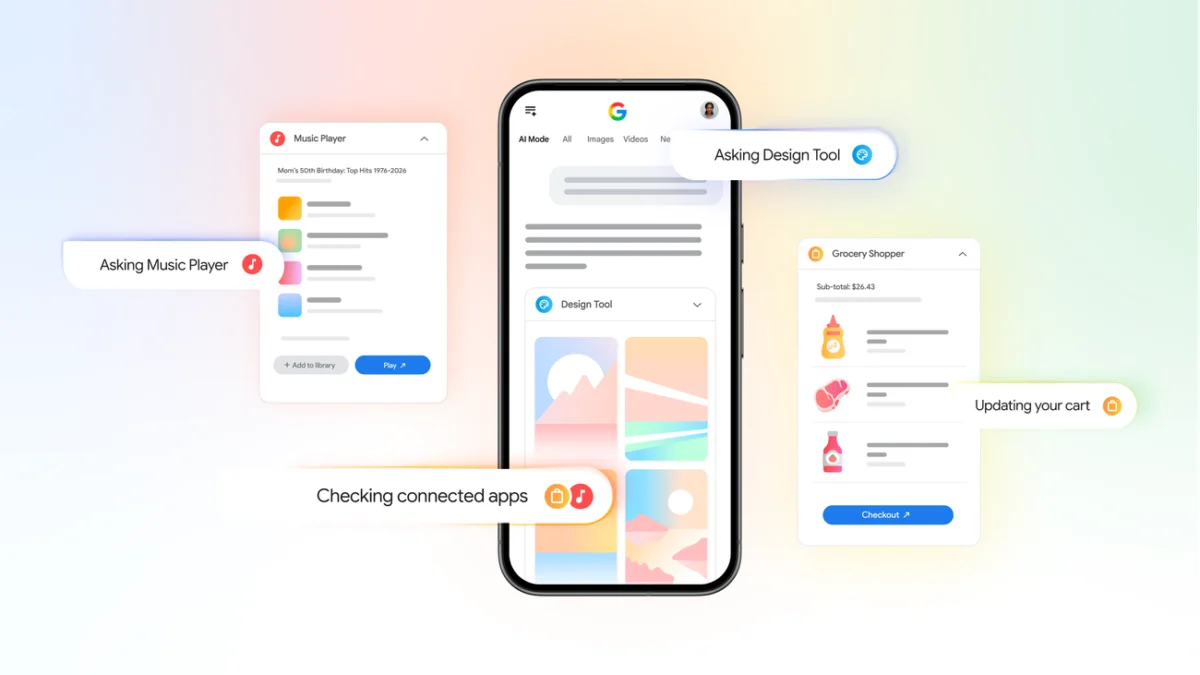
Google has officially announced a significant evolution in its search capabilities, enabling users to securely link and interact with third-party services directly within the Search AI Mode. This development, spearheaded by Senior Product Manager Chips Mistry and Engineering Lead Biharck Araújo, marks a pivotal shift for the world’s most used search engine, transitioning it from a platform primarily focused on information retrieval to one capable of executing complex tasks through integrated "Connected Apps." Starting this week, the rollout begins for users in the United States, offering a streamlined interface where actions—such as grocery shopping, creative design, and media curation—can be performed without leaving the Google ecosystem.
The integration represents a deepening of Google’s "Personal Intelligence" strategy, which seeks to provide tailored responses and actionable results based on a user’s specific digital ecosystem. By allowing users to connect services like Instacart, Canva, and YouTube Music, Google is positioning its AI Mode as a central command hub for digital productivity. This move follows the successful integration of similar features within the Gemini app, signaling a unified approach across Google’s various artificial intelligence touchpoints.
The Evolution of Search: From Queries to Actions
For decades, the standard search experience involved entering a query and receiving a list of blue links that required the user to navigate to external websites to complete a task. With the advent of the Search Generative Experience (SGE) and the subsequent introduction of AI Mode, Google began providing synthesized answers. However, the introduction of Connected Apps represents the "action phase" of this evolution.
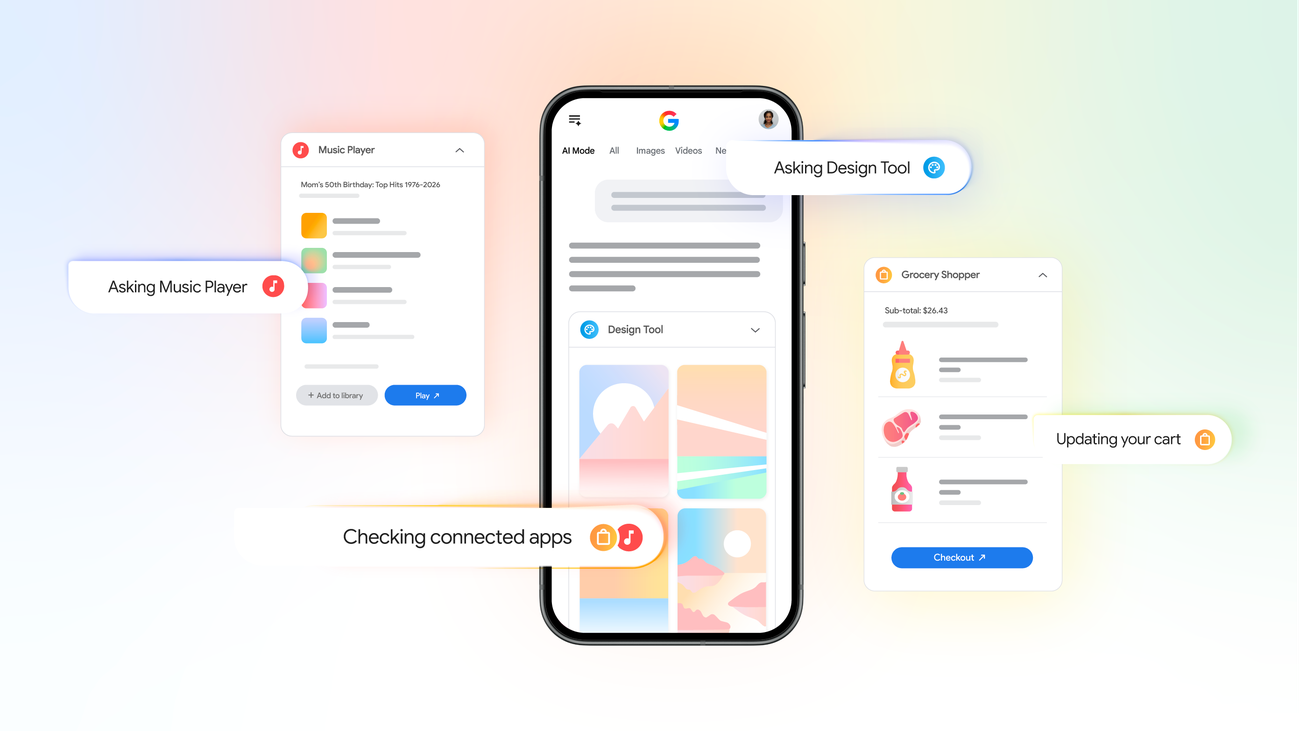
In the practical application of these new features, Google highlights how a user planning a social event, such as a barbecue, can use AI Mode to generate a grocery list. Under the new system, if the user has connected their Instacart account, the AI can automatically populate an Instacart shopping cart with the necessary ingredients. The user can then finalize the purchase and arrange delivery with only a few additional taps on the Instacart app or website. This reduces the friction between the inspiration phase of a search and the logistical completion of the task.
Similarly, the integration with Canva targets the creative professional and the casual user alike. When a user searches for design concepts—for instance, "create a flyer for a local bake sale"—AI Mode can now surface specific Canva templates. This allows for a seamless transition from the conceptualization of a project in Search to the execution of the design in Canva’s specialized environment.
Strengthening the Ecosystem: YouTube Music and Beyond
The entertainment sector is also a primary focus of this initial rollout. By connecting YouTube Music to Search’s AI Mode, users can curate soundtracks based on specific moods, themes, or event descriptions. An AI-generated playlist can be instantly saved to a user’s library and played immediately. This integration reinforces the synergy between Google’s search dominance and its vast media holdings, providing a competitive edge in the music streaming market where personalization is a key differentiator.
According to the announcement, these initial partners—Instacart, Canva, and YouTube Music—are just the beginning. Google is actively collaborating with a diverse range of developers and service providers to expand the library of Connected Apps. The goal is to create a comprehensive web of services that allows AI Mode to handle virtually any intent, from travel booking to financial management, all within a secure and unified interface.
Technical Infrastructure and Security Protocols
A critical component of the Connected Apps rollout is the emphasis on security and user consent. Chips Mistry and Biharck Araújo emphasized that the linking of services is "secure" and remains under the user’s control. In an era where data privacy is a paramount concern for consumers and regulators alike, Google’s implementation requires explicit user authorization to bridge the data between Search and third-party platforms.
The technical architecture behind these integrations relies on advanced API (Application Programming Interface) handshakes that allow the AI to understand the structure of the third-party app’s data without compromising the user’s broader account security. When a user interacts with a connected app in AI Mode, the AI acts as a sophisticated intermediary, translating natural language requests into structured commands that the third-party service can execute.
Strategic Context: The Competitive AI Landscape
The decision to integrate third-party apps directly into Search is widely viewed by industry analysts as a strategic response to the rising competition in the AI sector. Companies like OpenAI, with its rumored "SearchGPT," and Perplexity AI have been challenging Google’s dominance by offering conversational interfaces that provide direct answers. By adding a layer of "actionability" through Connected Apps, Google is leveraging its massive infrastructure and existing developer relationships to offer a utility that newer, standalone AI models may struggle to replicate at scale.
Furthermore, this move addresses the "zero-click" search trend. While critics have argued that AI-generated summaries may reduce traffic to external websites, the Connected Apps model creates a new type of referral traffic. Instead of sending a user to a homepage, Google is sending a "ready-to-act" user directly into a specific checkout or design flow within a partner’s app. This can potentially lead to higher conversion rates for partners like Instacart and Canva, creating a mutually beneficial ecosystem.
Supporting Data and Market Implications
Market data suggests that the demand for AI-driven personal assistants is at an all-time high. A recent report by Gartner predicted that by 2025, 30% of outbound marketing messages from large organizations will be synthetically generated, and a significant portion of consumer commerce will be facilitated by "AI Agents." Google’s transition toward an agentic search model aligns with these forecasts.
Furthermore, user behavior studies indicate that younger demographics, particularly Gen Z, are increasingly using social media platforms and specialized AI tools for discovery rather than traditional search engines. By making Search more interactive and utility-focused, Google aims to retain its relevance among these digital-native cohorts who prioritize efficiency and integrated experiences over traditional browsing.
Timeline of the Rollout and Future Prospects
The rollout of Connected Apps in Search is being handled with a phased approach:
- Phase 1 (Current): Initial launch in the United States for users opting into AI Mode. Integration includes Instacart, Canva, and YouTube Music.
- Phase 2 (Upcoming): Expansion of the partner network to include travel, hospitality, and productivity tools.
- Phase 3 (Long-term): Global rollout across multiple languages and regions, with deeper integration into the Android and Chrome ecosystems.
Google has invited users to visit the AI Mode in Search to experiment with the new features and has provided a dedicated support page to guide users through the process of connecting and disconnecting their apps.
Broader Impact on the Digital Economy
The implications of Google’s Connected Apps extend beyond simple user convenience. For the broader digital economy, this represents a shift in how "intent" is captured and monetized. In the traditional model, Google monetized intent through advertising (AdWords). In the new model, Google becomes an essential layer of the transaction itself.
While Google has not explicitly detailed new monetization strategies for Connected Apps, the potential for affiliate-style revenue sharing or enhanced premium service tiers remains a possibility. For developers, the incentive to become a "Connected App" is massive: it offers a direct pipeline to users at the exact moment they express a need for a specific service.
However, this evolution also raises questions for smaller publishers and independent websites. If users can complete tasks through a handful of major "Connected" partners, smaller players may find it increasingly difficult to capture search traffic. This could lead to a more consolidated web where a few dominant platforms provide the majority of services through the Google AI interface.
Conclusion: The Dawn of the AI-Agent Search
The introduction of Connected Apps in Google Search signifies the end of the search engine as a mere directory of the internet. It is the beginning of Search as a proactive agent. By bridging the gap between "knowing" and "doing," Google is attempting to redefine the utility of the internet for the AI era.
As Chips Mistry and Biharck Araújo noted in their announcement, the goal is to "streamline your day." Whether it is through the effortless creation of a shopping cart or the instant generation of a design project, the integration of third-party apps into Search’s AI Mode is a bold step toward a future where the boundary between the search engine and the software we use every day ceases to exist. As more partners join the platform and the AI becomes more adept at managing complex multi-app workflows, the way users interact with the digital world is poised for a fundamental transformation.

