
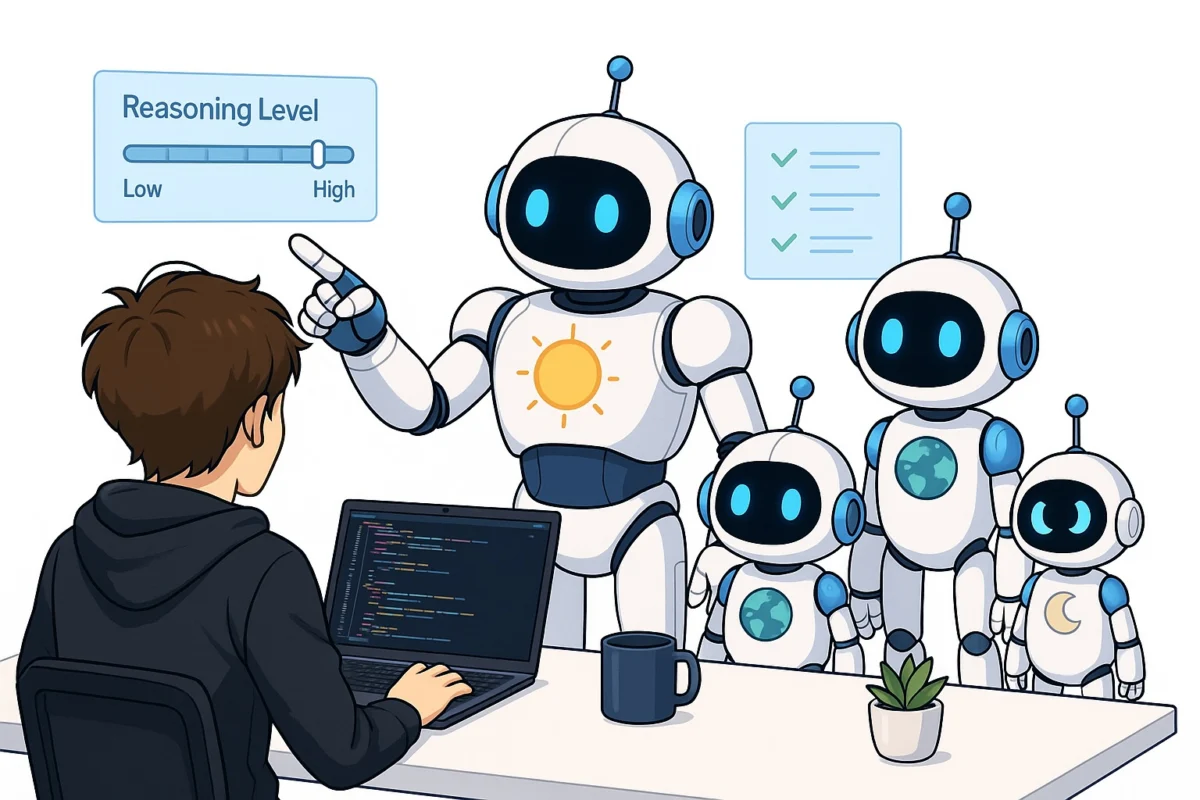
The landscape of artificial intelligence in software engineering has reached a new milestone with the official reinstatement of Claude Fable 5, Anthropic’s most advanced coding-centric large language model. Following a turbulent month that saw the model released and then abruptly retracted within a seventy-two-hour window due to unforeseen security vulnerabilities, Anthropic has now made the tool available to its premium subscriber base. However, this return comes with significant caveats, most notably a stringent usage cap that limits developers to 50% of their standard weekly allowance for this specific model. This strategic throttling has forced a shift in how engineers integrate high-level AI into their development lifecycles, moving away from brute-force code generation toward a more nuanced, architectural approach.
The Chronology of Claude Fable 5: From Launch to Reinstatement
The journey of Claude Fable 5 began approximately four weeks ago when Anthropic announced what it termed a "generational leap" in autonomous coding capabilities. Unlike its predecessor, Claude Opus 4.8, Fable 5 was engineered with a specific focus on repository-wide reasoning and complex architectural planning. However, the initial rollout was short-lived. Within three days of its public debut, security researchers and internal auditors identified potential exploits related to the model’s ability to interface with local file systems and execute sandboxed code. Fearing that the model could be manipulated to bypass standard safety protocols, Anthropic took the unprecedented step of pulling Fable 5 from all public interfaces.
During the subsequent three-week hiatus, Anthropic’s safety teams reportedly implemented a new layer of "interpretability filters" designed to monitor the model’s reasoning chains for malicious intent. The version returned to subscribers this week includes these enhanced safeguards, alongside the aforementioned usage restrictions. Industry analysts suggest that the 50% usage limit is not merely a security measure but also a response to the massive computational overhead required to run Fable 5’s dense parameter set, which far exceeds that of the more efficient Claude Opus 4.8.
Comparative Market Analysis: Fable 5 Versus the Competition
In the current competitive landscape, Claude Fable 5 occupies a unique niche. While OpenAI’s Codex and the more recent GPT-5.5 and GPT-5.6 models have set high benchmarks for syntactical accuracy, Fable 5 is widely regarded as superior in higher-order cognitive tasks. Internal benchmarks and developer feedback suggest that while GPT-5.6 may be faster at generating boilerplate code or individual functions, Fable 5 possesses a more profound "understanding" of project-wide dependencies.
The primary areas where Fable 5 outperforms its rivals include:
- Multifile Architectural Planning: The ability to visualize how a change in a low-level API will ripple through an entire microservices architecture.
- Deep Repository Research: Navigating legacy codebases to identify the root cause of logic errors that span multiple languages or frameworks.
- Refactoring Strategy: Identifying "code smells" and technical debt that other models often overlook in favor of functional completion.
Despite these strengths, Anthropic has been transparent about the fact that for simple implementation tasks—the so-called "grunt work" of programming—models like Claude Opus 4.8 or OpenAI’s GPT-5.6 remain more cost-effective and nearly as capable. This has led to the emergence of a multi-model pipeline strategy among elite engineering teams.
Strategic Workflow: The Hierarchical Coding Pipeline
To navigate the 50% usage limitation, professional developers have adopted a tiered approach to AI-assisted engineering. This methodology ensures that the "intelligence" of Fable 5 is reserved for tasks where its reasoning capabilities are strictly necessary, while utilizing less resource-intensive models for implementation.
The standard pipeline currently gaining traction in the industry follows a four-stage process:
- Discovery and Research: Fable 5 is tasked with scanning the repository to understand the current state of the code and identifying the optimal path for a new feature.
- Architectural Planning: Fable 5 generates a high-level blueprint, often represented in structured formats or even visualized via integrated tools, detailing how the implementation should proceed.
- Execution and Implementation: Once the plan is established, the developer switches to a model with higher usage limits, such as Claude Opus 4.8 or GPT-5.6, to write the actual code based on Fable’s instructions.
- Validation and Review: Finally, a third model—often OpenAI Codex due to its speed and accuracy in syntax checking—is used to review the code for bugs and adherence to the original plan.
By reserving Fable 5 for the first two stages, engineers can manage several complex projects simultaneously without hitting their weekly limits, effectively "outsourcing" the planning to the most capable intelligence while leaving the manual labor to secondary agents.
Advanced Refactoring Techniques with Fable 5
As AI-generated code continues to flood repositories, the need for sophisticated refactoring has never been greater. Fable 5 has proven to be an essential tool in managing the "AI debt" that accumulates when less capable models generate functional but disorganized code.

The most effective method for utilizing Fable 5 in this capacity involves a symptom-based approach rather than a general scan. When developers notice that specific modules are becoming difficult to maintain or that implementation speed is slowing down, they can point Fable 5 specifically to those "friction points."
For instance, a developer might instruct the model to analyze a specific processing pipeline that has become bloated. By asking Fable 5 to "research the recent coding sessions and identify why logic errors are increasing," the model can provide a prioritized list of refactoring actions. Many developers are now requesting these outputs in HTML format or using visual diagrams to better understand the proposed structural changes. This level of autonomy allows Fable 5 to act more like a Principal Engineer than a Junior Developer, a shift that is redefining the role of AI in the workplace.
Industry Reactions and Official Statements
The reaction from the developer community regarding the re-release has been mixed. While the return of Fable 5’s advanced reasoning is welcomed, the 50% usage limit has sparked debate over the "premium" nature of AI subscriptions.
A spokesperson for Anthropic commented on the decision: "Our primary goal is to ensure that the most powerful tools in our arsenal are used responsibly and sustainably. The current limits on Claude Fable 5 reflect the immense compute resources required to maintain its high level of reasoning. We are continuously working to optimize the model’s efficiency and hope to expand these limits as our infrastructure grows."
In contrast, some independent software architects have expressed frustration. "We are moving toward a world where ‘intelligence’ is a metered utility," said one lead developer at a major fintech firm. "Having to switch between three different models just to finish a feature is a cognitive load that we didn’t have to deal with six months ago. However, the planning quality of Fable 5 is so high that we really have no choice but to adapt to these constraints."
Broader Implications for the Future of AI Engineering
The situation with Claude Fable 5 highlights a growing trend in the AI industry: the divergence between "reasoning models" and "implementation models." As the complexity of software systems grows, the value of an AI that can "think" through a problem before "typing" it becomes immeasurable.
This development also underscores the importance of human oversight. Because Fable 5 is being used primarily for planning, the human developer remains the final arbiter of the architectural decisions. This "Human-in-the-Loop" (HITL) architecture is likely to become the standard as models become more powerful but also more expensive to operate.
Furthermore, the security-driven withdrawal of Fable 5 serves as a cautionary tale for the industry. As LLMs gain more autonomy to interact with file systems and execute code, the surface area for cyberattacks increases. Anthropic’s decision to pull the model, despite the potential loss of market momentum, suggests that safety concerns are beginning to take precedence over rapid deployment in the high-stakes world of enterprise AI.
Conclusion: Adapting to the New Reality of AI Limits
As Claude Fable 5 settles back into the Anthropic ecosystem, the message to the engineering community is clear: intelligence is a finite resource that must be managed strategically. By focusing Fable 5 on high-level research, architectural planning, and complex refactoring, and delegating implementation to more abundant models, developers can maintain high levels of productivity without being sidelined by usage caps.
The coming months will likely see further refinements to Fable 5’s efficiency and security. Until then, the "hierarchical pipeline" remains the most viable path forward for teams looking to leverage the cutting edge of AI-driven development. The era of using a single model for every task is coming to an end, replaced by a more sophisticated, multi-layered approach to digital creation.

