
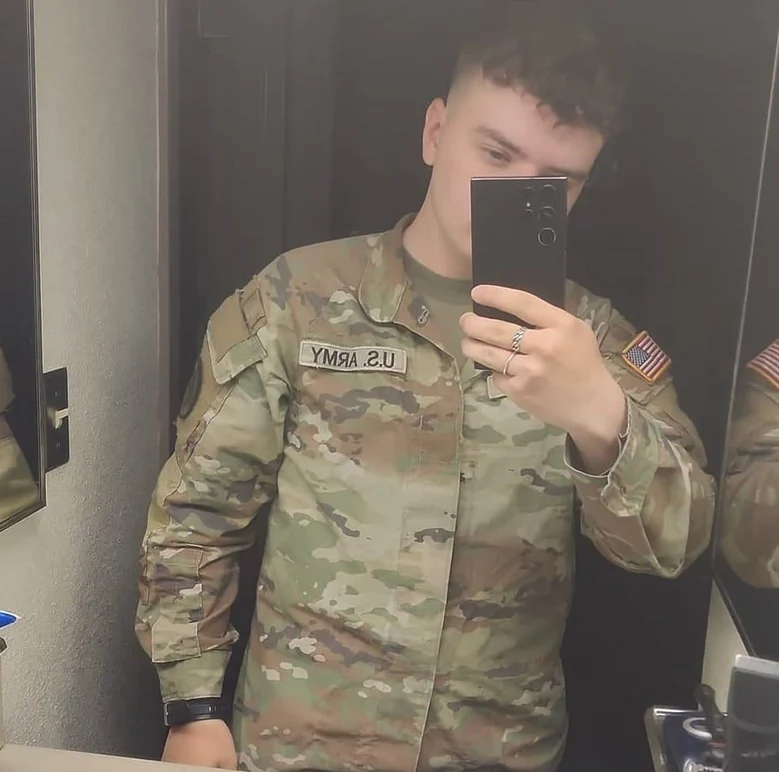
A federal judge in Seattle handed down a 70-month prison sentence to a 22-year-old U.S. Army soldier who admitted to orchestrating a sophisticated cybercriminal campaign that infiltrated multiple telecommunications giants. Operating under the dark-web persona "Kiberphant0m," the soldier exfiltrated sensitive call and text metadata belonging to more than 100 million AT&T customers. Beyond the prison term, the defendant was ordered to pay nearly $300,000 in restitution to his victims, concluding a high-profile prosecution that exposed critical vulnerabilities in corporate cloud storage security, insider threats within the military, and the evolving tactics of international extortion syndicates.
The sentencing marks a critical milestone in a multi-agency investigation that spanned continents, bringing to light how basic credential management failures in cloud environments can be exploited by rogue insiders with active-duty security clearances. While the financial payoff for the perpetrators was remarkably low compared to the staggering scale of the data breached, the disruption and reputational damage inflicted upon major international firms and national security apparatuses have prompted profound shifts in cybersecurity postures across both the private and public sectors.
Anatomy of a Breach: The Snowflake and Telecom Exploits
The campaign orchestrated by Kiberphant0m relied heavily on compromised credentials and inadequate security configurations within third-party cloud data storage providers, most notably Snowflake. During 2024, the cybercriminal syndicate identified and exploited accounts belonging to major corporate clients that lacked multi-factor authentication (MFA) enforcement. By leveraging these exposed credentials, the actors gained unauthorized access to vast repositories of enterprise data.
Operating while stationed at a U.S. Army base in South Korea, Cameron John Wagenius utilized his access to download proprietary databases from more than a dozen telecommunications companies worldwide. Among the primary targets was AT&T, from which the group stole extensive call and text metadata. This included highly sensitive logs detailing source and destination numbers, timestamps, and call durations. Other major entities, such as Verizon’s Push-to-Talk business, were similarly targeted as the syndicate systematically mapped out global telecom infrastructure to identify points of leverage.
In October 2024, emboldened by the scope of their digital plunder, the actors publicly boasted on underground cybercrime forums about their access. They initiated a series of extortion demands, threatening to dump the proprietary data online unless heavy ransom payments were met in cryptocurrency. Despite the vast scale of the stolen information—impacting the vast majority of AT&T’s subscriber base—investigators later revealed that Wagenius personally netted a paltry sum of approximately $1,500 from direct data sales, illustrating a severe disparity between the magnitude of the technical breach and the actual monetary return realized by the primary insider.
Chronology of the Investigation and Arrests
The unraveling of the Kiberphant0m persona unfolded rapidly in late 2024 through a combination of independent investigative reporting, digital forensics, and coordinated law enforcement intervention.
- November 2024: Cybersecurity research publication KrebsOnSecurity published findings indicating that the primary actor behind the Snowflake-related telecommunications extortion campaigns, Kiberphant0m, was likely a U.S. service member stationed in South Korea.
- December 2024: Following intensive intelligence sharing and digital footprint tracing, federal authorities arrested Cameron John Wagenius. He was subsequently hit with two separate federal indictments detailing computer fraud, extortion, and identity theft. Wagenius quickly opted to plead guilty to all counts.
- August 2026: Conor Riley Moucka, an alleged co-conspirator operating under the alias "Judische" out of Kitchener, Ontario, formally pleaded guilty to his role in the Snowflake data thefts following his initial 2024 extradition and arrest.
- September 2026: Federal prosecutors filed a comprehensive sentencing memo in Seattle detailing not only the original telecom hacks but also subsequent misconduct committed by Wagenius while incarcerated.
- Sentencing Hearing: Wagenius appeared before a federal judge in Seattle, receiving a 70-month prison sentence and an order for $294,978 in restitution.
Co-Conspirators and Global Cybercriminal Networks
The prosecution of Wagenius is part of a broader, interconnected series of federal cases targeting a loose collective of international hackers specializing in cloud intrusions and corporate extortion. Federal prosecutors identified several key co-conspirators who worked alongside Kiberphant0m to maximize the pressure placed on victimized enterprises.
Chief among them is Kenneth Schuchman, a 28-year-old resident of Vancouver, Washington, who possesses a notorious history in the cybercrime underground. Schuchman previously pleaded guilty in 2019 to operating the Satori botnet—a massive network of compromised Internet-of-Things (IoT) devices deployed for large-scale distributed denial-of-service (DDoS) attacks. In the Snowflake extortion scheme, prosecutors asserted that Schuchman actively assisted Wagenius in pressuring targeted corporations to meet ransom demands.
Another central figure in the web of indictments is John Erin Binns, an American citizen currently residing in Turkey. Binns remains a prominent figure in international cybercrime circles, wanted not only for his alleged participation in the Snowflake data thefts but also for his connection to the massive 2021 T-Mobile data breach that exposed the personal identifying information of at least 76 million customers.
The syndicate’s tactics extended beyond corporate shakedowns into reckless disclosures of sensitive material. Following the arrest of co-conspirator Conor Riley Moucka—and even after AT&T had reportedly paid a $370,000 Bitcoin ransom to the group—Kiberphant0m retaliated by dumping purported call logs belonging to high-profile political figures, including then-President-elect Donald Trump and then-Vice President Kamala Harris. Furthermore, the actor leaked architectural schematics allegedly stolen from the U.S. National Security Agency (NSA), dramatically escalating the severity of the threat landscape and drawing intense scrutiny from national security agencies.
Multi-Agency Task Force and Insider Threat Realities
The involvement of an active-duty soldier holding a secret security clearance triggered an immediate and aggressive multi-agency response. Paul Russell, the resident agent in charge at the Defense Criminal Investigative Service (DCIS)—the criminal investigative arm of the Department of Defense Office of Inspector General—noted the rarity and gravity of the situation.
"We don’t often get leads where there’s an active-duty soldier with a secret clearance who’s creating hacking tools and trafficking in data," Russell stated. "That doesn’t happen every day, and so when that hits, it really spins all of our partner organizations up. It was very serious from jump street, just because it was unique, it was an insider threat, and we weren’t sure what we were dealing with."
The investigation necessitated a seamless collaborative effort involving the DCIS, the Federal Bureau of Investigation (FBI), the Army Criminal Investigative Division (CID), and the U.S. Secret Service. The convergence of military intelligence assets with federal civilian cyber-investigative units highlights the evolving nature of modern defense against hybrid threats, where traditional battlefield boundaries blur with digital infrastructure.
In-Prison Conduct and AI Prompt Injection Attempts
Details emerging from the federal sentencing memo filed in September underscored Wagenius’s persistent technological curiosity and disregard for institutional controls, even while awaiting adjudication behind bars. According to records compiled by the Bureau of Prisons (BOP), Wagenius attempted to probe the cybersecurity defenses of the federal prison system itself.
In September 2025, while incarcerated, Wagenius allegedly routed requests through fellow inmates’ authorized email accounts to interact with commercial artificial intelligence tools. Employing a technique known as "prompt injection"—framing malicious technical inquiries within the hypothetical context of writing a book—Wagenius sought to bypass the safety filters embedded in AI models.
His queries specifically solicited actionable exploit scripts and CVE (Common Vulnerabilities and Exposures) details related to Windows 10 Enterprise privilege escalation, command injection flaws in D-Link networking hardware (specifically CVE-2023-45208), and methods for constructing improvised antennas using commissary items to extend unauthorized radio reception within a correctional facility. He also reportedly researched methodologies for executing a prison escape.
While federal prosecutors acknowledged there was no definitive evidence that Wagenius successfully deployed these researched vulnerabilities against BOP networks—with the defendant claiming his research was intended to assist prison administrators in identifying security gaps—the disclosures emphasized a continuous insider risk profile that heavily influenced the government’s sentencing recommendations.
Broader Implications for Enterprise Security and Policy
The resolution of the Wagenius case serves as a cautionary tale for both corporate enterprises and defense authorities. The incident laid bare several systemic vulnerabilities that have since catalyzed widespread regulatory and operational reforms:
- Mandatory Multi-Factor Authentication: The rapid exploitation of Snowflake-linked accounts underscored that basic credential hygiene remains the first line of defense. In the wake of the attacks, cloud storage providers and enterprise software vendors have increasingly moved toward mandatory MFA enforcement by default, eliminating user-level opt-outs that previously left organizations exposed.
- Insider Threat Mitigation: The intersection of military-grade security clearances with external cybercrime syndicates has forced the Department of Defense and allied agencies to re-evaluate continuous evaluation protocols for service members, particularly those operating within technical or communications specialties.
- AI Safety and Guardrails: The attempts by Wagenius to manipulate commercial AI tools via prompt injection highlight emerging challenges in governing generative artificial intelligence. As threat actors increasingly turn to AI to streamline exploit development and bypass technical barriers, software developers face mounting pressure to fortify safeguards against malicious evasion techniques.
Ultimately, while the financial gains realized by the perpetrators were negligible, the multi-million-dollar remediation costs, reputational fallout, and national security implications cemented this case as one of the most disruptive insider-assisted cyber extortion plots of the decade.

