
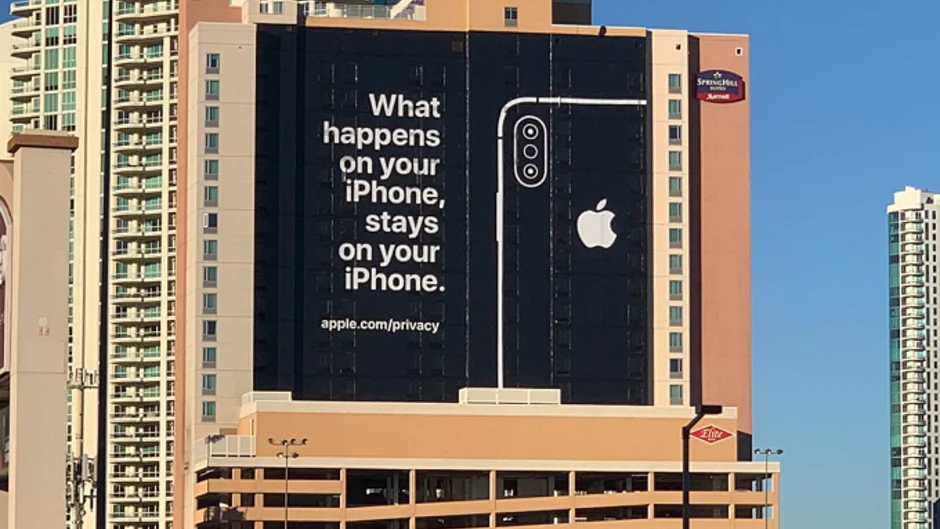
In an era where digital privacy is increasingly intertwined with personal security and professional survival, prominent cryptographers and cybersecurity experts are raising urgent concerns about a glaring omission in Apple’s flagship messaging platform, iMessage. While Apple has long championed its end-to-end encryption and recently integrated cutting-edge post-quantum cryptography into its communication architecture, the platform lacks a fundamental privacy tool that has become an industry standard across almost every other major messaging application: disappearing messages.
This security gap has profound implications for everyday users, particularly public servants, political workers, and private citizens navigating a volatile sociopolitical landscape where digital communications can be weaponized against them. As modern surveillance practices, data harvesting, and device searches become more pervasive, the inability to automatically purge sensitive conversations poses a critical risk to user safety.

The Core Vulnerability: Transit Security Versus Endpoint Retention
To understand the current debate, industry analysts emphasize the distinction between data security in transit and data retention at the endpoint. Apple’s iMessage has utilized end-to-end encryption (E2EE) since 2011. This cryptographic framework ensures that messages and attachments are scrambled using keys inaccessible to Apple, protecting data as it travels across networks. Furthermore, Apple bolstered this architecture by introducing PQ3, a post-quantum cryptographic protocol designed to safeguard communications against theoretical future quantum computing threats.
However, cryptographers point out that uncompromising transit encryption is only half the equation. Once an encrypted message is successfully delivered and decrypted on a recipient’s device, it is stored locally. By default, iMessage retains chat histories indefinitely. Combined with standard device backups and cloud-syncing features, this turns an iPhone into a permanent archive of a user’s personal life, professional discussions, and political thoughts.

An individual searching their iMessage history can frequently retrieve transcripts dating back a decade. While historical record-keeping is convenient for casual chats, it transforms messaging archives into high-liability databases. In environments where private text messages are routinely scrutinized, subpoenaed, or exposed via physical device access, indefinite retention strips users of practical confidentiality.
Industry Standards and the Disappearing Message Deficit
The absence of native, per-conversation disappearing messages in iMessage is an anomaly within the modern consumer software ecosystem. Competitors across the spectrum—including Signal, WhatsApp, Meta Messenger, Snapchat, and even Telegram—have implemented ephemeral messaging controls for years.

Typically, these features allow users to establish an expiration timer for chats, ranging from five minutes to 90 days. Once the predetermined window closes, the messages are automatically erased from both the sender’s and the recipient’s devices. Moreover, robust implementations of disappearing messages ensure that expired content is excluded from automated cloud backups, reinforcing the core premise that the conversation was never intended to be archived.
Despite repeated calls from cybersecurity researchers and privacy advocates, Apple has declined to introduce a comparable, thread-specific disappearing message feature. While iOS does include a global setting under device preferences labeled Keep Messages—allowing users to limit message retention to one year instead of indefinitely—the option has significant limitations. It operates universally rather than per chat, it does not purge messages from communication partners’ devices, and opting for a shorter retention window forces users to sacrifice older, non-sensitive conversation histories they may wish to preserve.
The Illusion of Security: iCloud Backups and Advanced Data Protection

Compounding the issue of message retention are complexities surrounding Apple’s cloud backup infrastructure. Apple offers a feature known as Messages in iCloud, designed to sync and back up chat databases across multiple Apple devices associated with a single user account. While Apple promotes this feature as end-to-end encrypted, technical audits reveal critical nuances that can mislead consumers.
By default, standard iCloud backups store the encryption keys required to access Messages in iCloud databases on Apple’s servers in a format accessible to the company. Consequently, law enforcement agencies armed with a valid subpoena—or unauthorized actors who compromise an Apple ID password—can potentially reconstruct a user’s entire message history from cloud servers.
Apple does provide a remedy through its Advanced Data Protection (ADP) feature, which extends end-to-end encryption to iCloud backups, preventing even Apple from accessing stored keys. While activating ADP significantly hardens cloud security, it remains an opt-in setting that the vast majority of mainstream consumers leave disabled due to user friction and the risk of permanent data lockout if account recovery keys are lost. Even when ADP is enabled, however, it merely protects backups; it does not solve the underlying problem of messages persisting indefinitely on local hardware.

Chronology of Apple Security Developments
To contextualize Apple’s current cryptographic posture, industry observers look back at a steady evolution of platform security enhancements over the past decade and a half:
- 2011: Apple introduces end-to-end encryption for iMessage, ensuring third parties and network intermediaries cannot intercept messages in transit.
- 2016: Security researchers uncover and publicly disclose cryptographic implementation flaws in the iMessage protocol, which Apple patches rapidly.
- 2022: Apple rolls out Advanced Data Protection for iCloud, enabling optional end-to-end encryption for device backups, photos, and messages.
- 2024: Apple introduces the PQ3 protocol, upgrading iMessage to post-quantum cryptographic standards to future-proof against quantum decryption attacks.
- 2025: Privacy advocates and cryptography engineers renew public appeals for native disappearing message controls, highlighting the disconnect between futuristic transit security and static endpoint retention.
Implications for Users and Industry Pressures

The persistence of legacy message retention models places Apple at odds with evolving privacy expectations. For government employees, whistleblowers, journalists, and everyday citizens operating in polarized political climates, the threat landscape has shifted. Digital security is no longer merely about thwarting sophisticated nation-state hackers or bulk data collection agencies; it is increasingly about mitigating the fallout from local device seizures, compromised accounts, and social retaliation based on archived personal communications.
When technology platforms fail to provide ephemeral communication options, they inadvertently shift the burden of risk onto the user. Critics argue that a company that prides itself on marketing privacy as a "fundamental human right" should provide the tools necessary to ensure that private conversations remain genuinely private.
Internal hesitation within Apple regarding privacy features often stems from balancing user data loss anxiety against security upgrades. When pressed on why robust security features like end-to-end encrypted backups are not enabled by default, Apple engineers frequently cite user fear of permanent data loss and the operational challenges of managing zero-knowledge account recovery. However, when questioned about the absence of disappearing messages—an optional feature that users explicitly choose to activate—industry insiders offer few technical justifications. Observers speculate that corporate caution, regulatory pressure from law enforcement agencies, or entrenched legacy codebase limitations may be contributing factors, though none have been officially confirmed.

Broader Impact and Future Outlook
As the debate over digital civil liberties continues to shape the technology sector, consumer expectations are shifting toward default-private architectures. Ephemeral messaging is no longer viewed as a niche tool for clandestine operations; it is recognized as a vital hygiene practice for digital communication in an era of ubiquitous data storage and aggressive surveillance.
For Apple, the path forward involves reconciling its advanced cryptographic achievements—such as PQ3 and Advanced Data Protection—with practical, user-centric privacy controls. Until native, flexible disappearing message functionality is integrated into iMessage, millions of users will remain vulnerable to the unintended permanence of their own digital footprints, leaving a noticeable void in an otherwise robust security ecosystem.
