
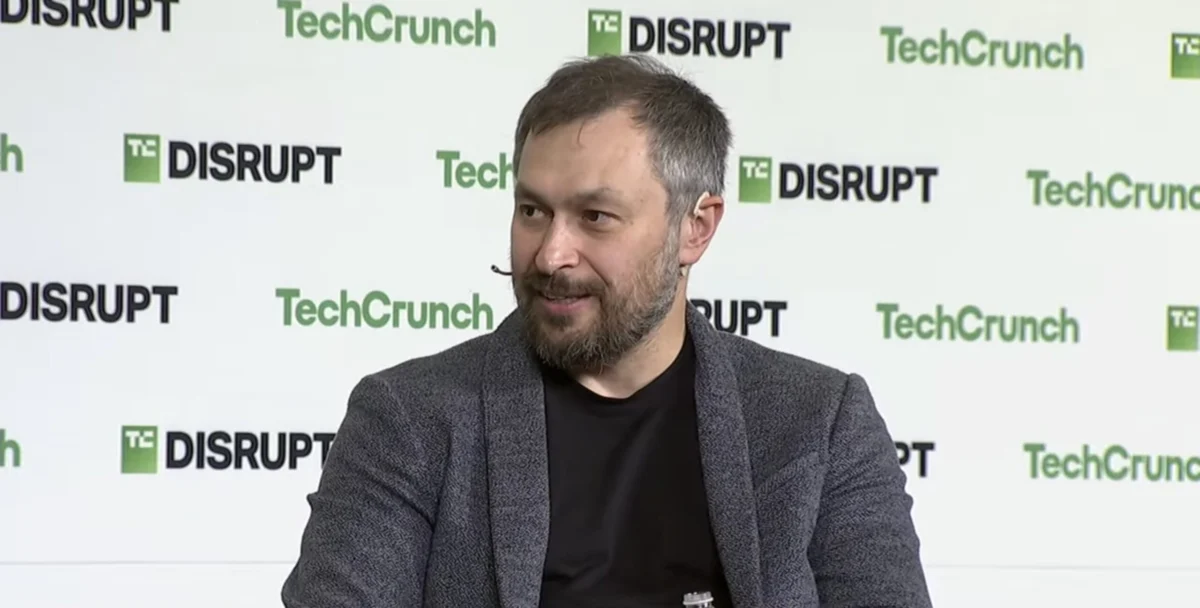
San Francisco, CA – The technological landscape for software engineers has been profoundly reshaped by the emergence of agentic coding tools, a transformative shift keenly observed and embraced by Anatoly Yakovenko, CEO of Solana Labs. Speaking at TechCrunch Disrupt in San Francisco, an event spanning October 13-15, 2026, Yakovenko articulated a notable evolution in his personal approach to software development, expressing an increasing comfort with delegating significant coding tasks to artificial intelligence, allowing him to adopt a more supervisory role. This candid revelation underscores a broader industry trend where advanced AI is not merely assisting but actively participating in the creation and refinement of software, prompting a reevaluation of traditional development paradigms.
Yakovenko, a seasoned software developer with over 15 years of experience, described his engagement with agentic coding as a profound enhancement to his capabilities. "AI has been a great force multiplier for somebody who’s an expert," he stated, highlighting the symbiotic relationship between human expertise and AI efficiency. He detailed his experience, particularly with tools like Claude, an advanced AI model, where he can "almost smell when it’s going off the rails," indicating a sophisticated level of interaction and trust developed over time. This sentiment reflects a growing confidence among tech leaders in AI’s capacity to handle complex computational tasks, freeing up human developers for higher-level strategic thinking, architectural design, and critical oversight. His humorous admission, "If people are in a meeting with me and I’m not paying attention, it’s because I’m watching Claude," vividly illustrates the engrossing and central role AI now plays in his daily workflow, signifying a shift from AI as a mere assistant to an integral, semi-autonomous partner in the development process.
The Dawn of Agentic AI in Software Development
The concept of "agentic coding" represents the latest frontier in AI’s integration into software engineering, moving beyond mere code generation or debugging assistance. Agentic AI tools are designed to understand broader objectives, break them down into sub-tasks, execute them iteratively, and even self-correct or refine their approach based on feedback or internal evaluations. This paradigm shift, from reactive tools to proactive agents, marks a significant leap in automation. While initial AI coding assistants like GitHub Copilot focused on autocompletion and snippet generation, the current generation of agentic tools, exemplified by models like Claude and others, are capable of tackling more comprehensive projects, from drafting entire modules to optimizing complex algorithms, and even managing aspects of the software development lifecycle.
Yakovenko’s endorsement at TechCrunch Disrupt resonates with a growing number of developers and tech executives who see AI not as a replacement, but as an exponential amplifier of human potential. For an expert, AI acts as a sophisticated apprentice, handling the rote or time-consuming aspects of coding, allowing the human to focus on innovation, critical problem-solving, and quality assurance. This evolution demands a new skillset from engineers: less about writing every line of code, and more about prompt engineering, understanding AI’s limitations, effectively debugging AI-generated code, and maintaining a high-level architectural vision. The industry is currently grappling with the implications of this shift, including questions of intellectual property, the potential for AI to propagate vulnerabilities, and the ethical responsibilities of developers leveraging such powerful tools. Despite these challenges, the consensus at events like TechCrunch Disrupt suggests that agentic AI is here to stay, fundamentally altering how software is built and maintained.
Solana’s Ascendant Trajectory Amidst Market Volatility
Beyond the transformative impact of AI on his personal workflow, Yakovenko also addressed the remarkable success of the Solana cryptocurrency protocol, which he co-founded, amidst a period of considerable volatility for many other digital assets. Solana has distinguished itself through its high transaction throughput and low fees, positioning itself as a formidable competitor to established blockchains like Ethereum. These technical advantages have attracted a burgeoning ecosystem of decentralized applications (dApps), NFTs, and various financial instruments, contributing to its robust performance.
Earlier this month, Solana Labs announced an impressive $2.85 billion in annual revenue, a figure largely propelled by activity on crypto trading platforms and the general expansion of the Solana ecosystem. This substantial revenue not only underscores the platform’s utility and adoption but also signals a maturing phase for the protocol, moving beyond speculative interest to tangible economic activity. For context, this revenue figure represents a significant year-over-year growth, reflecting increased network usage, transaction fees, and the successful incubation of various projects within its infrastructure. Analysts point to Solana’s strategic partnerships, developer grants, and continuous technological improvements as key drivers behind this financial milestone, even as the broader cryptocurrency market has experienced periods of contraction and uncertainty.
Further cementing Solana’s mainstream acceptance was the highly anticipated launch of the first Solana exchange-traded fund (ETF) the day before Yakovenko’s appearance at TechCrunch Disrupt. Launched by Bitwise, a prominent crypto asset manager known for its pioneering role in digital asset investment products, the ETF saw an extraordinary nearly $70 million of inflows in a single day. This debut performance significantly surpassed initial market expectations and highlights a surging institutional and retail investor appetite for exposure to Solana. The successful launch of a Solana ETF follows the precedent set by Bitcoin and, more recently, Ethereum ETFs, which have provided regulated and accessible avenues for traditional investors to gain exposure to cryptocurrencies without directly holding the underlying assets. The rapid inflow into Bitwise’s Solana ETF suggests that financial markets are increasingly viewing Solana not just as a speculative digital currency, but as a legitimate and investable asset class with long-term growth potential, further validating Yakovenko’s assertions about growing institutional acceptance.
Onstage, Yakovenko attributed much of this success to a growing understanding and acceptance of cryptocurrency, particularly within the conventional finance industry. He articulated a compelling argument for why finance professionals are uniquely positioned to grasp the value proposition of blockchain technology. "If you are a back-office finance person, you actually get crypto much, much faster," Yakovenko observed. He elaborated that "Finance people deal with settlement risk all the time. They deal with banking risk all the time." This insight is crucial: traditional financial systems are inherently complex, burdened by intermediaries, high transaction costs, and inherent risks associated with delayed settlements and counterparty exposures. Blockchain technology, with its immutable ledgers, near-instantaneous settlement capabilities, and transparent operations, directly addresses these pain points. For finance professionals accustomed to navigating these systemic challenges, the efficiency and security offered by decentralized protocols like Solana represent a clear, tangible improvement over legacy systems, accelerating their embrace of the technology.
Navigating the Ethical Minefield: The Trumpcoin Controversy
Amidst Solana’s financial triumphs and growing institutional embrace, the protocol has concurrently faced significant criticism for enabling controversial projects, most notably the Solana-hosted "Trumpcoin." This meme coin, and others like it, have drawn intense scrutiny for their perceived political implications and potential for public corruption. Reports indicate that Trumpcoin has directed an estimated $350 million to the former president, a figure that critics vehemently interpret as a form of bribery. This accusation is particularly potent in the wake of former President Trump’s high-profile pardons for several figures associated with the cryptocurrency industry, including Tron founder Justin Sun and Binance founder Changpeng Zhao (CZ).
The Trumpcoin phenomenon represents a novel intersection of decentralized finance and political fundraising, raising complex questions about transparency, ethics, and regulatory oversight in the digital age. Unlike traditional campaign donations, which are subject to stringent disclosure requirements and contribution limits, meme coins operating on decentralized platforms can obscure the flow of funds, making accountability challenging. The substantial sum channeled to the president via Trumpcoin has ignited a fierce debate among political watchdogs, legal experts, and the public, who view it as potentially undermining democratic processes and facilitating undue influence.
The controversy surrounding Trumpcoin is further intensified by its timing relative to the pardons granted to Justin Sun and Changpeng Zhao. Justin Sun, the founder of the Tron blockchain and a prominent figure in the crypto space, had faced charges from the U.S. Securities and Exchange Commission (SEC) for unregistered securities offerings and market manipulation, among other allegations. Changpeng Zhao, the charismatic founder of Binance, the world’s largest cryptocurrency exchange, pleaded guilty to violating anti-money laundering laws and faced significant penalties, including a substantial fine and a prison sentence. The pardons, granted by the president, raised immediate red flags for critics, who drew a direct line between the financial benefit derived from Trumpcoin and the leniency shown to these influential crypto figures. This perceived quid pro quo arrangement fueled accusations of civil fraud and public bribery, casting a shadow over the integrity of both the political system and the cryptocurrency ecosystem.
In response to these weighty criticisms, Yakovenko defended Solana’s fundamental nature as an open and neutral protocol. He emphasized that the protocol itself, much like the internet or email, cannot selectively censor or control the content or applications built upon it. "I could send you an email with a link to Trumpcoin or Fartcoin," Yakovenko explained onstage, illustrating his point, "and both of those are protocols, both the email and the underlying protocol that creates that market." This statement underscores a core tenet of decentralized networks: they are permissionless and censorship-resistant by design. The creators of the underlying infrastructure, in this case, Solana Labs, have limited to no control over the specific tokens or dApps that users choose to deploy or interact with on the network. This philosophical stance highlights a fundamental tension within the crypto world: the desire for true decentralization and freedom from centralized control often clashes with societal expectations for accountability, ethical governance, and the prevention of illicit activities. While Yakovenko’s argument is technically sound regarding the nature of open protocols, it does not alleviate the ethical concerns or the calls for greater regulatory clarity regarding politically charged digital assets.
Broader Implications and The Future Landscape
The confluence of agentic AI’s rise, Solana’s financial maturation, and the Trumpcoin controversy paints a vivid picture of the complex, rapidly evolving landscape of technology and finance. The widespread adoption of AI in software development, as championed by figures like Yakovenko, promises unprecedented levels of productivity and innovation. However, it also necessitates a redefinition of human roles, the development of robust AI governance frameworks, and a critical examination of the ethical implications of autonomous code generation. The future software engineer will likely operate more as an AI orchestrator and auditor than a traditional coder, demanding new skills and regulatory considerations.
Solana’s continued success, marked by impressive revenue figures and a groundbreaking ETF, signals a broader trend of cryptocurrency moving from the fringe to the mainstream. The growing acceptance by traditional finance, driven by an understanding of blockchain’s inherent efficiencies in managing risk and settlement, suggests a future where digital assets are integral to the global financial infrastructure. However, this integration also brings increased scrutiny and demands for regulatory clarity. The success of Solana, and the broader crypto market, will depend not only on technological innovation but also on its ability to navigate the intricate web of global regulations and public trust.
The Trumpcoin controversy, meanwhile, serves as a stark reminder of the ethical challenges inherent in truly decentralized systems. While open protocols offer unparalleled freedom and innovation, they also present avenues for misuse, raising profound questions about the limits of neutrality and the responsibilities of platform creators. The debate surrounding political meme coins and their potential for undue influence will likely intensify, pushing regulators and the crypto community to grapple with how to balance the principles of decentralization and censorship resistance with the imperative to prevent corruption and maintain market integrity. This ongoing tension will undoubtedly shape the future trajectory of decentralized finance, influencing both technological development and the regulatory frameworks designed to govern it. The events discussed at TechCrunch Disrupt underscore that the digital revolution, while promising immense progress, is also forcing society to confront fundamental questions about technology’s role in governance, ethics, and the very nature of human work.

