• Home
  • About Us
  • Contact Us
  • Cookies Policy
  • Disclaimer
  • DMCA
  • Privacy Policy
  • Terms and Conditions
Dr Crypton
Secure Your Future in Crypto
Artificial Intelligence & Tech

Create, edit and star in videos with two Google Vids updates

by admin July 25, 2026
written by admin

The landscape of corporate communication and digital content creation has shifted fundamentally with Google’s latest announcement regarding its video-first productivity application, Google Vids. In a significant expansion of its Workspace ecosystem, Google has integrated two transformative features: the Gemini Omni model and Personal Avatars. These updates are designed to democratize high-quality video production, allowing users to move from conceptual ideation to a finished, professional-grade video through the use of natural language prompts and personalized digital doubles. By leveraging the multimodal capabilities of Gemini Omni, Google Vids now offers a seamless bridge between text-based storytelling and visual execution, effectively removing the technical barriers that have historically sidelined non-creative professionals from the video production process.

The Evolution of Gemini Omni in Video Production

At the heart of this update is Gemini Omni, a sophisticated multimodal AI model that allows for a more intuitive interaction between the user and the software. Unlike traditional video editing suites that require a granular understanding of timelines, keyframes, and color grading, Gemini Omni operates through a "chat-to-edit" interface. This allows users to generate and refine video clips using everyday language. For instance, a user can start with a simple text prompt to generate a scene and then provide an image reference—such as a brand-specific photograph or a hand-drawn sketch—to ensure the AI matches a specific aesthetic or layout.

The "chat-to-edit" functionality represents a departure from the "one-and-done" generation model seen in earlier AI tools. Recognizing that creative work is iterative, Google has engineered Omni to support step-by-step refinements. If a generated clip requires a change in lighting, a different background, or the addition of specific visual effects, the user can simply describe the desired adjustment in a chat interface. The AI then modifies the existing project rather than forcing the user to regenerate the entire sequence from scratch. This persistence of project state is a critical requirement for professional workflows where precision and consistency are paramount.

Personal Avatars: Solving the Problem of On-Camera Presence

Perhaps the most visually striking update is the introduction of Personal Avatars. This feature addresses a common bottleneck in corporate video production: the time and resources required to record human presenters. Many professionals find the process of setting up lighting, sound, and teleprompters—or simply finding the time to be "camera-ready"—to be a deterrent to frequent video communication.

Google’s solution allows users to create a digital twin that looks and sounds like them. The setup process requires the user to upload a high-quality selfie and a short voice recording. From this data, the AI constructs a dynamic avatar capable of delivering scripted content. Once the avatar is created, the user only needs to type their message; the digital double then performs the speech with synchronized lip movements and natural-looking gestures. This technology is particularly aimed at internal communications, such as weekly department updates, personalized training modules, and executive announcements, where the presence of a familiar face enhances engagement without the logistical overhead of a traditional shoot.

Chronology of Google’s AI Video Ambitions

The rollout of Gemini Omni and Personal Avatars is the latest milestone in a rapidly accelerating timeline for Google’s generative AI efforts. To understand the significance of these updates, one must look at the trajectory of Google’s research and deployment:

  • Late 2022 – Early 2023: Google Research begins showcasing early versions of Imagen Video and Phenaki, demonstrating the ability to generate short, low-resolution clips from text.
  • December 2023: The introduction of the Gemini era marks a shift toward multimodal models that can process text, code, images, and video simultaneously.
  • April 2024: Google officially announces Google Vids at the Cloud Next conference, positioning it as an AI-powered video creation app for work, integrated directly into the Workspace suite alongside Docs, Sheets, and Slides.
  • February 2024 (and subsequent updates): The integration of Veo, Google’s most advanced video generation model, into Vids allows for higher-definition cinematic clips and better adherence to complex prompts.
  • Late 2024: The current rollout of Gemini Omni and Personal Avatars represents the move from experimental "generation" to practical, user-controlled "production."

This timeline illustrates a strategic push to move AI from a novelty feature to a core component of the modern workplace tech stack.

Market Context and Supporting Data

The push toward AI-driven video is supported by emerging data regarding workplace productivity and communication preferences. According to recent industry reports, video content is increasingly becoming the preferred medium for internal training and knowledge sharing. A 2023 study on workplace communication found that employees are 75% more likely to watch a video than read documents, emails, or web articles. However, the same study noted that "lack of time" and "lack of technical skills" were the top two reasons why managers avoided creating video content.

By integrating these tools into Google Workspace—which boasts over 3 billion users—Google is positioning itself to capture the massive demand for "asynchronous video." As remote and hybrid work models remain standard, the ability to send a personalized video update that bypasses time-zone constraints is becoming a competitive necessity for global enterprises.

Create, edit and star in videos with two Google Vids updates

Safety, Transparency, and Ethical Considerations

With the rise of deepfake technology and synthetic media, the introduction of Personal Avatars and AI-generated video brings significant ethical responsibilities. Google has addressed these concerns through a multi-layered security and transparency framework.

Central to this framework is SynthID, a digital watermarking technology developed by Google DeepMind. Every video clip generated within Google Vids includes an invisible SynthID watermark embedded directly into the pixels. This watermark is designed to be undetectable to the human eye but remains identifiable by specialized detection software, even if the video is cropped, compressed, or edited. This ensures that any content produced via AI can be verified as such, mitigating the risk of misinformation.

Furthermore, Personal Avatars are strictly governed by identity verification protocols. The feature is currently restricted to users aged 18 and older in specific regions. Crucially, the avatars are linked to the user’s individual Google Account and are restricted to the account holder’s likeness. This "self-only" restriction is a deliberate choice to prevent the unauthorized creation of digital twins of colleagues or public figures, a move that distinguishes Google’s corporate-focused tool from more open-ended consumer AI platforms.

Industry Implications and the Competitive Landscape

The updates to Google Vids place Google in direct competition with specialized AI video startups such as HeyGen, Synthesia, and Runway, as well as established tech giants like Microsoft. Microsoft has been aggressively integrating its Copilot AI into the 365 ecosystem, including video-related features in Microsoft Clipchamp.

However, Google’s advantage lies in the deep integration of Vids within the broader Workspace environment. Because Vids can pull data from a user’s Drive, summarize a Google Doc into a script, and then use Gemini Omni to visualize that script, it creates a closed-loop productivity cycle. This integration reduces the "context switching" that often hampers productivity when users have to move between different platforms to complete a single project.

Fact-based analysis suggests that this move will likely force a shift in the corporate video production industry. Low-level production tasks—such as creating simple "talking head" videos or basic explainer clips—will likely be automated. This allows professional creative teams to focus on high-concept storytelling and complex cinematography, while everyday business users handle routine communication through AI-assisted tools.

Official Responses and Implementation

While the internal product team, led by Product Manager Justin Luk, has emphasized the ease of use and the "natural language" interface, the broader response from Google Workspace leadership highlights the goal of "making video as easy as a slide deck." The company’s strategy focuses on the concept of "AI as a collaborator" rather than a replacement for human creativity.

Currently, Gemini Omni and Personal Avatars are being rolled out to specific tiers of the Google ecosystem. Access is available to subscribers of Google AI Pro and Ultra, as well as Google Workspace business customers. This tiered rollout allows Google to monitor system performance and refine the AI models based on professional feedback before a potential wider release.

Broader Impact on Professional Communication

As these tools become ubiquitous, the standard for professional communication is expected to evolve. The ability to generate a high-quality video from a rough sketch or a short prompt means that visual literacy will become as important as written literacy in the corporate world. The "Personal Avatar" feature, in particular, may change the nature of leadership communication, allowing executives to maintain a high-frequency visual presence across global teams without the burnout associated with constant recording sessions.

In conclusion, the updates to Google Vids signify a major step toward the "generative office." By combining the multimodal intelligence of Gemini Omni with the personalized touch of AI avatars, Google is not just adding features to an app; it is redefining the medium of workplace communication. As SynthID ensures a level of accountability in this new digital frontier, the focus shifts to how users will harness these tools to tell more compelling, efficient, and personalized stories in a professional context.

July 25, 2026 0 comment
0 FacebookTwitterPinterestEmail
Blockchain Technology

Russia Establishes Comprehensive Legal Framework for Digital Assets Amid Sanctions Pressure

by admin July 24, 2026
written by admin

Russia’s State Duma, the lower house of the parliament, has taken a monumental step towards formalizing the country’s digital asset landscape by passing the "On Digital Currency and Digital Rights" bill. This pivotal legislation is poised to introduce Russia’s first comprehensive legal framework for governing digital asset markets, encompassing a rigorous licensing regime and explicit rules for the operation of cryptocurrency exchanges, digital depositories, and various market participants. The move signifies a strategic shift in Moscow’s approach to digital assets, aiming to bring this burgeoning sector under formal state oversight while strategically leveraging its capabilities, particularly for cross-border trade in an era of unprecedented international sanctions.

The bill, having successfully navigated the State Duma, now advances to the Federation Council, the upper house of parliament, for further deliberation and approval. Should it pass this legislative hurdle, it will then be forwarded to President Vladimir Putin for his signature, at which point it will officially become law. This progression underscores a significant turning point for Russia’s digital economy, moving from a previously fragmented regulatory environment to a more structured and state-controlled ecosystem.

A New Era for Digital Asset Regulation in Russia

The "On Digital Currency and Digital Rights" bill is designed to address the existing legal ambiguities that have long characterized Russia’s approach to digital assets. Prior to this comprehensive framework, the regulation of digital asset ownership, trading, mining, and cross-border use relied on a patchwork of sector-specific rules derived from tax, anti-money laundering (AML), and existing digital financial asset laws. This lack of a unified framework created considerable legal uncertainty, even as interest in the space grew, significantly fueled by the severe international sanctions imposed on the country.

The core of the incoming framework is the establishment of a robust licensing regime. This will mandate that all entities involved in digital asset activities, including exchanges, brokers, custodians, and digital asset depositories, obtain appropriate licenses. These licensed entities will operate under the stringent supervision of the Bank of Russia, the nation’s central bank. The Bank of Russia is tasked with maintaining official registries of approved market participants and overseeing their compliance with the new regulations, thereby granting the government substantial influence and control over the domestic digital asset industry. Crucially, only organizations listed in these special registries will be legally permitted to engage in digital currency exchange activities, ensuring a centralized and monitored market.

According to a July 21 report from the TASS Russian News Agency, the legislation includes a two-year grace period. This transitional phase, extending until July 1, 2027, will allow existing digital asset firms to operate without immediate registry listing while they prepare and submit their applications for the requisite licenses. This provision aims to facilitate a smoother transition for market players, minimizing disruption during the initial implementation phase.

Retail participation in the digital asset market will also be tightly regulated. Non-qualified investors will face annual purchase limits, capped at approximately 300,000 rubles (equivalent to about $3,800 USD at current exchange rates), which must be conducted through licensed intermediaries. In contrast, qualified investors, meeting specific financial criteria, will be exempt from such restrictions, allowing them greater freedom in their digital asset investments. This tiered approach reflects a common regulatory strategy to balance investor protection with market accessibility.

While the bill reinforces the existing ban on using digital currencies and digital rights as a means of payment within Russia, thereby preserving the ruble as the country’s sole legal tender, it introduces several significant exceptions. These exceptions include settlements under foreign trade contracts between residents and non-residents, the use of cryptocurrencies obtained through mining, and settlements involving securities, other digital currencies, or digital rights. These provisions clearly delineate the primary purpose of digital assets within Russia’s legal framework: as tools for investment and, crucially, for selected cross-border transactions, rather than as a substitute for fiat currency in domestic commerce.

If approved by the Federation Council and signed by President Putin, the main provisions of the law are slated to come into force on September 1, 2026, marking a definitive date for the operationalization of Russia’s new digital asset regulatory regime.

The Fragmented Landscape Before the Bill

Before the current legislative push, Russia’s stance on cryptocurrencies and digital assets was characterized by a prolonged period of regulatory ambiguity and internal debate. For years, the Bank of Russia maintained a highly conservative, often outright hostile, position towards cryptocurrencies, frequently advocating for blanket bans, citing concerns about financial stability, money laundering, and investor protection. Conversely, the Ministry of Finance and other government bodies gradually adopted a more pragmatic approach, recognizing the potential for taxation revenue and the strategic utility of digital assets, particularly for circumventing sanctions.

This ideological split led to a piecemeal regulatory environment. The "On Digital Financial Assets" law, passed in 2020, was an initial attempt to provide some legal definition but primarily focused on tokenized assets and left significant gaps regarding cryptocurrencies like Bitcoin. Mining was eventually recognized and regulated, largely due to Russia’s abundant energy resources and cold climate making it an attractive location for mining operations. However, a unified framework for exchanges, trading, and cross-border transactions remained elusive, forcing market participants to operate in a grey area, relying on interpretations of existing financial and anti-money laundering laws. The legal uncertainty inhibited institutional adoption and fostered an environment ripe for illicit activities, prompting calls for comprehensive legislation from both domestic industry players and international observers.

Motivation: Navigating Sanctions and Economic Isolation

The urgency behind Russia’s push for a comprehensive digital asset framework cannot be decoupled from the geopolitical landscape, specifically the unprecedented international sanctions imposed following its illegal invasion of Ukraine in February 2022. These sanctions, targeting key sectors of the Russian economy, its financial institutions, and its elite, effectively severed Russia from significant portions of the global financial system, including exclusion from the SWIFT international payment messaging network, asset freezes, and severe restrictions on trade.

In this precarious situation, Russia has increasingly turned to the digital asset space as a potential lifeline and a mechanism for economic resilience. Digital assets offer an alternative payment rail that can operate outside the traditional, Western-dominated financial infrastructure, potentially allowing Russia to facilitate trade with "friendly" nations and mitigate the impact of financial isolation.

This strategic pivot became evident in 2024 when Russian lawmakers passed a separate bill explicitly allowing businesses to use digital assets in international trade. Under this legislation, digital assets were made subject to the same set of regulations as foreign currencies, such as the U.S. Dollar (USD), within Russia, signaling a clear intent to integrate them into the country’s foreign economic activity. This earlier move laid the groundwork for the more comprehensive framework now being enacted, demonstrating a consistent and evolving strategy to leverage decentralized technologies for national economic objectives.

The embracing of digital assets is also part of a broader de-dollarization strategy, aiming to reduce reliance on Western currencies and financial systems. By developing its own controlled digital asset ecosystem, Russia seeks to create an infrastructure that can support its international trade and investment goals, particularly with partners in Asia, Africa, and Latin America who may be less inclined to adhere to Western sanctions.

International Scrutiny and Counter-Measures

Russia’s increasing reliance on digital assets to circumvent sanctions has not gone unnoticed by the international community, leading to heightened scrutiny and active countermeasures. Global financial watchdogs and national authorities have expressed serious concerns about the potential for cryptocurrencies to be used for illicit finance, money laundering, and sanctions evasion.

In June 2024, Lithuania, a member of the European Union, demonstrated the tangible consequences of such concerns by penalizing the digital asset firm Payeer €9.3 million (approximately $10.1 million USD). The fine was imposed for Russia-related sanction violations, specifically for allegedly allowing Russian customers to transfer money to EU-sanctioned Russian banks. This incident highlights the challenges faced by digital asset service providers in navigating complex international sanction regimes and the readiness of authorities to enforce compliance.

More recently, on May 26, the United Kingdom Foreign Office revealed plans to ramp up measures against digital asset networks suspected of being used to bypass Britain’s sanctions. This initiative aims to prevent Russia from exploiting the sector to circumvent the heavy economic restrictions imposed by the UK and its allies. Foreign Secretary Cooper underscored the UK’s resolute stance at the time, stating, "If the Kremlin thinks it can evade our sanctions by hiding behind crypto networks and shadow financial systems, it is gravely mistaken."

These actions reflect a growing global consensus among sanctioning bodies, including the G7 and the Financial Action Task Force (FATF), that virtual assets pose inherent risks for illicit finance if not adequately regulated. The FATF, the global money laundering and terrorist financing watchdog, has consistently urged countries to implement its standards for virtual assets and virtual asset service providers (VASPs), including requirements for customer due diligence (KYC), transaction monitoring, and cross-border information sharing. Russia’s new bill, while establishing a domestic regulatory framework, will inevitably be scrutinized by these international bodies to assess its effectiveness in preventing illicit use and ensuring compliance with global AML/CFT standards. The interplay between Russia’s domestic regulatory ambitions and international efforts to enforce sanctions will likely define the digital asset landscape for the foreseeable future.

Implications for the Russian Economy and Global Crypto Market

The passage of the "On Digital Currency and Digital Rights" bill carries significant implications, both for Russia’s domestic economy and the broader global digital asset ecosystem.

Domestic Economic Impact: For Russia, the framework aims to bring much-needed clarity and legitimacy to its digital asset market. By establishing a licensing regime and centralizing oversight under the Bank of Russia, the government seeks to foster a controlled environment that can attract legitimate investment and innovation while mitigating risks. This could lead to a more structured growth of a domestic crypto industry, albeit one heavily influenced by state control. The stringent regulations, particularly for retail investors, suggest a cautious approach, prioritizing financial stability and consumer protection within a tightly managed system. However, the centralization inherent in the new framework may stifle some of the decentralized innovation typically associated with the crypto space, potentially creating a "walled garden" for digital assets within Russia.

International Trade and Geopolitical Strategy: Perhaps the most profound implication lies in the bill’s explicit allowance for digital assets in cross-border trade. This provision is a strategic gambit by Russia to create alternative channels for international transactions, bypassing the traditional financial systems from which it has been largely excluded. By permitting settlements under foreign trade contracts using digital currencies, Russia aims to facilitate commerce with countries that are either neutral in the geopolitical conflict or are themselves seeking alternatives to the dollar-dominated global financial architecture. This could involve direct trade with countries in the BRICS+ bloc (Brazil, Russia, India, China, South Africa, and expanding members) or other non-aligned nations. The success of this strategy will depend on the willingness of Russia’s trading partners to adopt these new payment methods and the ability of the international financial system to detect and counter such transactions.

Effectiveness Against Sanctions: The effectiveness of this framework in truly mitigating the impact of international sanctions remains a subject of intense debate. While digital assets offer a technical means to move value across borders without relying on traditional banks, converting these assets into usable fiat currency in international markets without triggering secondary sanctions or scrutiny is a significant challenge. Financial institutions globally are increasingly aware of these risks and are implementing enhanced due diligence to identify and block transactions linked to sanctioned entities. The "cat-and-mouse" game between Russia’s innovation in sanctions evasion and the West’s enforcement mechanisms is set to intensify.

Precedent for Other Nations: Russia’s move could also set a precedent for other nations facing similar economic isolation or seeking to reduce their reliance on the U.S. dollar and Western financial systems. Countries like Iran or Venezuela, which have also explored digital assets as a means of bypassing sanctions, might closely observe Russia’s experience. This could contribute to a broader trend of sovereign states developing their own regulated digital asset ecosystems as tools of economic statecraft.

Challenges and Outlook

Despite the ambitious nature of the "On Digital Currency and Digital Rights" bill, its implementation will likely face numerous challenges. The Bank of Russia will need to develop robust technical infrastructure and regulatory expertise to effectively supervise a rapidly evolving digital asset market. Industry participants will need to adapt quickly to the strict licensing requirements and compliance protocols, which may prove burdensome for smaller firms. Furthermore, the ongoing international pressure and the dynamic nature of sanctions enforcement mean that Russia’s digital asset strategy will constantly be tested and require continuous adaptation.

Looking ahead, the integration of this new framework with Russia’s ongoing development of a central bank digital currency (CBDC), the digital ruble, will be a key area to watch. A sovereign digital currency, combined with a regulated private digital asset market, could further solidify Russia’s control over its financial flows and enhance its capacity for cross-border transactions outside traditional channels.

In conclusion, Russia’s passage of the "On Digital Currency and Digital Rights" bill is far more than a mere regulatory update; it is a strategic maneuver on the global economic chessboard. It represents a calculated effort to harness the potential of digital assets to navigate severe international sanctions, bolster economic sovereignty, and carve out alternative pathways for international trade. While the full impact and effectiveness of this new framework will unfold over time, it unequivocally marks a significant chapter in the evolving narrative of digital assets as instruments of national policy and geopolitical strategy.

July 24, 2026 0 comment
0 FacebookTwitterPinterestEmail
Blockchain Technology

Sam Altman’s biometric startup World raises $52.5M via crypto sale

by admin July 24, 2026
written by admin

The capital infusion, secured through a private sale of World’s native WLD crypto token to strategic investors, marks a significant milestone for a project grappling with the complex intersection of digital identity, artificial intelligence, and blockchain technology. Participating investors committed to a 12-month lockup period for their WLD tokens, a common mechanism in the cryptocurrency space designed to demonstrate a long-term commitment to the project’s growth and utility by preventing immediate liquidation. This lockup signifies a strategic alignment with World’s ambitious vision, as highlighted by the company in its official press release on Friday.

Strategic Capital Infusion and Investor Commitment

The $52.5 million raised will be directed to the World Foundation, an exempted limited guarantee foundation based in the Cayman Islands. This foundation is specifically established to steward the expansion and decentralized governance of the World network, emphasizing a community-driven approach to its future development. The lead investor in this substantial token sale is Pantera Capital, a prominent venture capital firm with a dedicated focus on digital assets and blockchain innovation. Pantera Capital’s involvement lends considerable credibility to World’s long-term potential within the crypto ecosystem. Alongside Pantera, other notable firms participated, including Eightco Holdings, Bain Capital Crypto, Susquehanna Crypto, and Selini Capital, among others. The participation of such diverse and influential investors in a challenging macroeconomic climate for the broader crypto market suggests a strong belief in World’s fundamental value proposition and its potential to address critical future challenges in the digital realm.

The Vision Behind World: Addressing the AI-Driven Identity Crisis

At its core, the World project, operated by San Francisco-based startup Tools for Humanity (TFH), addresses a rapidly escalating concern in the digital age: distinguishing between human and machine-generated content and interactions. Co-founded by Sam Altman, CEO of OpenAI, and led by CEO Alex Blania, World posits that as artificial intelligence advances and bots become increasingly sophisticated, the ability to verify a user’s humanity will become paramount for maintaining trust, security, and authentic interactions online.

The company sells access to what it terms "proof of human" tools, aiming to popularize its World ID. This World ID functions as an anonymous digital marker, designed to definitively verify whether a particular account or online action is being executed by a human being rather than an autonomous bot or an AI agent. This mission is particularly salient given the exponential growth of AI-generated content, from sophisticated text and images to deepfake videos, which increasingly blurs the lines of digital reality. Experts across cybersecurity and digital ethics have warned about the potential for widespread misinformation, fraud, and manipulation if reliable methods of human verification are not widely adopted. World aims to be a foundational layer in this future digital landscape, providing a critical infrastructure for trust.

Technological Core: The Orb and World ID

The cornerstone of World’s verification system is a unique biometric device called the Orb. To obtain a verified World ID, which represents the highest level of authentication within the World ecosystem, users must undergo an iris scan conducted by one of these metallic, spherical devices. The Orb’s technology converts a user’s unique iris pattern into a distinct cryptographic identifier, a process designed to be privacy-preserving by not storing the raw biometric data itself, but rather a hash or derived code. This cryptographic identifier then serves as the immutable "proof of humanity" linked to their World ID.

World’s Orbs are strategically deployed globally, found at the company’s own offices and through a growing network of partner stores and locations worldwide. The deployment strategy aims for broad accessibility, recognizing that for a universal digital identity system to succeed, it must be available to a global user base. However, the use of biometric data, particularly iris scans, has naturally drawn scrutiny from privacy advocates and regulatory bodies, prompting discussions around data security, consent, and the potential for misuse, even with the company’s assurances of privacy-by-design. The company maintains that the system is designed to be anonymous, preventing the linking of a World ID back to an individual’s personal identity or financial information.

Evolution and Challenges: From Worldcoin to World

The project initially emerged under the name "Worldcoin," a more overtly crypto-centric experiment, and the WLD token involved in the recent sale retains this historical nomenclature. Under its original branding, Worldcoin was conceived with a strong emphasis on universal basic income (UBI) principles, aiming to distribute its token widely as a means of wealth redistribution in an AI-driven future. Users could trade or hold the WLD token through World’s dedicated mobile application, which also functions as a custodial wallet for digital assets.

However, amidst a broader market downturn and increasing regulatory scrutiny of the cryptocurrency industry, the project underwent a strategic rebranding, simplifying its name to "World." This shift aimed to broaden its appeal beyond the crypto-native audience and emphasize its core mission of human verification, positioning itself as a vital infrastructure layer for the internet rather than solely a cryptocurrency project. This rebranding reflects a pragmatic adaptation to market realities and a desire to appeal to a wider audience, including traditional tech companies and mainstream users.

Despite its ambitious global vision and high-profile co-founder, World has encountered its share of challenges in scaling its operations and achieving widespread consumer adoption. Convincing a significant portion of the global population to undergo an iris scan for a digital ID remains a considerable hurdle, particularly given prevailing concerns about data privacy and the novelty of such a system. In April, the project launched a new version of its application and announced strategic partnerships with major companies, including Tinder, Zoom, and Docusign, aiming to integrate its World ID into widely used platforms and demonstrate its utility in real-world applications. These partnerships signal an intent to move beyond a purely theoretical concept into practical application, potentially addressing issues like bot activity on dating apps or verifying participants in online meetings.

Nevertheless, operational difficulties persisted. In June, Tools for Humanity (TFH) reportedly conducted a round of layoffs, a common indicator of a company reassessing its operational strategy and cost structure in response to market conditions or slower-than-anticipated growth. These adjustments highlight the inherent complexities of building a novel, globally scalable infrastructure project that straddles cutting-edge technology, sensitive personal data, and a nascent regulatory environment.

The Broader Landscape: Decentralized Identity and Biometrics

World operates within the burgeoning field of decentralized identity (DID) and verifiable credentials, a segment of Web3 aiming to give individuals more control over their digital identities. Traditional identity systems are centralized, often controlled by governments or large corporations, making them vulnerable to breaches and limiting user autonomy. Decentralized identity seeks to reverse this, allowing users to own and manage their digital identities securely on a blockchain, selectively sharing verified attributes without revealing their entire personal data.

Biometric verification, while controversial, offers a compelling solution to the problem of proving unique personhood in a digital realm. Unlike passwords or traditional multi-factor authentication, biometrics are inherently tied to an individual’s physical self, making them difficult to fake or compromise through conventional means. The global biometric market size was valued at over $20 billion in 2022 and is projected to grow significantly, driven by increasing demand for enhanced security in financial services, government, and consumer electronics. However, the implementation of such systems at a global scale raises profound ethical questions about surveillance, data sovereignty, and the potential for exclusion of those unable or unwilling to participate. World’s approach attempts to mitigate some of these concerns through its emphasis on anonymity and the non-storage of raw biometric data, but these assurances are subject to ongoing public and expert scrutiny.

Regulatory Scrutiny and Privacy Concerns

The intersection of cryptocurrency, biometrics, and global digital identity places World firmly in the crosshairs of regulatory bodies worldwide. Data protection laws, such as GDPR in Europe and various state-level privacy acts in the US, impose strict requirements on the collection, processing, and storage of personal and sensitive biometric data. Regulators are particularly vigilant about projects that aim for global scale and collect such sensitive information, even if anonymized.

The Cayman Islands, where the World Foundation is registered, is known for its favorable legal and financial environment for foundations and trusts, often chosen for decentralized projects seeking a neutral and robust legal framework. However, this choice does not exempt the project from complying with data privacy laws in every jurisdiction where it operates. Concerns have been raised by privacy advocates regarding the long-term implications of a universal biometric identification system, regardless of its current privacy safeguards. The potential for such a system to be repurposed or compromised in the future, or to enable new forms of tracking or control, remains a significant point of debate. World’s ability to navigate this complex regulatory landscape and build public trust will be crucial for its sustained growth and widespread adoption.

Financial Mechanics: The WLD Token and World Foundation

The WLD token is central to World’s ecosystem, intended to serve multiple functions, including governance, utility, and potentially as a medium of exchange within the World network. The lockup period for investors, typically lasting 6 to 12 months in crypto projects, is a mechanism to align investor interests with the long-term success of the protocol rather than short-term speculative trading. It signals confidence and stability to the broader market, suggesting that the investors believe in the project’s fundamental value proposition.

The World Foundation’s role in stewarding the network’s expansion is critical. Foundations in the blockchain space often manage treasury funds, facilitate grants for ecosystem development, and oversee the evolution of the protocol in a decentralized manner. This structure aims to prevent undue influence by any single entity and foster community governance, although the degree of actual decentralization often remains a subject of ongoing debate in the crypto community. The $52.5 million raised will empower the foundation to fund development, expand Orb deployment, and support initiatives that drive World ID adoption.

Looking Ahead: The Future of Digital Identity and World’s Ambitions

World’s journey is emblematic of the ambitious, yet often tumultuous, path of Web3 and AI-driven ventures. The successful $52.5 million token sale provides a significant boost, equipping the project with the capital needed to further develop its technology, expand its global footprint, and address the formidable challenges of regulatory compliance and user adoption. The involvement of prominent investors like Pantera Capital validates World’s potential to carve out a niche in the burgeoning digital identity market, especially as AI continues to reshape online interactions.

The project’s ultimate success hinges on its ability to overcome several hurdles: proving the security and privacy of its biometric system to a skeptical public, achieving significant user adoption across diverse demographics, and navigating a fragmented and evolving global regulatory environment. As the digital world increasingly grapples with the proliferation of AI-generated content and the erosion of trust, the need for robust "proof of human" solutions will only intensify. World, with its unique Orb-based verification system and high-profile backing, aims to position itself as a foundational answer to this critical question, aspiring to build a more trustworthy and human-centric internet for the future.

July 24, 2026 0 comment
0 FacebookTwitterPinterestEmail
Cybersecurity & Hacking

BlueNoroff Zoom Phishing Kit Profiles Crypto Wallets Before Malware Delivery

by admin July 24, 2026
written by admin

North Korean threat actors, identified as BlueNoroff, have been found operating a highly sophisticated and actively developed phishing kit. This advanced platform leverages typosquatted Zoom and Microsoft Teams domains, combined with elaborate social engineering tactics and even AI-generated deepfakes, to deliver malware to high-value targets within the cryptocurrency sector. The revelation, detailed in an in-depth report by cybersecurity firm JUMPSEC, underscores a significant escalation in the state-sponsored group’s efforts to illicitly acquire funds through cybercrime, highlighting a meticulously crafted victim acquisition pipeline.

The campaign, described by JUMPSEC as an "operator-driven victim acquisition platform," represents a concerning evolution in cyber warfare, where trust abuse is operationalized. BlueNoroff meticulously combines compromised industry contacts, advanced social engineering, cryptocurrency wallet reconnaissance, and tailored malware delivery to create a repeatable and highly effective attack chain. A critical distinguishing feature of this operation is its initial profiling of victims’ cryptocurrency wallets, allowing the threat actors to selectively target individuals with substantial digital assets, maximizing their potential returns.

Unmasking BlueNoroff: A Persistent Threat

BlueNoroff is widely recognized as a sub-group of the notorious Lazarus Group (also known as APT38, Hidden Cobra, or Kimsuky), a state-sponsored cyber espionage and cybercrime collective linked to the Democratic People’s Republic of Korea (DPRK). Unlike some Lazarus sub-groups focused purely on espionage, BlueNoroff primarily targets financial institutions and cryptocurrency exchanges globally, with a clear mandate to generate revenue for the North Korean regime, circumventing international sanctions. Their activities often involve sophisticated social engineering, custom malware, and long-term infiltration strategies.

The "ClickFix-style campaigns" referenced in the report are a hallmark of BlueNoroff’s tactics. This methodology involves tricking unsuspecting targets into executing malicious commands, often under the guise of resolving technical issues, such as camera or audio malfunctions, or prompting essential software updates for videoconferencing platforms. This approach exploits the victim’s immediate need to participate in a meeting, reducing their vigilance and increasing the likelihood of compliance with seemingly innocuous instructions.

The ongoing nature and evolution of these campaigns have been thoroughly documented by various cybersecurity researchers since early 2025. Sekoia, another prominent cybersecurity firm, has been tracking a related North Korea-aligned threat cluster under the moniker "ClickFake Interview." This cluster employs similar ClickFix-like lures, often framed as interview preparation or technical checks, to deceive targets into running malicious scripts. Reports from June and October 2025 detailed "BlueNoroff deepfake Zoom scams" and exposed "Ghostcall" activities, respectively, further illustrating the group’s consistent focus on this attack vector. More recently, in April 2026, social engineering tactics attributed to UNC1069, another associated group, targeted Axios, demonstrating a broad and adaptive targeting strategy.

The Deceptive Onset: Compromised Trust and Self-Propagation

BlueNoroff Zoom Phishing Kit Profiles Crypto Wallets Before Malware Delivery

The initial phase of BlueNoroff’s attack chain hinges on compromising established trust. Attackers hijack legitimate Telegram accounts belonging to individuals within the cryptocurrency space – often contacts the target already trusts and may have even met in person. This critical first step bypasses many initial security filters and heightens the perceived legitimacy of the communication. From these compromised accounts, high-ranking employees of major companies are messaged, typically with a Calendly meeting link. Calendly, a legitimate scheduling tool, adds another layer of authenticity to the initial interaction.

The campaign exhibits a disturbing self-sustaining nature. JUMPSEC’s analysis revealed that "Every victim who runs the payload with Telegram Web open or Telegram Desktop installed is a candidate for their Telegram session to be stolen and reused against their own contacts." This means a single successful compromise can lead to a cascade of further infections, allowing BlueNoroff to expand its network of compromised accounts exponentially within interconnected professional circles. This method is exceptionally efficient, as each account takeover fuels the next stage of the attack, making detection and containment significantly more challenging.

Upon clicking the Calendly link, victims are redirected to what appears to be a legitimate Zoom meeting URL. However, this URL is, in reality, a meticulously crafted typosquatted domain, designed to impersonate the genuine videoconferencing service. These fake domains are often subtly different, leveraging common misspellings or adding extra subdomains (e.g., "us.zoom.06webin.us" instead of "us02web.zoom.us") to evade immediate suspicion.

The Illusion of Interaction: Deepfakes and Data Exfiltration

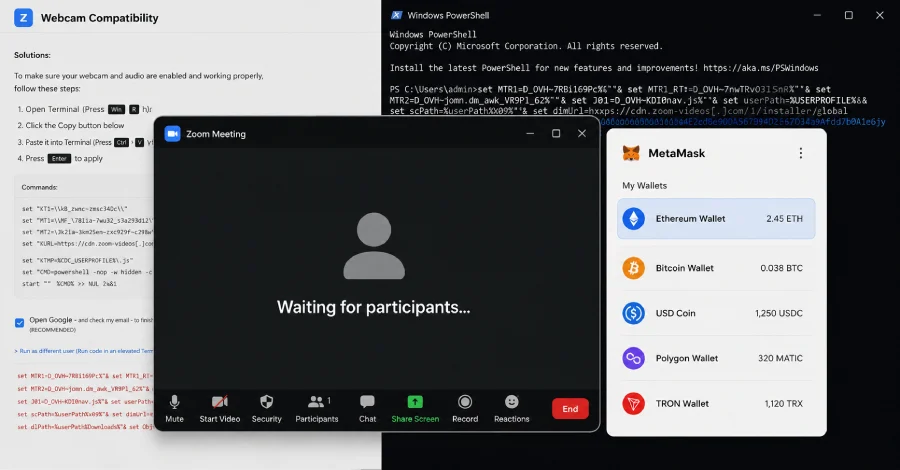
Once on the phishing page, users are prompted to enter their name and grant permissions to access their webcam – a seemingly standard request for any video call. This seemingly innocuous step, however, triggers the stealthy exfiltration of the webcam stream directly to the operators’ command-and-control panel via mediasoup WebRTC. Mediasoup is a legitimate WebRTC server-side library, but in this context, it is weaponized to silently monitor and record the victim without their knowledge.

Following this initial data capture, victims are led to another page, giving the impression that they have joined a Zoom call, but are "waiting for other participants." This holding pattern is strategically designed to maintain the illusion of a legitimate meeting while the attackers execute the next phase of their sophisticated plan.

Simultaneously, the phishing kit performs a detailed fingerprinting of the victim’s web browser to identify and inventory any installed cryptocurrency wallets. This reconnaissance step is crucial for BlueNoroff, as it allows them to confirm the target’s value before proceeding with malware delivery, ensuring their efforts are focused on high-yield individuals.

The "admin" then ostensibly joins the fake meeting. Here lies one of the most advanced elements of the campaign: the video feed the victim sees is not a live stream of a genuine participant. Instead, it is a pre-edited video featuring AI-generated headshots, crafted using tools like OpenAI ChatGPT, superimposed over authentic body movements captured during previous successful meetings. JUMPSEC elaborated on this, stating, "So, each successful attack feeds source material into the composites used against the next target. This combined with the Telegram account takeover method means that the fake meeting shows a plausibly familiar-looking face, moving with the body language of someone who was actually captured on camera." This innovative use of deepfake technology creates an extremely convincing illusion, making it incredibly difficult for victims to discern the deception, especially when the "person" on screen appears familiar.

BlueNoroff Zoom Phishing Kit Profiles Crypto Wallets Before Malware Delivery

Once the victim is thoroughly engaged in this fabricated environment, the operator utilizes their control panel to manipulate the meeting. They can send fake messages, such as "your mic isn’t working," further pressuring the victim to take action. This culminates in the critical prompt for a "Zoom SDK Update," which, when executed, delivers the final ClickFix payload – the malware designed to steal cryptocurrency or other sensitive information.

Campaign Refinements and Operator Tracing

JUMPSEC’s investigation uncovered two distinct lure variants, one for Zoom and another for Microsoft Teams. The Teams variant exhibited a higher degree of polish, incorporating features such as emoji reactions, mobile/tablet blocking, and more advanced wallet probes prior to malware delivery, indicating BlueNoroff’s continuous efforts to refine their tools and expand their target base. Both ClickFix attack chains are compatible with widely used operating systems, Windows and macOS, maximizing their potential reach.

Further forensic analysis led to the identification of an operator associated with the campaign. The Telegram exfiltration function within the stealer binary hard-codes the bot token and chat ID. Querying the Telegram API with this bot token linked it to an individual operating under the name "John" (@alchemy_john_mac). This "John" was observed as recently as May 2026, actively engaging with admins of the MAIV cryptocurrency group, inquiring about vesting contracts and fund withdrawals, further cementing the link to cryptocurrency theft.

An examination of the threat actor’s infrastructure revealed a relentless development cycle. Between May 31 and July 14, 2026, five distinct versions of the phishing kit were discovered, signifying continuous active development, testing, and fine-tuning efforts by BlueNoroff to enhance their attack capabilities and evasion techniques. This rapid iteration highlights the group’s dedication and resources.

Strategic Platform Choice: Why Zoom and Teams?

Sean Moran, Head of Threat Research and Enablement at JUMPSEC, provided crucial insights into BlueNoroff’s specific focus on Zoom and Microsoft Teams, eschewing platforms like Google Meet. He outlined three primary reasons:

  1. ClickFix Pretext Compatibility: The core of the ClickFix lure relies on prompting users to update their software. This tactic is highly effective for platforms like Zoom and Teams, which are known for their heavyweight desktop clients and frequent updates. Google Meet, being primarily browser-based, lacks this vulnerability to the "SDK update" pretext, making the social engineering less credible.
  2. Target-Application Fit: Zoom and Teams are prevalent communication platforms within the financial world, particularly among cryptocurrency investors, venture capitalists, and founders for "investor/partnership calls." Google Meet, while popular, is often perceived as more of a general customer calling platform rather than the preferred tool for high-stakes financial discussions, making targets less likely to be using it for sensitive interactions.
  3. Typosquatting Surface: The domain schemes for Zoom and Teams, often involving multiple sub-domains (e.g., "us.zoom.06webin.us"), offer a fertile ground for typosquatting and sophisticated spoofing. In contrast, "meet.google.com" is a simpler, more direct domain, making it harder to convincingly typosquat or create deceptive look-alike URLs that would fool discerning users.

Moran also noted that while the current phishing kit focuses solely on Zoom and Teams, the source code contains an unimplemented stub for a Google Meet equivalent. This suggests that while BlueNoroff has the technical capability to target Google Meet, their strategic decision to prioritize Zoom and Teams is driven by the factors outlined above, coupled with the proven effectiveness of their current setup.

BlueNoroff Zoom Phishing Kit Profiles Crypto Wallets Before Malware Delivery

Broader Implications and Cybersecurity Posture

The sophisticated nature of BlueNoroff’s latest campaign carries significant implications that extend far beyond the immediate threat. As the Web3 ecosystem and digital assets continue their rapid maturation, threat actors are increasingly recognizing that compromising the individuals who control access to these assets can be as lucrative, if not more so, than directly attacking the underlying infrastructure. This shift necessitates a re-evaluation of security paradigms.

JUMPSEC concludes that BlueNoroff’s relentless refinement of their attack methods serves as a stark reminder that organizations must adopt a holistic approach to security. This means treating identity, relationships, and communication channels as critical components of their overall security posture, rather than isolated elements.

To mitigate such advanced threats, organizations and individuals, particularly those in the cryptocurrency and financial sectors, must implement robust cybersecurity measures. These include:

  • Enhanced Employee Training: Comprehensive and regular training on identifying sophisticated phishing attempts, deepfake technology, and social engineering tactics is paramount. Employees must be educated on the subtle cues of deception, even when communications appear to come from trusted contacts.
  • Multi-Factor Authentication (MFA): Implementing strong MFA for all accounts, especially on communication platforms like Telegram, Zoom, and Microsoft Teams, can significantly reduce the risk of account takeover, even if credentials are compromised.
  • Vigilance with Software Updates and Permissions: Users should be highly suspicious of unsolicited requests for software updates or unusual permission grants, particularly during a live meeting. All updates should be initiated directly from official application sources, not through external links.
  • Verification Protocols: Always verify meeting links and sender identities through alternative, secure channels (e.g., a phone call to the known contact) before clicking any links or downloading files.
  • Robust Endpoint Security: Deploying advanced endpoint detection and response (EDR) solutions can help detect and block malicious payloads, even those disguised as legitimate software updates.
  • Threat Intelligence Sharing: Active participation in threat intelligence sharing communities can help organizations stay abreast of the latest tactics, techniques, and procedures (TTPs) employed by state-sponsored groups like BlueNoroff.

BlueNoroff’s current campaign exemplifies the evolving sophistication of state-sponsored cybercrime. By weaponizing trust, leveraging cutting-edge deepfake technology, and meticulously targeting high-value individuals, these actors pose an enduring and significant threat to the global financial landscape. A proactive, multi-layered security strategy is no longer optional but essential for safeguarding digital assets and sensitive information in this increasingly complex cyber environment.

July 24, 2026 0 comment
0 FacebookTwitterPinterestEmail
Cybersecurity & Hacking

OnTrac Notifies Customers of Data Breach Following Corporate Network Hack

by admin July 24, 2026
written by admin

OnTrac, a prominent American parcel delivery company, has publicly disclosed a significant data breach affecting its corporate network, potentially exposing personal details belonging to its extensive customer base. The revelation underscores the escalating cybersecurity threats faced by logistics firms, which handle vast amounts of sensitive consumer information. The company’s notification, while confirming access to customer names, has left other potentially compromised data elements undisclosed due to redaction in regulatory samples.

Chronology of the Cyberattack and Initial Response

The cyber incident was first detected on March 23, prompting an immediate internal investigation by OnTrac’s security teams. Forensic analysis subsequently revealed that unauthorized actors had gained access to specific files within the company’s corporate network over a period of three days, from March 20 to March 22. This narrow window of access suggests a targeted intrusion, where attackers swiftly navigated the network to locate and potentially exfiltrate data. The prompt detection and initiation of an investigation are critical steps in incident response, aiming to contain the breach and understand its full scope. However, the three-day window of unauthorized access highlights a period where customer data could have been at risk, necessitating a thorough forensic review.

Following the detection, OnTrac engaged a third-party cybersecurity specialist firm. This is a standard and recommended practice for companies experiencing sophisticated cyberattacks, as external experts bring specialized skills in forensic analysis, incident containment, and remediation that internal teams might lack. Their role is crucial in determining the exact nature of the breach, the methods used by the attackers, and, most importantly, precisely what data was accessed and potentially exfiltrated.

OnTrac’s Operational Footprint and Potential Scale of Impact

OnTrac operates as a private American parcel-delivery company, with a particular specialization in "last-mile" e-commerce deliveries—the final leg of a product’s journey to the consumer. The company was established in 2021 through the merger of OnTrac Logistics and LaserShip, creating a larger entity with an expanded operational reach. This merger likely integrated disparate IT systems and customer databases, potentially increasing the attack surface or creating complexities in securing a consolidated network.

The firm boasts an impressive operational scale, maintaining 102 locations across 35 states and collectively covering approximately 70% of the U.S. population. Its expansive network relies on a vast ecosystem, working with more than 7,000 independent delivery contractors. Given this extensive reach and reliance on a broad network of partners, the potential number of affected customers could be substantial. Each package processed, each delivery scheduled, and each customer interaction generates data that, if compromised, could lead to significant privacy concerns. The sheer volume of data handled by such a large logistics operation makes it an attractive target for cybercriminals seeking personal information for various malicious purposes, including identity theft and targeted phishing campaigns.

The Nature of Compromised Data and Unanswered Questions

OnTrac notifies customers of data breach after network hack

While OnTrac’s notification sample, shared with authorities, confirms that customer names were among the exposed data elements, the full extent of the compromised information remains unclear. The company redacted details regarding other types of data exposed in the publicly available notification. In similar data breaches within the logistics sector, "personal details" can encompass a wide range of sensitive information beyond names, including:

  • Physical addresses: Essential for parcel delivery, but also a key component for identity theft.
  • Email addresses and phone numbers: Used for communication regarding deliveries and often exploited for phishing scams.
  • Tracking information and delivery history: While seemingly innocuous, this can reveal patterns of consumer behavior or presence/absence from home, which could be exploited.
  • Account credentials: If customers had online accounts with OnTrac, usernames and hashed passwords could be at risk.
  • Limited payment information: Although less common in corporate network breaches compared to direct payment system compromises, some companies may store truncated payment card details or billing addresses.

Without a comprehensive disclosure of all data types, customers are left to speculate about the full extent of their risk. The lack of transparency, while sometimes legally permissible or strategically employed during an ongoing investigation, can heighten customer anxiety and hinder their ability to take appropriate protective measures. BleepingComputer, a cybersecurity news outlet, reached out to OnTrac for more details regarding the attack, the precise number of impacted clients, and whether a ransom was paid, but had not received a response by the time of publication.

Implications of "Re-secured and Not Distributed": A Possible Ransom Payment

A particularly notable statement from OnTrac’s notification indicates that the company took steps to "ensure the data described above was re-secured and not distributed." This phrasing is highly suggestive of a potential agreement between OnTrac and the attackers, which often involves a ransom payment. In the modern landscape of cybercrime, especially with ransomware and data extortion groups, it has become common for threat actors to not only encrypt a victim’s systems but also to exfiltrate sensitive data. They then use the threat of publicly leaking this stolen data as additional leverage to extort payment, a tactic known as "double extortion."

By stating that the data was "re-secured and not distributed," OnTrac implies that they have received assurances or taken actions to prevent the public release of the stolen information. This often comes at a significant financial cost, as companies weigh the reputational damage and potential legal liabilities of a data leak against the cost of a ransom. While paying a ransom can prevent immediate data leakage, it does not guarantee that the data will be permanently deleted by the attackers or that it won’t be sold privately on dark web forums. Furthermore, it can inadvertently incentivize future attacks, as it signals to cybercriminals that the organization is willing to pay. The global debate surrounding the ethics and effectiveness of paying ransoms continues, with law enforcement agencies often advising against it. At the time of writing, no specific ransomware or data extortion threat groups have publicly claimed responsibility for the attack on OnTrac, which could indicate ongoing negotiations or a successful, discreet resolution to prevent public disclosure by the attackers.

Mitigation Measures for Affected Customers

In response to the security incident and to help exposed customers mitigate potential risks, OnTrac is offering a complimentary 12-month subscription to a credit monitoring and identity protection service through CyberScout. This service is a common offering in the wake of data breaches, designed to alert individuals to suspicious activity related to their financial and personal identity. Customers typically have a 90-day enrollment deadline to activate this service, underscoring the urgency for vigilance.

Beyond the offered service, OnTrac, consistent with standard cybersecurity recommendations, has urged recipients of the breach notification letter to take proactive steps to protect themselves. These recommendations include:

  1. Reviewing Credit Reports: Regularly obtaining and reviewing free credit reports from the three major credit bureaus (Equifax, Experian, and TransUnion) allows individuals to spot unauthorized accounts or suspicious inquiries.
  2. Monitoring Account Statements: Carefully scrutinizing bank, credit card, and other financial account statements for any unusual or unrecognized transactions can help detect fraudulent activity early.
  3. Placing a Fraud Alert: A fraud alert on a credit file signals to creditors that they should take extra steps to verify identity before extending new credit. This is generally free and lasts for one year, though it can be renewed.
  4. Implementing a Credit Freeze: A credit freeze, also known as a security freeze, restricts access to a credit report, making it difficult for identity thieves to open new accounts in an individual’s name. This offers a higher level of protection than a fraud alert and can be lifted temporarily when applying for legitimate credit.

These measures are crucial because even if OnTrac’s actions have prevented public distribution of the data, the possibility of private sales or future misuse by the attackers cannot be entirely eliminated.

OnTrac notifies customers of data breach after network hack

Broader Implications for the Logistics Sector and Cybersecurity

The OnTrac data breach serves as a stark reminder of the persistent and evolving threat landscape faced by the logistics and supply chain sector. These companies are prime targets due to the vast amounts of personal and proprietary data they manage, the interconnectedness of their operations, and their critical role in the global economy. A successful attack can disrupt operations, compromise sensitive information, and erode customer trust.

The incident highlights several critical areas for organizations:

  • Robust Network Security: Companies must continuously invest in and update their network security infrastructure, including firewalls, intrusion detection systems, and advanced endpoint protection. Regular vulnerability assessments and penetration testing are essential to identify and address weaknesses before attackers exploit them.
  • Data Minimization and Segmentation: Storing only necessary data and segmenting networks can limit the scope of a breach. If attackers gain access to one segment, it should not automatically grant them access to the entire corporate network.
  • Employee Training: Human error remains a leading cause of security incidents. Comprehensive and ongoing cybersecurity training for all employees, focusing on phishing awareness, strong password practices, and secure data handling, is paramount.
  • Incident Response Planning: A well-defined and regularly tested incident response plan is crucial for minimizing the damage from a breach. This includes clear roles and responsibilities, communication protocols, and forensic capabilities.
  • Third-Party Risk Management: Given OnTrac’s reliance on 7,000+ independent contractors, assessing and managing the cybersecurity risks associated with third-party vendors and partners is increasingly vital. A breach in a less secure partner’s system could potentially create an entry point into the primary company’s network.

Regulatory Landscape and Potential Consequences

Data breaches of this magnitude invariably attract regulatory scrutiny. Depending on the residency of the affected customers, OnTrac could face investigations under various data privacy regulations, including state-specific laws like the California Consumer Privacy Act (CCPA) or broader federal regulations. Non-compliance with breach notification requirements or inadequate security measures can lead to significant fines and penalties.

Beyond regulatory action, OnTrac may also face civil litigation from affected customers seeking damages for privacy violations and potential identity theft. Such lawsuits can be costly, both in terms of legal fees and potential settlements, and can further damage a company’s reputation. The long-term financial implications of a data breach extend beyond immediate incident response costs, encompassing legal fees, regulatory fines, public relations campaigns, and the cost of offering credit monitoring services.

Conclusion: An Ongoing Challenge

The OnTrac data breach serves as another reminder of the relentless challenges in cybersecurity. While OnTrac has taken immediate steps to address the incident, including engaging specialists and offering identity protection services, many questions remain unanswered. The full extent of compromised data, the exact number of affected customers, and whether a ransom was paid are crucial details that will shape the long-term impact on the company and its clientele. As investigations continue, this event will undoubtedly contribute to the ongoing conversation about corporate responsibility in safeguarding personal data and the critical need for proactive, robust cybersecurity defenses in an increasingly interconnected and threatened digital world.

July 24, 2026 0 comment
0 FacebookTwitterPinterestEmail
Bitcoin & Altcoins

Ethereum Foundation Commences Treasury Staking to Enhance Ecosystem Funding and Demonstrate Commitment to Network Security

by admin July 24, 2026
written by admin

The Ethereum Foundation has begun staking a portion of its treasury, a strategic move aligning with its comprehensive Treasury Policy unveiled last year, signaling a deeper integration with and commitment to the operational integrity of the Ethereum network. This initiative involves approximately 70,000 Ether (ETH) being actively staked, with all generated rewards to be reinvested directly into the Ethereum Foundation’s treasury. This decision represents a significant step in the Foundation’s financial management and its active participation in the network’s consensus mechanism.

Background and Strategic Rationale

The Ethereum Foundation, a non-profit organization dedicated to supporting Ethereum and its ecosystem, has historically played a pivotal role in the development and promotion of the blockchain protocol. Its Treasury Policy, established in 2024, outlined a framework for managing its financial resources, including the prudent deployment of assets to generate sustainable income. The decision to stake ETH is a direct manifestation of this policy, aiming to create a stable and native revenue stream to fund ongoing research, development, grant programs, and other vital initiatives that fuel Ethereum’s growth and evolution.

This strategic pivot toward staking is not merely a financial decision; it is also a profound statement of confidence in the Ethereum network’s security and economic model, particularly following its transition to Proof-of-Stake (PoS) via "The Merge" in September 2022. By directly participating as a validator, the Foundation not only diversifies its income but also contributes to the overall security and decentralization of the network. The approximately 70,000 ETH being staked represents a substantial commitment, underscoring the Foundation’s long-term vision for Ethereum’s success.

Technical Implementation and Infrastructure Choices

The Ethereum Foundation’s staking operation is built upon robust, open-source software solutions, underscoring a commitment to transparency and community collaboration. After a thorough evaluation of numerous staking software options, the Foundation has selected Dirk and Vouch for its validator infrastructure.

Dirk, an open-source staking client, provides a secure and efficient way to manage validator keys and orchestrate staking operations. Vouch, a related open-source project, is designed to facilitate secure communication between staking operators and the Ethereum consensus layer. The choice of these specific tools reflects a preference for community-driven, auditable, and resilient infrastructure, which is paramount for an organization entrusted with significant ecosystem development responsibilities.

The Foundation’s technical setup is notable for its diversified approach to infrastructure. It employs minority clients, meaning they are not exclusively using the most popular client software for running nodes. This strategy is crucial for enhancing network resilience by reducing the risk of a single point of failure. If a bug or vulnerability were discovered in a dominant client, a network heavily reliant on it could face significant disruptions. By utilizing less common but equally functional clients, the Foundation contributes to a more robust and decentralized validator set.

Furthermore, the infrastructure is a hybrid model, combining hosted infrastructure with self-managed hardware deployed across several jurisdictions. This geographical and operational diversity mitigates risks associated with localized technical failures, regulatory changes, or geopolitical events. The self-managed hardware component allows for a higher degree of control and security over the validator operations, while hosted solutions offer scalability and flexibility.

Validator Configuration and Technical Specifications

A key technical detail of the Foundation’s staking setup is the use of Type 2 (0x02) withdrawal credentials. This specific type of credential offers several advantages for validators, particularly concerning future network upgrades and potential for withdrawals. While the specifics of these advantages are technical, they generally relate to improved flexibility and security in managing staked assets as the Ethereum protocol continues to evolve. For instance, Type 2 credentials are designed to be compatible with future protocol enhancements, potentially simplifying the process of moving staked ETH out of the consensus layer should the need arise, while also offering enhanced security features.

In terms of block production, the Foundation’s setup is designed to build blocks locally rather than relying on proposer-builder separation (PBS) sidecars. PBS is a more recent innovation in Ethereum’s staking architecture that separates the roles of block proposing and block building. While PBS aims to improve MEV (Maximal Extractable Value) distribution and network efficiency, building blocks locally offers direct control over the block construction process and can align with the Foundation’s ethos of operational transparency and direct participation. This approach allows the Foundation to maintain a granular understanding and control over the blocks it proposes.

Timeline and Deposit Details

The commencement of staking activities is a gradual process. The Ethereum Foundation has indicated that the first set of validators has already been activated. Information regarding these initial deposits and validator addresses is publicly accessible, demonstrating the Foundation’s commitment to transparency. For instance, one of the initial validators can be tracked on blockchain explorers like Beaconcha.in, providing verifiable proof of participation. The remaining deposits are slated to be deployed over the coming weeks, suggesting a phased rollout to ensure stability and meticulous oversight of the entire operation. This measured approach allows the Foundation to monitor performance, address any unforeseen issues, and ensure the smooth integration of all its staked ETH into the network.

Broader Implications and Analysis

The Ethereum Foundation’s direct participation in staking carries significant implications for the broader Ethereum ecosystem.

  • Ecosystem Funding and Sustainability: By generating native, ETH-denominated yield, the Foundation secures a more sustainable funding model for its multifaceted operations. This reduces reliance on external fundraising and allows for greater long-term planning and investment in critical ecosystem initiatives, from protocol research to developer grants and community outreach. The success of this staking strategy can serve as a model for other organizations and even individual stakers seeking to generate yield.

  • Network Security and Decentralization: Every ETH staked contributes to the security of the Ethereum network. By actively staking, the Foundation directly participates in the consensus mechanism, validating transactions and securing the blockchain. This direct involvement, especially with a significant amount of ETH, reinforces the network’s security posture. Furthermore, by employing minority clients and a diversified infrastructure, the Foundation actively promotes decentralization, making the network more resilient to attacks and failures.

  • Setting Standards for Transparency and Operational Management: The Foundation’s commitment to transparency, evident in the public disclosure of its Treasury Policy and the accessibility of validator information, sets a high benchmark for other staking participants. By openly sharing its technical choices, architectural decisions, and operational strategies, the Foundation provides valuable insights and best practices for the community. This transparency is crucial for building trust and fostering a collaborative environment within the Ethereum ecosystem. The operational realities of staking, including the associated risks and complexities, are being directly experienced and managed by the Foundation, offering a real-world case study for others to learn from.

  • Economic Alignment: The act of staking aligns the Foundation’s financial interests directly with the economic health and security of the Ethereum network. The rewards generated are directly tied to the network’s performance and the security provided by its validators. This creates a powerful feedback loop where the Foundation’s success is intrinsically linked to the success of Ethereum itself.

Inferred Reactions and Future Outlook

While direct statements from other parties were not included in the original content, the Ethereum Foundation’s proactive engagement in staking is likely to be met with positive reception from various stakeholders within the crypto community. Developers, researchers, and grant recipients who rely on the Foundation’s support will likely view this as a positive development for ecosystem funding. Other validators and staking service providers may observe the Foundation’s technical choices and operational strategies as valuable learning opportunities.

The long-term outlook for this initiative is one of continued contribution to Ethereum’s growth and security. As the Ethereum roadmap progresses through subsequent upgrades, the Foundation’s active participation and its generated yield will be instrumental in navigating the evolving landscape of decentralized technology. The success of this staking strategy could encourage further adoption of similar practices by other organizations and institutional investors, solidifying Proof-of-Stake as a cornerstone of Ethereum’s economic model.

This move by the Ethereum Foundation is more than just a financial maneuver; it is a deep endorsement of Ethereum’s future and a testament to its commitment to fostering a secure, decentralized, and sustainably funded ecosystem. By actively participating in the network’s consensus, the Foundation not only bolsters its own operational capacity but also strengthens the very foundation upon which the decentralized future is being built.

July 24, 2026 0 comment
0 FacebookTwitterPinterestEmail
Bitcoin & Altcoins

Variational Launches On-Chain Swaps to Bridge Traditional Finance and Decentralized Derivatives

by admin July 24, 2026
written by admin

Variational, a prominent peer-to-peer derivatives protocol operating on the Arbitrum network, has announced the forthcoming launch of its new on-chain product, Swaps, slated for release in the third quarter. This strategic introduction is anticipated to significantly enhance the protocol’s appeal to institutional investors, offering a novel avenue for engaging with decentralized finance while bridging the gap with traditional financial markets. The move signifies a critical step in Variational’s evolution, aiming to integrate the depth and predictability of traditional finance (TradFi) into the dynamic cryptocurrency landscape.

The official announcement, disseminated via Variational’s X (formerly Twitter) account, detailed the dual-pronged approach to this expansion. "Today, we’re enabling the first TradFi hedging venues integrated with the Omni Liquidity Provider (OLP) to begin improving spreads across a select set of our existing crypto-native perps, and announcing swaps, a new instrument type that will bring TradFi-level liquidity fully on-chain in Q3," the statement read. This indicates not only the introduction of a new product but also an immediate enhancement to existing offerings through the integration of TradFi liquidity providers.

Variational has established a strong reputation within the DeFi space for its innovative zero-fee perpetual futures, which extend across an impressive portfolio of over 450 markets. These markets encompass a diverse range of asset classes, including cryptocurrencies, stocks, commodities, and indices, with users able to leverage positions up to 50 times their initial stake. This broad market coverage and attractive fee structure have already garnered a substantial user base and trading volume.

The timing of the Swaps announcement is particularly noteworthy, following closely on the heels of Variational’s successful $50 million Series A funding round in May 2026. This significant capital infusion was spearheaded by prominent venture capital firms, including Dragonfly Capital, with substantial backing from Bain Capital Crypto and Coinbase Ventures. The substantial funding underscores the confidence investors have in Variational’s vision and its potential for future growth. Prior to this funding round, the protocol had already achieved an impressive milestone, recording over $200 billion in cumulative trading volume. According to data from DeFiLlama, Variational currently ranks as the fourth-largest perpetual futures decentralized exchange (DEX) by open interest, holding a substantial $1.15 billion.

Understanding Variational’s Swaps: A TradFi Gateway

At its core, Variational’s Swaps product represents a deliberate strategy to bring the mechanisms and liquidity of Traditional Finance (TradFi) directly onto the blockchain. This ambitious undertaking is facilitated through the protocol’s innovative Omni Liquidity Provider (OLP) vault. The OLP acts as a sophisticated, unified counterparty, aggregating liquidity not only from centralized exchanges (CEXs) and decentralized exchanges (DEXs) but crucially, from established TradFi dealers. This multi-faceted approach to liquidity sourcing is designed to overcome the inherent challenges of bootstrapping deep liquidity within a nascent on-chain ecosystem.

A key technological component enabling this is the adoption of a Request-for-Quote (RFQ) system. This system is strategically employed to circumvent the liquidity bootstrapping problem that often plagues traditional order book exchanges. By utilizing RFQ, Variational can offer a vast array of markets without the need to build liquidity from the ground up for each individual trading pair. Instead, it facilitates direct negotiations and transactions with liquidity providers, mirroring established practices in TradFi.

Currently, Variational offers perpetual futures on a range of assets including cryptocurrencies, gold, silver, copper, and oil. The impending launch of Swaps is set to dramatically expand this offering, with plans to list over 100 additional traditional finance markets throughout the summer. This expansion will encompass a broad spectrum of equities, major global indices, and various currency pairs, further solidifying Variational’s position as a comprehensive derivatives platform.

The official announcement highlighted several key features of the Swaps product that are designed to appeal to a sophisticated investor base. One of the most significant distinctions lies in the choice it offers traders. For instance, when a user searches for "Nvidia," they will encounter both "$NVDA-PERP" and "$NVDA-SWAP." The perpetual future ($NVDA-PERP) would be the preferred choice for traders prioritizing 24/7 trading availability and those who wish to benefit from or hedge against funding rate fluctuations. Conversely, the swap ($NVDA-SWAP) is tailored for users who value superior liquidity depth and seek the predictability of fixed carry payments. This granular choice empowers traders to align their trading strategy with their specific risk appetite and market outlook.

Differentiating Swaps from Perpetual Futures

Variational has been meticulous in delineating the differences between its existing perpetual futures and the new Swaps product, while emphasizing their synergistic coexistence on the platform. Perpetual futures have emerged as the dominant derivative instrument in the on-chain space, typically employing either order book or automated market maker (AMM) based mechanisms. A defining characteristic of perps is their reliance on funding rates, which are periodically adjusted to maintain price alignment with the underlying spot market. However, the reliance on variable funding rates and the transparency of public liquidity can present challenges for large trades, potentially leading to increased costs or reduced efficiency.

Swaps are engineered to directly address these inherent limitations of perpetual futures. While perps often depend on the open, public order book, Swaps are structured to facilitate bilateral, signed agreements between traders and TradFi dealers, mediated through the OLP. This off-exchange negotiation, facilitated by OLP, allows for more customized and potentially deeper liquidity. Furthermore, a critical distinction lies in the cost structure: perps are subject to variable funding costs that can fluctuate significantly based on market sentiment and trading activity. In contrast, Swaps are designed to offer a stable and predictable carry cost, estimated to be around 4.5%. This predictability is a significant draw for institutional participants who require greater certainty in their cost of capital and hedging strategies.

The broader implication of Variational’s Swaps launch is its potential to democratize access to institutional-grade trading instruments. As perpetual futures continue to gain traction, exemplified by the growth of platforms like Hyperliquid, Variational’s move aims to bridge the gap between the rapidly evolving decentralized finance ecosystem and the established, liquid markets of traditional finance. By offering institutional-grade liquidity and execution directly on-chain, Swaps provide traders with a compelling alternative to traditional perpetual contracts, potentially attracting a new wave of sophisticated participants to the Arbitrum network and the broader DeFi landscape. This innovation could set a new benchmark for how derivatives are traded in the digital asset space, fostering greater integration and mutual benefit between TradFi and DeFi.

Broader Implications for the DeFi Ecosystem

The introduction of Variational’s Swaps product is not merely an incremental addition to its existing offerings; it represents a significant step towards maturing the decentralized derivatives market. For years, the DeFi space has grappled with challenges related to liquidity depth, regulatory uncertainty, and the perception of being a niche market for retail investors. Variational’s strategy directly confronts these issues by leveraging the established infrastructure and deep liquidity pools of TradFi.

The OLP vault, by acting as a unified counterparty and aggregating liquidity from diverse sources, including traditional financial institutions, is a game-changer. This approach mitigates the "cold start" problem that many new DEXs face, where insufficient liquidity deters traders. By tapping into existing TradFi markets, Variational can offer robust liquidity from day one, making its platform attractive to a wider range of participants, including sophisticated hedge funds and proprietary trading firms that might otherwise be hesitant to engage with fully on-chain solutions.

Furthermore, the RFQ system offers a more bespoke and potentially efficient execution mechanism compared to fully on-chain order books. This mirrors the Over-The-Counter (OTC) trading desks that are prevalent in TradFi, allowing for larger block trades and customized deal structures without the price impact often associated with public exchanges. This can be particularly beneficial for institutional investors looking to enter or exit large positions discreetly.

The predictable carry cost of 4.5% for Swaps is another significant differentiator. In traditional finance, understanding and managing the cost of carry is fundamental to many trading and hedging strategies. By offering this stability on-chain, Variational removes a layer of uncertainty that can deter risk-averse institutional players. This contrasts sharply with the often volatile and unpredictable funding rates associated with perpetual futures, which can become prohibitively expensive during periods of high market volatility or skewed open interest.

The strategic choice of Arbitrum as the deployment network is also noteworthy. Arbitrum is a leading Layer 2 scaling solution for Ethereum, known for its lower transaction fees and faster processing speeds compared to the Ethereum mainnet. This provides a more cost-effective and user-friendly environment for trading, which is crucial for attracting and retaining users, especially in high-frequency trading scenarios. The growth of Arbitrum as a hub for DeFi innovation makes it an ideal launchpad for products aiming to attract institutional capital.

A Future of Hybrid Markets

The success of Variational’s Swaps could pave the way for a future where on-chain and off-chain markets are more seamlessly integrated. This integration could lead to a more efficient and robust global financial system, where the transparency and accessibility of DeFi are combined with the depth and stability of TradFi. It also raises important questions about the evolving role of traditional financial institutions in the digital asset space. As more TradFi players engage with DeFi protocols, it signals a potential shift in market dynamics and the development of new financial products and services.

However, challenges remain. Regulatory clarity surrounding decentralized derivatives and the integration of TradFi entities into DeFi protocols is still evolving. Ensuring compliance and managing counterparty risk will be critical for the long-term sustainability of such initiatives. Variational’s approach of integrating with established TradFi hedging venues suggests a cautious and deliberate strategy to navigate these complexities.

In conclusion, Variational’s launch of Swaps represents a significant advancement in the quest to build more mature and inclusive decentralized financial markets. By bridging the gap between TradFi and DeFi, the protocol is not only expanding its own offerings but also contributing to the broader evolution of the digital asset landscape, making it more accessible and appealing to a wider array of sophisticated investors. The coming quarters will be crucial in observing the adoption and impact of this innovative product.


Disclaimer: This article is for informational purposes only and does not constitute financial advice. Cryptocurrencies and digital assets are subject to high volatility and risk. Investors should conduct their own thorough research and consult with a qualified financial advisor before making any investment decisions. For more information, please review our Terms and Conditions and Privacy Policy.

July 24, 2026 0 comment
0 FacebookTwitterPinterestEmail
Web3 & DApps

Worldcoin Foundation Secures $52.5 Million in Strategic Token Sale Led by Pantera Capital to Bolster World ID Adoption

by admin July 24, 2026
written by admin

The Worldcoin Foundation announced the first close of a significant strategic token sale, raising $52.5 million, spearheaded by leading digital asset investment firm Pantera Capital. This infusion of capital marks a pivotal moment for the foundation’s ambitious "proof of human" identity verification system, World ID, signaling a concerted push towards broader adoption across enterprises, individual consumers, and emerging artificial intelligence agents. Notably, all Worldcoin (WLD) tokens involved in this initial close are subject to a 12-month lock-up period, underscoring investor confidence in the long-term vision of the project.

The funding round saw participation from other prominent investors, including Bain Capital Crypto, Eightco Holdings, Selini Capital, and Susquehanna Crypto. The deliberate 12-month lock-up period is interpreted as a strong signal of commitment, differentiating this investment from short-term speculative plays and highlighting a shared belief in the foundational utility of World ID. The primary objective of this capital injection is to accelerate the development and deployment of World ID, aiming to establish it as the de facto standard for verifying human identity in an increasingly digital and AI-driven world.

The Imperative of "Proof of Human" in the Agentic Web

The Worldcoin Foundation’s core proposition centers on the escalating need for robust mechanisms to distinguish human users from the burgeoning population of artificial intelligence agents. As AI technologies become more sophisticated and integrated into online interactions, platforms face an unprecedented challenge in maintaining authenticity and preventing malicious activities, such as bot farms, spam, and sophisticated disinformation campaigns. World ID aims to address this critical gap by providing a privacy-preserving, decentralized identity solution.

The system relies on a unique biometric verification process: an iris scan conducted using a specialized device known as the "Orb." This scan generates a unique digital credential that confirms an individual’s humanity without revealing their personal identity. This approach is designed to balance the need for verifiable uniqueness with the fundamental right to privacy.

Cosmo Jiang, a General Partner at Pantera Capital, articulated the firm’s conviction in the project’s potential: "The need for Proof of Human is becoming acutely clear with the acceleration of AI development, and we see this in the influx of enterprise traction," he stated in a press release. This sentiment is echoed by the Worldcoin Foundation’s ongoing integration efforts. The foundation highlighted that World ID is being actively embedded into several prominent platforms throughout 2026, including Zoom, Docusign, Okta, Vercel, and Tinder. This strategic integration across diverse sectors—from communication and document management to identity and security, and even social applications—demonstrates a comprehensive strategy to make World ID accessible and functional across a wide spectrum of digital interactions.

Furthermore, the foundation pointed to the release of World ID 4.0 earlier in 2026, an iteration specifically designed to cater to the needs and demands of enterprise-level applications. This signifies a commitment to providing robust, scalable, and secure solutions for businesses looking to leverage World ID for enhanced security, fraud prevention, and improved user experiences.

Scaling Adoption Amidst Market Fluctuations

This significant funding round coincides with the three-year anniversary of Worldcoin’s public launch in July 2023. Over this period, the Worldcoin network has witnessed substantial growth, accumulating more than 39 million members and achieving over 18 million verified human identities through the Orb. This growth trajectory reflects the project’s expanding reach and the increasing demand for its unique identity verification solution.

World Raises $52.5 Million With Every Token Locked Up for a Year

The current funding follows a previous significant capital raise in May 2025, where Worldcoin secured $135 million from notable investors Andreessen Horowitz and Bain Capital Crypto. At that time, the network had registered 26 million users, underscoring a consistent upward trend in user acquisition and platform development.

Interestingly, this substantial investment in the World ID ecosystem and its underlying token, WLD, occurs even as the WLD token has experienced significant market volatility. As of recent reporting, WLD was trading around $0.37, representing a substantial decrease of approximately 97% from its peak in March 2024. This disparity between the project’s developmental momentum and the token’s market performance highlights a potential divergence between fundamental utility and speculative market sentiment.

Despite the token’s price performance, investor confidence in the long-term vision of Worldcoin remains robust. Tom Lee, a board member of Eightco, a Nasdaq-listed company that holds a substantial stake of over 283 million WLD tokens, emphasized the foundational importance of Worldcoin’s technology. "Worldcoin’s technology is among the most important building blocks to secure and verify interactions in an increasingly digital driven world," Lee stated in the release. This perspective suggests that investors are focusing on the inherent value and potential of World ID as a critical piece of digital infrastructure, rather than solely on short-term token price movements.

Broader Implications and Future Outlook

The success of this token sale and the strategic partnerships being forged position World ID as a potentially transformative technology. In an era where digital identity is increasingly fractured and susceptible to fraud, a verifiable and privacy-preserving "proof of human" system could revolutionize how online interactions are managed.

The implications extend beyond simply differentiating humans from bots. World ID could empower individuals with greater control over their digital identities, enabling them to participate in online communities, access services, and engage in economic activities with enhanced security and privacy. For enterprises, it offers a potent tool for mitigating fraud, ensuring fair distribution of resources (such as one-person-one-vote mechanisms in decentralized governance or preventing sybil attacks), and fostering more trustworthy online environments.

The integration with AI agents is particularly forward-looking. As AI agents become more autonomous and capable of interacting on behalf of humans, verifying their non-human status will become crucial for maintaining the integrity of digital systems. World ID’s ability to provide a clear distinction between human and artificial intelligence could be instrumental in shaping the future of human-AI collaboration and the governance of AI-driven systems.

The Worldcoin Foundation’s strategy appears to be one of building tangible utility and user adoption, with the expectation that this will eventually translate into broader market recognition for the WLD token. The focus on enterprise integrations and the development of robust technological infrastructure suggests a long-term commitment to establishing World ID as a critical component of the future internet.

The project’s journey, marked by both rapid growth and market challenges, reflects the dynamic and often unpredictable nature of the blockchain and cryptocurrency space. However, with significant backing from established investors and a clear roadmap focused on addressing a pressing global need, Worldcoin and its World ID system are poised to play a significant role in shaping the digital identity landscape for years to come. The coming months and years will be critical in observing how effectively the Worldcoin Foundation can translate this substantial funding and strategic vision into widespread, real-world adoption.

July 24, 2026 0 comment
0 FacebookTwitterPinterestEmail
FinTech Innovations

Ant International Secures $1.2 Billion in Series A Funding to Accelerate Global Fintech Expansion

by admin July 24, 2026
written by admin

Ant International, the burgeoning global business arm of Chinese fintech behemoth Ant Group, has successfully raised a substantial $1.2 billion in its inaugural Series A funding round. This significant capital infusion, which saw participation from existing major stakeholders Ant Group and Alibaba Group Holding, alongside a cohort of undisclosed international institutional investors, is poised to propel Ant International’s ambitious global expansion strategies and catalyze further innovation across its diverse portfolio of financial services.

The primary objective of this funding is to fortify Ant International’s presence and operational capabilities in key international markets, encompassing Asia, Europe, the Middle East, and Latin America. The company aims to leverage this financial boost to enhance its offerings in critical areas such as merchant payment solutions, comprehensive account management systems, and the development of more inclusive financial services tailored for businesses of all scales, from nascent startups to established enterprises. Currently, Ant International boasts an expansive partnership network that connects over 150 million merchants worldwide with more than two billion user accounts, facilitated by a robust ecosystem of banks, card companies, mobile payment providers, and cutting-edge technology platforms.

Established as an independent entity in 2024 and strategically headquartered in Singapore, a globally recognized hub for financial technology and innovation, Ant International operates through four principal business units. These include Alipay+, its flagship digital consumer payments platform renowned for its extensive reach and user-friendly interface; Antom, a sophisticated provider of payment processing technology and essential infrastructure; WorldFirst, a dedicated cross-border payments and foreign exchange service catering to businesses; and Bettr, a comprehensive digital banking and financial services platform designed to meet modern financial needs. Collectively, these divisions support an impressive array of over 300 distinct payment methods across more than 220 markets, integrating with over 50 mobile payment partners and more than 10 national QR code payment systems.

The recent funding announcement coincides with the unveiling of strategic new partnerships that underscore Ant International’s commitment to expanding its service footprint and enhancing its product offerings. Through its Antom division, the company is collaborating with Freedom Holding Corporation to streamline the online shopping experience for consumers in Kazakhstan purchasing goods from China. Simultaneously, via its Bettr division, Ant International has partnered with QI Tech to broaden access to credit facilities for both e-commerce merchants and consumers in Brazil, addressing a critical need in the rapidly growing digital commerce landscape. These collaborations highlight Ant International’s proactive approach to identifying and capitalizing on emerging market opportunities and fulfilling evolving consumer and business demands.

Finovate Global Singapore: Funding a Unicorn, Partnering on Payments, and Fighting Digital Fraud

Alipay+ Forges Strategic Alliance with Hong Kong’s Hang Seng Bank to Enhance Cross-Border Payments

In parallel with its significant funding achievement, Ant International’s prominent payment gateway, Alipay+, has been actively expanding its global network of financial institution partners. This expansion is particularly noteworthy in the Asia-Pacific region, a dynamic market experiencing a surge in cross-border mobile payment activity. The latest addition to Alipay+’s growing roster of collaborators is Hang Seng Bank, a leading financial institution based in Hong Kong. This partnership marks a significant milestone as it represents Alipay+’s inaugural banking collaboration within Hong Kong.

Through this strategic alliance, Hang Seng Bank will empower its mobile app users with the capability to conduct payments via simple QR code scans. This integrated payment solution will be operational not only within mainland China but also across more than 100 million merchants spanning over 55 countries and regions globally. This integration aims to provide a seamless and convenient payment experience for Hang Seng Bank customers engaging in cross-border transactions, whether for leisure or business.

Rannie Lee, Head of Retail Banking and Wealth at Hang Seng Bank, articulated the strategic importance of this collaboration, stating, "Customers increasingly expect seamless payment solutions when traveling overseas. By partnering with Alipay+, we’re enhancing customer experience by bringing a simple QR payment service within our mobile app – combining broad merchant acceptance with the simplicity of paying and tracking spending in just one place. This is a strategic step in strengthening our payments proposition and expanding our cross-border connectivity, as we continue to build a digital ecosystem that keeps banking simple, safe, and smart." This sentiment underscores the growing consumer demand for integrated, user-friendly payment solutions that transcend geographical boundaries.

Alipay+’s platform is designed to simplify the integration process for banks, enabling them to offer robust cross-border payment services through a single, streamlined connection. This approach not only enhances efficiency for financial institutions but also significantly expands their reach and service capabilities. The platform’s interoperability extends to over 10 national QR code systems, including prominent ones like Malaysia’s DuitNow, Thailand’s PromptPay, and Uzbekistan’s HUMO. This feature allows partner banks to scale their mobile payment adoption more effectively, circumventing the need for numerous individual agreements with merchants across diverse markets.

Finovate Global Singapore: Funding a Unicorn, Partnering on Payments, and Fighting Digital Fraud

The timing of this announcement is particularly pertinent given the robust growth projections for outbound cross-border payments originating from the Asia-Pacific region. Forecasts from industry analysis firm FXC Intelligence indicate that this payment volume is anticipated to surge to $20.1 trillion by 2032, more than doubling its 2024 valuation. This burgeoning market presents a significant opportunity for Alipay+ and its banking partners, such as Hang Seng Bank, to capture a substantial share of this expanding payment landscape. Hang Seng Bank, a wholly owned subsidiary of the HSBC Group, boasts a rich history dating back to its founding in 1933. The institution serves a substantial customer base of nearly four million individuals and businesses, offering a comprehensive suite of financial services including retail banking and wealth management, commercial banking, insurance, asset management, and markets and securities services.

Singapore and Thailand Enhance Cooperation to Combat Evolving Digital Fraud Threats

In a significant move to bolster regional financial security, the Monetary Authority of Singapore (MAS) and the Bank of Thailand (BOT) have formalized a Memorandum of Understanding (MoU) aimed at strengthening their collaborative efforts in combating digital fraud. This pact builds upon an existing, albeit less formal, cooperative relationship between the two regulatory bodies, signifying a commitment to a more robust and structured approach to enhancing cybersecurity defenses across their respective financial ecosystems.

Chia Der Jiun, Managing Director of MAS, emphasized the critical nature of this partnership, stating, "Cyber risks and digital fraud are key transnational threats confronting our region and call for closer collaboration to combat these risks." This declaration highlights the increasingly interconnected nature of financial systems and the parallel rise in sophisticated cyber threats that transcend national borders.

The newly inked MoU outlines a clear framework for enhanced cooperation between MAS and BOT. Key provisions include the regular exchange of crucial information pertaining to cybersecurity incidents and digital fraud trends, encompassing updates on evolving cybersecurity regulations and relevant threat intelligence specific to the financial sector. Beyond information sharing, the agreement also prioritizes capacity building through joint staff training programs, facilitated research exchanges, and collaborative policy discussions. Furthermore, MAS and BOT commit to conducting joint cross-border cybersecurity and crisis management exercises. These exercises are designed to simulate real-world scenarios, thereby enhancing operational readiness and improving the coordinated response capabilities of both regulatory bodies in the event of a major cyber incident.

Finovate Global Singapore: Funding a Unicorn, Partnering on Payments, and Fighting Digital Fraud

Vitai Ratanakorn, Governor of the Bank of Thailand, echoed the sentiment of urgency and the necessity of bilateral cooperation. He stated, "As cyber threats and digital fraud continue to evolve rapidly amidst growing financial connectivity and technological advancement, closer collaboration between MAS and BOT will help deepen mutual capabilities and achieve seamless cross-border intelligence exchange to counter emerging threats." This statement underscores the dynamic and ever-evolving nature of cyber threats, necessitating continuous adaptation and enhanced collaborative strategies.

The signing of the MoU took place during the 31st Executives’ Meeting of East Asia-Pacific Central Banks Governors, held in Singapore. This significant regional gathering also served as a platform for discussing other pressing economic and financial issues. Among the topics on the agenda were the prevailing uncertainties in the global economic landscape and the profound impact of artificial intelligence (AI) on the economies and financial systems of countries within the East Asia region. Discussions delved into the potential financial risks associated with large-scale AI investments, provided updates on regional advancements in AI and digitalization, and explored the prospective use of AI technologies to augment the operational efficiency and analytical capabilities of central banks. This confluence of discussions at the governors’ meeting underscores the interconnectedness of cybersecurity, technological innovation, and macroeconomic stability in the contemporary global financial environment.

July 24, 2026 0 comment
0 FacebookTwitterPinterestEmail
FinTech Innovations

Weave Robotics Launches Isaac 1 Home Robot for Laundry and Tidying, Ushering in New Era of Domestic Automation with Subscription Models

by admin July 24, 2026
written by admin

Weave Robotics has officially opened preorders for its highly anticipated home robot, the Isaac 1, marking a significant advancement in domestic automation. This innovative robot is designed to tackle mundane household chores such as sorting laundry, making beds, and tidying rooms, with initial deliveries slated for California this fall and broader U.S. availability extending through 2027. The introduction of Isaac 1 signals a potential paradigm shift in how consumers access and utilize advanced robotics in their homes, with a compelling pricing strategy that includes both outright purchase and a flexible monthly subscription option.

The Isaac 1 robot represents a substantial evolution from Weave Robotics’ previous offering, the Isaac 0, a stationary laundry-folding unit that successfully completed over 2,000 operational hours since its February launch. The new model boasts a sophisticated design featuring a wheeled base for mobility, allowing it to navigate household spaces with ease. When in operation, the robot extends to a height of 5 feet 9 inches and utilizes two dexterous arms capable of manipulating clothing, bedding, and various household items. This design choice, prioritizing a wheeled base over legs, is a strategic move to mitigate the significant engineering and manufacturing costs associated with complex bipedal locomotion, a factor that directly influences its market positioning.

Pricing and Market Positioning: A Strategic Calculation

The pricing of the Isaac 1 is positioned as a deliberate response to the high cost of competing home humanoid robots. Consumers can acquire the Isaac 1 outright for $7,999. Alternatively, a more accessible monthly payment plan is available at $449, with a refundable $250 preorder deposit required. This pricing structure is particularly noteworthy when compared to rivals like 1X Technologies’ Neo, a bipedal home humanoid robot, which commands a price tag of $20,000 or a monthly fee of $499. Weave Robotics’ decision to forgo legs in favor of a wheeled platform significantly reduces the need for expensive actuators, contributing to its more competitive price point, as highlighted by Tech Times.

However, even with this competitive edge, the upfront cost of $7,999 or the monthly outlay of $449 remains a substantial financial commitment for the average household. This starkly illustrates the persistent challenge in bridging the gap between "affordable by robotics standards" and "affordable for most households." Historically, home robot prices have typically commenced around $19,000 and can easily exceed $100,000, effectively relegating them to a niche market for early adopters and affluent consumers. The Isaac 1, while positioned below this established high-end market, is still priced in a similar bracket to a major appliance or a pre-owned vehicle, rather than an everyday consumer good.

The Rise of Subscription Models in Robotics

The strategic adoption of a subscription model by Weave Robotics and 1X Technologies underscores a growing trend in the robotics industry aimed at democratizing access to advanced automation. This approach mirrors the successful transition of the software industry from perpetual licenses to Software-as-a-Service (SaaS) models. By offering robots on a monthly payment plan, companies can significantly lower the initial financial barrier to entry for consumers who may be hesitant to make a large, one-time capital investment.

This strategy is already gaining traction internationally. In China, AGIBOT launched Sharebot, a rental platform that allows customers to access humanoid robots for as little as $517 per day, a service that even includes an on-site human operator. The platform experienced remarkable success in its initial three months, registering over 5,500 orders. AGIBOT projects the global robot rental market to reach an impressive $1.5 billion by the end of 2026.

While AGIBOT’s current market focus is on corporate events, retail promotions, and livestreamed content, the underlying economic principle is transferable to the domestic sphere. Renting transforms a large, potentially uncertain purchase into a manageable, recurring expense. This shift is crucial for consumer adoption, as it allows individuals to integrate robotic assistance into their monthly budgets, much like they do with other services and utilities. Furthermore, subscription models empower robotics manufacturers to maintain greater control over their hardware, enabling seamless over-the-air updates and ensuring all deployed units are running the latest software. This is particularly beneficial for early-stage home robots, where consumer confidence in the robot’s ability to consistently perform novel tasks is still developing.

Technological Underpinnings and Operational Capabilities

The Isaac 1 is engineered with a focus on practical functionality. While it operates autonomously by default, Weave Robotics has incorporated a "teleoperation assistance" feature. This mechanism allows human operators to remotely access live camera feeds from within a customer’s home if the robot’s AI encounters a task it cannot complete independently. This intelligent fallback system ensures that the robot remains functional and useful even in complex or unforeseen domestic scenarios.

Addressing privacy concerns, Weave has stated that for the Isaac 0, remote specialists only have access to the specific camera feeds from the robot’s head and wrist necessary for task correction. Importantly, no audio is collected. While the company has not explicitly confirmed whether this footage is used to train its AI, the transparency around data access is a critical factor for consumer trust and adoption. The ability to refine AI capabilities through real-world operational data is a cornerstone of improving robotic performance, but it must be balanced with robust privacy protections.

The Future of Home Robotics: Beyond the Initial Purchase

The introduction of Isaac 1 and the emphasis on subscription models by companies like Weave Robotics and 1X Technologies signal a pivotal moment for the home robotics market. The persistent high cost of these advanced machines has been a significant impediment to widespread adoption. By offering flexible payment plans and potentially shifting the paradigm from ownership to access, these companies are attempting to overcome this hurdle.

The implications of this shift are far-reaching. If successful, it could lead to a future where sophisticated robots are as common in households as smartphones or home appliances. This would not only alleviate the burden of domestic chores for individuals and families but also open up new avenues for employment in robot maintenance, operation, and AI development.

However, challenges remain. The reliability and adaptability of home robots are still being tested. Consumer trust, particularly concerning data privacy and the effective functioning of AI in complex home environments, will be paramount. The ability of robots like Isaac 1 to seamlessly integrate into daily life, rather than becoming an additional source of complexity, will ultimately determine their long-term success.

The journey from concept to widespread consumer adoption for home robots has been a long one, marked by technological advancements and evolving market strategies. The Isaac 1, with its blend of practical functionality, competitive pricing, and innovative subscription model, appears poised to be a significant player in this ongoing evolution. As Weave Robotics continues to refine its technology and expand its reach, the dream of a truly automated home may be closer than ever before. The company’s commitment to iterative development, as evidenced by the evolution from Isaac 0 to Isaac 1, suggests a long-term vision for creating robots that are not only capable but also accessible and integrated into the fabric of everyday life. The coming years will be crucial in determining whether Isaac 1 and its ilk can fulfill this promise and redefine domestic life as we know it.

July 24, 2026 0 comment
0 FacebookTwitterPinterestEmail
Newer Posts
Older Posts

Recent Posts

  • EF Protocol Cluster Releases Unified Tier List for Hegotäel Upgrade
  • Kraken Expands Its Digital Asset Offerings With the Official Launch of KOR Protocol Token Trading
  • Zcash Ecosystem Faces Pivotal Week with Network Upgrade 7 and Landmark Governance Restructuring
  • Navigating the Digital Identity Crisis: An Illustrated Primer on Anonymous Authentication in the Age of AI and Age-Verification Laws
  • Verifone Integrates Visa Featurespace Adaptive AI to Revolutionize Global Fraud Detection and Payment Security

Recent Comments

No comments to show.
  • Facebook
  • Twitter

@2021 - All Right Reserved. Designed and Developed by PenciDesign


Back To Top
Dr Crypton
  • Home
  • About Us
  • Contact Us
  • Cookies Policy
  • Disclaimer
  • DMCA
  • Privacy Policy
  • Terms and Conditions

We are using cookies to give you the best experience on our website.

You can find out more about which cookies we are using or switch them off in .

Dr Crypton
Powered by  GDPR Cookie Compliance
Privacy Overview

This website uses cookies so that we can provide you with the best user experience possible. Cookie information is stored in your browser and performs functions such as recognising you when you return to our website and helping our team to understand which sections of the website you find most interesting and useful.

Strictly Necessary Cookies

Strictly Necessary Cookie should be enabled at all times so that we can save your preferences for cookie settings.