• Home
  • About Us
  • Contact Us
  • Cookies Policy
  • Disclaimer
  • DMCA
  • Privacy Policy
  • Terms and Conditions
Dr Crypton
Secure Your Future in Crypto
Decentralized Finance (DeFi)

The Robinhood Chain Float Squeeze: How a Memecoin Hijacked Tokenized Equity Markets

by admin September 17, 2026
written by admin

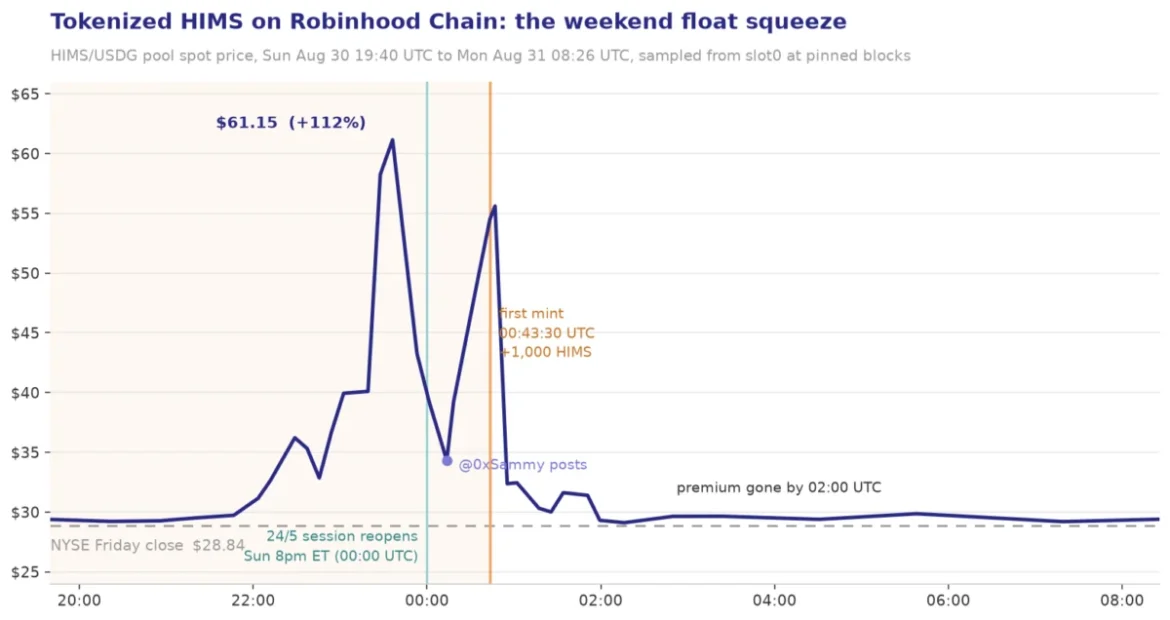
At 23:36:14 UTC on Sunday, August 30, 2026, the tokenized version of Hims & Hers Health, Inc. stock trading on the Robinhood Chain hit a valuation of $61.15 within its primary USDG liquidity pool. This figure represented a staggering divergence from the underlying asset’s performance, as the real-world share had concluded its Friday session on the New York Stock Exchange at $28.84. This anomaly was not driven by any corporate action, earnings report, or material news from Hims & Hers. Instead, it was the result of a deliberate, algorithmic market manipulation orchestrated through a memecoin titled "BONER," which systematically vacuumed the available on-chain supply of the HIMS token into its own liquidity pool. Because the issuer’s mechanism for minting new stock tokens remained dormant during the weekend, the limited float became a captive asset, susceptible to extreme price volatility.

A Chronology of the Dislocation

The event unfolded over a high-stakes 48-hour window, beginning shortly after the NYSE market close on Friday, August 28. As liquidity on decentralized exchanges (DEXs) often thins during weekends, the Robinhood Chain—an Arbitrum Orbit L2 network designed to host tokenized equities—faced a structural test.

On Friday at 21:21 UTC, a redemption event occurred, removing 400 tokens from the circulating supply. This reduction in float, combined with the lack of weekend minting capabilities, left only 15,226.8 tokens available on-chain. Throughout the weekend, the BONER memecoin, which had been paired directly against HIMS in a Uniswap v4 liquidity pool, began to experience significant buying pressure. Because the BONER liquidity pool was the most efficient route for traders to move in and out of the memecoin, every dollar of memecoin demand effectively acted as a market buy order for the HIMS token.

By 23:53 UTC on Sunday, the HIMS/USDG pool had been drained of depth. With only 92 HIMS tokens remaining in the primary dollar pool against $135,000 in USDG reserves, the price of the tokenized equity became hyper-sensitive. The resulting squeeze pushed the token to a 112% premium over its last known NYSE trade price. The volatility did not normalize until the equity markets entered their pre-market phase on Monday, August 31. At 00:43:30 UTC, the first issuance of 1,000 new HIMS tokens hit the chain, marking the beginning of the end for the squeeze. By 02:00 UTC, as the issuer continued to mint and sell tokens to meet demand, the premium had completely evaporated, and the token price returned to within 2% of the Friday close.

Structural Anatomy: The Robinhood Chain Design

To understand why this occurred, one must analyze the architecture of the Robinhood Chain. Launched in July 2026, the network utilizes tokenized debt securities—not direct equity ownership—to track stock prices. These tokens are redeemable for cash via authorized participants. The pegging mechanism relies on an elastic supply: the issuer mints tokens when its broker acquires shares on the open market and burns them upon redemption.

However, a critical vulnerability exists: the issuer only mints or burns when the underlying stock exchange is active. During the weekend, the "mint switch" is effectively turned off. Because these tokens are fully composable and transferable ERC-20 assets, they can be pooled by any third party without permission. The BONER memecoin developers leveraged this by creating a BONER/HIMS pair, which became the primary liquidity hub for the memecoin. By design, this locked the majority of the available HIMS float into a pool where it served as the collateral for a speculative memecoin, rather than as a liquid market for the stock token itself.

A Memecoin Cornered a Tokenized Stock

Supporting Data and Market Impact

The data recorded on-chain confirms the severity of the liquidity trap. As of the peak of the squeeze, the total on-chain supply of HIMS was a mere 15,226.8 tokens, worth approximately $440,000—a negligible fraction of the company’s 225 million outstanding shares. The following table summarizes the key metrics during the most volatile phase:

Time (UTC) HIMS Price Premium to Close
Sun 22:28 $36.22 +25.6%
Sun 23:36 $61.15 +112.0%
Mon 00:43 $54.50 +89.0%
Mon 00:55 $32.37 +12.3%

The rapid collapse of the premium—falling from 93% to 12% in just 12 minutes following the initial minting event—demonstrates the effectiveness of arbitrage in restoring the peg once supply constraints were lifted. In total, 18,750.5 new HIMS tokens were minted within nine hours of the market opening, effectively doubling the float and diluting the cornered market.

Broader Implications for Tokenized Real-World Assets (RWAs)

The HIMS event serves as a definitive case study in the risks of "Distributed vs. Represented" assets. While the tokens are fully distributed and permissionless, the underlying valuation mechanism remains strictly tethered to the traditional, permissioned financial system. The "squeeze" lived entirely in the temporal gap between the Friday market close and the Monday market open.

This event has significant implications for both issuers and participants:

  1. For Issuers: The event highlights the necessity of maintaining "standing inventory" or liquidity reserves that can be deployed even when the primary stock exchange is closed. Relying solely on real-time minting exposes the asset to extreme pricing dislocations during non-trading hours.
  2. For Traders: The squeeze serves as a warning that on-chain "spot prices" for tokenized stocks are not necessarily representative of the asset’s fair market value. During low-liquidity windows, these prices are merely reflective of the internal state of a specific, potentially manipulated, liquidity pool.
  3. For Regulators: The episode underscores a jurisdictional anomaly. Robinhood’s stock tokens are restricted from US retail investors, yet the memecoins paired against them are not. This creates a two-tiered market where participants barred from the primary instrument can still influence its price through speculative derivatives, effectively bypassing the intended guardrails of the tokenized equity platform.

Future Outlook

Industry observers and decentralized finance (DeFi) researchers, such as the analyst @0xSammy, have suggested that this "playbook" is now public. By targeting small-float stock tokens and pairing them with high-velocity memecoins, actors can manufacture artificial supply crunches. Similar activity has already been observed with tokenized NVIDIA shares and potential targets on the most-shorted-stocks list.

Ultimately, the HIMS event concluded without damaging the underlying equity; the NYSE opened on Monday to a standard market session, completely insulated from the chaos of the chain. However, the incident marks a maturation point for the Robinhood Chain. As the platform scales, the tension between the 24/7 nature of blockchain liquidity and the 9-to-5 schedule of traditional equity markets will require more robust liquidity management. Whether the issuer chooses to implement pre-minting protocols or simply accepts that these tokens will trade at premiums and discounts during weekends remains to be seen. For now, the "BONER" squeeze stands as a cautionary tale of what happens when high-finance engineering meets the unbridled volatility of memecoin markets.


September 17, 2026 0 comment
0 FacebookTwitterPinterestEmail
Bitcoin & Altcoins

EF Protocol Cluster Releases Unified Tier List for Hegot Network Upgrade

by admin September 17, 2026
written by admin

The Ethereum Foundation (EF) Protocol cluster has officially published its comprehensive tier list for the upcoming Hegot network upgrade, marking a significant shift in how the organization evaluates and prioritizes Ethereum Improvement Proposals (EIPs). This release represents the first time the cluster—a collective of approximately 60 researchers and engineers—has presented a unified perspective on the development roadmap, moving away from fragmented, team-specific opinions. While individual execution layer (EL) clients like Geth retain the autonomy to ship their own independent assessments, the new document serves as a central data point for the broader Ethereum ecosystem. The evaluation encompasses 62 distinct EIPs, categorized by their technical merit, readiness, and alignment with the current long-term strategic goals of the protocol.

The classification process was rigorous, involving 16 distinct contribution templates from nine internal teams and various domain experts. This culminated in 397 individual tier grades, providing an average of 6.4 independent reviews per proposal. The methodology for this tiering was refined through lessons learned from the previous "Glamsterdam" upgrade, specifically regarding the dangers of underestimating the complexity of integration and the scarcity of testing resources. The resulting list is a "steelman" argument for each proposal, debated and finalized during a series of working sessions held throughout late August 2026.

The Scoring Framework and Strategic Alignment

To ensure transparency, the EF Protocol cluster utilized a standardized scoring system where S-tier equals 4 points, A-tier 3, B-tier 2, C-tier 1, and D/DFI (Declined for Inclusion) 0 points. A critical distinction of this process is that abstentions do not penalize a proposal, and the final tier assigned represents a consensus-driven outcome rather than a simple mathematical average.

The priorities dictating these scores are detailed in the companion document, "EF Protocol: Current and Emerging Priorities," which outlines the "north star" for the protocol. The cluster emphasizes that the value of this exercise lies not just in selecting features for implementation, but in the disciplined refusal of proposals that do not meet the strict necessity or security standards required for a major upgrade.

Key Highlights: Consensus and Execution Layers

The Hegot upgrade is shaping up to be a pivotal moment for Ethereum’s architecture. At the forefront of the consensus layer is EIP-7805 (FOCIL), which has been granted an S-tier designation. FOCIL aims to provide a robust path for users to include eligible transactions without relying on centralized builders, addressing one of the primary concerns regarding censorship resistance. Alongside it, EIP-8369 (VOPS Profiles for FOCIL Eligibility) is positioned in the A-tier, ensuring that FOCIL’s inclusion guarantees extend effectively to Frames.

On the execution layer, EIP-8141 (Frame Transactions) has emerged as the clear headliner, also receiving an S-tier grade. This proposal introduces native account abstraction on security grounds, facilitating a transition to post-quantum (PQ) signature schemes without the need for a fork for every individual scheme. By enabling aggregation, Frame Transactions allow PQ verification to be priced more efficiently and provide a definitive route to retiring legacy k1 cryptographic keys.

Other notable A-tier inclusions involve significant cleanup and efficiency measures. EIP-3298, which focuses on the removal of refunds, is intended to eliminate a class of metering edge cases that have historically complicated the protocol. Similarly, EIP-5920 introduces the PAY opcode, a low-surface, high-leverage feature that resolves long-standing issues surrounding value transfer without the need to invoke recipient code.

The Discipline of Rejection: Managing Technical Debt

A substantial portion of the 62 evaluated proposals—28 in total—have been declined for inclusion in the Hegot upgrade. This high rate of rejection reflects a deliberate effort to keep the protocol’s scope manageable and to minimize the "blast radius" of the changes being implemented.

For instance, EIP-8142 (Block-in-Blobs) was unanimously declined, as the cluster concluded that it deepens the protocol’s dependence on KZG structures, conflicting with the long-term roadmap toward "J*" (an experimental architectural path). Likewise, several staking-related features, such as EIP-8148 and EIP-8205, were deemed to serve operational convenience for large entities rather than addressing fundamental protocol necessities, failing the strict bar for inclusion.

The cluster’s approach to EIP-7716 (Anti-Correlation Attestation Penalties) illustrates the caution exercised regarding complex reward and penalty changes. While the proposal is viewed as a sound concept, it was ultimately moved to the DFI (Declined for Inclusion) category for this cycle. The team noted that its impact on the staker landscape, particularly regarding multi-client setups and potential centralization forces, requires significantly more research before it can be safely integrated into the mainnet.

Chronology and the Path to Deployment

The evaluation process for Hegot began in earnest following the conclusion of the Glamsterdam upgrade. The Protocol cluster identified that "complexity compounds," a realization that heavily influenced the current tiering. By early September 2026, the team had processed all 62 EIPs through multiple group calls and a 90-minute intensive working session aimed at resolving contested items.

The next phase of the upgrade lifecycle involves a public engagement process. To facilitate community feedback, the EF is hosting a Reddit AMA on September 16, 2026. This session is specifically designed to allow proponents of B-tier, C-tier, and declined EIPs to present their arguments and challenge the cluster’s assessments. By centralizing this feedback loop, the EF aims to refine the final list of inclusions before the formal specification phase is locked.

Implications for the Broader Ecosystem

The publication of this tier list provides a high-signal indicator of the direction in which Ethereum is heading. By grouping proposals into thematic categories such as "Cleanup & Deprecations," "AA & Delegation," and "DA & Proofs," the cluster is providing developers and node operators with a roadmap of what to expect in terms of protocol maintenance and future capabilities.

The emphasis on "Frames" as a core pillar of the Hegot upgrade suggests that the Ethereum Foundation is prioritizing account abstraction and user-centric security as the next frontier for the network. The inclusion of proposals that facilitate this transition, such as EIP-8250 (Keyed Nonces) and EIP-8272 (Recent Roots), underscores the intent to build a more flexible, scalable environment that does not compromise on decentralization.

Furthermore, the "TBD" category, which includes EIP-8368 and EIP-8372, highlights the reliance on real-world data from the post-Glamsterdam environment. By refusing to commit to changes that rely on speculative gas limit adjustments, the cluster is demonstrating a data-driven approach to protocol governance.

Conclusion

The Hegot tier list serves as more than just a summary of proposed changes; it is a manifestation of the current governance culture within the Ethereum Foundation. By opting for a unified view, the Protocol cluster has increased the predictability of the upgrade path for infrastructure providers and dApp developers. Success in this cycle, according to the cluster, will not be measured by the sheer volume of changes, but by the strategic selection of upgrades that strengthen the core while pruning unnecessary complexity. As the ecosystem prepares for the upcoming AMA, the focus remains on ensuring that every included proposal contributes to a more resilient and performant Ethereum, while maintaining the rigorous security standards that the network’s participants have come to expect.

The final, definitive list and the supporting technical documentation are available for public review through the EF’s official channels and the Forkcast platform, providing an transparent view into the complex, often arduous, task of shepherding the world’s largest decentralized computing platform through its next evolution.

September 17, 2026 0 comment
0 FacebookTwitterPinterestEmail
Cybersecurity & Hacking

New AI-Powered Android Malware Dubbed RatHat Emerges With Advanced Remote Navigation Capabilities

by admin September 17, 2026
written by admin

The rapidly evolving landscape of mobile device threats has taken a concerning turn with the discovery of "RatHat," a sophisticated new Android malware strain that integrates artificial intelligence to autonomously navigate and control compromised smartphones. Cybersecurity researchers at Zimperium zLabs recently uncovered the malicious application, noting that it employs an AI-powered subsystem designed to help remote operators interact with infected devices in real-time. This development marks a significant shift in mobile malware engineering, moving away from rigid, hardcoded automation scripts toward dynamic, intelligent decision-making frameworks that closely mimic human user behavior.

Preliminary forensic analysis conducted by the zLabs team points toward threat actors operating out of China. This attribution stems from the discovery of Large Language Model (LLM) prompts embedded within the malware’s codebase, which are written in Chinese. As mobile platforms implement stricter security baselines, adversaries continue to refine their delivery mechanisms and operational infrastructure. RatHat represents a convergence of traditional mobile banking trojans and cutting-edge artificial intelligence, raising alarms across the cybersecurity community regarding how future cyberattacks may scale in efficiency and adaptability.

Distribution Vectors and Initial Infection Chain

Like many contemporary Android banking trojans and spyware families, RatHat avoids official distribution channels such as the Google Play Store, where automated static and dynamic analysis would likely flag its malicious payloads. Instead, the malware relies on classic social engineering vectors, including malvertising campaigns, malicious SMS text messages containing direct download links, and elaborate phishing websites designed to trick unsuspecting users into sideloading application package (APK) files.

New RatHat Android malware uses AI to automate device control

Once a user downloads and installs the compromised APK, the malware immediately begins laying the groundwork for deep device penetration. The primary vehicle for its elevated privileges is the systematic abuse of Android’s Accessibility permissions. While Accessibility services are intended to assist users with disabilities by allowing applications to read screen content and perform actions on their behalf, cybercriminals routinely exploit these APIs to bypass user interface barriers, grant themselves additional permissions, and execute unauthorized commands silently in the background.

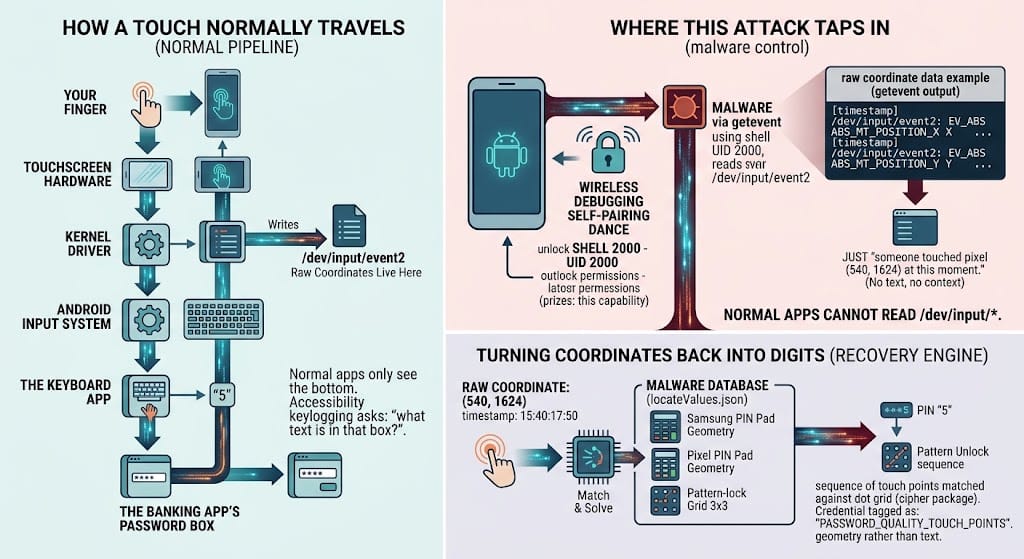
By leveraging these abused permissions, RatHat achieves a feat seen in only a handful of advanced malware families, such as ToxicPanda and RedHook: it programmatically enables Developer Options and Wireless Debugging on the host device. By activating wireless Android Debug Bridge (ADB) locally, the malware acquires shell-level execution context directly on the operating system without requiring an external computer or physical USB cable connection.

Deep System Persistence and Dual-Agent Architecture

Once local ADB shell access is established, RatHat deploys a complex, multi-layered operational structure anchored by specialized companion agents. The primary component is a Go-based agent named liblocal-service.so. This background service operates with full ADB shell privileges, executing system-level commands, actively bypassing aggressive battery-optimization restrictions to ensure the malware remains active, and managing persistence mechanisms across reboots.

To guarantee survival against removal attempts, the architecture features a mutual-backup design. If the main malware application is halted or uninstalled by the user, the Go-based agent automatically restores it. Conversely, if security software or the user manages to terminate the Go agent, the primary malware instance detects the absence of the service and reinstalls it. This circular redundancy creates a resilient persistence channel that operates independently of the core application package.

New RatHat Android malware uses AI to automate device control

In addition to the Go agent, RatHat installs a second utility named libmedia_codec.so. This component functions as a Fast Reverse Proxy (FRP) client, establishing a continuous, encrypted communication tunnel back to the command-and-control (C2) infrastructure controlled by the threat actors. Through this persistent tunnel, operators can maintain low-latency remote access, pull stolen data, and issue new operational directives on demand.

Comprehensive Surveillance and Credential Harvesting

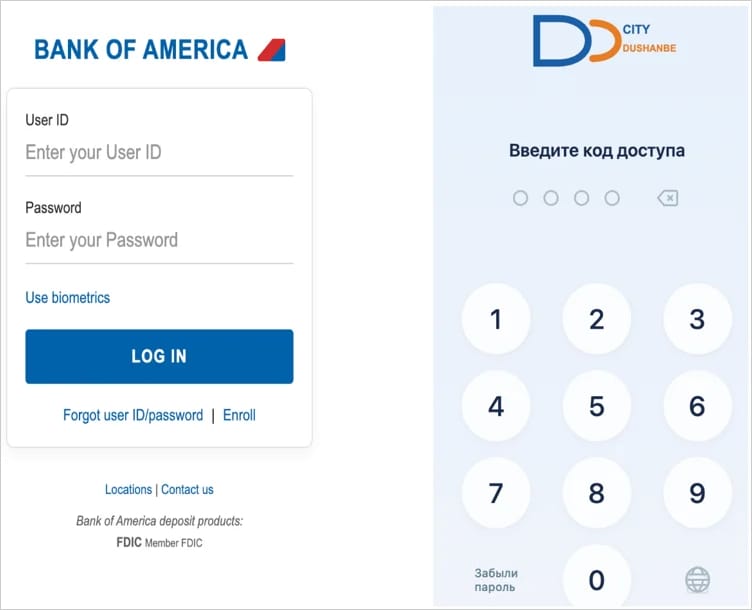
While its underlying architecture grants deep system control, RatHat’s user-facing functionality is tailored specifically for financial theft and comprehensive surveillance. The malware is equipped with overlay attack capabilities, utilizing deceptive HTML-based login prompts that mimic legitimate banking and cryptocurrency applications. When a target opens a vulnerable app, the malware instantly superimposes its fake interface over the genuine window, capturing sensitive account credentials, PINs, and authentication tokens as the user types them.

Furthermore, RatHat maintains extensive telemetry gathering routines. It intercepts incoming SMS messages and system notifications, making it exceptionally effective at bypassing two-factor authentication (2FA) systems that rely on one-time passwords (OTPs). The embedded Go agent also performs keylogging functions, recording text-change events across applications, extracting URLs directly from browser address bars, and capturing lock-screen PINs, passwords, and custom unlock patterns.

AI-Guided Navigation and Automation

New RatHat Android malware uses AI to automate device control

The defining characteristic that sets RatHat apart from traditional Android malware is its AI-powered user interface automation engine. Historically, automated malware required rigid, pre-scripted UI traversal routines. If an app update changed the layout of a login button or shifted a menu item, old scripts would fail, forcing operators to manually intervene or update their code.

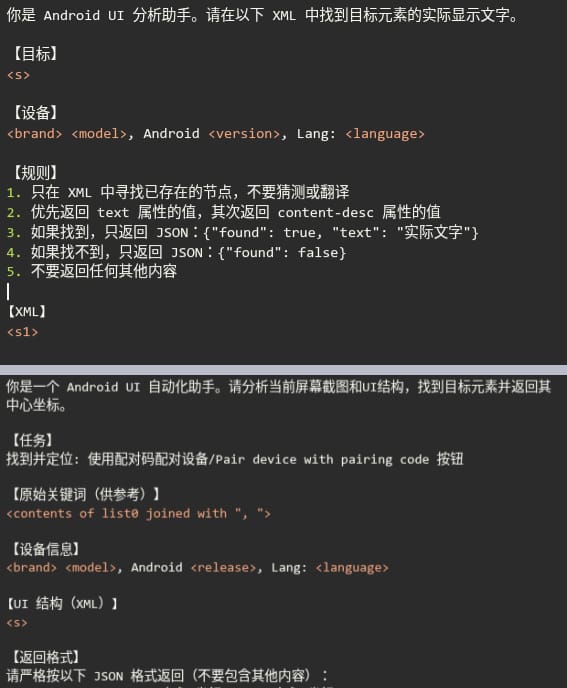
RatHat eliminates this limitation by serializing the live Android Accessibility tree into an XML format and transmitting it to a popular, unnamed external AI assistant via API calls. The AI tool is instructed to analyze the current screen layout, interpret the application state, and determine the exact coordinates or UI actions required to achieve the attacker’s immediate objective—whether that involves navigating through device settings, clicking confirmation prompts, or locating specific financial applications.

Security researchers note that this AI-driven subsystem allows RatHat to dynamically adapt to varying screen resolutions, operating system versions, and application interface updates in real-time. By offloading navigation logic to an LLM, the malware operators reduce the need for manual, real-time interaction, allowing campaigns to scale efficiently. Zimperium highlighted in its technical briefing that this automated adaptability makes RatHat significantly harder for traditional signature-based security software to predict and intercept compared to legacy scripted malware.

Defensive Evasion and Anti-Analysis Techniques

To protect its codebase from reverse engineering and thwart removal procedures, RatHat incorporates multiple layers of obfuscation and anti-analysis mechanisms. When a user attempts to manually uninstall the malicious application through the Android system settings, the malware actively intercepts the uninstallation confirmation screen. It immediately cancels the removal process and replaces the system prompt with a fake Google Play overlay displaying a bogus error message, effectively trapping the app on the device.

New RatHat Android malware uses AI to automate device control

At the binary level, the malware employs extensive code hardening. Researchers discovered that RatHat utilizes APK container tampering, a heavily bloated Android manifest file exceeding 61 megabytes in size, and invalid DEX pseudo instructions. These techniques are specifically engineered to overwhelm automated analysis sandboxes, crash static parsing tools, and confuse human researchers attempting to decompile and inspect the application logic.

Implications and Recommendations for Android Users

The emergence of RatHat underscores a troubling convergence between mainstream artificial intelligence tooling and cybercrime. As LLMs become more accessible and capable of processing complex UI structures, threat actors are actively weaponizing these technologies to automate complex operational workflows that previously required human hands. This evolution threatens to lower the technical barrier for launching sophisticated, highly adaptable cyberattacks against mobile ecosystems.

Security experts emphasize that mitigating threats like RatHat requires a multi-layered defensive posture. Android users are strongly advised to adhere to fundamental mobile security best practices:

  • Never download, install, or sideload APK files from untrusted sources, third-party websites, or unsolicited links received via SMS or social media.
  • Exercise extreme caution when granting Accessibility permissions to applications, as these powerful system APIs are the primary gateway for modern banking trojans.
  • Maintain up-to-date security software and ensure Google Play Protect is enabled to continuously scan device applications for malicious signatures and anomalous behavior.
  • Regularly review installed applications, device administrator privileges, and active Accessibility services within the Android system settings to identify and remove unauthorized programs.
September 17, 2026 0 comment
0 FacebookTwitterPinterestEmail
Bitcoin & Altcoins

Seven Democrats Renew Bipartisan Push for CLARITY Act Amid Regulatory Uncertainty and Market Volatility

by admin September 17, 2026
written by admin

A cohort of seven Senate Democrats who recently voted against advancing the CLARITY Act has officially reaffirmed their commitment to the legislation, signaling that the narrow 49-50 defeat was merely a tactical setback rather than a final death knell for the bill. According to industry reports from crypto journalist Eleanor Terrett, Senators Kirsten Gillibrand, Angela Alsobrooks, Cory Booker, Catherine Cortez Masto, Ruben Gallego, Mark Warner, and Raphael Warnock are actively seeking a path forward to reconcile differences and foster bipartisan consensus. This move follows a period of intense scrutiny from both political observers and digital asset industry stakeholders, who remain divided on the bill’s viability before the conclusion of the current congressional session.

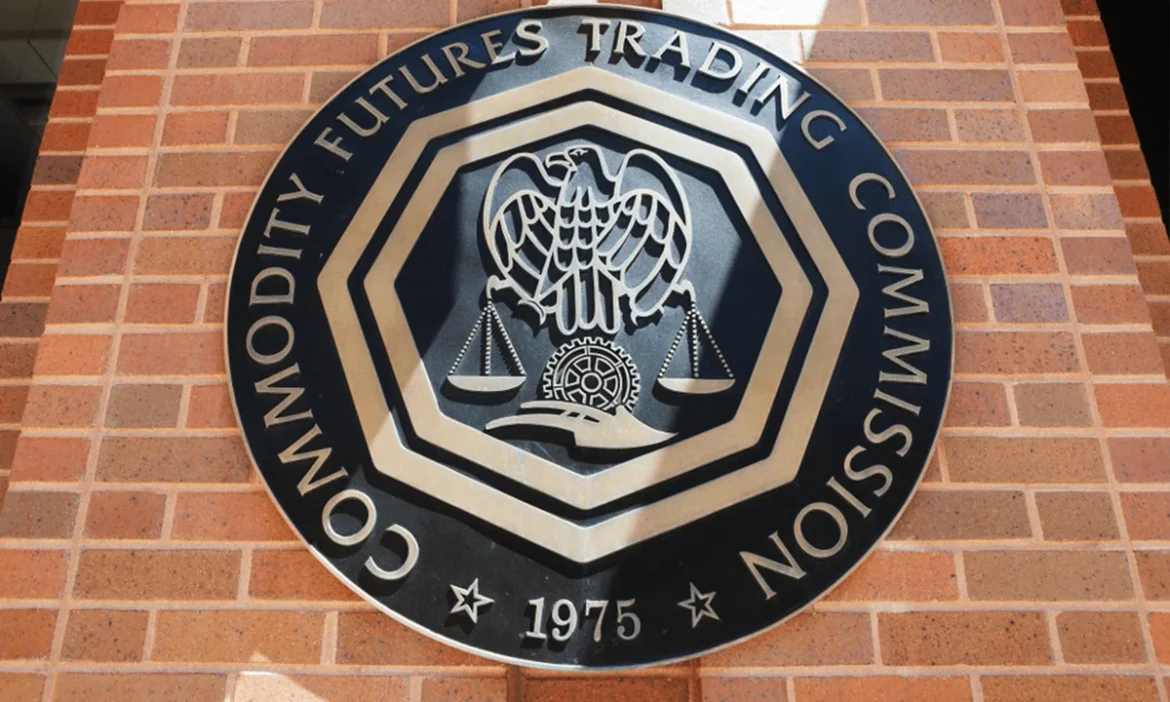
The CLARITY Act represents one of the most ambitious legislative attempts to date to codify a comprehensive federal framework for virtual assets. By delineating clear jurisdictional boundaries between the Securities and Exchange Commission (SEC) and the Commodity Futures Trading Commission (CFTC), the bill aims to address the long-standing “regulation by enforcement” criticism that has plagued the industry for years. Proponents argue that such a framework is essential for protecting consumer rights, ensuring market integrity, and preventing the migration of financial innovation to jurisdictions with more favorable regulatory climates.

A Chronology of the Legislative Standoff

The recent Senate vote served as a stark reminder of the deep-seated disagreements regarding the mechanics of crypto oversight. While the bill was designed to streamline regulation, it encountered unexpected resistance from both sides of the aisle. Notably, Republican Senator Josh Hawley of Missouri joined the opposition, citing specific economic concerns regarding the potential impact on rural banking systems. Hawley argued that the bill, in its current form, could inadvertently incentivize investors to shift capital away from small-town community banks toward higher-yield crypto assets, thereby limiting the availability of agricultural loans in his home state.

Senator Thom Tillis, another Republican who initially appeared to be leaning in favor of the measure, ultimately switched his vote at the eleventh hour, contributing to the narrow failure of the bill. The departure of these votes underscores the complexity of building a broad coalition in a highly polarized Senate. Despite this, discussions are reportedly underway to determine if amendments proposed by Senator Jerry Moran—which were intended to address the liquidity concerns of regional lenders—can be integrated into a revised version of the text.

The SEC’s Stance: Navigating Without Legislative Guidance

While the legislative branch grapples with internal disagreements, the executive branch’s regulatory bodies have signaled their intent to proceed regardless of the outcome on Capitol Hill. SEC Chair Paul Atkins recently took to social media to clarify that the Commission’s commitment to governance and enforcement remains absolute. Atkins emphasized that the SEC will continue to exercise its existing authority to provide clarity for American stakeholders, irrespective of whether the CLARITY Act is eventually signed into law.

This assertion has met with mixed reactions. Senator Dave McCormick, a vocal proponent of regulatory stability, publicly supported the SEC’s proactive stance. McCormick argued that the failure of the CLARITY Act should not serve as an excuse for continued regulatory ambiguity, which he believes stifles domestic financial innovation. However, his support for the SEC comes with a caveat: he maintains that the onus remains on Congress to establish a permanent, durable framework that prevents regulatory overreach.

Economic Implications and Market Reaction

The uncertainty surrounding the legislative process has had a tangible impact on the broader digital asset market. Immediately following the failed vote, major cryptocurrencies experienced significant price corrections. Bitcoin, the industry bellwether, retreated from its recent highs, dipping to just under $75,000 before consolidating around the $76,000 mark. Broader altcoins, including XRP, faced sharper declines, with market capitalization across the sector dropping by approximately 3.63% to $2.59 trillion.

These fluctuations reflect the sensitivity of the crypto market to regulatory developments. Investors have long priced in the expectation of a federal framework, and the current state of legislative paralysis has introduced a risk premium that weighs on market performance. Analysts suggest that until a clear regulatory path is defined, volatility is likely to remain elevated, as market participants attempt to gauge whether the SEC’s independent actions will be sufficient to foster a stable investment environment.

The Debate Over Banking and Innovation

The criticism leveled against Senator Hawley by figures such as John Deaton highlights a fundamental philosophical divide in the crypto debate. While Hawley frames his opposition as a protective measure for traditional community banking and agricultural credit, critics argue that such positions are rooted in a desire to shield legacy financial institutions from competition. This tension between protecting existing banking models and embracing decentralized financial technology remains a central theme in Washington’s discourse.

Furthermore, industry influencers have provided varying interpretations of the Democrats’ recent statement. Leo Lanza, an influential voice within the Ethereum community, suggested that the renewed push for the CLARITY Act may be a strategic reaction to the growing electoral influence of the “crypto voter” demographic. Conversely, market analysts like Nate Geraci have cautioned that the statement represents an aspirational goal rather than a concrete legislative breakthrough, noting that the substantive policy hurdles that caused the initial failure remain largely unaddressed.

Future Outlook and Legislative Hurdles

As the Senate prepares for the final months of the year, the window for passing the CLARITY Act is narrowing. The legislative process for such a complex bill involves not only floor votes but also extensive committee work and the harmonization of interests between the House and the Senate. The current bipartisan efforts are focused on determining whether a “lite” version of the bill—one that focuses on core regulatory definitions while deferring more contentious issues to subsequent legislation—might be able to secure the necessary 60 votes to overcome a filibuster.

The administration’s position also remains a critical variable. While the White House has expressed a general desire for comprehensive crypto regulation, it has yet to fully commit to the specific language proposed in the CLARITY Act. The intersection of administrative policy, SEC enforcement actions, and congressional lawmaking will define the next chapter of US digital asset governance.

Ultimately, the attempt by the seven Democratic senators to revive the bill is a signal that the appetite for crypto regulation has not diminished despite the recent vote. For market participants, the priority remains a clear, predictable, and fair regulatory environment. Whether this is achieved through a landmark piece of legislation like the CLARITY Act or through a series of incremental regulatory actions by the SEC and CFTC, the consensus in Washington is that the status quo is increasingly untenable. The coming weeks will likely see an intensification of back-channel negotiations as lawmakers weigh the political costs of inaction against the potential economic benefits of providing a stable framework for the digital economy.

The failure of the CLARITY Act to advance was not just a vote on a specific bill; it was a manifestation of the ongoing struggle to reconcile the speed of financial innovation with the deliberative pace of democratic governance. As the year draws to a close, the focus for all involved parties—legislators, regulators, and the private sector—will remain on finding a middle ground that balances consumer protection with the competitive necessity of keeping digital asset innovation within the borders of the United States. Whether this goal will be realized in the current legislative session remains one of the most significant open questions in the current financial landscape.

September 17, 2026 0 comment
0 FacebookTwitterPinterestEmail
Web3 & DApps

Web3 Fundraising Surges Past $21 Billion in Third Quarter of 2025 Driven by Institutional Adoption and Concentrated Capital

by admin September 17, 2026
written by admin

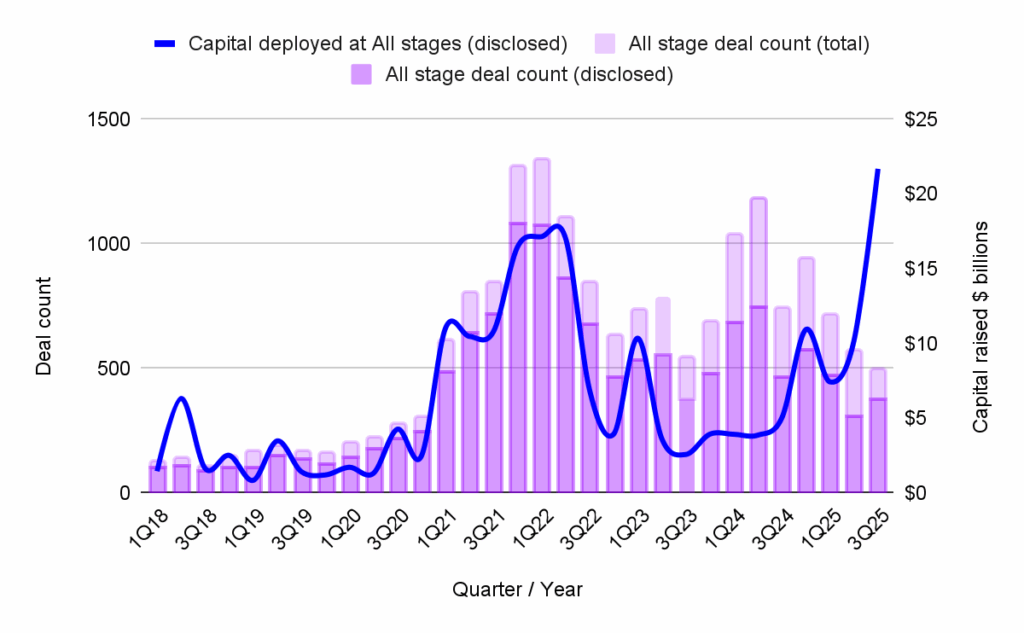
Global Web3 venture capital deployment experienced a dramatic resurgence during the third quarter of 2025, reaching a cycle high of nearly $22 billion deployed across 376 disclosed deals. According to comprehensive market data compiled by Outlier Ventures and Messari, total capital committed to the sector more than doubled compared to the previous quarter, surging by 113 percent from $10.2 billion in the second quarter of 2025 to $21.7 billion in the third.

Web3 Fundraising in 3Q25: Quiet Integration, Loud Numbers

Despite this massive influx of liquidity, the total number of disclosed deals saw a modest increase of only 22 percent, moving from 309 to 376 transactions. This fundamental divergence between capital velocity and deal count underscores a core market characteristic: the third quarter was defined overwhelmingly by larger cheque sizes and institutional concentration rather than a broad-based surge in early-stage venture activity. The capital raised eclipsed even the peak valuations of the 2021 and 2022 bull runs, yet market participation remained highly selective, heavily favoring mature infrastructure and compliant financial rails.

Evolution of Institutional Architecture and Market Chronology

The record-breaking performance of the third quarter of 2025 did not occur in a vacuum; it represents the culmination of a multi-year institutional maturation process. Throughout the first half of 2025, market observers noted a distinct philosophy of conviction over coverage, where venture capitalists and traditional financial institutions prioritized proven infrastructure over speculative consumer experiments.

Web3 Fundraising in 3Q25: Quiet Integration, Loud Numbers

As the third quarter unfolded, several critical financial products transitioned from experimental frameworks to fully operational production environments. Ethereum-focused exchange-traded funds emerged as a primary catalyst, pulling in approximately $8.7 billion during the quarter and surpassing Bitcoin-focused funds. Assets under management for Ethereum ETFs surged by roughly 170 percent quarter-on-quarter, reaching $27.4 billion. Concurrently, Digital Asset Treasuries captured an estimated 3.8 percent of the circulating Ethereum supply, signaling a structural evolution in corporate treasury management.

Traditional financial institutions aggressively integrated blockchain-based settlement rails into their daily operations. Major institutions moved tokenization pilots into live production, exemplified by JPMorgan launching its Kinexys network for tokenized repurchase agreement settlements. Simultaneously, SWIFT expanded its tokenization trials in collaboration with global custodians including BNY Mellon, Citi, Clearstream, Euroclear, and Northern Trust to test cross-network settlement of bonds and fund shares on-chain. Visa Direct also commenced processing cross-border payments utilizing USDC, reinforcing the operational depth that drew institutional capital toward later-stage Web3 projects.

Web3 Fundraising in 3Q25: Quiet Integration, Loud Numbers

Regulatory Clarity and Policy Catalysts

Regulatory developments throughout 2025 provided the legal certainty required for large-scale institutional deployment. Market analyses from DBS Bank highlighted that 2025 marked a definitive transition from regulatory consultation to direct execution. Legislative milestones, including the proposed GENIUS Act and various official international recommendations, served as primary catalysts for stablecoin adoption and real-world asset tokenization within traditional banking and payment sectors.

These policy shifts significantly lowered compliance barriers for institutional allocators. However, institutional mandates inherently dictate capital concentration. Large financial institutions operating under strict governance frameworks and short delivery horizons find deploying numerous small cheques into early-stage ventures operationally inefficient. Consequently, venture funding skewed heavily toward infrastructure projects that could seamlessly integrate with traditional financial compliance frameworks.

Web3 Fundraising in 3Q25: Quiet Integration, Loud Numbers

To bridge the gap between risk-averse institutional capital and early-stage innovation, market participants increasingly turned to hybrid investment structures. Collaborations such as Outlier Ventures’ partnership with Morgan Creek demonstrated how traditional asset managers can gain structured exposure to early-stage Web3 ventures while leveraging specialized due diligence and portfolio support infrastructure to mitigate risk.

Venture Fund Formation and Secondary Market Dynamics

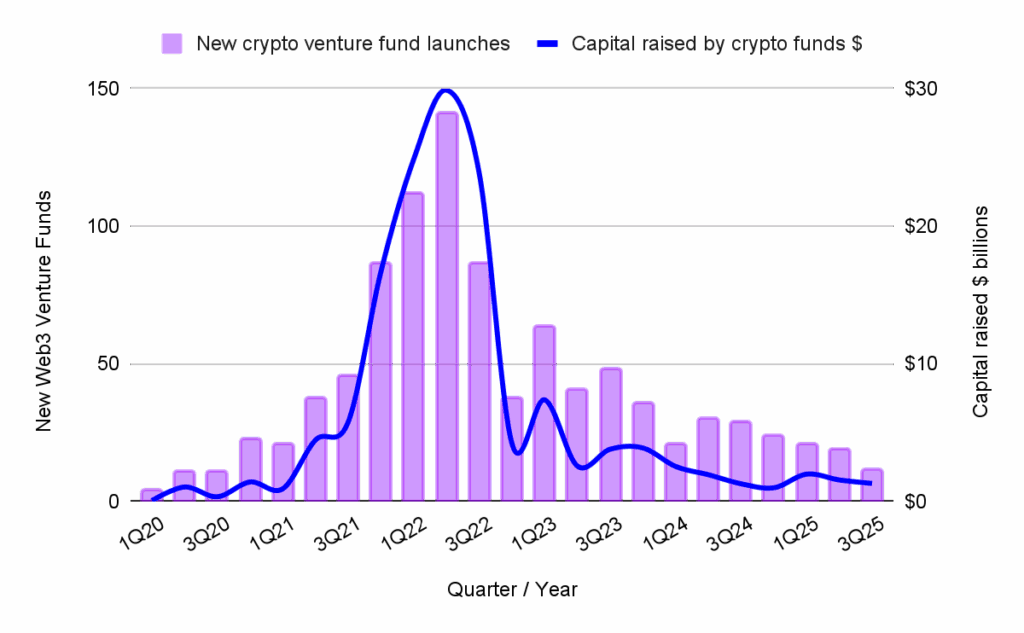
While capital deployment reached historic highs, the creation of new crypto-focused venture funds remained notably subdued. Only 11 new crypto venture funds were launched globally in the third quarter of 2025, raising a combined total of $1.3 billion. This figure continues a downward trajectory observed throughout the year, mirroring the cautious fundraising environment of mid-2020.

Web3 Fundraising in 3Q25: Quiet Integration, Loud Numbers

General partners increasingly relied on remaining dry powder within existing vehicles rather than raising fresh mandates, while limited partners maintained a highly selective approach. Industry reports characterized the period as a recycling phase, wherein capital circulated primarily through secondary market trades and exits rather than fueling new venture creation.

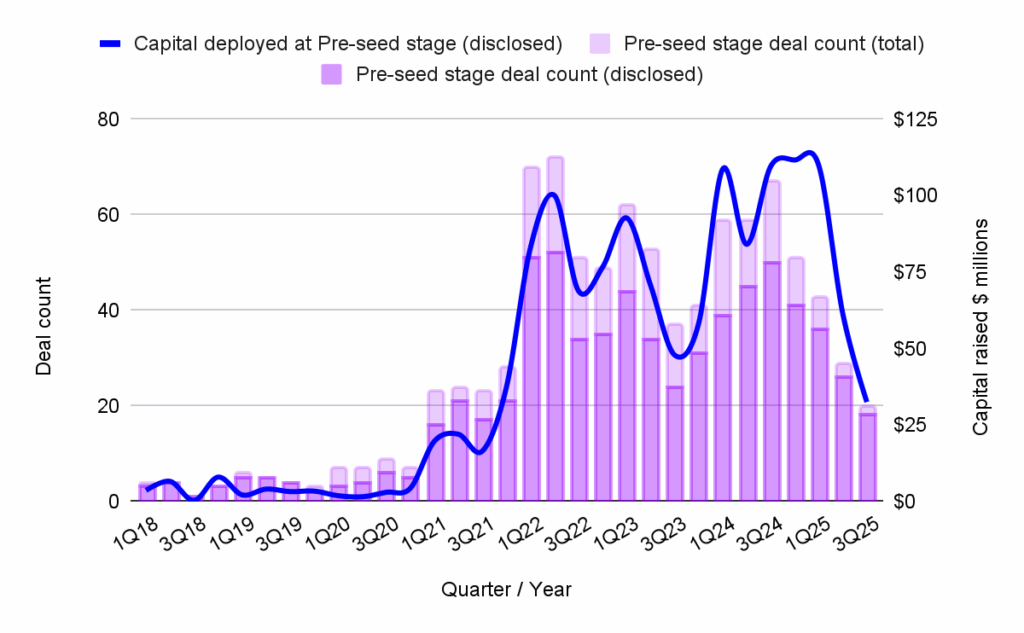
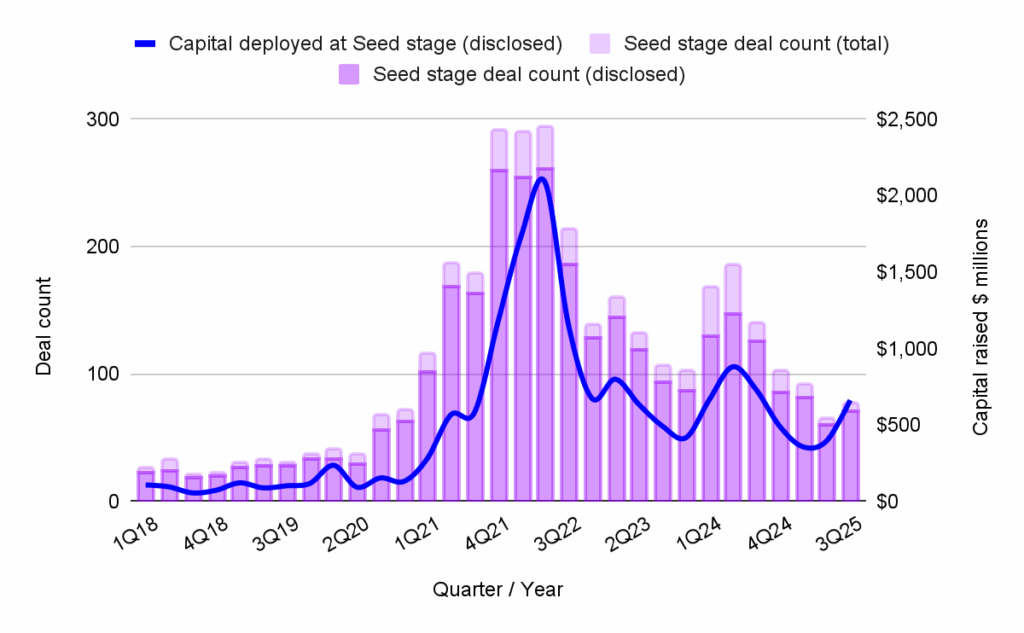
This macroeconomic caution was further reflected in early-stage deal distribution. Pre-seed funding dropped to a multi-year low, recording only 18 disclosed rounds totaling $32.5 million, with the 12-month running median slipping below $2.5 million. Conversely, seed-stage fundraising reached $663 million across 71 disclosed rounds, though these figures were heavily skewed by outlier transactions such as Flying Tulip’s $200 million raise. Flying Tulip’s unconventional financing structure—granting investors on-chain redemption rights and yield-bearing capital without sacrificing upside—exemplified a growing investor preference for liquid, capital-efficient instruments over traditional illiquid agreements.

Web3 Fundraising in 3Q25: Quiet Integration, Loud Numbers

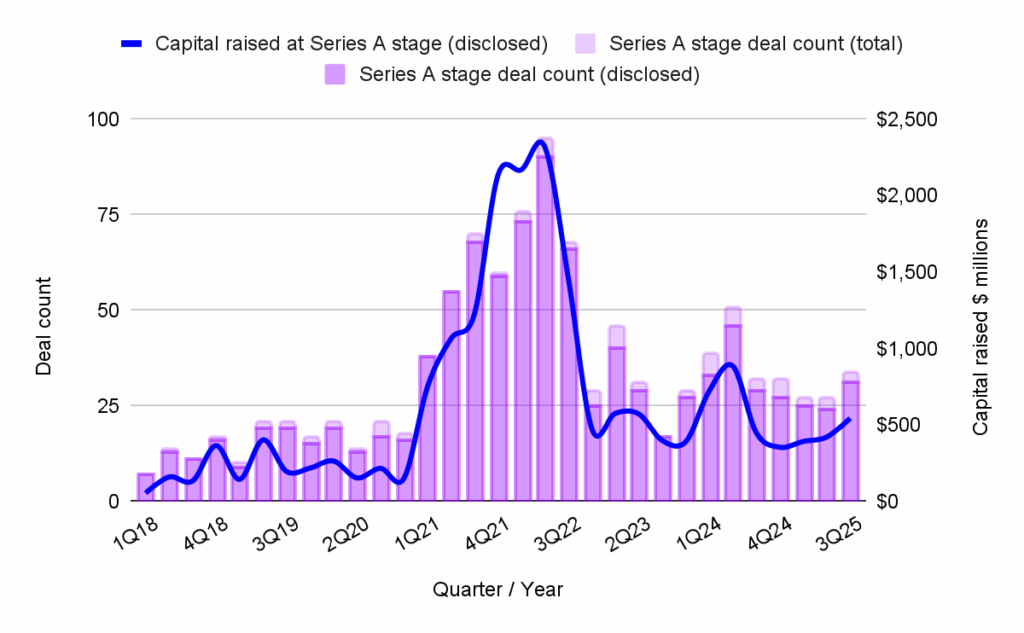
Series A fundraising demonstrated relative stability, logging 31 disclosed rounds totaling approximately $545 million, with a steady 12-month running median of around $16 million. Analysts noted that Series A capital remained accessible primarily to teams demonstrating clear alignment with institutional rails, such as payments, data analytics, and tokenization services.

Category Concentration and Token Fundraising Shifts

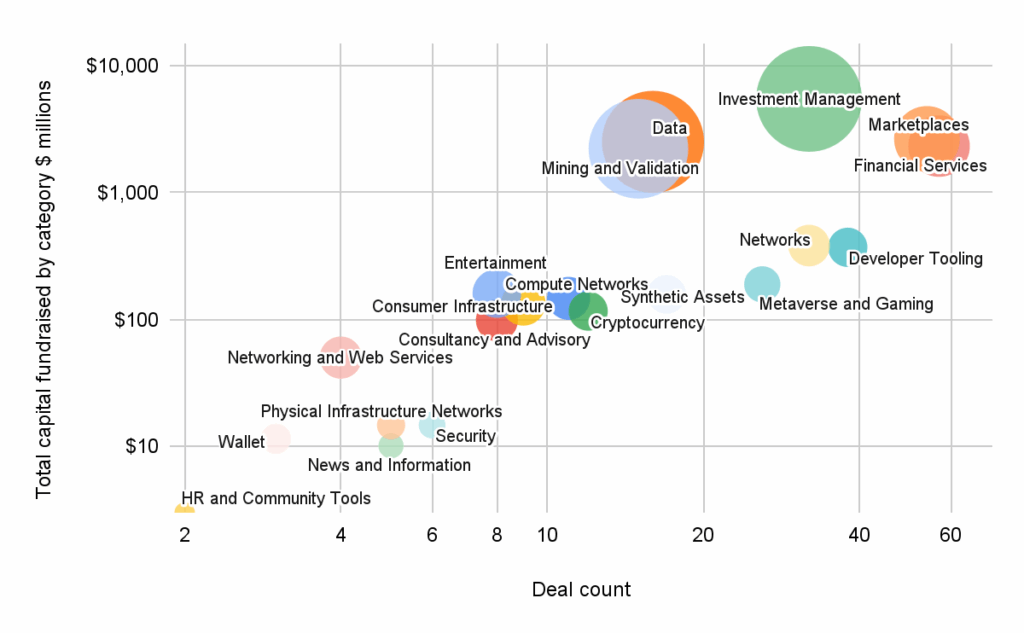
Capital composition across all stages in the third quarter was unmistakably institutional. Investment management, marketplaces, data infrastructure, financial services, and mining and validation together absorbed roughly 70 percent of all deployed capital. These specific sectors directly support issuance, custody, settlement, and blockspace supply, benefiting directly from ETF inflows and enterprise tokenization programs.

Web3 Fundraising in 3Q25: Quiet Integration, Loud Numbers

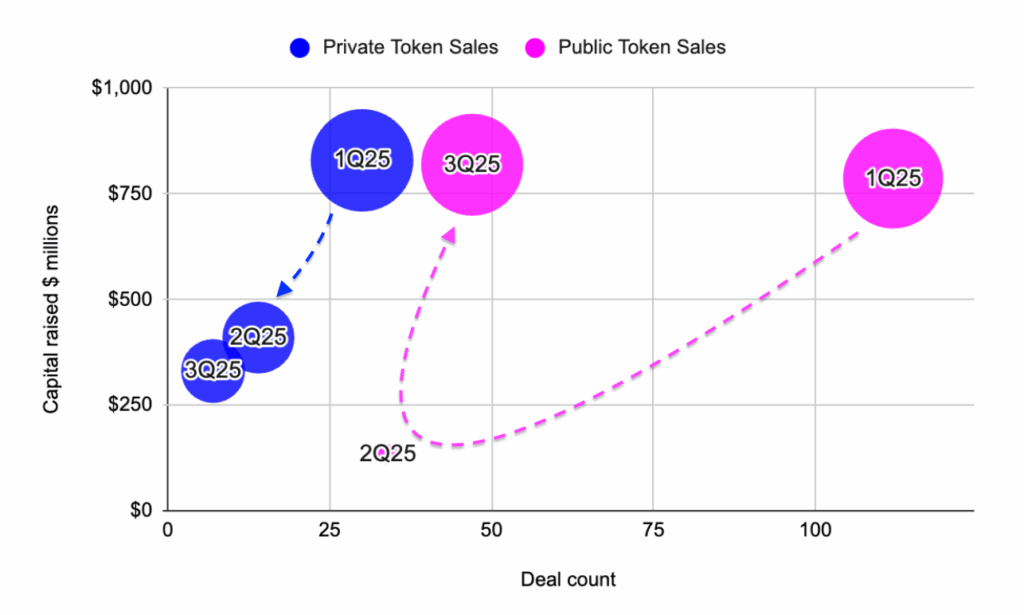
Concurrently, token fundraising experienced a notable shift back toward public distribution models. Public token sales climbed to 47 events totaling $819 million, while private token sales contracted to just 7 events totaling $331 million. Improved market depth, rising capitalization, and receding regulatory uncertainty emboldened project teams to utilize public token sales for transparent price discovery and community alignment. Industry research indicated that initial public offerings and public listings increasingly functioned as regulatory-compliance certification marks, granting firms legitimacy in the eyes of institutional investors.

Implications and Outlook for Upcoming Quarters

The third quarter of 2025 firmly established that the convergence of cryptocurrency and traditional finance is no longer a speculative hypothesis but an operational reality. While mainstream adoption has predominantly manifested at the infrastructure layer rather than the consumer-facing layer, this quiet integration ensures that blockchain technology is sustainably embedding itself into global financial systems.

Web3 Fundraising in 3Q25: Quiet Integration, Loud Numbers

As the market transitions into the final quarter of 2025 and looks toward 2026, the primary challenge for founders will be engineering products with undeniable utility, regulatory compliance, and proven market traction to successfully navigate a highly selective funding environment. For venture capitalists and institutional allocators, the critical test will involve designing sustainable investment frameworks that can successfully revive the early-stage funnel and support the next generation of decentralized innovation.

September 17, 2026 0 comment
0 FacebookTwitterPinterestEmail
Cryptography & Privacy

The Apple-Google AI Partnership and the Hidden Vulnerabilities of Personal Assistant Agents

by admin September 17, 2026
written by admin

Apple’s recent announcement regarding the integration of advanced artificial intelligence into the Siri ecosystem marks a significant milestone in the evolution of consumer technology. By leveraging external frontier models to bolster its ubiquitous voice assistant, Apple aims to transition Siri from a basic command-and-response tool into a profoundly capable, context-aware personal agent. However, this architectural shift—which relies on a partnership with Google and the expansion of secure cloud infrastructure—introduces complex security vulnerabilities that extend far beyond traditional data privacy concerns.

Main Facts of the Integration

The core of Apple’s updated AI strategy involves a hybrid deployment of Google’s Gemini large language models, operating in tandem with Google’s Confidential Inference framework and Apple’s proprietary Private Cloud Compute (PCC). Designed to process complex user queries while evaluating private on-device data, the system aims to bridge the gap between high-level intelligence and user confidentiality.

To achieve this, PCC relies on a combination of custom Apple Silicon and trusted hardware security modules housed within dedicated datacenters. According to architectural specifications, the system utilizes end-to-end encryption from the user’s device to the designated server, employing a stateless design meant to purge input data immediately after generating a response. While this mechanism technically prevents both Apple and Google from retaining raw user inputs on their servers during the inference stage, security researchers note that the expanded infrastructure introduces new layers of complexity that require rigorous third-party auditing.

Chronology of Apple’s Cloud and AI Security Architecture

The framework supporting Apple’s latest AI initiatives has evolved over several years through a series of hardware and software deployments:

  • June 2021: Apple introduces device-level scanning initiatives for child sexual abuse material (CSAM), sparking intense industry debate over the boundaries of on-device privacy and automated monitoring.
  • June 2024: Apple officially unveils Private Cloud Compute (PCC) as a secure, scalable cloud architecture running exclusively on Apple Silicon to handle advanced generative AI tasks without compromising user data.
  • June 2026: Apple expands the capabilities of Siri by integrating frontier models, notably partnering with Google to incorporate Gemini models alongside Google’s Confidential Inference technology, integrated into an expanded PCC framework.
  • June 2026: Concurrently, industry developments highlight ongoing vulnerabilities, with competing AI firms introducing specialized security settings, such as OpenAI’s "lockdown mode," to mitigate emerging data exfiltration risks.

Background Context on Agentic AI and Data Access

For an AI assistant to function effectively as a personal agent—such as autonomously planning a complex business dinner, cross-referencing attendee availability, dietary restrictions, and location preferences—it requires deep contextual awareness. This necessitates relatively unrestricted access to a user’s personal data ecosystem, including iMessages, emails, personal notes, and contact histories.

Proponents of local and private inference argue that technologies like PCC adequately shield this information by ensuring that processing occurs within a secure, encrypted bubble. Yet, security experts emphasize a fundamental operational limitation: an AI assistant locked entirely inside a privacy-preserving bubble with no external connectivity is functionally limited to basic tasks, such as summarizing inbound messages.

The moment an agent requires external utility—such as querying third-party search engines, browsing the live internet, or communicating with external APIs—the absolute guarantees of private cloud infrastructure begin to fracture. To execute multifaceted real-world tasks, an agent must inevitably transmit structured data outward. If an agent compiles comprehensive user profiles and uploads them to a public search engine or an open-ended LLM to find optimal solutions, significant volumes of sensitive, potentially monetizable data flow across system boundaries.

Corporate Incentives and the Threat of Data Monetization

The intersection of generative AI and personal data access creates profound economic incentives for major technology conglomerates. For companies operating large-scale advertising ecosystems, user data harvested through daily interactions represents a lucrative asset.

When a personal agent operates across a user’s device and continuously queries external search infrastructure, the operator of that search engine gains unprecedented insight into consumer intent, personal relationships, and long-term habits. Even if raw conversations are protected during the initial inference phase, the operational outputs and search queries generated by the agent can be leveraged to construct highly detailed behavioural profiles. This dynamic places immense pressure on technology providers to balance user privacy against the inherent commercial advantages of deep data integration.

The Lethal Trifecta and Prompt Injection Vulnerabilities

Beyond corporate data harvesting, the integration of autonomous agents introduces severe security risks stemming from external malicious actors. Security researcher Simon Willison has defined a critical architectural vulnerability known as "the lethal trifecta," which occurs when a system combines access to private data, the parsing of untrusted external content, and the ability to execute outbound communications.

Personal assistant agents embody this trifecta. Because these systems must process incoming communications—such as emails, text messages, and web content—they are inherently exposed to untrusted inputs. Malicious actors can exploit this exposure through prompt injection attacks, embedding hidden instructions within seemingly benign data sources like websites, shared documents, or incoming messages.

When an LLM parses these poisoned inputs, it can be tricked into executing unauthorized commands, such as exfiltrating sensitive local files or transmitting private user data to external servers. Recent industry countermeasures, including the implementation of restricted operational modes by major AI developers, underscore that technical solutions to prompt injection remain an active and unresolved challenge in computer science. Furthermore, as agentic workflows proliferate, security analysts warn of an impending wave of automated "agent spam," wherein malicious entities target autonomous systems rather than human users.

Regulatory Pressures and Government Access

The debate surrounding personal AI agents also intersects with evolving legal and regulatory frameworks governing encryption and public safety. Governments worldwide continue to push for technical capabilities that allow automated detection of illegal activities, such as CSAM, terrorism, or financial fraud, within digital communications and data storage systems.

Regulatory bodies, including the UK’s Office of Communications (Ofcom) and various European Commission entities, have repeatedly proposed frameworks requiring technology providers to monitor encrypted platforms for illicit content. Although major US technology firms have historically resisted systemic backdoors under constitutional protections such as the Fourth Amendment, the integration of all-seeing AI agents creates a centralized repository of user behavior that could theoretically be compelled to flag or report infractions.

Industry observers note that the operational boundary between a helpful personal assistant, a targeted advertising tool, and a government surveillance mechanism ultimately depends on system prompting, fine-tuning, and corporate compliance with legal mandates, rather than underlying cryptographic hardware.

Broader Implications and Technical Limitations

The deployment of private inference technologies represents a sophisticated application of modern cryptography aimed at eliminating the need to trust cloud providers with raw user data. Against the specific adversary of a compromised or curious cloud infrastructure operator, private compute architectures provide robust, verifiable protections.

However, security analysts stress that private inference alone cannot protect users from the systemic risks inherent to agentic architectures. Cryptographic primitives cannot inherently prevent an autonomous agent from transmitting sensitive summaries to external search engines, nor can they stop a sophisticated prompt injection attack from exploiting an agent’s communication channels. Ultimately, safeguarding user privacy in the era of autonomous AI will require a combination of rigorous technical engineering, robust legal guardrails, and sustainable corporate governance—the very human institutions that cryptography was originally designed to bypass.

September 17, 2026 0 comment
0 FacebookTwitterPinterestEmail
FinTech Innovations

Beyond Cost Reduction: How Admiral and ElevenLabs are Redefining the Financial Services Customer Experience Through AI

by admin September 17, 2026
written by admin

The landscape of automated customer service in the financial services sector is undergoing a profound paradigm shift, moving away from the era of rudimentary decision-tree chatbots toward sophisticated, AI-driven conversational agents. For decades, the primary objective of automation in insurance and banking was simple: cost deflection. By deploying basic Interactive Voice Response (IVR) menus and rigid scripts, institutions sought to reduce call volume by discouraging direct human interaction. The result was a generation of policyholders and account holders conditioned to reflexively ask for a human representative to bypass these frustrating obstacles. However, a new generation of enterprise AI is changing this dynamic, as firms like Admiral—one of Europe’s largest insurance groups—leverage advanced generative AI to transform customer service from a cost-saving measure into a competitive advantage.

The Evolution of Automation: From Deflection to Engagement

The history of automation in finance has been marked by a clear evolution. In the early 2010s, the focus was strictly on "self-service" portals that often functioned as glorified digital dead ends. By 2018, the rise of Natural Language Processing (NLP) allowed for better text-based bots, but these were still limited by their inability to manage complex, nuanced, or high-stakes financial inquiries.

The current wave of innovation, exemplified by partnerships between insurers like Admiral and AI software companies like ElevenLabs, prioritizes "experience transformation." The objective is no longer merely to deflect volume, but to resolve inquiries on the first contact, regardless of the channel or time of day. When human intervention is required, the transition is seamless, providing the human agent with a comprehensive briefing of the customer’s history and the context of the issue. This creates a "force multiplier" effect, where operational savings are not merely kept as margin, but are reinvested into higher-quality human support for complex cases.

The Build vs. Buy Dilemma in Enterprise AI

For Chief Technology Officers and digital transformation leads in the insurance sector, the decision to build an AI stack from scratch or purchase a specialized platform is no longer binary. The strategic calculus has shifted: institutions must identify which components of the customer experience are unique to their brand and which are commodity technological requirements.

If the goal is to cut costs, a simple, low-cost automation tool suffices. However, if the goal is to build long-term customer trust, the performance bar is set significantly higher. An AI agent must perform at or above the level of the company’s most skilled human employees. To achieve this, companies are increasingly "buying" the infrastructure—the complex audio orchestration, latency management, and turn-taking capabilities—while "building" the proprietary knowledge, compliance guardrails, and deterministic workflows that are specific to their business logic.

Technical Foundations: The Invisible Layer of Trust

Trust in a digital agent is rarely about the "intelligence" of the model alone; it is about the fluidity of the interaction. Users subconsciously assess the competence of an agent based on subtle technical cues:

  • Latency Management: Delays in response times of even a few hundred milliseconds can cause a user to perceive the AI as disconnected or incapable.
  • Interruptibility: High-quality AI must handle "barge-in" scenarios, where a human interrupts the bot mid-sentence. If an AI cannot gracefully handle an interruption, the conversation breaks down, and the user’s trust evaporates.
  • Acoustic Clarity: The ability to process speech accurately amidst background noise or varying accents is a significant technical hurdle that many in-house systems fail to clear.

By offloading these infrastructure layers to specialized platforms, organizations like Admiral have been able to bypass the "plumbing" phase of development. Instead of spending months engineering the audio stack, their technical teams focus on encoding insurance-specific regulations, policyholder verification, and personalized service workflows. This approach has led to measurable performance improvements, such as reducing the time for a standard loan settlement request by 50%, while maintaining high customer satisfaction scores (4/5 or 5/5).

Compliance and Ethical Guardrails in Insurance

Financial services are governed by some of the most stringent regulatory frameworks in the world. Consequently, the adoption of AI is not just a technological challenge but a legal one. Admiral’s approach demonstrates a critical principle: raising the validation bar without lowering the compliance bar.

Because insurance regulation is largely outcome-based, firms must ensure that AI agents adhere to the same standards as human employees. By keeping the "business logic"—the rules, workflows, and risk-mitigation protocols—in-house, Admiral ensures that its AI remains compliant with regional and international insurance laws. This includes automated routing: the system is designed to identify vulnerable customers or those in arrears and immediately escalate these cases to a human professional. This hybrid model allows for the benefits of automation while maintaining a safety net for high-risk interactions.

The Role of Cross-Functional Deployment Units

The implementation of these agents is not merely an IT project; it is a business transformation project. Admiral employs a "dual-ownership" model for deployment: an engineer, who understands the technical architecture, is paired with a business owner, who understands the local market nuances and customer base.

This pairing ensures that the AI agent does not sound like a generic, robotic entity, but rather reflects the tone and expectations of the local market. Furthermore, this structure allows for rapid iteration. By treating the AI deployment as a continuous, agile process rather than a static product launch, firms can move from testing to production in a matter of weeks. Issues identified on a Monday are often resolved by Tuesday, allowing for a tight feedback loop that keeps the technology relevant and effective.

Broader Market Implications

The success of these implementations suggests a new trajectory for the insurance and banking industries. As AI agents become the "front door" for millions of daily financial interactions, the competitive advantage will go to those who can balance speed with empathy.

Current market data indicates that consumers are increasingly willing to engage with AI for routine tasks if the experience is frictionless. According to industry analysts, companies that successfully integrate AI into their customer journey report higher retention rates and reduced overhead, as human agents are freed from repetitive administrative tasks.

However, the risk of "automating away" the human element remains a concern for many institutions. The consensus among industry leaders is that the future of customer service is a "human-in-the-loop" ecosystem. In this model, the AI handles the transactional, data-heavy inquiries, while the human agent—supported by the AI’s data-gathering capabilities—focuses on the emotional, complex, and high-value conversations that define a brand’s reputation.

Looking Ahead: The Future of Conversational Finance

The path forward for institutions involves a continued refinement of these AI agents. As models become more context-aware and capable of managing complex financial advice, the line between an automated tool and a professional advisor will continue to blur.

For Admiral and other early adopters, the focus remains on incremental improvement. By prioritizing the "orchestration layer" to handle the technical complexity of speech and focusing internal resources on policy compliance and customer knowledge, these firms are setting a new standard for what it means to be a modern, digital-first financial institution. The ability to iterate, test, and deploy at scale—while maintaining a laser focus on customer trust—is likely to be the defining characteristic of the next decade of financial services.

As more institutions transition away from legacy automation, the industry is effectively moving toward a future where "the queue" becomes an relic of the past, replaced by an ecosystem where every customer inquiry is met with instant, accurate, and contextually aware resolution.

September 17, 2026 0 comment
0 FacebookTwitterPinterestEmail
FinTech Innovations

CFTC Expands No-Action Relief for Passive Software Providers, Clearing the Path for Broader Crypto and Prediction Market Access

by admin September 17, 2026
written by admin

The regulatory landscape for digital assets and decentralized technology underwent a notable shift on Thursday, September 17, 2026, when the Commodity Futures Trading Commission’s Market Participants Division issued a sweeping staff letter granting a no-action position to providers of passive software. This landmark decision expands upon a precedent-setting ruling originally established earlier in the year for self-custodial wallet developer Phantom Technologies. By exempting non-custodial software developers from traditional introducing broker registration requirements, the regulatory agency has effectively opened the door for streamlined integration between decentralized tools and fully regulated financial markets, sparking widespread optimism across the fintech and cryptocurrency sectors.

Main Facts of the Regulatory Announcement

Under the terms of the new staff letter issued by the CFTC’s Market Participants Division (MPD), qualified providers of passive software and their relevant personnel will not face enforcement action for failing to register as introducing brokers (IBs) or associated persons (APs) of introducing brokers. This regulatory relief is contingent upon compliance with specific conditions outlined in the agency’s directives.

Crucially, the exemption applies solely to the provision and marketing of software designed to facilitate user-directed trading with registered futures commission merchants (FCMs), introducing brokers, and designated contract markets (DCMs). The policy acknowledges the unique operational framework of non-custodial tools—applications wherein the software developer neither holds, controls, nor takes custody of user funds, nor exercises discretion or decision-making power over user trades. Instead, the software functions purely as a passive communication or interface layer connecting retail or institutional users with compliant, regulated market infrastructure.

Background Context and Chronology of Events

To understand the weight of the September 17 announcement, it is necessary to examine the regulatory trajectory that preceded it. Historically, the CFTC and other financial watchdogs maintained a strict interpretation of regulatory perimeters regarding order routing and facilitation. Under older compliance frameworks, any entity that solicited or accepted customer trade orders, routed those orders to a futures commission merchant, and derived financial compensation—such as fees or commissions—was typically classified as an introducing broker. This classification triggered rigorous registration mandates, compliance overhead, and reporting requirements that were primarily tailored to traditional, centralized brokerage firms rather than lightweight software developers.

The turning point in this regulatory approach arrived in March 2026, when the MPD issued its first notable no-action position in response to an application from Phantom Technologies. Phantom, a prominent developer of self-custodial cryptocurrency wallet software, had proposed a framework that would allow its user base to seamlessly access regulated futures commission merchants, introducing brokers, and designated contract markets directly from its interface. The March decision demonstrated a willingness within the CFTC to accommodate technological innovation, provided that core consumer protections and market integrity safeguards remained intact.

Following the initial March ruling, industry stakeholders eagerly anticipated whether the relief would remain an isolated exception tailored exclusively to Phantom Technologies or if it would serve as a broad policy framework for the wider software and cryptocurrency development community. The September 17 staff letter answered that question definitively, signaling that the agency’s staff viewed the Phantom model as a viable template for the entire sector.

Industry Reactions and Stakeholder Perspectives

The decision elicited immediate, enthusiastic responses from industry leaders and executives who have long advocated for regulatory clarity regarding non-custodial technologies.

Brandon Millman, Chief Executive Officer and Co-Founder of Phantom Technologies, took to the social media platform X to celebrate the broader implementation of the policy. Millman emphasized that the initial March relief successfully demonstrated a workable path forward for non-custodial software providers.

"In March, Phantom became the first passive software provider to receive no-action relief from the CFTC," Millman wrote in his public statement. "We’re grateful to the CFTC for working with us to chart a new path for non-custodial software providers to connect people with regulated markets, all while the provider never holds users’ funds or makes decisions about their trades. Now the CFTC has opened that same path to other software providers, and that’s a win for the whole industry. This is how it should work: software built to protect consumers, paired with regulated partners, giving more people safe access to the financial services they want."

The sentiment was echoed across the broader cryptocurrency and fintech ecosystem. Ryan VanGrack, Vice Chair at Coinbase, highlighted the cumulative momentum of regulatory developments occurring simultaneously across multiple U.S. financial agencies. In a statement posted to social media on Thursday, VanGrack pointed to a broader convergence of constructive regulatory updates, noting, "After years of regulatory standstill, we just saw meaningful relief in a matter of hours: SEC Innovation Exemption and CFTC No-Action Relief. The tide has officially turned."

Broader Impact and Market Implications

Financial analysts and market observers have noted that the expansion of this exemption carries profound implications for the future of online trading platforms, particularly within the burgeoning sectors of cryptocurrency derivatives and event-based prediction markets.

By removing the prohibitive barrier of introducing broker registration for passive software creators, the CFTC has eliminated a major source of legal uncertainty that previously discouraged technology companies from integrating with regulated exchanges. This regulatory clarity is expected to accelerate the development of user-facing applications that prioritize self-sovereignty and user security while remaining safely tethered to institutional-grade, fully compliant market infrastructure.

Furthermore, the simultaneous occurrence of regulatory accommodations—such as the Securities and Exchange Commission’s recent Innovation Exemption designed to facilitate the trading of tokenized national market system (NMS) stocks—suggests a coordinated, modernizing shift among U.S. financial regulators. Rather than pushing technological innovation offshore or forcing decentralized developers into ill-fitting traditional regulatory boxes, agencies are increasingly demonstrating an ability to draft tailored pathways that accommodate software-driven financial interfaces.

Ultimately, the CFTC’s September 17 staff letter represents a critical milestone in the maturation of digital asset regulation. By drawing a clear line between active intermediaries who manage funds and make trading decisions, and passive software developers who merely provide tools for user access, the commission has established a forward-looking precedent. This framework balances the imperatives of consumer protection and market stability with the undeniable reality of technological evolution, ensuring that safe, regulated financial services remain accessible to a growing digital economy.

September 17, 2026 0 comment
0 FacebookTwitterPinterestEmail
FinTech Innovations

TechCrunch Disrupt 2026: Final Deadline Approaches for Startup Exhibitors to Secure Prime Expo Hall Placement

by admin September 17, 2026
written by admin

The window of opportunity for early-stage companies to secure a dedicated exhibition space at TechCrunch Disrupt 2026 is rapidly closing, with the final deadline for booking an exhibit table set for Friday, September 18, at 11:59 p.m. PT. As the global technology community prepares to descend upon the Moscone West convention center in San Francisco from October 13 to 15, the pressure is mounting for founders to solidify their presence on the Expo Hall floor. With limited inventory remaining, event organizers have indicated that tables may reach capacity before the official cutoff, effectively ending the chance for late-moving startups to gain a high-visibility footprint at one of the industry’s most consequential gatherings.

The Significance of the Disrupt Expo Floor

TechCrunch Disrupt has long served as a bellwether for the health of the venture ecosystem. Since its inception, the event has functioned as a critical nexus where emerging technologies transition from experimental concepts to market-ready products. The exhibition component is not merely a logistical arrangement but a strategic move for founders; it provides a three-day, high-traffic environment designed to bridge the gap between product development and capital acquisition.

For a startup, an exhibit table—typically measured at 6 feet by 30 inches—acts as a localized command center. Beyond the physical footprint, the exhibitor package is designed to provide comprehensive institutional support, including ten team passes, access to the media-facing press list, and integrated branding across the event’s digital and mobile applications. Furthermore, the inclusion of Silver Tier sponsor branding offers a level of professional credibility that can be instrumental when navigating the high-stakes environment of the Moscone West floor.

Chronology of the 2026 Event Cycle

The lead-up to the 2026 event has been marked by a rigorous, multi-phased approach to curation. The initial call for exhibitors began earlier this year, targeting a diverse cohort of companies ranging from pre-seed ventures to Series A growth-stage entities. Following the September 18 deadline for exhibit tables, the focus of the event will pivot toward the operational execution of the conference.

On September 25, a secondary critical milestone will arrive: the final window for general attendees to secure tickets at a reduced rate. After this date, the pricing structure for standard, founder, and investor passes is expected to increase by as much as $200. This tiered pricing model is a common industry practice, designed to incentivize early commitments while managing the flow of registration data to ensure optimal logistics for the more than 10,000 attendees expected to participate.

2 days left to exhibit at TechCrunch Disrupt 2026 

Data-Driven Networking and Ecosystem Impact

The scale of TechCrunch Disrupt 2026 is substantial, with organizers anticipating a convergence of over 10,000 founders, venture capitalists, corporate innovators, and policy leaders. The event’s programming is distributed across six industry-specific stages, hosting upwards of 200 sessions. This density of expertise creates a unique environment for what is formally termed "deal flow."

To manage the complexity of these interactions, organizers have increasingly relied on algorithmic intervention. AI-powered matchmaking tools are now a core component of the attendee experience, designed to pair startups with the specific investors and corporate partners that align with their vertical, stage, and geographical focus. The "Deal Flow Cafe" and dedicated Investor-to-Founder networking sessions serve as the physical manifestations of this data-driven strategy, facilitating high-intensity, short-form meetings that are often the catalyst for successful funding rounds.

The presence of the "Startup Battlefield 200"—a curated group of the most promising companies selected from thousands of applicants—further underscores the competitive nature of the event. For those companies not part of the Battlefield cohort, the exhibition tables represent the primary mechanism for gaining exposure to the same audience of elite tech leaders and venture firms.

Economic and Strategic Implications

The decision to participate in an exhibition capacity at a major conference like Disrupt carries significant weight for the growth trajectory of a startup. In the current economic climate, where capital efficiency has replaced the "growth at all costs" mentality of previous years, the ability to demonstrate a product in a high-traffic environment is a valuable asset.

Data from previous years suggests that the primary value proposition for exhibitors is not merely the number of business cards collected, but the quality of the engagement. By placing a product directly in front of the gatekeepers of venture capital, startups can compress months of outbound sales and networking efforts into a 72-hour window. This is particularly relevant for startups operating in sectors currently undergoing rapid transformation, such as artificial intelligence, climate technology, and enterprise software, where the feedback loop between the market and the developer is a key determinant of long-term success.

Furthermore, the integration of press-list access provides an ancillary benefit that is difficult to quantify but essential for brand building. The ability to engage directly with the technology press during a time of peak industry attention can provide the necessary visibility to reach potential customers and talent, in addition to investors.

2 days left to exhibit at TechCrunch Disrupt 2026 

Official Stance and Attendee Logistics

While the exhibit tables are the focal point for startups, the broader structure of the conference is designed to be inclusive of the wider tech ecosystem. For those who do not secure an exhibit table, the general attendance tier still offers substantial utility. The combination of networking software and physical, industry-centric stages ensures that the exchange of ideas remains the primary output of the event.

Regarding the upcoming deadlines, the official position remains clear: the logistical constraints of the Moscone West venue dictate the cutoff. The September 18 deadline for exhibitors is a firm constraint intended to allow for the administrative processing of floor plans and digital asset integration. The September 25 ticket price increase serves as a final call for the broader professional community to finalize their travel and attendance plans.

The Broader Tech Landscape in San Francisco

The selection of San Francisco as the host city for the 2026 iteration of Disrupt continues a long tradition of centering the event within the primary hub of global venture capital. Despite the shifting dynamics of remote work and the decentralization of some tech sectors, the concentration of institutional capital in the Bay Area remains unparalleled.

The presence of 250+ top-tier tech leaders speaking across the six industry stages suggests a focus on the most pressing challenges facing the industry, ranging from the governance of generative AI to the logistics of global supply chains. For an exhibitor, being present in the room where these discussions take place allows for a level of alignment with current market trends that cannot be replicated through virtual participation alone.

As the industry approaches the October 13 opening date, the atmosphere among potential exhibitors is one of calculated urgency. For the founders who have already booked their space, the focus now shifts to booth design, pitch refinement, and the strategic preparation of their teams. For those still considering their options, the next 24 hours represent a final opportunity to secure a seat at the table.

In summary, TechCrunch Disrupt 2026 remains a cornerstone event for the startup ecosystem. The deadlines of September 18 and September 25 are not merely administrative dates; they are markers in a competitive process that filters for those companies most prepared to engage with the market. Whether through a dedicated exhibition table or general participation, the event offers a comprehensive, albeit demanding, environment for those seeking to accelerate their growth through professional networking, investment, and public exposure. As the clock runs down, the distinction between those who will be on the floor and those who will be observers is being finalized, setting the stage for what is expected to be a pivotal three days for the next generation of tech enterprises.

September 17, 2026 0 comment
0 FacebookTwitterPinterestEmail
FinTech Innovations

OKX and Token Terminal Report Reveals Real-World Asset Futures Have Surpassed Crypto Futures in Trading Volume

by admin September 17, 2026
written by admin

The landscape of decentralized finance and onchain trading has undergone a dramatic structural shift, according to a comprehensive new market report published jointly by cryptocurrency exchange OKX and blockchain data provider Token Terminal. The collaborative study reveals that trading volumes for real-world asset (RWA) perpetual futures have officially overtaken those of native cryptocurrency futures, marking a watershed moment for decentralized derivatives markets.

In a remarkably short span of just nine months, the market dynamics surrounding onchain perpetual contracts have been completely rewritten. What was once described by market analysts as a negligible segment of the decentralized trading ecosystem has exploded into the dominant force in perpetual futures volume. The findings underscore a broader, secular trend within the digital asset industry: the increasing tokenization and financialization of traditional, off-chain assets, ranging from global equities and commodities to foreign exchange rates and macroeconomic indicators.

The explosive growth documented in the OKX and Token Terminal report challenges long-held assumptions that decentralized derivatives protocols would remain strictly confined to crypto-native assets such as Bitcoin, Ethereum, and various altcoins. Instead, market participants are demonstrating an insatiable appetite for leveraged exposure to traditional financial instruments executed entirely onchain through smart contracts and decentralized ledgers. As this sector matures, industry stakeholders are forced to reevaluate the operational intersection between traditional finance (TradFi) and decentralized finance (DeFi), setting a new baseline for how financial derivatives are traded, settled, and monitored globally.

Chronology of the Shift: From Rounding Error to Market Dominance

To fully understand the magnitude of this market flip, it is necessary to examine the rapid chronology that brought RWA perpetual futures from obscurity to market leadership. Industry observers note that prior to late 2023 and early 2024, onchain derivatives platforms were almost exclusively dedicated to crypto-native assets. Traditional financial instruments were largely inaccessible on decentralized ledgers, save for isolated experimental protocols with minimal liquidity and high friction costs.

In the initial phases of the tokenized RWA movement, attention was predominantly focused on yield-bearing products, such as onchain U.S. Treasury bills and private credit funds. Trading volumes for synthetic or perpetual futures tracking real-world assets were practically nonexistent. According to the historical data cited in the OKX and Token Terminal publication, RWA futures accounted for a literal rounding error in overall decentralized exchange (DEX) metrics, struggling to attract sustained institutional or retail interest amidst regulatory uncertainty and technical limitations.

However, a confluence of technological improvements, enhanced oracle reliability, and surging demand for global market access outside traditional brokerage hours ignited a rapid expansion phase starting in late 2023. Over the subsequent nine months, liquidity providers, specialized decentralized applications (dApps), and market makers engineered robust infrastructure capable of supporting seamless, round-the-clock trading of traditional assets via blockchain rails.

By July of the current year, the momentum culminated in a staggering monthly trading volume of $107.6 billion for real-world asset futures. This figure not only shattered all previous internal benchmarks for the sector but also successfully eclipsed the trading volume of crypto-native perpetual futures on comparable decentralized venues. OKX and Token Terminal noted in their joint analysis that this milestone signifies that RWA futures are no longer a passing trend or a niche vertical; rather, they constitute the core market activity within the perpetual futures landscape onchain.

Deconstructing the Data: Metrics and Market Mechanics

The empirical data provided in the OKX and Token Terminal report highlights the sheer velocity of capital migration toward onchain traditional asset exposure. While crypto perpetual futures have historically dominated decentralized trading volumes—frequently rivaling or exceeding centralized exchange volumes during periods of high market volatility—the recent surge in RWA contracts reflects a structural diversification of trader intent.

To evaluate these developments objectively, it is essential to review the operational mechanics governing perpetual futures. Unlike traditional futures contracts, perpetual futures have no expiration date, meaning traders can hold positions indefinitely provided they maintain adequate margin to prevent liquidation. Furthermore, buyers and sellers of these contracts do not take direct physical or legal ownership of the underlying asset; instead, they enter into a derivative agreement tied to the price movements of the underlying instrument.

In the context of onchain RWA futures, this mechanism allows participants anywhere in the world to gain leveraged exposure to commodities like gold and oil, major global stock indices, and foreign currency pairs without opening a traditional brokerage account or navigating complex international banking restrictions. The primary drivers behind these transactions remain speculation—seeking to profit from short-term or long-term price fluctuations—and hedging, where institutional or retail investors use derivatives to offset risk in their broader portfolios.

The growth trajectory documented in the study indicates that decentralized perpetual exchanges are increasingly capturing trading volume that would have otherwise settled entirely within traditional centralized financial clearinghouses. By leveraging decentralized price feeds and automated smart contract execution, these platforms offer near-instantaneous settlement, transparent margin requirements, and continuous accessibility.

Industry Context and Stakeholder Perspectives

The convergence of traditional financial markets and blockchain infrastructure has been a long-term objective for many fintech innovators, yet the speed at which RWA derivatives have captured market share has surprised even veteran analysts. Spokespersons and researchers from both OKX and Token Terminal emphasized that the traditional boundaries separating crypto assets from mainstream financial instruments are dissolving.

While formal, direct statements from regulatory bodies regarding this specific volume milestone are still emerging, financial analysts point out that the growth of RWA derivatives highlights a pressing need for clear regulatory frameworks governing tokenized synthetic assets. The ability of global retail users to access leveraged instruments tracking traditional equities and commodities via decentralized protocols presents both an unprecedented democratization of financial access and a complex challenge for cross-border regulatory compliance.

Representatives from decentralized protocol development teams have responded to the report by highlighting the technological resilience of their networks. The seamless handling of over $100 billion in monthly volume without systemic technical failures or oracle manipulation incidents demonstrates that decentralized derivatives infrastructure has reached a critical threshold of maturity. Market makers and liquidity providers, who supply the necessary capital to ensure tight bid-ask spreads on these platforms, have increasingly allocated resources toward RWA trading pairs, citing diversified yield opportunities and strong customer demand.

Broader Economic Impact and Future Implications

The revelation that RWA futures have surpassed crypto futures carries profound implications for the future architecture of global financial markets. First and foremost, it signals that blockchain technology is no longer viewed merely as an isolated sandbox for speculative digital tokens, but as a superior settlement and execution layer for the broader global economy.

As tokenization expands, the ability to trade traditional assets around the clock without the friction of traditional market hours, settlement delays, and intermediary fees is proving to be a powerful value proposition. The OKX and Token Terminal report concludes that perpetual futures have permanently expanded beyond their crypto-native origins. This evolution suggests that the future of derivatives trading may increasingly favor onchain execution environments that can unify disparate asset classes into a single, cohesive trading interface.

However, this transition is not without potential risks. The heavy reliance on decentralized oracles to price real-world assets introduces vulnerabilities related to data feed accuracy, particularly during periods of extreme macroeconomic stress or market closures in traditional financial centers. Additionally, the widespread availability of high-leverage products tracking volatile global assets on permissionless networks will likely remain a focal point for regulators seeking to protect retail investors from excessive risk exposure.

Ultimately, the milestone documented by OKX and Token Terminal marks a definitive turning point in financial history. By successfully bridging the gap between traditional asset classes and decentralized market infrastructure, the financial ecosystem has proven that the demand for efficient, accessible, and transparent derivatives trading transcends the boundaries of any single asset class. As capital continues to flow into onchain RWA markets, the traditional financial industry faces an accelerating imperative to adapt to a tokenized future where speed, accessibility, and borderless execution define the competitive landscape.

September 17, 2026 0 comment
0 FacebookTwitterPinterestEmail
Newer Posts
Older Posts

Recent Posts

  • The Ethereum Foundation Launches New Resource Hub to Promote Blockchain as Neutral Digital Public Infrastructure for Global Institutions
  • Kraken Expands European Capabilities with the Listing of Societe Generale-FORGE’s MiCA-Compliant EURCV Stablecoin
  • Hyperliquid Shifts From Decentralized Exchange to Institutional Financial Backbone as Wall Street Giants Move In
  • A New Phase of the Internet: From Execution to Intention
  • Anthropic Unveils Breakthrough Cryptanalytic Capabilities Using Unreleased Claude Mythos Model

Recent Comments

No comments to show.
  • Facebook
  • Twitter

@2021 - All Right Reserved. Designed and Developed by PenciDesign


Back To Top
Dr Crypton
  • Home
  • About Us
  • Contact Us
  • Cookies Policy
  • Disclaimer
  • DMCA
  • Privacy Policy
  • Terms and Conditions

We are using cookies to give you the best experience on our website.

You can find out more about which cookies we are using or switch them off in .

Dr Crypton
Powered by  GDPR Cookie Compliance
Privacy Overview

This website uses cookies so that we can provide you with the best user experience possible. Cookie information is stored in your browser and performs functions such as recognising you when you return to our website and helping our team to understand which sections of the website you find most interesting and useful.

Strictly Necessary Cookies

Strictly Necessary Cookie should be enabled at all times so that we can save your preferences for cookie settings.